Unlocking Little Minds: The Transformative Power of Problem-Solving Toys for Toddlers
Introduction: More Than Just Play
Every parent has witnessed that magical moment when a toddler, faced with a challenge, pauses, frowns, and then—with a triumphant grin—figures it out. That moment is not just cute; it is a cornerstone of cognitive development. In the whirlwind of early childhood, play is the primary vehicle for learning, and among the vast array of playthings, problem-solving toys hold a unique and irreplaceable role. These are not merely distractions or sources of entertainment; they are tools that sculpt the architecture of a growing brain. For toddlers—children roughly between the ages of one and three—the world is a cascade of puzzles waiting to be solved. Problem-solving toys provide a safe, engaging, and structured environment where these tiny explorers can practice reasoning, persistence, and creativity. In this comprehensive article, we will delve into why these toys matter, what types are most effective, how to choose them wisely, and how parents can maximize their benefits. By the end, you will understand that investing in quality problem-solving toys is one of the most impactful decisions you can make for your toddler’s future.
Why Problem-Solving Matters in the Toddler Years
The toddler period is a critical window for brain development. Neural connections are forming at an astonishing rate—over a million new connections per second during the first few years of life. Problem-solving skills are not innate; they are built through experience. When a toddler tries to fit a square block into a square hole, they are engaging in a process that involves observation, trial and error, memory, and motor coordination. Each success reinforces neural pathways; each failure teaches resilience. Research in early childhood education consistently shows that children who engage regularly with age-appropriate problem-solving activities demonstrate stronger executive function skills later in life—skills like self-control, working memory, and cognitive flexibility. These are the very foundations of academic success, social competence, and emotional regulation. Problem-solving toys are the gym equipment for these mental muscles. They transform abstract concepts—like cause and effect, spatial relationships, and logical sequencing—into tangible, hands-on experiences. Furthermore, these toys foster a growth mindset. Toddlers learn that challenges are not obstacles but opportunities. The satisfaction of solving a puzzle releases dopamine, the brain’s reward chemical, reinforcing the desire to tackle increasingly difficult problems. This intrinsic motivation is far more powerful than any external reward.
Types of Problem-Solving Toys for Toddlers
Puzzles: The Classic Building Block of Logic
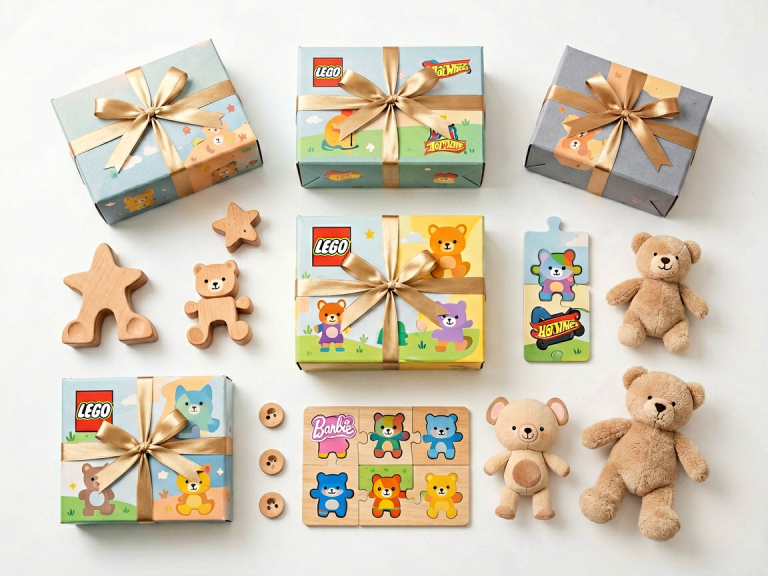
Jigsaw puzzles, shape sorters, and peg puzzles are staples in the problem-solving toy category. For toddlers, starting with large, chunky pieces that fit into corresponding cutouts is ideal. These toys teach pattern recognition, shape discrimination, and spatial awareness. A simple puzzle with four to six pieces encourages the toddler to analyze the relationship between the piece and the empty space. As they progress, puzzles with more pieces or interlocking designs introduce sequencing and the concept of a complete picture emerging from parts. Wooden puzzles with knobs are excellent for developing fine motor control and hand-eye coordination. Importantly, puzzles also teach patience. A toddler may struggle to fit the last piece, and the process of turning it, adjusting it, and trying again is a microcosm of real-world problem-solving. Look for puzzles that feature familiar objects, animals, or numbers to integrate learning across domains.
Stacking and Nesting Toys: Understanding Order and Balance
Stacking rings, nesting cups, and building blocks are deceptively simple yet profoundly educational. A toddler stacking rings on a cone must learn size ordering—the largest ring must go on first, the smallest last. This teaches seriation, a foundational math concept. Nesting cups, where one cup fits inside another, introduce the idea of volume and relative size. Building blocks, whether wooden or plastic, allow for open-ended problem-solving: How high can I stack before the tower falls? How do I create a stable base? These activities engage spatial reasoning and an early understanding of physics—gravity, balance, and weight distribution. When a block tower collapses, the toddler must analyze why and try a different approach. This iterative process is exactly how engineers and scientists work. Furthermore, stacking and nesting toys often come in bright colors and varied textures, stimulating sensory development alongside cognitive growth.
Shape Sorters and Lacing Beads: Fine Motor and Logic Combined
Shape sorters are iconic problem-solving toys. The toddler must match a shape to its corresponding hole, often requiring rotation and alignment. This task demands visual discrimination and manual dexterity. More advanced shape sorters include multiple shapes that can only enter through one specific opening, adding a layer of complexity. Lacing beads—where a toddler threads a string through holes in beads—develops bilateral coordination, focus, and planning. The child must decide the order of beads, hold the string steady, and guide it through the hole. This is a multi-step problem that requires sustained attention. Lacing activities also prepare the hand for writing by strengthening the small muscles. Both shape sorters and lacing beads can be made more challenging by introducing patterns—for example, asking the child to string beads in a red-blue-red-blue sequence.
Cause-and-Effect Toys: The Joy of Discovery
Toys that produce a reaction when manipulated are powerful problem-solving tools. Think of a simple wooden hammer and peg set where hitting one peg causes another to pop up. Or a ball that, when dropped into a hole, rolls down a ramp and rings a bell. These toys teach the toddler that their actions have consequences. They encourage experimentation: What happens if I push this button? What if I turn the crank faster? This is early scientific thinking. Cause-and-effect toys also build memory—the toddler remembers that pressing a certain button makes a sound, and they will repeat the action to achieve the desired outcome. Some of the best cause-and-effect toys are interactive and allow for a sequence of actions, such as a multi-step activity board with doors that open, knobs that turn, and latches to lift. These toys combine fine motor skills with logical sequencing.
Matching and Sorting Games: Categorization and Attention
Simple matching games—like finding pairs of identical cards or sorting colorful objects into bins by color or shape—are excellent for developing categorization skills. Categorization is a fundamental cognitive ability that underlies language development (grouping words into categories like animals or foods) and mathematical thinking (grouping numbers or shapes). For toddlers, these games should be tactile: large wooden pieces with pictures, or fabric bags with objects to match. Sorting by attribute (color, size, type) requires the toddler to ignore irrelevant features and focus on a specific characteristic. This selective attention is a key executive function. Advanced sorting games might involve multiple attributes, such as sorting animal toys into farm animals versus zoo animals. These activities also encourage language development as the parent names the categories.
How to Choose the Right Problem-Solving Toys
Selecting toys for toddlers requires careful consideration. The first principle is safety: all toys should be made of non-toxic materials, free of small parts that could be choking hazards, and sturdy enough to withstand rough handling. Look for certifications like ASTM or EN71. The second principle is age-appropriateness. A toy that is too advanced will frustrate the child; one that is too simple will bore them. The sweet spot is a challenge that is just slightly beyond the child’s current ability—what developmental psychologist Lev Vygotsky called the “zone of proximal development.” For a one-year-old, simple shape sorters with large, easy-to-grasp pieces are ideal. By age two, they can handle puzzles with four to six pieces and stacking toys. By age three, they are ready for more complex puzzles, lacing beads, and simple matching games. The third principle is open-endedness. While some structured toys are valuable, toys that can be used in multiple ways—like building blocks—offer richer problem-solving opportunities because they allow the child to set their own goals. Fourth, consider the toy’s ability to grow with the child. For example, a set of nesting cups can be used for stacking, sorting, pouring water in the bath, and even as pretend play food. Finally, avoid toys that rely heavily on batteries or electronic sounds. While these can be engaging, they often limit the child’s role to pressing a button, whereas passive toys require active cognitive effort.
The Parent’s Role: Facilitating Problem-Solving Without Taking Over
The best problem-solving toy in the world is only as good as the interaction around it. Parents and caregivers play a crucial role in scaffolding a toddler’s learning. The goal is not to give the answer but to guide the process. When a child is struggling to fit a puzzle piece, resist the urge to grab it and do it for them. Instead, ask open-ended questions: “What shape is that piece? Where do you think it might go? Can you try turning it a little?” This verbal narration helps the child articulate their thinking. Another effective technique is to model problem-solving yourself. Show the toddler how you approach a challenge: “Hmm, this piece doesn’t fit. I’m going to turn it around and try again.” This models persistence and problem-solving language. Praise effort, not outcome. Say, “You worked so hard on that puzzle! I saw you try many different ways,” rather than “You’re so smart when you finish.” This reinforces a growth mindset. Finally, be present. Put away your phone. Sit on the floor. Engage in parallel play—build your own block tower while they build theirs. This shared experience deepens the learning and strengthens the parent-child bond.
Overcoming Common Challenges
Even with the best intentions, parents may face obstacles. For instance, a toddler may become frustrated and throw the puzzle pieces. This is normal. Frustration is part of the learning process. When this happens, calmly acknowledge the feeling: “I see you’re frustrated. It’s hard when the piece doesn’t fit. Let’s take a deep breath together.” Then offer a small hint or simplify the task—perhaps remove some pieces to make it easier. Sometimes, the child may lose interest quickly. This can be a sign that the toy is too easy or too difficult. Rotate toys regularly to maintain novelty. Keep only a few problem-solving toys accessible at a time and swap them out every week or two. Another common issue is the child wanting to use the toy in a “wrong” way—for example, using a shape sorter as a drum. This is actually a valuable form of creative problem-solving. Allow it. The toddler is exploring cause and effect in a different context. As long as it’s safe, let them experiment. The “correct” use of the toy will come with time.
The Long-Term Impact: From Toddler to Thinker
The benefits of problem-solving toys extend far beyond the toddler years. Children who develop strong problem-solving skills early are better equipped to handle social conflicts, academic challenges, and life’s inevitable setbacks. They learn to break down complex problems into manageable steps, to think flexibly, and to persist when solutions are not immediately apparent. These are the skills that employers value, that relationships require, and that personal growth demands. In a world that is increasingly complex and rapidly changing, the ability to adapt and solve novel problems is more important than ever. By providing our toddlers with rich, engaging, and developmentally appropriate problem-solving toys—and by supporting their exploration with patience and enthusiasm—we are not just keeping them busy. We are laying the groundwork for a lifetime of learning, creativity, and resilience. So the next time you see your little one struggling with a puzzle, smile. You are witnessing the birth of a thinker.
Conclusion: Play with Purpose
Problem-solving toys for toddlers are not a luxury or an indulgence. They are an essential investment in a child’s cognitive, emotional, and social development. From the simplest wooden ring stack to a complex shape sorter, each toy offers a micro-lesson in logic, persistence, and discovery. As parents and educators, our responsibility is to choose these tools wisely, to facilitate without rescuing, and to celebrate the process rather than the answer. In doing so, we honor the innate curiosity and capability of every child. So go ahead—fill the playroom with puzzles, blocks, and sorting games. Watch your toddler’s face light up with each small victory. And remember: every fitting piece, every balanced tower, every perfectly strung bead is a step toward a brighter, more adaptable future. The journey of problem-solving begins with a single toy. Make it count.