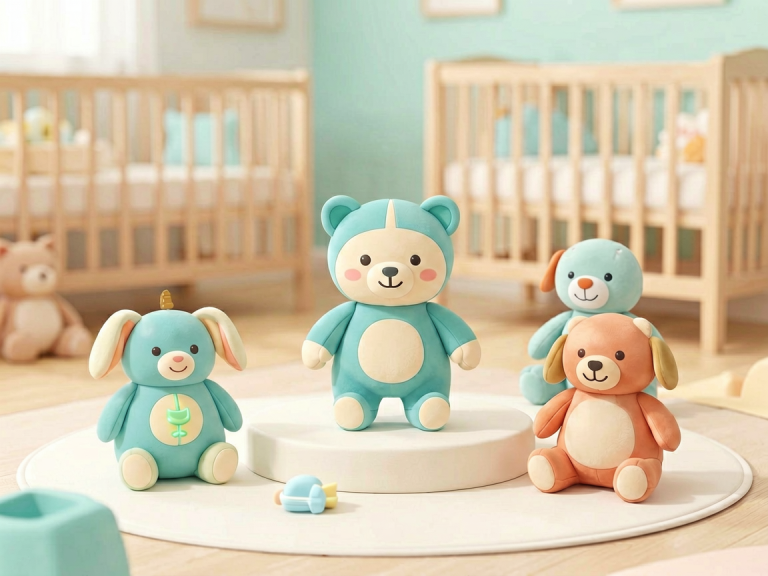
Screen-Free Toys vs. App-Based Toys: Rethinking Childhood in a Digital Age
Introduction
In the past two decades, the landscape of childhood play has undergone a dramatic transformation. Once dominated by wooden blocks, stuffed animals, and simple puzzles, the toy aisle now brims with tablets, smart robots, and app-connected dolls. Parents today face an increasingly difficult choice: should they invest in traditional screen-free toys, which have proven their developmental value over generations, or embrace the latest app-based toys that promise to blend entertainment with digital literacy? The debate is not merely about preference—it touches on fundamental questions about cognitive development, attention spans, social skills, and even physical health. To make an informed decision, it is essential to examine the strengths and weaknesses of both approaches, recognizing that the best solution often lies not in an all-or-nothing stance but in a thoughtful, balanced integration.
The Enduring Value of Screen-Free Toys
Sensory and Motor Development
Screen-free toys engage a child’s senses in ways that digital alternatives cannot replicate. A simple wooden train set requires a child to grasp, push, connect, and balance—actions that refine fine motor skills, hand-eye coordination, and spatial awareness. Building blocks, clay, and sand encourage tactile exploration, which is crucial for neural development in early childhood. When a child stacks blocks and watches them tumble, they learn cause and effect through direct, physical feedback. This kind of learning is embodied and concrete; the child is not just observing a cartoon block fall on a screen but experiencing the weight, texture, and resistance of real materials. Similarly, art supplies like crayons, paints, and scissors allow for open-ended creativity that strengthens the small muscles in the hands and fingers, preparing children for writing tasks later in life.
Unstructured Play and Imagination
One of the greatest gifts of screen-free toys is their capacity to foster unstructured, imaginative play. A cardboard box can become a spaceship, a castle, or a time machine. A set of wooden figures can star in a thousand different stories, each invented on the spot by the child. This type of play is intrinsically motivated and self-directed, which supports executive function skills such as planning, decision-making, and self-regulation. Research in developmental psychology consistently shows that children who engage in more imaginative play tend to develop stronger problem-solving abilities and greater emotional resilience. App-based toys, by contrast, often impose a predefined narrative or set of rules, leaving little room for the child to invent their own scenarios. The app tells the child what to do; the screen-free toy asks, “What will you do?”
Social Interaction and Language Development
When children play with physical toys together, they are forced to negotiate, share, and communicate in real time. A set of toy cars or a dollhouse becomes a stage for social role-playing: deciding who drives the red car, what the doll should say, how to resolve a conflict over a toy. These interactions are rich in language development, emotional intelligence, and collaborative skills. Screen-based play, especially if it involves individual tablets, often isolates children. Even app-based toys that claim to be “multiplayer” frequently require each child to have their own device or to follow a rigid digital script that limits spontaneous conversation. A 2020 study published in the *Journal of Pediatrics* found that toddlers who played with electronic toys spoke fewer words and received fewer verbal responses from parents compared to those playing with traditional toys. The simple act of building a tower together or rolling a ball back and forth creates a natural, conversational rhythm that is hard to replicate through a screen.
The Appeal and Potential of App-Based Toys
Interactive Learning and Personalization
Proponents of app-based toys argue that these devices offer unprecedented levels of interactivity and personalization. An app-connected robot can adapt its behavior based on a child’s progress, providing targeted challenges that grow with the user. For example, a coding toy might start with basic directional commands and gradually introduce loops and conditionals as the child masters each level. This adaptive learning can be highly effective for teaching specific skills, such as early literacy, mathematics, or logic. Many app-based toys also incorporate audio feedback, animations, and gamification elements that can increase motivation and engagement, especially for children who struggle with traditional learning methods. For a child with attention difficulties, the immediate rewards and interactive nature of an app-based toy can provide the feedback loop needed to sustain focus.
Digital Literacy and Preparation for the Future
In an increasingly digital world, some argue that avoiding screen-based toys altogether may leave children at a disadvantage. Learning to navigate a touchscreen, understand icons, manipulate digital objects, and even write simple code are becoming foundational skills. App-based toys can introduce these concepts in a playful, low-pressure environment. For instance, a programmable robot like Sphero or a digital drawing tablet encourages computational thinking and creativity with technology. When used appropriately—under parent supervision and with time limits—these toys can help children become confident, critical consumers of technology rather than passive viewers. The key is to treat app-based toys as tools for creation and learning, not as digital pacifiers.
Accessibility and Variety
App-based toys also offer a degree of accessibility and variety that physical toys cannot match. A single tablet can host hundreds of educational games, puzzles, and creative tools, making it easier for families with limited space or budget to provide diverse play experiences. Additionally, many app-based toys are designed to be inclusive for children with disabilities. For example, apps with voice control can assist children with fine motor challenges, and visual accessibility features can help those with vision impairments. The digital format also allows for continuous updates and new content, meaning a toy’s lifespan can extend far beyond that of a static physical object. A child does not outgrow a well-designed educational app; the app grows with the child.
The Hidden Costs of App-Based Toys
Passive Consumption and Reduced Creativity
Despite their benefits, app-based toys carry significant risks. Many so-called “educational” apps actually encourage passive consumption rather than active creation. A game that asks a child to tap on the correct answer may reinforce rote memorization but does little to develop critical thinking or creative problem-solving. The bright colors, sounds, and reward mechanisms are often designed to trigger dopamine releases, making the experience addictive rather than genuinely enriching. A study by the University of Michigan found that children who spent more time with mobile apps showed lower levels of creativity in open-ended tasks compared to peers who played with traditional toys. The app’s structure—clear goals, immediate feedback, limited options—can crowd out the open-ended, exploratory mindset that is the hallmark of deep learning.
Screen Time and Health Concerns
The American Academy of Pediatrics (AAP) has long warned against excessive screen time for young children, citing links to obesity, sleep disruption, and delayed language development. Even app-based toys that require physical movement (like dance games) still involve staring at a screen, which can strain eyes and disrupt circadian rhythms if used before bedtime. Furthermore, the portability of tablets and phones makes it harder for parents to enforce boundaries. A child who has access to a screen-based toy in the car, at the dinner table, or in the bedroom may struggle to develop the ability to tolerate boredom—a skill that is essential for self-reflection and patience. In contrast, screen-free toys naturally impose limits: you cannot play with a puzzle while the car is moving, and you cannot take a dollhouse to bed without risk of clutter.
Privacy and Commercialization
Another often-overlooked concern is data privacy. Many app-based toys collect information about children’s behavior, preferences, and even voice recordings. This data is frequently used for targeted advertising or sold to third parties. The Children’s Online Privacy Protection Act (COPPA) provides some safeguards in the United States, but enforcement is far from perfect. Additionally, app-based toys often come with in-app purchases or advertising that can expose children to commercial pressures. A child using a free drawing app may be interrupted by ads for candy games, while a “free” learning app may urge them to buy additional levels. This commercialization of play undermines the purity of childhood and can create financial stress for families.
Finding the Balance: A Hybrid Approach
Age-Appropriate Guidelines
The most effective approach is not to choose one category over the other but to strategically integrate both types of toys based on the child’s age and developmental needs. For children under two years old, the AAP recommends avoiding all screen time except for video calls. In this crucial period, screen-free toys—rattles, soft blocks, stacking cups, and sensory bins—should dominate. For preschoolers (ages 3–5), limited and supervised use of educational apps can supplement, not replace, physical play. For example, a child might spend 15 minutes using an interactive alphabet app, then spend an hour building with blocks or drawing with crayons. For school-age children, app-based toys like coding kits or digital microscopes can be valuable tools for STEM learning, but only when balanced with outdoor play, board games, and face-to-face social interactions.
Parental Involvement as the Key
Regardless of the toy type, the role of the parent is paramount. A screen-free toy does not automatically guarantee learning; it requires a caregiver to model how to use it, ask open-ended questions, and engage in joint play. Similarly, an app-based toy can be highly educational if a parent sits with the child, discusses what they are doing, and extends the learning offline. For instance, after playing a geography app, a parent might pull out a real map and show the child where the countries are. The danger lies in handing over a device as a babysitter. When used mindfully, both types of toys can coexist. The goal should be to foster a rich play environment where a child feels free to explore, create, and connect—with or without a screen.
Conclusion
The screen-free versus app-based toy debate is not a binary choice but a spectrum that requires thoughtful navigation. Screen-free toys offer irreplaceable benefits for sensory development, creativity, social interaction, and physical health. They have stood the test of time for good reason. App-based toys, when used judiciously, can enhance learning, develop digital fluency, and provide adaptive challenges that static toys cannot. The real enemy is not the technology itself but the unthinking overuse of it—plugging a child into a glowing rectangle for hours on end while neglecting the messy, beautiful, unpredictable world of hands-on play. By setting clear limits, prioritizing quality over quantity, and remaining actively involved in our children’s play, we can give them the best of both worlds. In the end, the most important toy in any child’s life is not made of wood or plastic or pixels—it is the loving, attentive presence of the adult who plays alongside them.