Encouraging Growth Through Solitude: The Best Independent Play Toys for Toddlers
In the bustling world of modern parenting, the pressure to constantly entertain, engage, and stimulate a toddler can feel overwhelming. Yet some of the most valuable moments in early childhood development occur when a child is left alone—not in neglect, but in the quiet, focused space of independent play. For toddlers aged one to three, the ability to entertain themselves for short periods is not just a convenience for caregivers; it is a critical milestone in cognitive, emotional, and social development. The right independent play toys for toddlers can transform a passive, dependent child into an active, curious explorer of their own world. This article explores why independent play matters, what makes a toy suitable for solo engagement, and provides concrete recommendations for families seeking to foster this essential skill.
The Science Behind Solo Play: Why Independence Matters
Cognitive Benefits of Unstructured Time
When a toddler plays alone, they are not simply “killing time.” They are engaging in a complex process of self-directed learning. Without an adult directing the narrative, the child must make decisions: Which block to stack? How to fit the puzzle piece? What sound does this car make when it rolls? These micro-decisions build executive function skills—planning, impulse control, and problem-solving. Research from developmental psychologists suggests that children who regularly engage in independent play show stronger concentration abilities and greater creativity later in life. The absence of immediate feedback from a parent forces the child to experiment, fail, and try again. This iterative process is the foundation of resilience. For example, a toddler attempting to fit a shape into a sorter box will experience frustration when the triangle does not go into the square hole. But without a parent to immediately correct them, the child will rotate, push, and test—eventually discovering the solution. That internal “aha” moment is far more empowering than being told the answer.
Emotional Regulation and Self-Soothing
Independent play also serves as a natural training ground for emotional regulation. Toddlers are notorious for emotional volatility, but when they learn to occupy themselves, they develop coping mechanisms for boredom, mild frustration, or the desire for attention. A toy that captivates them—such as a simple set of nesting cups or a wooden train set—can become a tool for self-soothing. Over time, the child learns that they can meet their own need for stimulation without relying on a caregiver. This is not to say that parents should abandon their children to play alone all day; responsive parenting remains essential. But intentionally carving out short, safe periods of solo play—perhaps ten to twenty minutes at a stretch—teaches the child that they are capable and competent. The long-term payoff is a child who is less prone to tantrums when a parent needs to cook dinner or take a phone call.
Social Skills in the Long Run
Counterintuitively, independent play also enhances later social skills. A child who is comfortable being alone is less likely to be clingy or anxiously dependent on peers. They develop a sense of self that is not entirely defined by others. When they eventually enter preschool, they can engage in parallel play and cooperative play with greater ease because they already possess an internal sense of agency. They do not need constant validation from others to feel secure. Thus, encouraging independent play is not about isolation; it is about building a strong internal foundation from which social connection can bloom.
What Makes an Ideal Independent Play Toy?
Open-Endedness Over Specificity
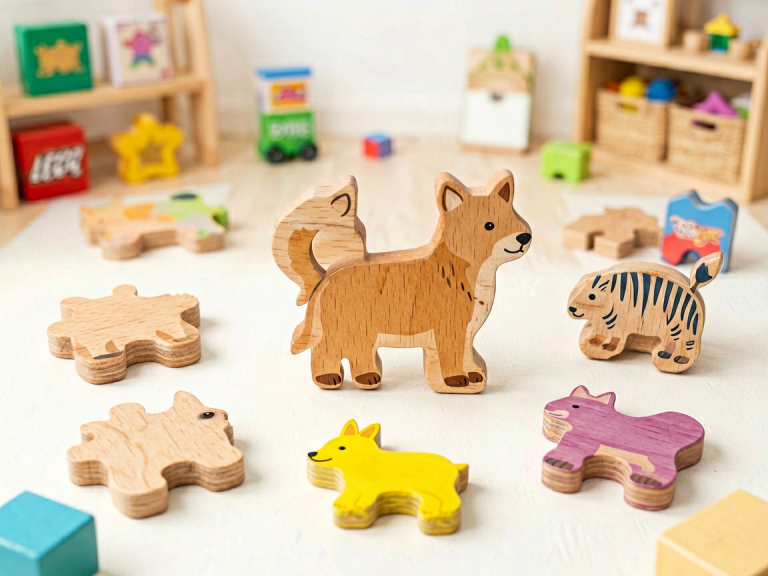
The most effective independent play toys for toddlers share one key characteristic: they are open-ended. An open-ended toy does not have a single correct use. A set of wooden blocks, for instance, can become a tower, a bridge, a fence for animals, or a pretend cake. In contrast, a battery-operated toy that only sings one song or moves in one predetermined way quickly loses its novelty. Once the child has pressed the button ten times, the novelty fades, and they are left passive, waiting for the next stimulation. Open-ended toys invite the child to become the director of their own play. They encourage divergent thinking—the ability to generate multiple solutions to a problem. For a toddler, this means endless possibilities within a single set of materials.
Sensory Richness Without Overstimulation
Another crucial factor is sensory balance. Toddlers are naturally drawn to bright colors, interesting textures, and sounds. However, toys that flash lights, blast loud music, or vibrate aggressively can overstimulate a young nervous system. Instead of promoting calm, focused play, they can lead to agitation and short attention spans. The best independent play toys engage the senses gently: the smooth coolness of a wooden puzzle, the soft crinkle of fabric blocks, the satisfying click of magnetic tiles connecting. These subtle sensory inputs ground the child in the present moment and invite sustained engagement. Montessori-inspired toys, for example, emphasize natural materials and simple designs precisely because they allow the child to focus on the task rather than the noise of the toy.
Safety, Size, and Accessibility
For independent play to be truly independent, the environment must be safe. Any toy given to a toddler for solo play should be free of small parts that could pose a choking hazard, sharp edges, or toxic materials. Additionally, the toy should be physically manageable for small hands. A toddler will quickly become frustrated if the pieces are too heavy or too small to grasp. Finally, accessibility matters: the toy should be stored at the child’s eye level, in a low bin or on a low shelf, so they can choose it themselves. This empowers the child to initiate play without asking for help. A play space that is organized and uncluttered also helps the child focus. Rotating toys weekly—keeping only a few options available at a time—prevents overwhelm and keeps each toy feeling fresh and interesting.
Top Independent Play Toy Categories and Recommendations
Building and Construction Toys
Few toys rival the versatility of building sets. Wooden unit blocks are a classic for good reason: they are heavy enough to feel substantial, smooth to the touch, and infinitely combinable. A toddler might spend twenty minutes stacking, knocking down, and restacking. For slightly older toddlers (around 2.5 years), magnetic tiles such as Magna-Tiles or PicassoTiles offer a satisfying click when they connect, and they allow for three-dimensional creations like houses, tunnels, and rockets. Unlike plastic interlocking bricks, magnetic tiles are easier to connect and separate, reducing frustration. Another excellent option is cardboard building bricks (like the ones from Jumbo or Melissa & Doug). They are large, lightweight, and safe for knocking over—which is half the fun. Building toys teach spatial reasoning, balance, and cause-and-effect, all while the child works independently.
Sorting, Stacking, and Patterning Toys
Toddlers are naturally drawn to order. Sorting toys—such as a wooden shape sorter, a set of colored rings to stack on a peg, or a simple puzzle with four large pieces—provide a clear goal: match the shape, stack the rings, fit the piece. The satisfaction of completing the task is intrinsically motivating. Nesting cups or stacking bowls are remarkably versatile: they can be stacked into a tower, nested into one another, used as scoopers for sand or water, or even turned into hats for stuffed animals. The multiple uses keep a toddler engaged over many sessions. Another favorite is a rainbow stacker (a series of wooden arcs that can be stacked into a rainbow or used as tunnels for small cars). These toys strengthen fine motor skills, hand-eye coordination, and early math concepts like size and sequence.
Pretend Play Props for One
Pretend play often happens with peers, but solo pretend play is equally valuable. A play kitchen with a few pots, pans, and wooden vegetables can occupy a toddler for a long time as they “cook” and “serve” imaginary meals. The key is to keep the props simple—no electronic sounds or lights. A doll or stuffed animal becomes a companion, and the toddler practices nurturing behaviors by feeding, dressing, or putting the doll to bed. Toy vehicles—wooden cars, trains, or construction trucks—encourage storytelling. The child might create a road out of blocks, drive the car to the garage, and then crash it into a tower. These acts of imagination are the building blocks of narrative thinking and empathy. For outdoors, a sandbox with scoops, buckets, and molds provides endless independent play. Sand is a sensory material that captivates toddlers for long stretches, and the open-ended nature of digging and pouring fosters deep concentration.
Quiet, Focused Activities
Not all independent play needs to be energetic. Lacing beads (with large wooden beads and a thick string) require concentration and fine motor coordination. Magnetic drawing boards allow a toddler to scribble and erase without mess. Simple knob puzzles (with thick pegs for easy gripping) teaches shape recognition and patience. Felt boards with a few felt shapes—stars, circles, animals—let the child create scenes on a vertical surface. These quiet activities are ideal for times when a caregiver needs to focus nearby, such as during a phone call or while preparing a meal. They also build the attention span that is essential for later academic tasks like reading and math.
Final Thoughts on Fostering Independent Play
Selecting the right independent play toys for toddlers is only half the equation. The environment and the caregiver’s attitude matter just as much. Set up a small, safe play area where the child knows they can explore without interruption. Resist the urge to jump in and “help” every time the child shows a moment of hesitation. Instead, observe quietly, offer a warm smile from across the room, and trust the process. Over time, the child will learn that their own ideas are worthy, their own hands are capable, and their own imagination is a rich and reliable companion. In a world that constantly demands attention and interaction, the ability to be content alone is a gift that will serve them for a lifetime. Start with a few simple, open-ended toys, and watch your toddler blossom into a confident, curious, and independently happy little person.