The Art of Choosing Toys That Foster Independent Play: A Parent’s Guide
Introduction: Why Independent Play Matters
In the bustling landscape of modern parenting, where schedules are packed with structured activities and screen time competes for attention, the concept of independent play often takes a back seat. Yet, the ability for a child to engage deeply and joyfully in solo play is not merely a convenience for exhausted parents—it is a cornerstone of healthy development. Independent play cultivates creativity, problem-solving skills, emotional regulation, and a sense of self-efficacy. When children play alone, they learn to entertain themselves, manage boredom, and explore their own interests without constant adult direction.
Choosing the right toys is central to nurturing this skill. Not all toys are created equal; some encourage passive consumption, while others invite active, self-directed exploration. This article provides a comprehensive guide to selecting toys that truly support independent play, from infancy through early elementary years. By understanding developmental stages, recognizing key toy characteristics, and avoiding common pitfalls, you can curate a play environment that empowers your child to become a confident, self-reliant player.
—
Understanding Your Child’s Developmental Stage
Before diving into toy categories, it’s essential to align your selections with your child’s cognitive, physical, and social-emotional abilities. A toy that sparks independence in a three-year-old may frustrate or bore a one-year-old. Here is a breakdown of general developmental stages and what independent play looks like at each.
Infants (0–12 months): Sensory Exploration and Cause-and-Effect
At this stage, independent play is brief and rooted in sensory discovery. Babies explore through mouthing, grasping, shaking, and banging. Toys that require no adult setup—such as soft rattles, textured teethers, simple activity gyms, and unbreakable mirrors—allow infants to practice cause-and-effect (e.g., “I shake this, it makes a sound”). Look for toys that are safe, visually stimulating, and easy to manipulate with tiny hands. Avoid items with many small parts or those that demand complex actions.
Toddlers (1–3 years): Emerging Imagination and Motor Skills
Toddlers begin to engage in pretend play and enjoy manipulating objects to achieve simple goals. Independent play may last 5–15 minutes at a time. Ideal toys include stacking cups, shape sorters, push-and-pull toys, chunky puzzles, and basic building blocks. These items encourage repetition, problem-solving, and fine-motor development without requiring a script. Avoid toys with batteries that sing or talk excessively—they tend to dictate the play rather than let the child lead.
Preschoolers (3–5 years): Elaborate Pretend and Open-Ended Exploration
This is a golden age for independent play. Preschoolers can sustain solo play for 30 minutes or more, creating intricate storylines and experimenting with roles. Open-ended toys—such as wooden blocks, magnetic tiles, play dough, dollhouses with simple figures, and art supplies (crayons, paper, child-safe scissors)—are powerful catalysts. They offer limitless possibilities and adapt to a child’s evolving imagination. Avoid overly themed toys that prescribe a single narrative (e.g., a specific movie-character playset that dictates what the child “should” do).
Early Elementary (5–7 years): Strategy, Construction, and Early Games
Older children crave challenge and mastery. Independent play now involves construction sets (LEGO, K’NEX), simple board games they can play alone or with a sibling, craft kits, science experiments, and building materials like marble runs. These toys encourage goal-setting, patience, and logical thinking. The key is to choose items that allow for self-correction and repeated attempts. Avoid toys that are too easy (boredom) or too difficult (frustration without support).
—
Key Characteristics of Independent Play Toys
Not every toy marketed as “educational” promotes independent play. Look for these five core attributes:
- Open-Endedness – The toy does not have a single “right” way to play. Blocks can become a tower, a castle, a road, or a spaceship. Open-ended toys evolve with the child’s skill level and interests.
- Self-Correcting Feedback – The toy provides natural cues that tell the child if their action worked. A puzzle piece that doesn’t fit, a block tower that wobbles, or a marble that falls off the track—these are not failures but learning opportunities.
- Low-Floor, High-Ceiling – The toy is easy to start but offers increasing complexity. Magnetic tiles can be stacked by a toddler or built into complex geometric structures by an older child.
- Sustained Engagement – The toy invites deep concentration rather than quick novelty. Simple materials like sand, water, clay, or fabric scraps can be revisited again and again.
- No External Instructions Needed – A toy that requires an adult to read a manual, set up complicated pieces, or supervise closely will not foster independence. Look for toys that a child can understand intuitively.
—
Categories of Independent Play Toys
Here are specific toy types that consistently succeed in promoting solo play, with examples and rationale.
Construction and Building Toys
From classic wooden blocks to LEGO Duplo, magnetic tiles, and interlocking discs, construction toys are the gold standard for independent play. They develop spatial reasoning, hand-eye coordination, and persistence. The child decides what to build, how to fix mistakes, and when to start over. For younger children, larger pieces and simple stacking are best; for older ones, smaller, more detailed sets (like LEGO Creator) allow for hours of solitary tinkering.
Pretend Play Props
Independent pretend play thrives on generic, versatile props. A set of simple wooden food items, a play kitchen with pots and pans, a doll with neutral features, a doctor’s kit with basic tools, or a box of dress-up scarves—these allow children to create their own worlds. Avoid character-branded costumes that lock a child into a fixed role. Instead, offer fabric capes, hats, and bags that can transform into anything.
Art and Craft Supplies
Self-directed art is a powerful form of independent play. Provide access to blank paper, crayons, washable markers, child-safe scissors, glue sticks, and a variety of collage materials (fabric scraps, buttons, feathers). The goal is not to produce a “perfect” piece but to experiment. Rotate materials to keep interest alive. For older children, add simple instruction-free kits like origami paper or weaving looms.
Sensory Play Materials
Sensory bins filled with rice, beans, sand, or water (with scoops, cups, and funnels) can occupy a child for surprisingly long stretches. Play dough, kinetic sand, and slime (with tools like cookie cutters and rolling pins) encourage manipulation and creativity. These materials are especially effective for toddlers and preschoolers who need tactile input.
Puzzles and Logic Games
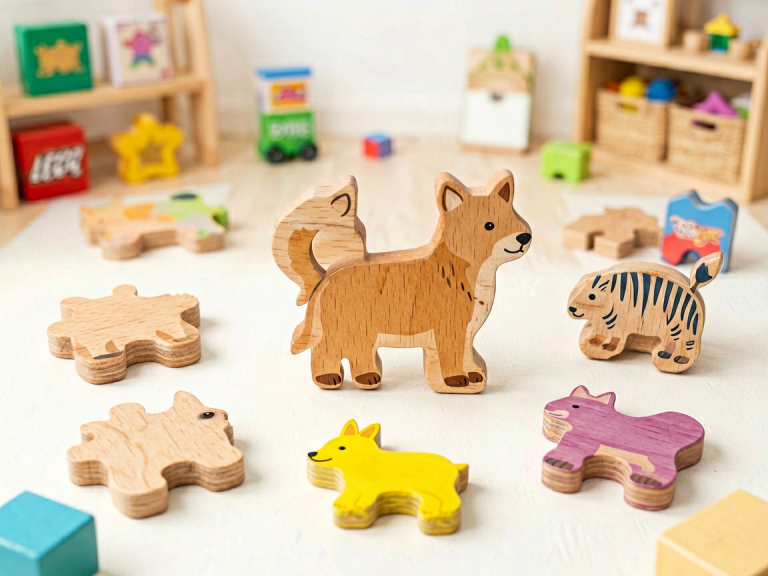
Jigsaw puzzles, pattern blocks, tangrams, and simple matching games teach problem-solving and patience. Choose puzzles with increasing difficulty but ensure the first few are easy enough for the child to succeed independently. Wooden puzzles with knobs are excellent for young children; floor puzzles with 24–48 pieces suit preschoolers. Logic games like Rush Hour or Color Code can engage older children alone.
Cars, Trains, and Vehicles
Simple wooden or plastic vehicles with no batteries allow a child to create roads, garages, and adventures. A small set of trains with tracks that can be reconfigured endlessly is a classic. Avoid remote-controlled or electronic cars that do the moving for the child.
Musical Instruments
Unplugged instruments like xylophones, drums, shakers, and bells invite exploration of sound and rhythm. They require no adult to operate and let the child be the composer. For older children, a simple beginner’s harmonica or recorder can provide hours of solo experimentation.
—
Practical Tips for Selecting and Introducing Toys
Knowing what to buy is only half the battle. How you present the toys and manage the play environment matters enormously.
1. Rotate Toys, Don’t Flood the Room
A child surrounded by dozens of toys often flits from one to another without deep engagement. Pack away most toys and bring out a small, curated selection (5–7 items) every few weeks. Rotation keeps novelty alive and reduces decision paralysis. A child is far more likely to immerse themselves in a few open-ended toys than a chaotic pile.
2. Create a “Yes” Space
Designate a safe, child-proof area where the child can access toys independently. Low shelves, a small table and chair, and a clean floor space invite autonomy. When toys are within reach and the environment is child-friendly, the child does not need to ask for help getting started.
3. Model Independent Play—Briefly
Especially with toddlers, you may need to show how a toy works once, then step back. Sit nearby and engage in your own quiet activity (reading, knitting). Your presence provides security, but your lack of direction signals that the child is in charge of the play.
4. Resist the Urge to Interrupt
When a child is deeply focused, avoid praising or asking questions. A simple “You’re working hard” might be fine, but even that can break the flow. Let the child complete their own process. Interruptions teach the child that adult attention is the goal, not the play itself.
5. Observe and Adjust
Pay attention to which toys your child returns to again and again. If a toy is consistently ignored, try it again in a few months—or donate it. If a toy causes frustration and the child walks away, it may be too advanced. Consider simplifying the setup or offering a related but easier version.
—
Avoid the Pitfalls: What to Steer Clear Of
Even with the best intentions, some toys systematically undermine independent play. Here are common offenders:
1. Battery-Operated, Noisy, or Singing Toys
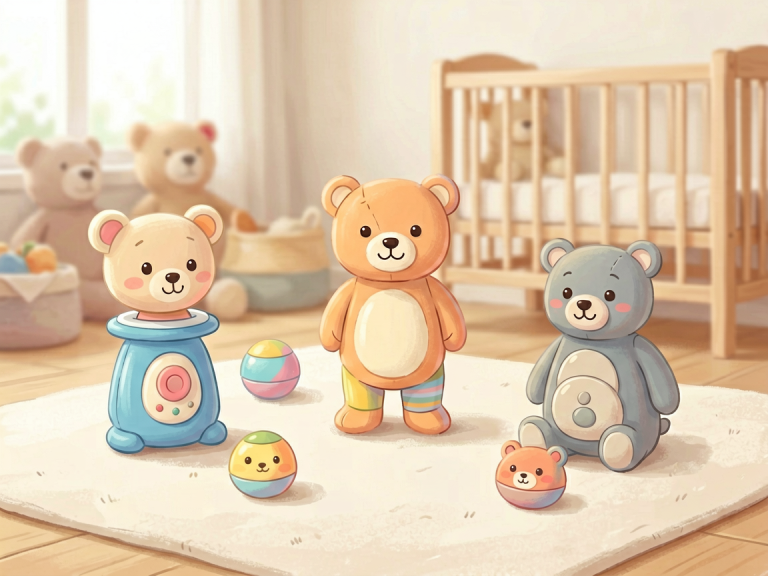
Toys that light up, talk, or play music on their own train the child to be a passive spectator. The novelty wears off quickly, and the child learns to wait for the toy to “do something” rather than driving the activity themselves.
2. Highly Themed, Movie- or Show-Branded Toys
Action figures from a specific film come with a fixed story. A child may enact scenes from the movie, but they are less likely to invent original narratives. Generic figures (people, animals, fantasy creatures) are far more flexible.
3. Toys That Require a Screen or App
Many “smart” toys demand an adult to download an app, set up Wi-Fi, or navigate a digital interface. These add barriers and often reduce the child’s agency. Stick to analog, tactile play.
4. Too Many Small Pieces for Young Children
While older kids benefit from intricate sets, a toddler overwhelmed by dozens of tiny parts will either lose them or become frustrated. Match the number of pieces to the child’s attention span and fine motor ability.
5. Toys That Have a Single Correct Outcome
Workbooks, flash cards, and “educational” toys with a right/wrong answer can be useful in small doses, but they do not foster the open-ended exploration that fuels independent play. Use them sparingly, alongside open-ended materials.
—
Conclusion: The Long Game of Independent Play
Choosing toys that promote independent play is not about a single purchase—it is a philosophy of trusting your child’s innate drive to learn and create. By selecting open-ended, self-correcting, and developmentally appropriate toys, you provide the raw materials for countless hours of solo discovery. You also give your child a gift that extends far beyond the playroom: the confidence to be alone with their thoughts, to solve problems without help, and to find joy in their own imagination.
In a world that constantly pushes children toward external validation and structured achievement, independent play is a quiet rebellion. It says, “You are enough. Your ideas matter. You can build your own world.” As a parent, the most powerful thing you can do is step back, provide the right tools, and watch that world unfold.
*(Word count: approximately 1,350)*