Unlocking Imagination: The Transformative Power of Educational Creativity Toys for Kids
—
Introduction: The Shift from Passive Entertainment to Active Creation
In an era dominated by screens, algorithm-driven content, and passive consumption, the humble toy has undergone a radical transformation. No longer are children’s playthings merely colorful distractions or simple pastimes; they have become powerful tools for cognitive development, emotional resilience, and—most importantly—creative expression. Educational creativity toys for kids represent a deliberate departure from the “press-a-button-and-watch” model. Instead, they invite children to become architects of their own worlds, to experiment without fear of failure, and to develop the kind of flexible thinking that will serve them long after the last block is stacked or the final sculpture dries.
The global market for these toys has exploded in recent years, not because of a passing trend, but because parents and educators alike have recognized a critical gap: the need to nurture intrinsic motivation and divergent thinking in children. As routine jobs are increasingly automated, the human capacity for originality, empathy, and problem-solving becomes the ultimate currency. Educational creativity toys are the sandboxes where this currency is minted. They teach children that there is rarely one right answer, that mistakes are stepping stones, and that the joy of making something new is its own reward. This article explores the multifaceted universe of such toys, their developmental benefits, practical selection criteria, and the essential role adults play in facilitating meaningful creative play.
—
The Cognitive and Developmental Benefits of Creativity Toys
Beyond the obvious fun, educational creativity toys engage multiple areas of a child’s brain simultaneously, forging neural connections that are the foundation of lifelong learning. While traditional rote-learning methods often target memory alone, creativity toys demand a synthesis of logic, spatial reasoning, fine motor skills, and emotional regulation.
Enhancing Problem-Solving and Executive Function
When a child faces a building set that doesn’t quite hold together or a puzzle that defies easy solution, they enter a state of productive struggle. This is not frustration in the negative sense; it is the engine of cognitive growth. Research in developmental psychology shows that open-ended toys—those without a single predetermined outcome—activate the prefrontal cortex, the brain region responsible for planning, impulse control, and flexible thinking. A child who builds a bridge from wooden planks must test hypotheses (will this shape hold?), adjust strategies (add a counterweight), and persist through initial collapses. These micro-dramas of trial and error build executive function skills far more effectively than any worksheet.
Fostering Imagination and Narrative Thinking
Creativity toys, by definition, leave room for the imaginary. A set of magnetic tiles can become a castle, a spaceship, or a hospital depending on the child’s current narrative. This ability to project meaning onto an object—called symbolic play—is a hallmark of healthy cognitive development. It strengthens language skills as children narrate their creations, social skills as they negotiate roles with peers, and emotional intelligence as they work through scenarios that mirror real-life challenges. For example, a child who builds a “vet clinic” from a construction kit is not only practicing fine motor skills but also processing the concept of caregiving, empathy, and sequencing events.
Building Resilience and a Growth Mindset
One of the most profound benefits of creativity toys is their inherent tolerance for failure. Unlike a video game with a clear “game over” screen, a lump of modeling clay or a box of loose parts only offers new possibilities. Children learn that a collapsed tower is not an endpoint but a starting point for a different design. This fosters what psychologist Carol Dweck calls a “growth mindset”—the belief that abilities can be developed through effort. When success is defined not by getting the “right” answer but by the depth of exploration, children become more willing to take risks, try novel approaches, and recover from setbacks. These habits of mind are more valuable than any specific skill.
—
Categories of Educational Creativity Toys: Building, Art, Science, and Role-Play
The landscape of creativity toys is vast, but most fall into four broad categories, each targeting different facets of a child’s creative potential. Understanding these categories helps parents and educators curate a balanced “play diet” that stimulates multiple intelligences.
1. Construction and Building Toys
From classic wooden blocks to advanced magnetic tiles, construction toys are the quintessential tools for spatial reasoning and engineering intuition. They teach principles of balance, symmetry, and structural integrity without a single textbook. Modern variants like interlocking plastic bricks with gears and axles introduce basic mechanics, while open-ended kits containing random shapes (like loose parts or recycled materials) challenge children to see potential where others see junk. The key here is lack of prescription: the best building toys have no instruction manual, or offer only suggestions that can be discarded. A child who builds a tower that leans like the Leaning Tower of Pisa has learned something about center of gravity that no lecture could convey.
2. Art and Craft Supplies
While a coloring book with predefined outlines may provide fine motor practice, true creativity toys in the art domain are those that offer raw materials and freedom. Modeling clay, air-dry dough, watercolors, collage materials, and weaving looms allow children to create two- and three-dimensional art from scratch. Recent innovations include eco-friendly bioplastics that harden into durable sculptures, and light-sensitive paper that lets children make sun prints. Art toys also encourage emotional expression: a child who cannot yet articulate anger may release it through vigorous clay-pounding, while another might channel wonder into a watercolor galaxy. The process, not the product, is the real treasure.
3. Science and Discovery Kits
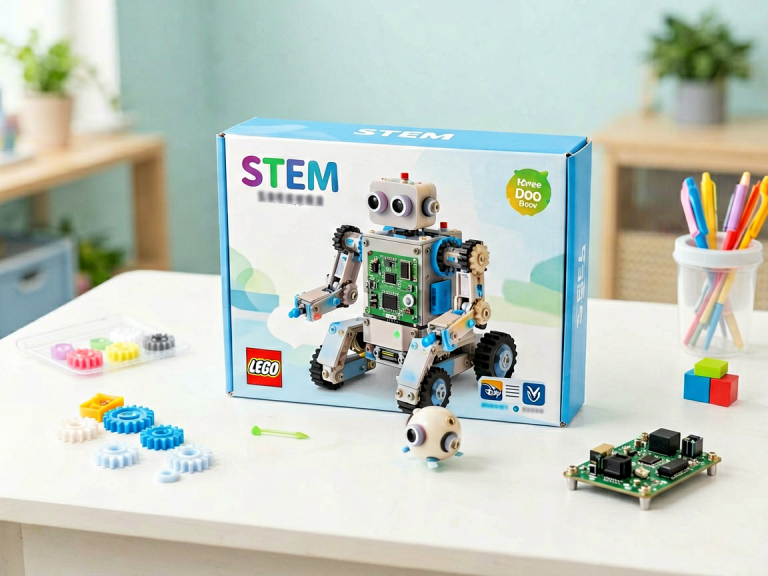
The best science toys for creativity are not pre-packaged experiments with predictable outcomes—they are exploration kits that pose questions rather than give answers. A microscope with blank slides invites children to investigate whatever they find in the garden; a chemistry set with safe household materials encourages them to mix, observe, and hypothesize. Robotics kits that require building and programming a moving creature combine coding logic with mechanical design. These toys teach the scientific method not as a rigid script but as a dance of curiosity and evidence. They show that creativity and science are not opposites but partners—every great invention began with a flash of imagination.
4. Role-Play and Storytelling Sets
Dolls, puppets, costumes, and miniature environments (such as a wooden farm or a felt pizza shop) are often underestimated in their creative value. Yet role-play is where children synthesize everything they have observed about the world. A simple toy cash register becomes a lesson in arithmetic, social dynamics, and entrepreneurial thinking when a child runs a pretend store. Story cubes—dice with images that must be woven into a narrative—boost verbal creativity and sequencing skills. Digital tools like programmable storyboards (where children record their own voices for characters) bridge the gap between physical and digital creativity. The common thread is that these toys give children agency to direct their own narrative, making them authors of their own learning.
—
How to Choose the Right Creativity Toys for Different Age Groups
Selecting the perfect educational creativity toy is an art in itself. The toy must match the child’s developmental stage without being so simple that it bores or so complex that it frustrates. A one-size-fits-all approach fails because creativity is deeply personal and age-dependent.
Infants and Toddlers (0–3 years): Sensory Exploration
For the youngest children, creativity toys prioritize sensory input and cause-and-effect. Soft stacking rings, textured balls, and sound-making shakers allow infants to discover texture, weight, and sound. Around age two, open-ended blocks (larger, lightweight) and chunky crayons introduce basic manipulation. Avoid toys that do too much for the child; a simple wooden cart that wobbles when pushed is more creatively stimulating than an electronic car that zooms on its own. The goal is to let the child be the initiator.
Preschoolers (3–5 years): Symbolic Play and Fine Motor Development
At this stage, children begin to represent ideas through objects. Building sets with larger pieces, play dough with simple tools, and dress-up costumes are ideal. Toy selection should encourage storytelling: a set of wooden animals can spark a safari narrative, while magnetic tiles can become a zoo. Look for toys that grow with the child—for example, a shape-sorting cube might be too simple, but a collection of geometric shapes that can be arranged in endless patterns offers years of engagement. Safety is paramount: avoid small parts that could be swallowed, and choose non-toxic materials.
Early Elementary (5–8 years): Introduction to Systems and Processes
Children in this age group are ready for more complexity. Construction kits that include pulleys, gears, and connectors introduce basic physics. Art supplies like watercolor sets with multiple brushes, air-dry clay, and weaving looms allow for sustained projects. Science kits that involve growing crystals, building simple circuits, or observing insect life cycles blend creativity with analytical thinking. Importantly, these toys should be _modifiable_—the child should be able to combine them with other toys. A marble run set, for instance, can be integrated with block towers to create a new challenge.
Older Children (8–12 years): Specialization and Advanced Design
Tweens seek autonomy and mastery. Advanced robotics kits (like those with microcontrollers and sensors), 3D printing pens that let them draw in the air, and sophisticated art supplies (oil pastels, fabric dyes, or calligraphy sets) cater to their desire for complex outcomes. Coding toys that blend physical and digital—such as programmable paper circuits or game-design platforms—allow them to create interactive art. At this stage, the toy should support self-directed projects that might take days or weeks. The best choice is often a “toolkit” rather than a single-use kit: a set of materials that can be combined in infinitely different ways, such as a large collection of recycled craft materials, a journal of prompts, or a subscription box that delivers new challenges monthly.
—
The Role of Parents and Educators in Guiding Creative Play
Even the most brilliant creativity toy is only as effective as the environment in which it is used. Children need adults who understand that creativity is not a mess to be cleaned up but a process to be nurtured. The role of the adult is not to instruct but to facilitate, observe, and sometimes step back.
Creating a “Yes” Space
A creativity-friendly environment is one where mess is tolerated. Designate a play area where clay can be worked on a waterproof mat, where paints are accessible without constant permission-seeking, and where blocks can remain mid-construction overnight. This signals to the child that their work is valued. Additionally, rotate toys periodically to keep the selection fresh without overwhelming the child. A set of 30 magnetic tiles is more creative than 300 pieces that become noise.
Asking the Right Questions
Instead of praising the final product (“That’s a beautiful castle!”), focus on the process with open-ended inquiries: “How did you decide to make the tower so tall?” or “What would happen if you added a window here?” These questions encourage metacognition—thinking about thinking—and validate the child’s agency. When a creation “fails,” reframe it: “That’s interesting—what did you learn from that? What would you try next?” This language builds resilience.
Modeling Creative Behavior
Children absorb attitudes from adults. If a parent says, “I’m not creative,” the child may internalize that belief. Instead, adults should model curiosity: tinker with a broken appliance, draw alongside the child, or admit when they are unsure and experiment together. Show that creativity is not about perfection but exploration. For educators, integrating creativity toys into the classroom—not only during free play but as part of curriculum in math, literacy, and science—demonstrates that creativity is cross-curricular and essential.
—
Real-World Examples and Case Studies
The theoretical benefits of educational creativity toys are compelling, but concrete examples make them tangible. Consider a Finnish elementary school that replaced traditional desks with “maker spaces” filled with LEGO Mindstorms, sewing machines, and recycled materials. Students were tasked with designing solutions to local environmental problems—a project that required them to research, prototype, test, and iterate. The result? Increased engagement, improved collaboration skills, and a measurable rise in standardized test scores in problem-solving. The toys were not the goal; they were the medium through which deep learning occurred.
Another example comes from a home-based study of siblings aged 4 and 7. Their parents introduced a “loose parts” kit—a bin of corks, fabric scraps, wooden spools, pipe cleaners, and cardboard tubes. Initially, the children used the parts to build simple towers. Over two months, the complexity soared: they constructed a functioning catapult, a miniature city with roads and signs, and a puppet theater with characters made from spools and fabric. The parents reported that the children began to plan their projects, negotiate roles, and even document their work with drawings. The toy had evolved from a set of objects into a catalyst for project-based learning.
In a comparative study of preschool classrooms, researchers found that children with access to open-ended creativity toys (blocks, clay, and pretend play materials) demonstrated 40% more complex narrative language during play than those with electronic toys that required passive response. Furthermore, these children showed greater willingness to cooperate and share ideas. The data underscore that the medium truly shapes the message: a toy that asks questions rather than answers them builds a more flexible mind.
—
Conclusion: Investing in the Future Through Play
Educational creativity toys for kids are far more than consumer products; they are investments in human potential. In a world that increasingly prizes innovation, adaptability, and original thought, these toys provide the practice ground where such qualities flourish. They remind us that learning is not the accumulation of facts but the art of making connections, that mistakes are not failures but data, and that the most powerful lessons are born from play.
Yet toys alone are insufficient. They require a culture that values process over product, exploration over efficiency, and curiosity over certainty. Parents who put down their own phones to build alongside their children, educators who design classrooms that celebrate tinkering, and communities that fund public maker spaces—these are the true catalysts. The next time you choose a gift for a child, consider not just what they will do with it, but who they will become through it. Because every masterpiece, every invention, every solution to a problem we cannot yet imagine begins with a child who was given the tools to imagine, and the freedom to play.