Smart Play on a Budget: The Best Learning Toys Under $50
Introduction
In an era where screen time often dominates childhood, parents and educators are more eager than ever to find physical toys that educate, engage, and entertain. Yet the market is flooded with expensive gadgets that promise genius-level results. The good news? You don’t need to break the bank to spark curiosity and foster cognitive development. With a little research, you can find dozens of high-quality learning toys under $50—toys that encourage problem-solving, creativity, STEM skills, and language acquisition without straining your wallet. This article explores the most effective categories of budget-friendly educational toys, offers concrete recommendations, and provides tips for selecting the perfect match for your child’s age and interests.
—
The Value of Educational Play
Before diving into specific toys, it’s important to understand why learning toys matter. Play is the natural language of childhood. When a child builds a tower, solves a puzzle, or experiments with a simple circuit, they are not merely passing time—they are developing executive function, fine motor skills, spatial reasoning, and perseverance. Toys that deliberately embed educational goals within joyful interactions can amplify this developmental process. Studies consistently show that guided play with structured materials improves academic readiness, especially in early math and literacy. However, “educational” does not have to mean expensive. Some of the most effective tools are affordable, open-ended, and designed to grow with the child.
—
STEM Toys That Spark Curiosity
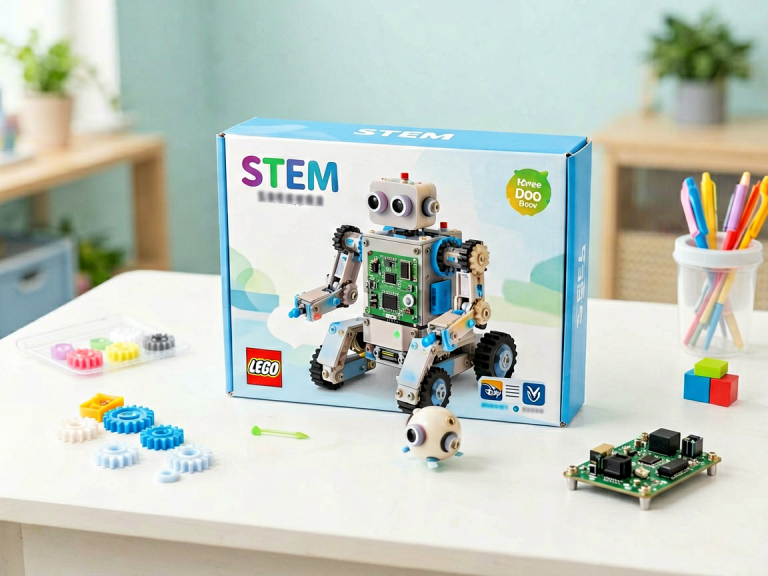
STEM (Science, Technology, Engineering, Mathematics) toys are among the most sought-after categories for good reason. They teach logical thinking, cause and effect, and the thrill of experimentation. Under $50, you can find excellent options that rival high-end kits.
Snap Circuits Jr. (SC-100) is a classic example. For around $25–$30, this kit lets children ages 8 and up build over 100 projects, including a working AM radio, a doorbell, and a light-sensing alarm. No soldering required—pieces snap together on a plastic grid. It introduces basic electronics concepts while giving kids the satisfaction of real-world results. Another fantastic STEM choice is Magnetic Tiles (e.g., PicassoTiles 100-piece set, around $35). These translucent, magnetic geometric shapes allow preschoolers and older children to construct 2D patterns and 3D structures. They reinforce geometry, symmetry, and balance, and they are endlessly reusable. For coding beginners, Botley the Coding Robot (by Learning Resources, about $40) requires no screen or app. Children program Botley’s movements using a physical remote, learning sequencing, loops, and conditional logic through hands-on play.
—
Language and Literacy Builders
Reading readiness and vocabulary growth are critical in early childhood, and many affordable toys turn language learning into a game. LeapFrog LeapReader systems (around $35) include a stylus that reads specially designed books aloud, highlighting words as the child touches them. This multisensory approach reinforces phonics, sight words, and comprehension. The starter set usually comes with one or two books, but additional titles are often on sale. For slightly older children (ages 5–8), Zingo! Word Builder (ThinkFun, about $20) is a bingo-style game that helps players build three-letter words from letter tiles. It’s fast-paced, social, and excellent for phonemic awareness. Another low-cost gem is Alphabet Bean Bags (around $25). These soft, embroidered bags feature letters and corresponding images (A for apple, etc.). Toss them into a bucket while calling out the letter or sound—perfect for active learners who need to move.
—
Creative and Artistic Learning Toys
Creativity is a cornerstone of cognitive flexibility, and artistic toys under $50 can unlock rich imaginative worlds. Play-Doh is an obvious but powerful tool. A 24-pack of assorted colors (around $15) plus a simple set of shape cutters and rollers gives children a sensory-rich medium for pattern-making, color mixing, and storytelling. More structured options include Klutz Make Your Own Soap craft kit ($20–$25), which teaches chemical reactions and following instructions while producing usable art. For budding architects, LEGO Classic Creative Bricks (around $40) offer 1,500 pieces in a variety of colors and shapes. While LEGO sets themed around movies can be expensive, the classic box of bricks is a steal—it encourages open-ended building and engineering without a predetermined outcome.
—
Puzzles and Logic Games
Puzzles develop critical thinking, pattern recognition, and patience. Melissa & Doug produce a wide range of wooden puzzles under $15, such as the World Map Floor Puzzle (48 pieces, about $12). It combines geography with fine motor skills and can be used as a conversation starter about cultures and animals. For older children (ages 7+), Rush Hour by ThinkFun (around $25) is a sliding-block logic game where players must navigate a red car out of a traffic jam. It offers 40 progressively challenging cards, building deductive reasoning and planning skills. Another excellent choice is Kanoodle (Educational Insights, about $10). This compact puzzle game has 2D and 3D challenges that test spatial reasoning and concentration. Small enough to fit in a pocket, it’s perfect for travel or quiet time.
—
Tips for Choosing the Right Toy
With so many options, how do you pick the best one? First, match the toy to the child’s developmental stage. A toddler needs large, safe pieces; a first grader can handle small parts and more complex rules. Second, prioritize open-ended play. Toys that can be used in multiple ways (e.g., building blocks, magnetic tiles) offer better long-term value than single-use gadgets. Third, read reviews from educators and parents. Websites like Common Sense Media or the Good Toy Guide provide unbiased assessments of educational merit. Fourth, consider your child’s interests. A child who loves dinosaurs will engage more deeply with a dinosaur-themed puzzle or excavation kit than with a generic math game. Finally, don’t overlook secondhand options. Many well-crafted learning toys—especially puzzles, blocks, and magnetic sets—last for years and can be found gently used at thrift stores or online marketplaces for even less than $50.
—
Conclusion
Investing in your child’s education does not mean spending a fortune. From snapping circuits to sorting letters, building towers to solving traffic jams, there is a world of engaging, developmentally rich toys available for under $50. The key is to look beyond flashy packaging and focus on toys that encourage active, hands-on, and exploratory learning. By choosing wisely, you can fill your home with tools that inspire curiosity, build skills, and—most importantly—make learning feel like pure fun. So the next time you are searching for a gift or a classroom resource, remember: smart play fits any budget.