Science Kits and Choking Hazards: A Critical Examination of Safety in Children’s Educational Toys
Introduction
In recent years, science kits have become a staple in homes and classrooms, offering children hands-on exposure to chemistry, physics, biology, and engineering. These kits are marketed as tools for fostering curiosity, critical thinking, and STEM (Science, Technology, Engineering, and Mathematics) skills. Yet beneath their colorful packaging and promises of “fun learning” lies a hidden and often underestimated risk: choking hazards. Small components such as plastic beads, tiny magnets, glass vials, and even chemical containers can pose a serious danger to young children, especially those under the age of three who naturally explore objects by putting them in their mouths. This article examines the nature of choking hazards in science kits, reviews existing safety standards and their shortcomings, and offers practical recommendations for parents, educators, and manufacturers.
The Allure and Danger of Science Kits
Science kits are designed to simulate laboratory experiences for children, often including miniature versions of real scientific equipment. A typical kit might contain test tubes, pipettes, lenses, wires, plastic connectors, and small samples of seeds, crystals, or powders. The educational value is undeniable; children learn about chemical reactions, electrical circuits, and the properties of matter through direct experimentation. However, the very features that make these kits exciting—small, manipulable parts—also make them potential choking hazards. A child’s airway is roughly the diameter of a drinking straw, and objects as small as a pea (approximately 1.5 cm or less) can obstruct it completely. Many science kit components fall below this threshold, especially after a child breaks or disassembles them.
Common Choking Hazards in Science Kits
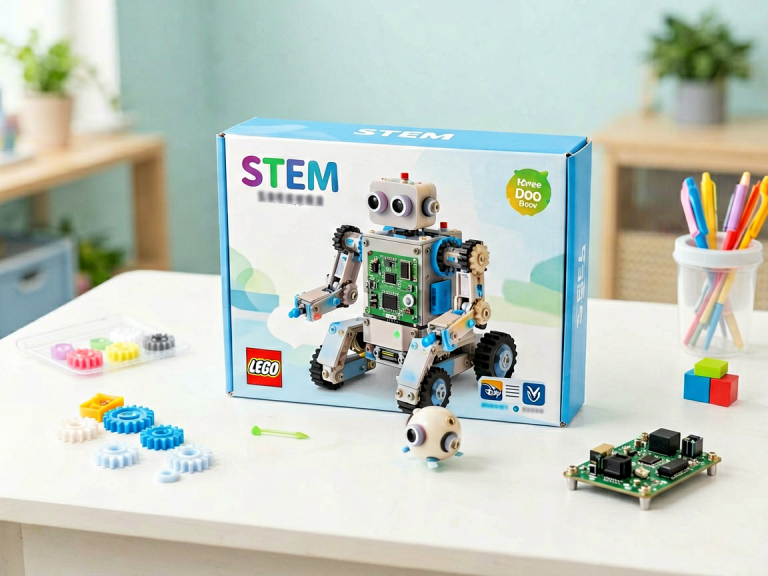
*Small plastic components* – Many kits include plastic gears, connectors, and figurines that come loose during play. For instance, a “magnetic levitation” kit may contain tiny plastic spacers that are easily lost and found on the floor, only to be picked up by a younger sibling.
*Magnets – Small, powerful neodymium magnets are common in physics kits. If swallowed, they can attract across intestinal walls, causing severe internal injury or perforation. Even a single magnet can be a choking hazard if it lodges in the throat.
*Glass and ceramic items – Test tubes, microscope slides, and small glass beads are frequent components. When broken, they create sharp shards that can cause laceration of the mouth or esophagus, but even intact glass vials are small enough to be swallowed and can block the airway.
*Chemical capsules and powders – Some kits include gelatin capsules containing substances like baking soda or citric acid. These capsules, if not properly sealed, can be mistaken for candy by a child.
*Liquid containers – Small droppers or plastic bottles with narrow caps can be chewed off and swallowed.
*Pieces from assembly – Even larger components, such as a plastic screw or a rubber band, can become detached and reduce in size after repeated use, making them more dangerous.
Case Studies and Statistics
Although comprehensive data on choking incidents specifically linked to science kits is limited, reports from consumer safety agencies like the U.S. Consumer Product Safety Commission (CPSC) and the European Union’s RAPEX system reveal a troubling pattern. In 2021, a recall was issued for a popular chemistry set after several incidents where children removed and swallowed small plastic “mineral” samples. In one recorded case, a three-year-old required emergency bronchoscopy to remove a plastic bead from his airway. Another incident involved a six-year-old who swallowed a small magnet from a physics kit, requiring surgery to repair intestinal perforations. According to the CPSC, an estimated 17,000 children under the age of 15 are treated in emergency rooms each year for choking-related injuries from toys, and a significant proportion involve educational kits or sets with multiple small parts. Furthermore, a study published in the *Journal of Pediatrics* noted that choking from "non-food items" is the second leading cause of toy-related deaths, with magnets and small plastic parts being the most frequent culprits.
Regulatory Standards and Gaps
Most developed countries have stringent regulations for toy safety, including mandatory choke test cylinders. In the United States, the ASTM F963 standard requires that toys intended for children under three years old must not contain small parts that fit entirely into a specified test cylinder with a diameter of 31.7 mm. However, many science kits are labeled for ages 8 and up, which bypasses the strict small-parts testing required for younger age groups. The assumption is that older children will not put objects in their mouths, but this is not always reliable. Children with developmental delays, pica (the urge to eat non-food items), or those who are simply curious may still swallow small parts. Moreover, the age labeling is often ignored by parents who purchase kits for younger siblings, or by educators who allow mixed-age groups to use the same materials. European standards (EN 71) similarly rely on age differentiation, but enforcement is inconsistent, especially for kits sold online from third-party sellers. Another gap is the lack of mandatory warnings about the specific hazards of magnets and glass. While some kits include generic “choking hazard” labels, they often fail to mention the additional risk of intestinal injury from multiple magnets.
Recommendations for Parents and Educators
Given the incomplete nature of current regulations, adults must take proactive steps to minimize risks.
- Check age labels carefully – Never assume that a kit is safe for a child just because it seems “educational.” If a kit is labeled for ages 8+, keep it away from children under 4. Even for older children, provide constant supervision during use.
- Inspect components before use – Look for any loose, broken, or easily detachable parts. Test each piece for size: if it can pass through a standard toilet paper tube (which approximates the child’s throat diameter), it is a potential choking hazard.
- Remove and discard small pieces – If possible, eliminate any tiny items that are not essential for the core experiment, or replace them with larger alternatives. For example, use plastic beads that are at least 3 cm in diameter.
- Store kits securely – After use, immediately return all components to a sealed container and store it out of reach of young children. Do not leave kits on kitchen counters or low shelves.
- Teach safe behavior – Explain to children that no toy or component, no matter how interesting, should be placed in the mouth. Model this behavior and reinforce it regularly.
- Learn first aid for choking – Every parent and teacher should know the Heimlich maneuver and infant back blows. Immediate response can save a life.
The Role of Manufacturers
While parent vigilance is crucial, the primary responsibility lies with manufacturers. They must design science kits with the youngest users in mind, even if the label says “for ages 8+.” This means using large, robust components that cannot be broken into small pieces. For essential small parts (e.g., lenses, magnets), they should be enclosed in a larger housing or attached to a lanyard to prevent swallowing. Color-coding and warning symbols can also help. In addition, manufacturers should provide clear, multilingual instructions that explicitly state the choking and magnet hazards, rather than relying on fine print. Third-party testing and third-party safety audits should be mandatory for all science kits sold online and in stores. Finally, industry associations like the Toy Association should develop a voluntary standard specifically for science kits, addressing the unique combination of hazardous materials (chemicals, glass, magnets) and small parts.
Conclusion
Science kits are invaluable tools for inspiring the next generation of innovators, but they must not come at the cost of a child’s safety. The choking hazards inherent in these kits require a multi-layered approach: stricter regulatory enforcement, more responsible manufacturing, and more informed adult supervision. A single life lost to a preventable choking incident is one too many. As parents, educators, and policymakers, we must demand that the joy of discovery never be overshadowed by the tragedy of a preventable accident. By recognizing the hidden dangers, advocating for better safety standards, and exercising caution at home, we can ensure that science kits remain gateways to learning—not to emergency rooms.