Beyond the Screen: Why Screen-Free Toys Are the Ultimate Investment for 7-Year-Olds
In an era where tablets and smartphones have become default babysitters, the humble screen-free toy faces an existential threat. Yet for parents of 7-year-olds, the choice between a glowing rectangle and a box of wooden blocks is far from trivial. At this pivotal age—when children are transitioning from early childhood into middle childhood, developing critical thinking skills, social awareness, and a sense of autonomy—the kinds of playthings that surround them can profoundly shape their cognitive, emotional, and physical development. This article explores why screen-free toys are not merely nostalgic relics but essential tools for raising well-rounded, resilient, and creative 7-year-olds, and offers practical guidance on selecting the best options.
The Developmental Landscape of a 7-Year-Old
To understand why screen-free toys matter, we must first appreciate what is happening inside a typical 7-year-old’s brain and body. At this age, children are in what developmental psychologist Jean Piaget called the “concrete operational stage.” They can think logically about concrete events, grasp the concept of conservation (understanding that quantity remains the same despite changes in shape), and begin to understand cause and effect in more complex ways. Their fine motor skills are improving rapidly—handwriting becomes neater, scissors become more precise—and they are capable of sustained attention for 20 to 30 minutes on a single task.
Socially, 7-year-olds are moving away from purely parallel play toward more cooperative and imaginative play with peers. They begin to understand rules, fairness, and teamwork. Emotionally, they are more aware of their own feelings and those of others, yet they still struggle with impulse control and frustration tolerance. This is also an age when many children are first introduced to formal academic pressures—homework, standardized tests, and after-school enrichment—which can paradoxically increase their need for unstructured, joyful, and screen-free downtime.
Screen-based entertainment, with its instant gratification, constant novelty, and passive consumption, can short-circuit many of these developmental processes. When a child watches a video or plays a mindless app game, they are often not practicing sustained attention, creative problem-solving, or social negotiation. In contrast, screen-free toys demand active participation, physical manipulation, and imaginative engagement—all of which are precisely what a 7-year-old’s growing brain craves.
The Multidimensional Benefits of Screen-Free Play
Cognitive Development: Building Brains, Not Just Bricks
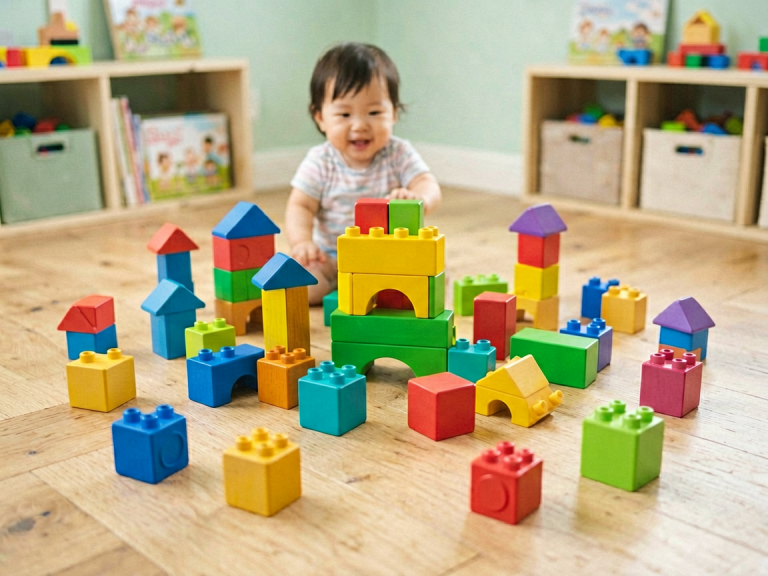
Screen-free toys are unparalleled tools for cognitive growth. Consider construction sets like LEGO Classic bricks, magnetic tiles (e.g., Magna-Tiles), or wooden unit blocks. When a 7-year-old decides to build a castle with a working drawbridge, they are not merely following instructions—they are engaging in complex spatial reasoning, planning, and iterative problem-solving. They must estimate how many blocks are needed, visualize the structure in three dimensions, and troubleshoot when the tower collapses. This is the same kind of thinking that underpins geometry, engineering, and computer programming, but learned through tangible trial and error rather than abstract symbols on a screen.
Similarly, strategy board games like *Catan Junior*, *Ticket to Ride: First Journey*, or *Qwirkle* require children to hold multiple variables in mind, anticipate opponents’ moves, and adapt their strategies. Unlike a video game that often provides hints or resets automatically, a board game forces the child to live with the consequences of their decisions—and to learn from them. Research from the American Academy of Pediatrics has shown that such analog games improve executive functions, including working memory, cognitive flexibility, and self-control, far more effectively than most digital alternatives.
Creativity and Imagination: The Unscripted Stage
Perhaps the most profound gift of screen-free toys is the space they create for open-ended imagination. A 7-year-old with a set of wooden figures, a dollhouse, or a collection of plastic animals can invent entire worlds, complete with conflicts, resolutions, and recurring characters. Unlike a video game that dictates the narrative (even the most “open” digital worlds have pre-programmed boundaries), these toys place the child in the director’s chair. They decide who the hero is, what the villain wants, and how the story ends.
Building and craft kits—such as Klutz’s *LEGO Chain Reactions* or *Melissa & Doug’s pattern blocks and pegboards*—also nurture divergent thinking. There is no single “right” answer. The child can combine pieces in unexpected ways, discover new patterns, and feel the thrill of creation. This kind of imaginative play has been linked to higher levels of creativity in adulthood, as well as improved emotional regulation. A child who acts out a story about a sad elephant or an angry dragon is practicing empathy and emotional expression in a safe, controlled environment—something no screen can truly replicate.
Social and Emotional Skills: Learning to Lose and to Share
Seven-year-olds are famously competitive, yet many have not yet learned how to lose gracefully. Screen-free group activities—whether it’s a family board game night, a cooperative puzzle project with siblings, or building a fort with friends—teach essential social skills that digital play often bypasses. In a video game, if you lose, you can simply press “restart” without any real-world consequences. In a game of *Jenga* or *Blokus*, losing means watching your tower fall or your pieces get blocked—and then having to congratulate the winner. This is a small but powerful lesson in sportsmanship, resilience, and emotional regulation.
Furthermore, many screen-free toys are inherently collaborative. A large floor puzzle (like a 300-piece map of the world or a dinosaur scene) requires multiple children to coordinate, communicate, and compromise. A joint building project, such as creating a marble run using *Gravity Maze* or *Q-BA-Maze* cubes, demands that children listen to each other’s ideas and negotiate when they disagree. These are real-life social interactions that build empathy and teamwork in ways that even the best multiplayer online game, hidden behind screens and headphones, cannot achieve.
Physical Health and Sensory Integration
In an age of rising childhood obesity and myopia (nearsightedness linked to excessive screen time), the physical benefits of screen-free toys are too important to ignore. Toys that encourage movement—such as a jump rope, a hula hoop, a balance board, a scooter, or even a simple set of sidewalk chalk for hopscotch—get children off the couch, into the fresh air, and using their large muscle groups. For 7-year-olds, who are naturally active and still developing their gross motor coordination, this kind of play is not just fun; it is foundational for health.
Fine motor development also benefits immensely from screen-free toys. Manipulating small LEGO pieces, threading beads for jewelry-making, cutting and folding paper for origami, or using tweezers to sort objects in a sensory bin—all of these activities strengthen the small muscles in hands and fingers that are essential for writing, drawing, and future skills like typing or playing a musical instrument. Moreover, toys that offer varied textures, temperatures, and weights (such as kinetic sand, Play-Doh, or a weighted lap pad) provide crucial sensory input that can help regulate a child’s nervous system, especially for those with sensory processing differences or ADHD.
A Curated Guide: The Best Screen-Free Toys for 7-Year-Olds
Category 1: Construction and Engineering Toys
- LEGO Classic Bricks and LEGO Creator sets – Open-ended enough for free building, but with optional instructions for those who want a challenge. Sets with gears, wheels, and axles introduce basic engineering concepts.
- Magna-Tiles or Picasso Tiles – Clear magnetic geometric shapes that snap together. Perfect for building 3D structures, learning about symmetry, and understanding magnetism.
- K’NEX – A more advanced construction system with rods, connectors, and even motorized pieces. Ideal for budding engineers who want to build working rides or bridges.
- Gravity Maze by ThinkFun – A marble run logic game that combines construction with puzzle-solving. Children must place towers to create a path for the marble from start to finish.
Category 2: Board Games and Strategy Games
- Catan Junior – A simplified version of the classic strategy game, teaching resource management and trading in a pirate-themed setting. Ages 6+, perfect for 7-year-olds.
- Outfoxed! – A cooperative whodunit game where players work together to solve a mystery, encouraging logical deduction and teamwork.
- Blokus – A fast-paced geometry game where players claim territory with their colored pieces. It teaches spatial awareness and strategic thinking without reading required.
- Dragomino – A tile-placement game where children match dragon habitats to build maps. Great for pattern recognition and simple decision-making.
Category 3: Creative and Artistic Toys
- Klutz STEAM Kits – For example, *LEGO Chain Reactions* (build moving contraptions), *Paper Flying Dragon* (make a paper puppet), or *Tie-Dye* (fabric art). Each kit comes with a book and all materials.
- Melissa & Doug Reusable Sticker Pads – “Scene” pads with backgrounds and hundreds of cling-style stickers that can be rearranged endlessly. Fosters storytelling and fine motor control.
- Young Artist watercolor sets or oil pastels – High-quality, non-toxic art supplies combined with a sketchbook encourage free expression without digital filters.
- Spirograph – The classic geometric drawing toy is still a hit. It teaches patterns, symmetry, and patience, and the results are rewarding.
Category 4: Active and Outdoor Toys
- Skip-It or a jump rope – Simple, cheap, and excellent for cardiovascular health and coordination. 7-year-olds love to challenge themselves with speed or tricks.
- Balance board (like the Wobble Board) – Helps develop core strength and balance; many children also use it as a standing desk fidget tool.
- Nerf Guns or foam dart launchers – While not for everyone, these encourage active, imaginative play (think “spy missions” or “target practice”) and can be played indoors with soft darts.
- Sidewalk chalk and a hopscotch template – Encourages outdoor movement, creativity, and learning numbers at the same time.
Category 5: Imaginative and Role-Play Toys
- Wooden dollhouses with furniture – Classic role-play allows children to act out family dynamics, school scenarios, or fantasy adventures. Look for ones with movable parts.
- Play figures and animals (like Schleich or Papo) – High-quality, detailed figurines of dinosaurs, farm animals, knights, or mythical creatures. They spark storytelling and can be combined with blocks or natural materials.
- Costumes and dress-up trunks – A cape, a crown, a doctor’s coat, and a stethoscope—simple props unlock elaborate pretend play. 7-year-olds enjoy more detailed costumes than younger kids.
- Puppets and a small puppet theater – Improves narrative skills and gives shy children a chance to speak through a character.
Overcoming Common Objections: Practical Tips for Parents
Some parents worry that screen-free toys are “boring” compared to the flashy animations and instant rewards of digital games. The key is to model enthusiasm and to create a home environment that values slow, deep play. Here are a few strategies:
- Declutter and rotate toys. 7-year-olds can become overwhelmed by too many choices. Keep only a few types of toys available at a time and swap them every few weeks. This renews interest without buying new items.
- Join the play. A parent sitting down to build a LEGO castle or play a board game communicates that this activity is valued. Even 15 minutes of joint play can be powerful.
- Limit screen time, not play time. The American Academy of Pediatrics recommends no more than 1 hour of high-quality screen time per day for children aged 6 and older. Use that hour as a “dessert” after ample screen-free play.
- Involve the child in choosing toys. Visit a local toy store or browse online catalogs together. Let them pick one or two new items within a budget. Ownership increases engagement.
- Embrace boredom. It’s okay if a child says “I’m bored” at first. Boredom is the mother of invention. Without a screen to rescue them, children will eventually find creative ways to entertain themselves with what’s at hand.
Conclusion: A Legacy of Hands-On Joy
The most precious gift we can give a 7-year-old is not the latest video console or a subscription to a streaming service, but the time, space, and tools to play freely without a screen. Screen-free toys are not anti-technology; they are pro-development. They teach patience, persistence, creativity, and human connection—qualities that no algorithm can replicate. As parents, grandparents, and educators, we owe it to our children to remember that the best toy is often the simplest one: a bunch of blocks, a few friends, and an unlimited imagination.
By investing in high-quality screen-free toys today, we are building the foundation for lifelong learners, empathetic friends, and innovative thinkers. And what could be a better investment than that?