The Power of Play: How Fine Motor Skill Toys Shape Young Minds and Hands
Introduction: More Than Just Child’s Play
From the moment a baby grasps a rattle to the triumphant “look, I tied my shoe!” of a kindergartner, the development of fine motor skills quietly transforms a child’s world. These small, precise movements—pinching, twisting, lacing, stacking—are the building blocks of independence. They enable a child to feed themselves, write their name, button a coat, and eventually type on a keyboard. In an era dominated by screens and passive entertainment, fine motor skill toys have become not just playthings but essential tools for cognitive and physical growth. This article explores what fine motor skill toys are, why they matter, the best types for different ages, and how parents and educators can choose toys that turn playtime into a gym for the fingers and brain.
What Are Fine Motor Skills and Why Do They Matter?
Fine motor skills refer to the coordination of small muscles—especially those in the hands, fingers, and wrists—with the eyes. Unlike gross motor skills (running, jumping), fine motor tasks require precision, control, and patience. Think of a child picking up a single Cheerio, threading a bead onto a string, or cutting along a dotted line with scissors. These actions demand the simultaneous development of hand strength, bilateral coordination (using both hands together), and hand-eye coordination.
Why are they so critical? Research shows that fine motor skill proficiency in early childhood correlates strongly with later academic success, especially in writing and mathematics. Children who struggle with fine motor tasks often avoid them, leading to frustration and delays in self-care. Moreover, these skills are closely linked to cognitive development: as children manipulate objects, they learn about cause and effect, spatial relationships, and problem-solving. Fine motor toys provide the repetitive, engaging practice children need to master these foundational abilities without the pressure of a formal lesson.
The Anatomy of a Good Fine Motor Toy: What to Look For
Not all toys labeled “educational” actually target fine motor development effectively. A high-quality fine motor toy should meet several criteria:
- Requires deliberate hand movement: Pushing a button on a electronic device does little for finger strength. Instead, look for toys that demand squeezing, twisting, prying, or pinching.
- Offers graduated difficulty: The best toys grow with the child. For example, a simple wooden shape sorter for a one-year-old can later be used for sorting by color or size.
- Encourages repetition without boredom: Children learn through repetition, but the toy must be engaging enough that they want to do the action again and again. Sensory elements—bright colors, varied textures, gentle sounds—help sustain interest.
- Promotes bilateral coordination: Many fine motor tasks require one hand to stabilize while the other works. Toys that involve holding a container in one hand while inserting objects with the other are particularly valuable.
- Is safe and durable: Small parts are a choking hazard for toddlers. Choose toys made of non-toxic materials with smooth edges.
Top Categories of Fine Motor Skill Toys by Age Group
Infants (0–12 Months): Sensory Exploration and Grasping
For the youngest learners, fine motor development begins with the palmar grasp (whole-hand grip) and progresses to the pincer grasp (thumb and forefinger). Excellent toys include:
- Soft grasping toys: Textured fabric blocks, silicone teethers with different nubs, and soft links that can be hooked together. These encourage reaching, grasping, and transferring from one hand to another.
- Rattles and wrist bands: The gentle sound rewards movement and helps babies understand cause and effect.
- Activity gyms with dangling toys: Reaching up to bat at toys strengthens shoulder and arm muscles that support later fine motor control.
Toddlers (1–2 Years): Poking, Stacking, and Picking Up
This is the golden age of pincer grasp practice. Toddlers love to pick up tiny objects, but safety is paramount. Recommended toys:
- Peg boards and pounding benches: Wooden pegs that fit into holes using a small mallet (supervised) strengthen the hand muscles needed for tool use.
- Large beads and lacing strings: Beads with wide holes and stiff, tipped laces allow toddlers to practice threading—a bilateral coordination challenge.
- Shape sorters and stacking rings: The classic shape sorter requires a child to rotate the shape to align with the hole. Stacking rings demand precise placement to avoid toppling.
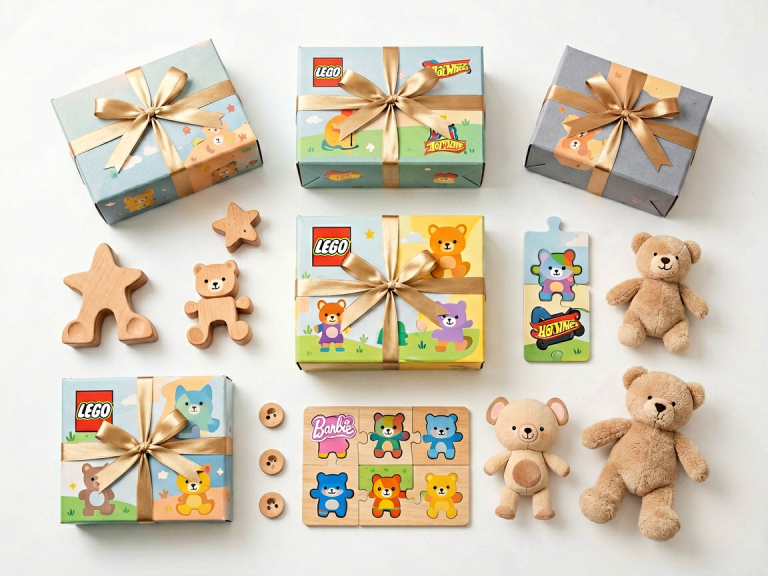
- Snap-together blocks: Duplo-style blocks that require a firm press to connect develop hand strength and spatial reasoning.
Preschoolers (3–5 Years): Tools, Scissors, and Writing Readiness
As children enter preschool, fine motor tasks become more complex. Toys that mimic real-life tools are especially effective:
- Safety scissors and cutting strips: Child-safe scissors that actually cut paper (not just plastic) require thumb-up positioning and coordinated opening/closing motions. Start with cutting play dough, then move to paper strips with pre-drawn lines.
- Play dough and clay tools: Rolling pins, cookie cutters, plastic knives, and extrusion tools build hand strength and precision. Squeezing, pinching, and flattening dough is an excellent hand workout.
- Lacing cards and sewing kits: Stiff cardboard shapes with holes and a blunt needle help children practice the same motions used in writing—moving a tool in a controlled, deliberate path.
- Tweezers and tongs activities: Using large plastic tweezers to transfer pom-poms from one bowl to another is a fun way to develop the tripod grip needed for holding a pencil.
- Jigsaw puzzles with knobs: Puzzles with small knobs on each piece encourage pincer grasp and visual-spatial reasoning.
School-Age Children (5+): Refining and Specializing
Older children need toys that challenge dexterity and precision further, preparing them for handwriting, musical instruments, and STEM activities:
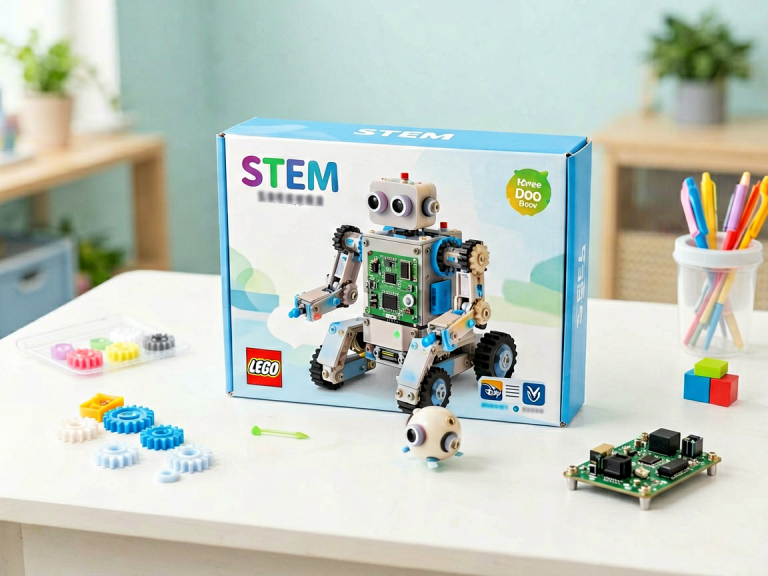
- Construction sets with tiny parts: LEGO Classic or Technic sets require pressing small pieces together with thumb and forefinger, following complex instructions.
- Beading and jewelry-making kits: Small beads, elastic cord, and clasps demand meticulous finger movements and patience.
- Origami and paper crafts: Folding paper precisely along lines involves bilateral coordination and fine pressure control.
- Knitting or finger knitting looms: Loops, hooks, and yarn strengthen hands and develop rhythm. Finger knitting is a particularly accessible starter activity.
- Graphing and tracing boards: Etch-a-Sketch, magnetic drawing boards, or grooved tracing boards for letters and shapes provide structured practice for writing strokes.
How to Integrate Fine Motor Toys into Daily Routines
Toys are most effective when they are part of a child’s natural play, not forced drills. Here are practical strategies for parents and educators:
- Create a “busy hands” station: Set up a low shelf or tray with rotating fine motor activities. Change items weekly to maintain novelty. Include a small container of water and a turkey baster (for transferring water between cups) or a bowl of dried beans and a scoop.
- Use mealtime as practice: Let toddlers use a small pitcher to pour their own water, a child-safe knife to slice soft fruit, or tongs to serve themselves from a communal bowl. These real-world tasks are far more motivating than any toy.
- Mix art with motor work: Painting with a brush, squeezing glue bottles, using a hole puncher, and tearing paper all build fine motor skills. Offer unconventional tools like cotton swabs or sponges attached to clothespins.
- Incorporate music: Toy xylophones, maracas, and drums require grasping and striking. Learning to press piano keys or strum a child’s guitar fingerpicks the same muscles used for writing.
- Go outdoors: Digging in sand with a small shovel, picking up leaves or pebbles (supervised), and using a spray bottle to water plants are natural fine motor activities.
The Hidden Benefits: Beyond the Hands
While the physical development is obvious, fine motor toys also nurture cognitive and emotional skills:
- Focus and persistence: Threading a needle or building a delicate LEGO structure requires sustained attention. Children learn to tolerate frustration and try again when a bead falls.
- Problem-solving: Figuring out how to fit a shape into a sorter or how to balance a stack of blocks engages executive functions.
- Confidence and independence: Every time a child successfully zips their own jacket or writes their name, they feel a sense of accomplishment. This builds self-esteem and the willingness to tackle harder tasks.
- Language development: As children play, adults can narrate actions (“You’re turning the lid clockwise,” “The red bead goes on first”), introducing vocabulary for directions, colors, and verbs.
Common Pitfalls to Avoid
Even the best toys can be misused. Watch for these mistakes:
- Over-stimulation: Battery-operated toys with flashing lights and loud sounds often distract children rather than encourage focused motor work. The toy should be the tool, not the entertainer.
- Age-inappropriate difficulty: A toy that is too hard leads to tears; one that is too easy leads to boredom. Observe your child’s current ability and choose toys at the edge of their skill zone.
- Forcing practice: Fine motor development happens through play. If a child resists a particular activity, try a different approach or toy. Pressure creates anxiety, which actually inhibits motor learning.
- Neglecting gross motor foundations: Strong core and shoulder muscles provide the stability for fine motor control. Ensure children have plenty of time to climb, swing, and crawl.
Conclusion: Invest in Play, Invest in Potential
Fine motor skill toys are not a luxury; they are a necessity in a child’s developmental journey. In a world where digital devices often replace tactile experiences, the simple act of squeezing play dough, snapping beads, or cutting paper is a profound learning event. By choosing thoughtful, engaging toys and integrating them into daily life, parents and educators give children the tools not just for writing and dressing, but for creative thinking, problem-solving, and the quiet confidence that comes from mastering one small movement at a time. So the next time you see a child bent over a lacing card, their tongue poking out in concentration, remember: they are not just playing. They are building the architecture of their future.
*(Word count: approximately 1,480 words)*