Building Blocks and Construction Sets: Engineering the Mind
The Ultimate Guide to the Best Educational Toys for 5-Year-Olds: Cultivating Curiosity, Creativity, and Critical Thinking
The age of five is a magical milestone in a child’s development. It is a time when the brain is a sponge, eagerly absorbing new information, and the imagination is a wildfire that can light up the most ordinary moments. Five-year-olds are transitioning from toddlerhood into early childhood, developing finer motor skills, beginning to understand abstract concepts, and forming social bonds beyond the family circle. Choosing the right educational toys at this stage is not merely about keeping a child busy—it is about scaffolding their cognitive, emotional, and physical growth in ways that are joyful and meaningful. The best educational toys for 5-year-olds are those that blend play with purposeful learning, encouraging exploration, problem-solving, and self-expression. In this comprehensive guide, we will explore seven categories of toys that stand out for their ability to nurture a five-year-old’s developing mind and body, with detailed explanations of why each category matters and specific examples that have proven effective in real-world playrooms.
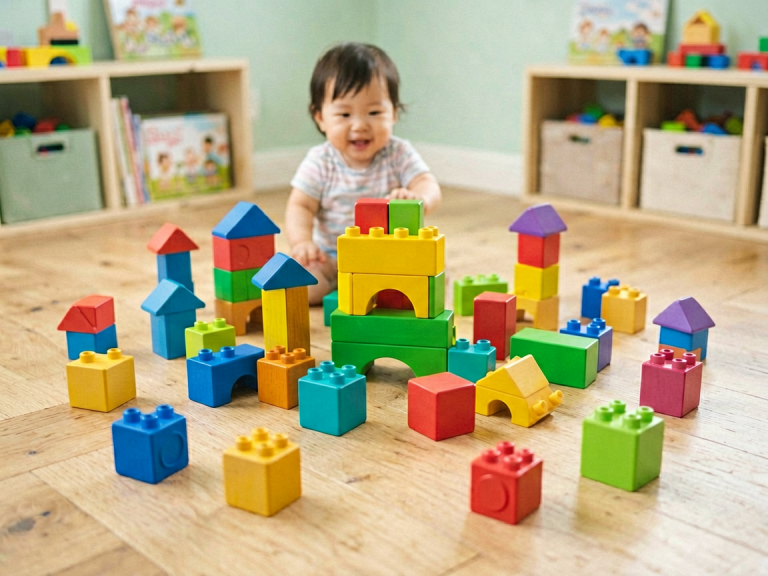
Construction toys are the undisputed champions of open-ended play. At five, children are ready to move beyond simple stacking and into systematic building. They can follow picture instructions, create symmetrical structures, and even invent their own designs. The cognitive benefits are profound: building blocks develop spatial awareness, hand-eye coordination, and early engineering thinking. When a child struggles to make a tower stand, they are learning about balance, gravity, and trial-and-error—skills that form the foundation of scientific reasoning.
One standout option is LEGO Classic sets with a mix of standard bricks, wheels, and special pieces. Unlike themed sets that prescribe a single model, classic boxes encourage children to build anything they imagine. For a five-year-old, a bucket of 800–1000 pieces offers endless possibilities: a castle for a knight, a spaceship for an astronaut, a house for a pet dinosaur. The act of snapping bricks together strengthens finger muscles, preparing little hands for writing. Similarly, Magnetic Tiles (such as Magna-Tiles or Picasso Tiles) are a favorite in many classrooms. Their translucent, colorful panels snap together with magnets, allowing children to create 3D structures from simple cubes to elaborate castles. The magnetic connection is satisfying and easy for small hands, and the geometry lessons are built into the play—children intuitively learn about shapes, symmetry, and how different angles create stable forms.
Another excellent choice is wooden block sets like those from Melissa & Doug. Natural wood blocks in various shapes—cylinders, arches, rectangles—offer a tactile experience that plastic cannot replicate. They are heavier, which teaches children about weight distribution. And because they are not prescriptive, a child can use them alongside other toys to build roads for cars or walls for a zoo. The key is that construction toys do not have a single “right” answer, so every play session becomes a unique problem-solving adventure. For a five-year-old, the best building toy is one that challenges them just enough to keep them engaged but not so much that they become frustrated. A good rule of thumb: if they can build something and then rebuild it in a different way, it is a winner.
Science and STEM Kits: Hands-On Discovery
Five-year-olds are natural scientists. They ask “why” incessantly, they love to mix things, and they have boundless curiosity about how the world works. STEM (Science, Technology, Engineering, and Math) toys channel that curiosity into structured experiments that feel like magic. The best STEM kits for this age are those that involve simple, safe reactions with immediate visual results. For example, a kid-friendly chemistry set like the *Scientific Explorer My First Mind Blowing Science Kit* allows children to create colorful eruptions, make crystals, and mix acids and bases using citric acid and baking soda. The instructions are picture-based, so pre-readers can follow along, and the materials are non-toxic. When a five-year-old watches a “volcano” foam over, they are not just entertained—they are absorbing the cause-and-effect relationship that underpins all science.
Another fantastic STEM toy is the GeoSafari Jr. Talking Microscope from Educational Insights. It features 20 pre-loaded slides with images of insects, plants, and everyday objects, and the microscope speaks facts about each one in a friendly voice. This toy transforms a complex instrument into an accessible tool for exploration. A child can see the veins of a leaf or the legs of a spider up close, sparking questions about biology. Similarly, magnetic discovery kits (like the *Learning Resources Magnetic Wand and Chips* set) let children explore polarity, attraction, and repulsion through hands-on play. They can sort metal and non-metal objects, create magnetic fields with iron filings, and even build simple magnetic mazes. The beauty of these toys is that they require no screens—just hands, eyes, and a sense of wonder.
One cannot discuss STEM without mentioning coding toys for early learners. The *Coding Critters* by Learning Resources are adorable animal-shaped robots that children program by pressing directional buttons on their backs. A five-year-old can learn sequencing and logical thinking by sending a “Rumble the Dinosaur” through a series of obstacles. The feedback is instant: if the code is wrong, the critter bumps into a wall; if correct, it reaches its target. This is a gentle introduction to computational thinking without the need for a tablet. The key is to choose kits that are screen-free and heavily play-based, because at age five, direct physical interaction is still far more beneficial than passive screen time.
Puzzles and Logic Games: Sharpening Problem-Solving Skills
Puzzles are a staple of early childhood education for good reason. They teach patience, pattern recognition, and the ability to focus on a task until completion. For a five-year-old, the sweet spot is a puzzle with 48 to 100 pieces, depending on the child’s experience. Floor puzzles (like those from Ravensburger or Mudpuppy) are especially good because they are large and easy to handle, and they often feature detailed scenes—a map of the world, a dinosaur habitat, or a busy city—that encourage conversation. As a child searches for the piece with a red car or a blue whale, they are practicing visual discrimination and memory. Moreover, puzzles can be social: working on a puzzle with a parent or sibling builds communication and collaboration skills.
Beyond traditional jigsaw puzzles, logic games designed for ages 4–7 are excellent for developing executive function. The *SmartGames* series is a gold standard in this category. Games like *Day and Night* challenge children to replicate a picture using colored blocks, but with a twist—the pieces must be arranged in a specific order to create the correct silhouette. Another favorite is *Camelot Jr.*, where children place wooden towers and stairs to create a path for a knight to reach a princess. These games have a single solution but multiple approaches, which teaches systematic thinking and the value of trying again after failure. They are self-correcting, meaning that if a child’s answer is wrong, they can see it immediately and adjust their strategy. This builds resilience, a trait that is arguably more important than any academic skill.
Tangrams are another timeless logic toy that every five-year-old should encounter. A set of seven geometric shapes can be arranged to form hundreds of images—animals, people, houses. The challenge is to figure out which pieces fit where, and there is usually a sheet of outlines for guidance. Tangrams teach geometry, fractions (since pieces are halves and quarters of a square), and flexible thinking because the same piece can be a duck’s beak or a cat’s ear. The best part is that tangrams are compact, cheap, and can be played alone or with a group.
Art and Creativity Tools: Unleashing Imagination
Creativity at age five is not about producing a masterpiece—it is about the process of exploration. The best art toys for this age are those that allow for mess, experimentation, and open-ended expression. Washable tempera paints and a set of good brushes are a must. But beyond basic supplies, there are specific toys that take art to a higher cognitive level. For instance, Melissa & Doug’s Scratch Art sets come with black-coated sheets that reveal rainbow colors when scratched with a wooden stylus. This activity helps develop fine motor control and pencil grip without the pressure of drawing from scratch. The results are always satisfying, which boosts confidence.
Play-Doh and modeling compounds are also invaluable. A five-year-old can learn to roll, pinch, and shape dough into letters, animals, or food items. The sensory feedback is calming and therapeutic, and the process of creating a 3D object from a shapeless blob teaches planning and motor sequencing. Adding simple tools like plastic knives, cookie cutters, and rolling pins extends the play. There are even Play-Doh activity sets that let children make pretend ice cream cones or pizzas, integrating pretend play with art.
Another innovative category is light drawing boards or LED tracing pads. These allow children to place a picture underneath a transparent surface and trace over it, which is an excellent way to learn how to copy shapes and eventually letters. When they trace a dinosaur or a flower, they are internalizing the lines and curves that will later help them form letters. The light board makes the activity feel magical and reduces frustration because the child can always erase and start over. Pairing these with water-based markers ensures easy cleanup.
Stamp sets are also wonderful for five-year-olds. Alphabet stamps allow children to create their own words and names, merging art with literacy. Animal stamps can be used to create story scenes. The act of pressing down firmly and evenly is a good fine-motor exercise. Look for sets with washable ink pads in multiple colors. The key to creative toys is to resist the urge to correct or direct the child’s output. Let them mix colors, stamp crookedly, and draw purple trees. The joy of self-expression is its own reward.
Language and Literacy Toys: Building a Love for Reading
At five, many children are on the cusp of reading. They may recognize some letters, know the sounds they make, and even attempt to sound out simple words. The best literacy toys for this age do not feel like lessons—they feel like games. Alphabet puzzle mats (like the ones from Melissa & Doug) are foam pieces with letters that snap together. Children can walk on them, jump from letter to letter, or arrange them to spell their name. This kinesthetic approach reinforces letter recognition in a way that worksheets never can.
Magnetic alphabet boards are another favorite. A child can match uppercase and lowercase letters, put them in order, or spell simple words like “cat” or “dog.” The *LeapFrog Fridge Phonics* set turns the refrigerator into a learning center, and the magnetic letters also play songs when inserted into a reader. This multisensory exposure—seeing, touching, and hearing the letter sounds—accelerates phonemic awareness. For children who are more advanced, sight word games like *Zingo! Word Builder* combine a bingo-style game with letter tiles, helping children recognize common words such as “the,” “and,” “have.” The competitive element (filling your card first) keeps children engaged.
Storytelling toys are also crucial. *Story Cubes* are dice with pictures on each face—a key, a moon, a tree, a castle. A child rolls the dice and must create a story using the images that appear. This develops narrative skills, vocabulary, and imagination. Similarly, finger puppets or hand puppets of characters (like animals or fairy tale figures) encourage dialogue and role-play, which are foundational for understanding plot and character. A five-year-old can act out “The Three Little Pigs” with finger puppets, building comprehension of story structure without even realizing they are learning.
Finally, book-and-toy sets are a direct bridge between play and reading. For example, a set that comes with a plush caterpillar and a board book version of *The Very Hungry Caterpillar* allows a child to hold the character while reading. This tactile connection deepens engagement and memory. The golden rule: never force literacy. If a child is not interested in letters, expose them through play-based activities rather than drills. The goal is to develop a positive association with language.
Role-Playing and Pretend Play: Social and Emotional Growth
Pretend play is how five-year-olds make sense of the world. They imitate adults, act out scenarios, and experiment with different social roles. The best toys for this are open-ended, realistic (but not too realistic), and encourage collaboration. Kitchen playsets are a classic for a reason. A wooden or plastic kitchen with pots, pans, play food, and a pretend stove allows children to mimic cooking, serving, and cleaning. This builds social scripts (“Would you like some soup?” “Thank you, chef!”) and teaches sequencing (first cut the vegetables, then put them in the pot). The *Melissa & Doug Let’s Play House!* line includes a metal stove, a sink with a pretend faucet, and a refrigerator with opening doors. Children can spend hours creating imaginary meals for stuffed animals or family members.
Dress-up costumes are equally important. A five-year-old can be a firefighter, a doctor, a princess, or a superhero. The act of putting on a costume is a form of physical and psychological transformation. It allows children to explore different power dynamics, emotions, and perspectives. For example, a child who plays the “doctor” might learn to be gentle and caring, while a child who plays the “patient” learns to receive care. Good costumes are simple—a hat, a cape, a vest—and not overly detailed, so the child’s imagination does the rest. A cardboard box can be a spaceship cockpit or a castle wall, so the key is to provide props: play money, a cash register, a doctor’s kit with stethoscope, and a toy tool set.
Puppets and dollhouses also fall into this category. A small dollhouse with furniture and family figures invites a child to create domestic scenarios: bedtime, breakfast, a birthday party. Through these narratives, children process their own experiences and emotions. If a child is worried about starting school, they might act out a “going to school” story with a doll. This gives parents a window into their inner world. The best role-playing toys are those that allow the child to be the director of the story, not just a passive participant. Avoid toys that have a fixed script or electronic voices that dictate what to say; instead, choose silent props that the child controls.
Outdoor and Active Learning Toys: Physical Development and Nature Exploration
Five-year-olds have boundless energy, and they learn through movement. Educational toys that get them outside or moving indoors are essential for developing gross motor skills, balance, and coordination—all of which are linked to cognitive development. Balance bikes (or pedal bikes with training wheels) teach balance and coordination in a fun, low-stress way. Riding a bike also builds endurance and confidence. For the yard or park, a kid-size gardening set (trowel, rake, watering can, gloves) encourages children to plant seeds, dig, and observe growth. Gardening teaches biology, patience, and responsibility. A child who waters a sunflower every day and watches it sprout learns about life cycles firsthand.
Obstacle course toys like *Step2’s All Around Playground* or simple items like cones, a tunnel, and a balance beam can turn any backyard into a motor skills lab. Hopping from one spot to another, crawling through a tunnel, and balancing on a beam requires planning, body awareness, and coordination. These activities also improve focus because the child must concentrate on each movement. Scooters and jump ropes are other excellent options. Jumping rope, even if only two consecutive jumps, builds rhythm and cardiovascular strength.
Nature exploration kits encourage a different kind of learning. A bug catcher with a magnifying glass, a field guide to local insects, and a “nature journal” (a blank notebook with crayons) turn a walk in the park into a scientific expedition. A five-year-old can catch a ladybug, observe its spots, draw it, and then release it. This practice builds observation skills, classification (bugs vs. leaves vs. rocks), and a sense of wonder. *National Geographic’s Explorer Kit* comes with a compass, a magnifying glass, and a whistle, adding an element of adventure. The key is that outdoor toys do not need to be high-tech; they just need to invite interaction with the natural world.
For rainy days, indoor active toys like a *Stamina Beginner Tumbling Mat* or even a *Kinetic Sand* table (which can be played sitting down but involves scooping and pouring) provide movement and sensory input. Another underrated toy is the Hula Hoop—it can be used for spinning, but also as a target for tossing beanbags or as a pretend steering wheel. The beauty of outdoor and active toys is that they often combine physical play with imaginative or social elements, making them holistic educational tools.
Conclusion: Choosing Quality Over Quantity
The best educational toys for a five-year-old are not necessarily the most expensive or the most technologically advanced. They are the ones that invite interaction, allow for multiple uses, and spark a child’s natural desire to learn. A handful of thoughtful toys—a set of magnetic tiles, a puzzle, a few art supplies, a dress-up costume, and a balance bike—can provide months of rich learning. The key is to observe your child: what do they gravitate toward? What challenges them? What makes them lose track of time? Follow those clues, and you will find the toys that will not only entertain