A Parent’s Guide: How to Choose Hands-On Learning Toys That Truly Educate
In an age of screens and digital distractions, hands-on learning toys remain a cornerstone of childhood development. These tangible, interactive playthings engage a child’s senses, promote fine motor skills, spark creativity, and foster problem-solving abilities. Yet the market is flooded with seemingly “educational” toys—many of which are little more than flashing lights and pre-programmed gimmicks. How can a parent, caregiver, or educator confidently select toys that deliver genuine, lasting learning? The answer lies in understanding the principles behind effective hands-on play, assessing a child’s individual needs, and looking beyond marketing claims. This guide provides a comprehensive framework for choosing hands-on learning toys that not only entertain but also cultivate critical thinking, perseverance, and joy in discovery.
Understanding the Developmental Stage and Age Appropriateness
Before any purchase, the first and most crucial step is to match the toy to the child’s developmental level. A toy that is too simple will bore a child quickly, while one that is too complex will frustrate them and lead to abandonment. Hands-on learning toys should sit comfortably in a child’s zone of proximal development—the sweet spot where challenge meets capability.
For infants and toddlers (ages 0–3), sensory exploration dominates. Look for toys that stimulate touch, sight, sound, and even taste (always non-toxic). Examples include textured blocks, soft stacking rings, and simple shape sorters. These toys help build cause-and-effect understanding and basic hand-eye coordination. At this stage, the best hands-on toys are those that require no batteries and respond directly to the child’s actions—a wooden rattle that makes noise when shaken, or a set of nesting cups that can be stacked and knocked down.
For preschoolers (ages 3–5), pretend play and fine motor refinement become central. Toys like magnetic building tiles, large interlocking bricks (e.g., Duplo), and simple puzzles encourage problem-solving and spatial reasoning. Children at this age also benefit from open-ended materials such as play dough, sand, and water tables, which allow them to experiment with texture, weight, and volume without a fixed outcome.
For school-aged children (ages 6–12), complexity increases. Look for construction kits (gears, marble runs, or architectural sets), science experiment kits (crystal growth, simple circuits), and strategy games that require logical deduction. At this level, hands-on learning toys can introduce concepts from STEM fields (Science, Technology, Engineering, Math) but should still prioritize direct manipulation—building a bridge with popsicle sticks, or assembling a working pulley system, rather than watching a video about it.
Prioritizing Open-Ended Play Over Prescribed Outcomes
One of the most important distinctions in the toy world is between open-ended and closed-ended toys. Closed-ended toys have a single correct use or solution—for example, a puzzle that completes a specific picture, or a board game with fixed rules. While these have their place, they often limit creativity once the puzzle is solved or the game is mastered. Open-ended toys, on the other hand, can be used in countless ways, encouraging divergent thinking and imaginative exploration.
Classic examples of open-ended hands-on learning toys include unit blocks, LEGO bricks (the basic set, not a themed build), magnetic tiles, and loose parts like wooden beads, bolts, and fabric scraps. A set of plain wooden blocks can become a tower, a castle, a ramp for toy cars, or a pretend robot. Each time a child interacts with them, they are constructing new knowledge about balance, geometry, and spatial relationships. When choosing hands-on learning toys, ask yourself: “Can my child use this in more than one way? Will it grow with them as they develop new ideas?” If the answer is no, reconsider.
Research in early childhood education consistently shows that open-ended materials foster higher-order thinking. They allow for trial and error, which builds resilience—a child might build a tower that falls, then try a different foundation, learning through failure. Moreover, open-ended toys rarely become obsolete because they adapt to a child’s changing interests. A magnetic tile set used for simple stacking at age three can later be used to explore angles, symmetry, and even basic fractions at age seven.
Emphasizing Quality Materials and Safety
Hands-on learning toys are meant to be touched, thrown, chewed, and manipulated vigorously. Therefore, material quality and safety are non-negotiable. Avoid toys made from brittle plastic that can shatter, or those with sharp edges, small detachable parts (for children under three), or toxic paints. Look for certifications like ASTM (American Society for Testing and Materials) or CE mark in Europe, which indicate compliance with safety standards.
Natural materials—wood, fabric, metal, and silicone—often provide the best tactile experience. Wooden toys, for instance, have a pleasing weight and texture that stimulates the senses more than hollow plastic. They are also more durable and environmentally friendly if sourced sustainably. When possible, choose toys that are painted with non-toxic, water-based finishes. Additionally, consider the sound quality: toys that produce a gentle rattle or a natural clack are often preferable to loud, grating electronic noises that can overstimulate.
Safety also extends to the toy’s lifespan. A high-quality hands-on toy should withstand years of use—think of the classic wooden train set that is passed from sibling to sibling, or the metal construction set that lasts decades. Investing in fewer, better-made toys is both economically smarter and more beneficial for learning than accumulating a pile of cheap, disposable items that break or lose appeal.
Assessing the Toy’s Educational Depth and Transferability
Not all “educational” labels are created equal. A toy that claims to teach “logic” but merely lights up when a child pushes the correct button is teaching rote memorization, not reasoning. True hands-on learning toys engage multiple cognitive domains simultaneously. For example, a simple balance scale allows a child to compare weights, predict outcomes, and understand concepts like equilibrium and proportional reasoning. That same scale can be used later with math counters to explore addition through physical manipulation.
When evaluating a toy, consider these questions:
- Does it encourage problem-solving and decision-making?
- Does it require the child to plan, sequence, or test hypotheses?
- Does it build vocabulary or conceptual language? (For instance, a set of pattern blocks can teach words like “hexagon,” “symmetry,” and “tessellation.”)
- Can the learning be transferred to real-world contexts? A toy that simulates counting money or building a simple machine has direct transferability.
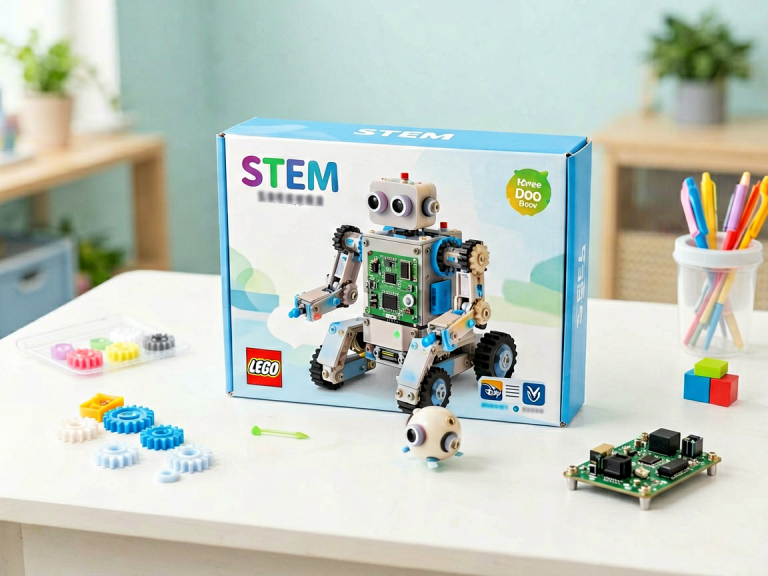
Beware of toys that do all the “thinking” for the child—talking dolls that narrate stories, or robots that move on their own. While these can be entertaining, they minimize the child’s own agency. The best hands-on learning toys are tools; the child is the engineer, architect, or scientist. The toy should respond to the child’s actions, not replace them.
Balancing Individual Interests With Exposure to New Areas
Every child has natural inclinations—some love building, others enjoy art, and still others gravitate toward pretend play. It’s wise to follow a child’s passion because intrinsic motivation drives deeper engagement. However, careful guidance can also introduce new domains. If a child is obsessed with dinosaurs, a hands-on excavation kit (with a plaster block and digging tools) combines their interest with fine motor work and scientific observation. If they love drawing, consider a light-up tracing board or a set of geometric stencils that subtly teach angles and shapes.
The key is to use the child’s existing interests as a portal to broader learning. A child who loves cooking can measure ingredients (math), observe chemical reactions when baking soda meets vinegar (science), and read recipes (literacy). Hands-on cooking toys, like a real child-safe kitchen set or a simple recipe card book, are excellent learning tools. Similarly, a child fascinated by construction can be introduced to a gear set that teaches cause-and-effect and rotational motion.
Encouraging Collaboration and Social Interaction
Hands-on learning is often thought of as a solitary activity, but many of the best toys are designed for multiple players. Cooperative building projects, such as a large marble run that requires two children to hold ramps and guide marbles, teach negotiation, turn-taking, and shared goal-setting. Board games that involve physical components (like a magnetic fishing game or a balancing tree) promote social skills alongside cognitive ones.
When choosing a toy, consider whether it can be used with siblings or friends. Toys that inspire group problem-solving often have greater long-term value because they build communication skills that academic tests can’t measure. Even simple items like a set of building planks become a collaborative endeavor: “We need a foundation wide enough to hold this weight.” Such interactions mirror real-world teamwork.
Avoiding “Smart” Toys That Detract From Active Learning
Finally, a word of caution about so-called “smart” toys—those equipped with artificial intelligence, app connectivity, or voice commands. While some are well-designed, many undermine the very principles of hands-on learning. When a toy talks for the child or provides instant feedback (“Correct! Now press the blue button!”), it robs the child of the opportunity to reason independently. The child learns to follow prompts rather than to initiate exploration.
Hands-on learning should be self-directed. A child learns more by figuring out how to balance a block on one edge than by listening to a digital voice instruct them to “place the block on the left.” Therefore, prefer toys that are silent, battery-free, and rely entirely on the child’s physical and mental engagement. The silence of a wooden marble run, punctuated only by the clack of rolling marbles, is far richer for the developing brain than any electronic beep.
Final Thoughts: Less Is More
In a world of endless toy catalogs and peer pressure, remember that the goal is not to own the largest collection, but to curate a small, intentional set of hands-on learning tools that will challenge and delight a child over time. Observe your child at play: Which materials do they return to again and again? Which seem to evoke frustration or boredom? Use these cues to guide future purchases. The best hands-on learning toys are those that become part of a child’s daily world—building towers, mixing “potions,” or constructing imaginary cities. They are the toys that, years later, a child recalls not as objects, but as the catalysts of their own discovery. Choose wisely, and watch your child learn through their own hands.