The Best Educational Toys for 8-Year-Olds: Building Skills Through Play
Introduction
At age eight, children are in a fascinating developmental sweet spot. They have moved beyond the basics of reading and math, yet they still possess a boundless curiosity and a love for hands-on exploration. Their cognitive abilities are sharpening: they can think logically, follow multi-step instructions, and engage in abstract reasoning. Socially, they begin to crave collaboration, competition, and creative expression. The right educational toys can harness this stage of growth, turning play into a powerful vehicle for learning. The best toys for 8-year-olds are those that challenge without frustrating, spark imagination, and build skills that extend far beyond the playroom. This article explores the top categories of educational toys for this age group, each chosen for its ability to foster critical thinking, creativity, STEM literacy, and social-emotional development.
1. STEM Kits: Cultivating a Love for Science and Engineering
Why They Matter for 8-Year-Olds
At eight, children can understand cause-and-effect relationships, follow detailed instructions, and experiment with trial and error. STEM (Science, Technology, Engineering, and Mathematics) kits provide structured yet open-ended opportunities to explore real-world concepts. They also build patience and resilience when experiments don’t work the first time.
Top Picks and What They Teach
- Snap Circuits Junior – This classic kit allows children to build working electronic circuits by snapping components onto a plastic grid. Kids learn about electricity, switches, and motors while creating a light bulb, a fan, or a doorbell. The visual and immediate feedback is highly motivating.
- Engino Discovering Stem – Kits like the “Hydraulics” or “Mechanics” series introduce principles of pneumatics, leverage, and gear systems. For an 8-year-old, building a hydraulic arm or a crane that actually lifts objects is both thrilling and educational.
- Osmo Genius Starter Kit – While digital, Osmo uses an iPad camera to blend physical pieces (tiles, numbers, puzzles) with interactive games. It teaches problem-solving, geometry, and basic coding logic without requiring screen reading.
Developmental Benefits
These toys teach the scientific method—hypothesis, testing, observation, conclusion—in a playful context. They also improve fine motor skills (connecting small parts) and encourage persistence. Many 8-year-olds who struggle with traditional school science find a sense of mastery through these kits, boosting their confidence in STEM subjects.
2. Strategy and Logic Games: Sharpening the Mind
Why They Matter for 8-Year-Olds
Eight-year-olds are beginning to understand advanced game rules, plan several moves ahead, and think strategically. They also enjoy friendly competition. Logic games that require deduction, pattern recognition, and spatial reasoning are perfect for this age.
Top Picks and What They Teach
- Gravity Maze – A marble-run and logic puzzle combined. Players must arrange towers to create a path for a marble to reach a target. It builds spatial reasoning, planning, and sequential thinking. Each challenge card offers increasing difficulty, keeping children engaged for months.
- Rush Hour – A sliding-block puzzle where players move cars to unblock a red car. It teaches planning, flexible thinking, and the concept of working backward from a goal. The compact size makes it great for travel.
- Blokus – A four-player strategy game where each player places colored tiles on a board, trying to block opponents while maximizing their own space. It develops geometric intelligence, turn-taking, and foresight.
Developmental Benefits
These games improve executive function—the set of mental skills that include working memory, cognitive flexibility, and self-control. They also teach children how to handle losing gracefully and how to adjust strategies based on an opponent’s moves. In an era of instant gratification, strategy games provide a slow-burn satisfaction that builds patience.
3. Creative Construction and Artistic Toys: Unleashing Imagination
Why They Matter for 8-Year-Olds
Creativity peaks in middle childhood. Eight-year-olds love to build, design, and invent. Artistic toys that allow for open-ended creation help them express emotions, solve design problems, and develop aesthetic sensibilities. Construction toys, in particular, reinforce geometric and engineering concepts.
Top Picks and What They Teach
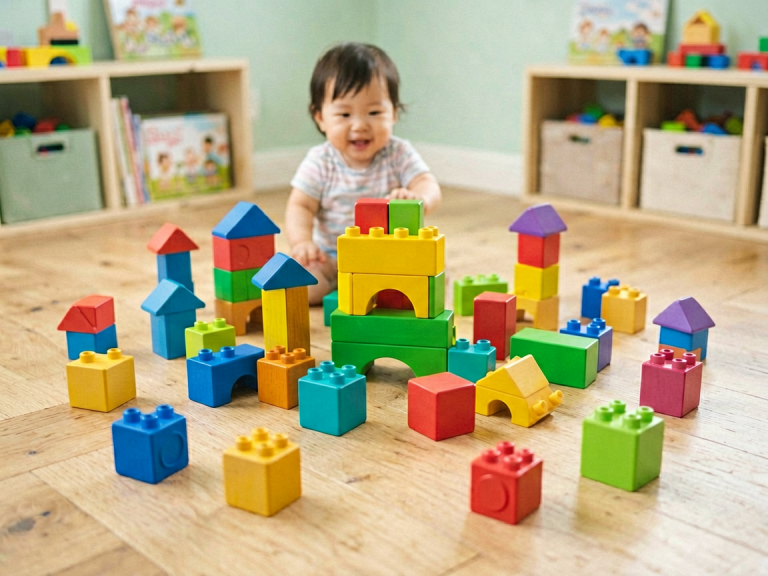
- LEGO Classic Bricks (Large Box) or LEGO Technic – Basic LEGO bricks offer endless possibilities. For 8-year-olds, sets like “LEGO Classic Creative Suitcase” or small Technic vehicles introduce mechanical elements—gears, axles, and pulleys. Building from instruction manuals teaches following directions, while free building fosters innovation.
- K’NEX – Similar to LEGO but with rods and connectors, K’NEX allows children to build moving structures like ferris wheels or bridges. It’s excellent for understanding tension, compression, and structural stability.
- Klutz Make Your Own Soap or Slime Kit – For children who love science-meets-art, these kits combine chemistry with creative design. Making custom-shaped, scented soaps or colorful slime teaches measurement, chemical reactions, and patience.
- Charcoal Pencils, Watercolor Sets, or a High‑Quality Sketchbook – Simple art supplies are often overlooked but are among the most educational. Drawing and painting improve hand-eye coordination, observation skills, and visual thinking. Many 8-year-olds benefit from non‑prescriptive creativity without a “right” answer.
Developmental Benefits
Creative toys build divergent thinking—the ability to generate many solutions to a single problem. They also foster a growth mindset: when a LEGO tower collapses, a child learns to rebuild and improve. Artistic expression provides a healthy outlet for emotions, which is especially important as 8-year-olds navigate social complexities like friendship dynamics and school pressures.
4. Science Exploration Kits: Nature, Biology, and Observation
Why They Matter for 8-Year-Olds
Children at this age are natural scientists—they ask “why” and “how” constantly. Kits that allow them to observe living things, investigate minerals, or conduct safe chemistry experiments satisfy that innate curiosity while teaching scientific disciplines.
Top Picks and What They Teach
- National Geographic Earth Science Kit – Includes materials for growing crystals, building a volcano, and digging for fossils. It introduces geology, mineralogy, and the scientific method in a highly tactile way.
- Crystal Growing Kits – Many brands offer crystal-growing projects that take days to complete. Kids learn about supersaturation, evaporation, and crystal structure. The wait-and-observe process teaches patience and scientific recording.
- Butterfly Garden – A kit to raise live caterpillars into painted lady butterflies. Watching metamorphosis first-hand is unforgettable. It teaches life cycles, animal care, and responsibility.
- Microscope (Entry-Level) – A simple 40x–1000x microscope coupled with prepared slides and blank slides lets children observe pond water, onion skin, or their own cheek cells. It transforms the invisible world into a visible one, sparking lifelong interest in biology.
Developmental Benefits
These kits teach observational skills, documentation (drawing or writing observations), and respect for living things. They also provide a concrete foundation for abstract concepts taught later in school (e.g., cell structure, chemical reactions). For an 8-year-old, holding a real crystal they grew or watching a butterfly emerge from a chrysalis creates a powerful memory that connects science to emotion.
5. Reading and Language Enrichment: Building Literacy Through Engagement
Why They Matter for 8-Year-Olds
Reading fluency and comprehension accelerate dramatically around age eight. Children transition from “learning to read” to “reading to learn.” Toys that support vocabulary, storytelling, and grammar in a fun way—without feeling like homework—are invaluable.
Top Picks and What They Teach
- Bananagrams – A portable word-building game where players race to create their own interconnected crossword grids using letter tiles. It reinforces spelling, vocabulary, and mental flexibility. The tactile nature of arranging tiles helps kinesthetic learners.
- Story Cubes – Nine dice with pictures (e.g., a castle, a key, a monster). Players roll all dice and create a story linking the images. This builds narrative skills, imagination, and oral language. Perfect for car rides or family game nights.
- High‑Interest Chapter Books with Companion Kits – For example, the *Magic Tree House* series often has companion non‑fiction books or activity kits. Similarly, *Diary of a Wimpy Kid* inspires reluctant readers. Pairing books with related toys (like a map from the story) deepens engagement.
- Puzzles with Hidden Words (e.g., Word Searches or Crossword Puzzles for Kids) – Simple puzzle books that are grade-level appropriate improve focus, spelling, and pattern recognition without screen time.
Developmental Benefits
These toys boost vocabulary, reading comprehension, and storytelling ability. They also strengthen working memory—when playing Bananagrams, a child must hold multiple words in mind while rearranging tiles. For 8-year-olds who find reading a chore, these games transform language into a playful challenge.
6. Collaborative and Social-Emotional Learning (SEL) Toys
Why They Matter for 8-Year-Olds
Social skills become critical at this age. Children are forming deeper friendships, learning to resolve conflicts, and developing empathy. Toys that require cooperation, negotiation, and emotional awareness—rather than pure competition—support healthy social development.
Top Picks and What They Teach
- The Game of Life (Junior Edition) – This board game simulates real-life decisions about jobs, family, and money. It teaches cause and effect, financial literacy, and the concept of consequences. Playing with siblings or friends encourages turn-taking and sharing.
- Outfoxed! – A cooperative whodunit game where all players work together to identify a thief before time runs out. It teaches deduction, teamwork, and the idea that working as a group can accomplish more than working alone.
- Emotional Intelligence Card Games – Decks like “Totika” or “The Feelings Game” prompt children to discuss emotions, describe situations, and practice empathy. For an 8-year-old, these games provide a safe structure to talk about fears, joys, and frustrations.
- Building Sets for Two (e.g., LEGO Friends sets with multiple characters) – While not explicitly SEL, building together requires communication, compromise, and shared creativity. It’s a low‑pressure way for children to practice collaboration.
Developmental Benefits
Cooperative games reduce anxiety about losing and emphasize relationships over winning. They build interpersonal skills that are foundational for school group projects and future work environments. For children who are shy or struggle with social cues, these toys offer a scaffolded way to engage with peers.
Conclusion: Choosing the Right Toy for Your 8-Year-Old
The best educational toys for 8-year-olds are not one-size-fits-all. Consider your child’s unique interests and temperament. A budding engineer may thrive with Snap Circuits or K’NEX, while a storyteller might prefer Bananagrams and Story Cubes. A socially inclined child may get more from cooperative board games, and a nature lover will adore a butterfly garden. The common thread across all these toys is that they are actively engaging rather than passively consuming. They require thinking, creating, building, or collaborating. They also respect a child’s developmental readiness—challenging but not overwhelming.
Investing in high‑quality educational toys at this age pays dividends. The skills children develop—critical thinking, creativity, persistence, empathy—are not just for school. They are the building blocks of a lifelong love of learning. So the next time you look for a gift, skip the flashy screen-based gadgets and choose a toy that sparks a question, ignites a discovery, or launches a new adventure. Your 8-year-old will learn more than you can imagine—and have a wonderful time doing it.