The Ultimate Guide to the Best STEM Toys for 8-Year-Olds: Fun, Learning, and Future Skills
At eight years old, children are at a magical crossroads. Their curiosity is boundless, their reading skills are solid enough to follow instructions, and their fine motor control has improved dramatically. They ask “why” and “how” with genuine hunger, and they possess the patience to stick with a challenging project for more than five minutes. This is the golden age for introducing STEM (Science, Technology, Engineering, and Mathematics) toys—tools that transform abstract concepts into tangible, joyful experiences. But with hundreds of products flooding the market, how do parents, educators, and gift-givers choose the ones that truly deliver? This guide dives deep into the best STEM toys for 8-year-olds, offering thoughtful recommendations based on developmental appropriateness, educational value, and—most importantly—pure fun.
Why Age 8 Is a Sweet Spot for STEM Toys
Eight-year-olds have moved beyond the simple “cause and effect” play of toddlerhood. They can now grasp multi-step processes, understand basic logic, and even dabble in coding concepts without feeling overwhelmed. Their brains are wired for pattern recognition and systematic thinking, which makes STEM activities particularly rewarding. At this age, children also start to develop a sense of identity—they might declare themselves “a scientist” or “an engineer” after a successful project. This intrinsic motivation is the fuel that drives lifelong learning.
Moreover, the social aspect of play evolves. Eight-year-olds often enjoy collaborating with siblings or friends on building tasks, yet they also relish independent challenges. The best STEM toys for this age group strike a balance between guided instruction and open-ended exploration. They allow kids to fail safely, iterate, and experience the thrill of “Aha!” moments. Whether it’s programming a robot to navigate a maze or mixing chemicals to create a volcanic eruption, these toys plant the seeds for critical thinking, creativity, and resilience.
Key Features to Look For in STEM Toys for 8-Year-Olds
Before diving into specific recommendations, it’s helpful to understand what makes a STEM toy effective for an eight-year-old. First, look for age-appropriate complexity. The toy should challenge without frustrating—think of it as “just hard enough” to keep them engaged. Second, multiple ways to play extend the toy’s lifespan. A single activity may lose its charm after two tries, but a kit that offers a dozen experiments or a building set with endless configurations will keep a child coming back. Third, real-world connections help children see how STEM applies to everyday life. A circuit kit that lets them power a fan or a light bulb is more meaningful than abstract puzzles. Finally, safety and durability are non-negotiable. Eight-year-olds can be enthusiastic, so chemical kits should be non-toxic, and electronic components should be well-insulated.
1. Coding and Robotics: Learn Programming Through Play
Coding is often perceived as intimidating, but the right toys make it as natural as building with blocks. For an eight-year-old, the goal isn’t to write lines of text but to grasp sequencing, loops, and conditional logic through tactile or visual interfaces.
Botley 2.0 by Learning Resources is a screen-free coding robot that speaks directly to this age group. Botley can detect objects, follow black lines, and execute up to 150 steps in a single program. Kids simply press directional buttons on a remote programmer to create sequences, then watch their robot respond. The beauty of Botley 2.0 is its expandability: it comes with forty coding cards, a coding activity set, and the ability to transform into a train, police car, or ghost for Halloween-themed fun. Children learn that a wrong step in a sequence causes the robot to crash—and they delight in debugging their own program. This immediate, visual feedback is invaluable. Botley also encourages teamwork; two children can design obstacle courses together, testing each other’s logic.
Another outstanding option is Osmo Coding Starter Kit for iPad. Osmo uses augmented reality: a physical coding blocks mat is placed in front of an iPad, and children arrange blocks to guide a character named Awbie through a game world. The blocks represent commands like “move,” “turn,” “jump,” and loops, and the screen instantly shows the result. For eight-year-olds who love digital games, Osmo bridges the gap between screen time and hands-on learning. It teaches the same core concepts as Botley—sequencing, debugging, and algorithm design—but in a more narrative-driven, immersive format. Both toys are proven to boost spatial reasoning and problem-solving, skills that pay dividends in math and science.
2. Science Experiment Kits: Hands-On Discovery
Nothing sparks scientific curiosity like a mess—a carefully controlled mess, that is. Science experiment kits allow eight-year-olds to act like mini chemists, physicists, and biologists, all while staying safely inside their own kitchen or backyard.
The National Geographic Mega Science Series – Earth Science Kit is a powerhouse of discovery. It includes over fifteen experiments, from growing crystals and erupting volcanoes to digging up real fossils and gemstones. Each experiment is accompanied by a detailed guide that explains the “why” behind the reaction: for instance, why baking soda and vinegar create carbon dioxide gas, or why crystals form in supersaturated solutions. The kit also comes with a display case for treasures, encouraging children to take pride in their findings. What makes this kit exceptional for eight-year-olds is the balance between guided instruction and open exploration. After following the steps once, children often start modifying variables—adding more vinegar, changing the temperature—which is authentic scientific inquiry.
For a more thematic approach, The KiwiCo Tinker Crate subscription delivers a new engineering or science project each month. Past crates have included building a hydraulic claw, a spinning top that uses centripetal force, and a simple motor. Each box contains all necessary materials, a comic book-style instruction manual, and online extras like videos and extension activities. The monthly surprise element keeps children engaged over time, and the projects are designed to last. Eight-year-olds particularly enjoy the sense of ownership—they build something functional from scratch and understand the physics behind it. Whether it’s a one-time gift or an ongoing subscription, science kits like these turn abstract classroom concepts into memorable, hands-on experiences.
3. Engineering and Building Sets: From Blueprint to Reality
Eight-year-olds are natural builders. Their spatial reasoning is sharpening, and they can follow complex diagrams to create structures that move, balance, and carry weight. The best engineering toys for this age are those that introduce principles of structural integrity, gear ratios, and mechanical advantage without overwhelming them.
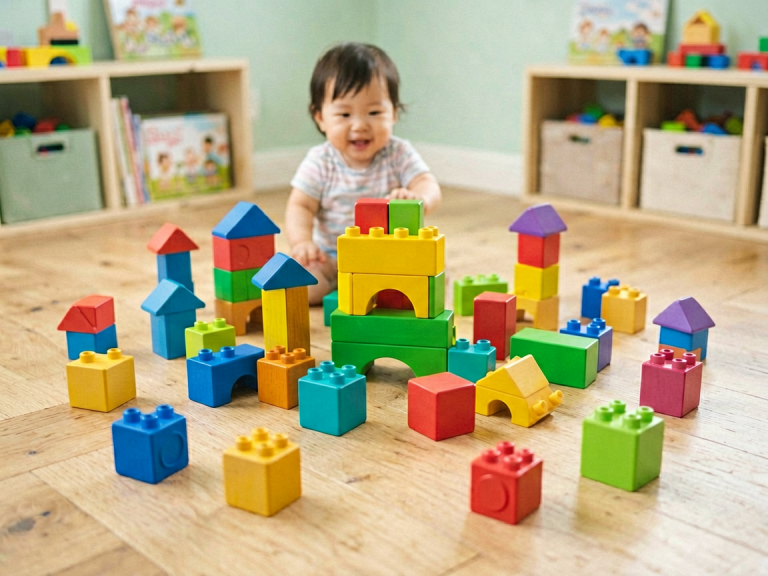
LEGO Classic Creative Bricks might seem too simple, but when combined with the BrickGears Engineering Set or even the LEGO Gear Bricks accessory pack, it becomes a powerful learning tool. Children can build a hand-crank fan, a winch, or a simple car with a steering mechanism. The act of meshing gears of different sizes teaches torque and speed intuitively. Many eight-year-olds also love Magna-Tiles – the clear magnetic tiles that snap together to form 3D geometric shapes. While often marketed to younger kids, the open-ended nature of Magna-Tiles allows older children to design complex domes, bridges, and towers, testing stability under real load. They learn that a triangle is stronger than a square, and that symmetry distributes weight evenly.
For a more structured engineering challenge, ThinkFun Gravity Maze is a marble run logic game that requires players to build a path from a starting point to a target tower using translucent cubes with built-in ramps, chutes, and tunnels. Kids must think ahead, plan routes, and adjust when the marble doesn’t reach its destination. Each of the 60 challenges increases in difficulty, from beginner to expert, and the game is entirely self-contained—no batteries, no screens. Gravity Maze teaches engineering design thinking: you hypothesize, test, observe, and refine. It’s portable, durable, and surprisingly addictive, making it one of the top STEM toys for car rides or rainy afternoons.
4. Math and Logic Games: Sharpening Critical Thinking
Mathematics often gets a bad reputation as merely memorizing multiplication tables, but the right game makes it a puzzle to be solved. For eight-year-olds, math and logic games should feel like play, not homework, and they should build number sense, pattern recognition, and deductive reasoning.
Rush Hour by ThinkFun is a classic traffic jam logic game that secretly teaches multi-step planning and spatial reasoning. Players slide cars and trucks on a grid to move the red hero car to the exit. As the levels advance, the grid becomes more congested, requiring you to think several moves ahead. Eight-year-olds may struggle initially, but the satisfaction of unlocking a jam after ten minutes of concentration is immense. Rush Hour has been shown to improve executive function and flexible thinking.
For a more explicitly mathematical challenge, Math Dice Jr. by ThinkFun transforms basic arithmetic into a competitive, fast-paced game. Roll the two target dice, then roll the five scoring dice. Players try to combine the scoring dice using addition and subtraction (and later multiplication) to match the target number. With multiple ways to combine the numbers, children naturally explore number bonds and mental math strategies. The game is portable, can be played solo or in a group, and adapts as skills grow. Eight-year-olds who are still building fluency with addition and subtraction will find it engaging, while more advanced players can introduce multiplication for extra challenge.
5. Electronic and Circuit Kits: Powering Creativity
Understanding how electricity flows is a cornerstone of STEM literacy. Electronic kits for eight-year-olds should be safe—no soldering—and intuitive enough that children can see the immediate effect of connecting a wire. The best ones use modular, snap-together components that make circuit building feel like putting together a puzzle.
Snap Circuits Jr. SC-100 is the gold standard for this age. It contains over 100 projects, from a simple light bulb to a flying propeller, a doorbell, and a lie detector. Each component snaps onto a plastic grid—no wires to strip, no batteries to worry about (the kit includes AA batteries). The manual is color-coded and easy to follow, and children quickly learn to read schematic symbols. The “snap” feedback is satisfying, and when a circuit doesn’t work, troubleshooting involves checking each connection—a perfect lesson in debugging and persistence. Many children advance from the Jr. kit to larger Snap Circuits sets, building radios, alarms, and even voice-controlled devices.
Another fantastic option is littleBits Base Kit. Rather than snapping wires, littleBits use magnetic connections where each bit has a specific function (power, input, output, wire). The magnetic design prevents incorrect connections, so kids can experiment freely. They can create a fan that spins when they wave a hand, or a buzzer that sounds when light hits a sensor. The modularity encourages creativity; after following the included instructions, children often invent their own gadgets. For an eight-year-old who loves storytelling, littleBits can even be integrated into dioramas to make interactive scenes—a volcano that glows, a treasure chest that plays music. This combination of art and engineering is exactly the kind of interdisciplinary thinking that STEM education should foster.
Conclusion: Fostering a Lifelong Love for Discover
Choosing the best STEM toys for an eight-year-old isn’t about buying the most expensive or technologically advanced product. It’s about finding a tool that matches the child’s current interests, challenges them just enough, and leaves room for creativity and mistakes. Whether they build a robot, grow a crystal, or solve a traffic jam puzzle, children gain confidence in their ability to understand and shape the world around them. The toys discussed here—from Botley’s coding blocks to Snap Circuits’ click-together electronics—are not just playthings; they are catalysts for curiosity. As you watch an eight-year-old’s eyes light up when their first circuit powers a light bulb, you realize that the best gift you can give is not a toy, but an experience of discovery. And that experience, once sparked, can illuminate a path toward a future filled with innovation and wonder.