The Ultimate Logic Toys Buying Guide: How to Choose Puzzles That Sharpen Young Minds
Introduction: Why Logic Toys Matter
In an age dominated by screens and passive entertainment, logic toys stand as powerful tools for active, engaged learning. Unlike video games that often guide a child step by step, logic puzzles require genuine cognitive effort—planning, reasoning, pattern recognition, and trial-and-error problem solving. Research consistently shows that regular engagement with logic-based play improves executive function, spatial reasoning, and even mathematical aptitude. But with hundreds of options flooding the market, from wooden blocks to digital coding kits, how does a parent, educator, or gift-giver make an informed choice? This guide provides a comprehensive framework for evaluating logic toys based on age, skill level, material quality, educational goals, and long-term value. Whether you are shopping for a curious toddler or a teenage puzzle enthusiast, the following sections break down every critical factor you need to consider before making a purchase.
1. Understanding the Spectrum of Logic Toys
Logic toys are not a monolithic category. They range from simple shape-sorters for infants to complex mechanical puzzles and coding robots for adolescents. To choose wisely, you must first understand which subcategory matches the child’s developmental stage and interests.
1.1. Classic Puzzles and Pattern Games
These include jigsaw puzzles, tangrams, Sudoku boards, and Rubik’s Cube-style puzzles. They focus on spatial reasoning, visual discrimination, and sequential logic. For young children (ages 3–5), large-piece floor puzzles with colorful images help develop hand-eye coordination and basic categorization. For older children and adults, metal or wooden mechanical puzzles (like the Chinese rings or burr puzzles) demand multi-step reasoning and patience.
1.2. Building and Construction Kits
Construction toys such as LEGO, magnetic tiles, and wooden block sets are fundamentally logic tools. Children must follow instructions or invent structures that obey physical constraints—gravity, balance, symmetry. More advanced sets include gear-based kits (like Gears! Gears! Gears!) that introduce cause-and-effect relationships. For children aged 8 and up, architectural model kits (such as wooden bridge builders) require planning and structural logic.
1.3. Strategy and Board Games
Games like chess, checkers, Blokus, and Settlers of Catan are logic toys in disguise. They teach turn-based reasoning, resource management, and foresight. Cooperative logic games (e.g., “The Magic Labyrinth” or “Outfoxed”) encourage group problem-solving. When choosing board games, consider the number of players, average playtime, and whether the game offers scalable difficulty.
1.4. Coding and Computational Logic Toys
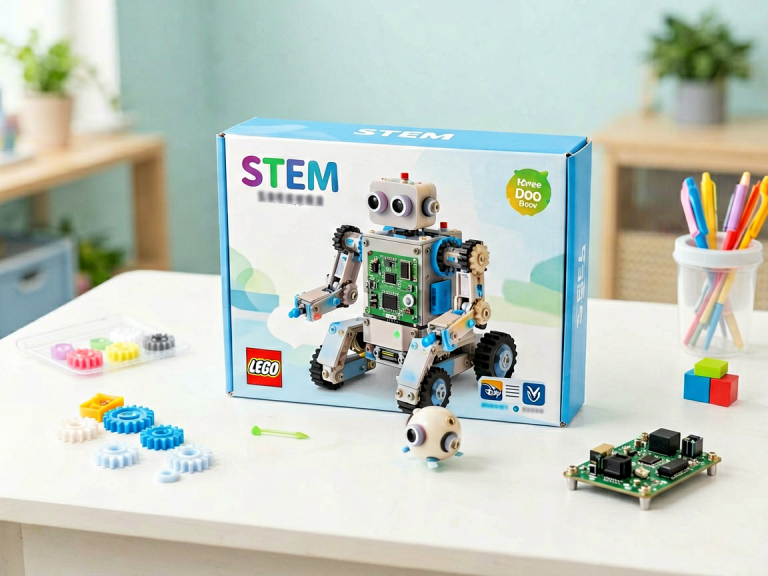
For children aged 6 and above, programmable robots (like Botley, Sphero, or LEGO Boost) and unplugged coding puzzles (such as Code & Go Mouse) introduce sequential logic and debugging skills. These toys often grow with the child—a simple command-based robot can later be programmed with block coding or even text-based languages.
1.5. Puzzle Boxes and Escape Room Kits
These real-world puzzles require opening locks, finding hidden compartments, or solving a series of clues. They are excellent for older children (10+) and family bonding. Look for kits with adjustable difficulty levels or those that allow multiple replays by re-setting the mechanisms.
2. Age Appropriateness: Matching Toy Complexity to Cognitive Ability
A logic toy that is too easy leads to boredom; one that is too difficult causes frustration. The golden rule is to choose a toy that sits just at the edge of the child’s current ability—the “zone of proximal development.” Here is a rough age breakdown:
Ages 2–4: Sensory and Categorical Logic
- Best choices: Large wooden shape sorters, nesting cups, simple peg puzzles, color-matching games.
- What to avoid: Small parts (choking hazard), overly abstract puzzles, toys requiring reading.
- Key features: Bright colors, chunky pieces, safety certifications (ASTM, CE).
Ages 5–7: Sequential and Spatial Logic
- Best choices: Jigsaw puzzles (up to 100 pieces), pattern blocks, simple board games (Candy Land, but with logical variations), magnetic building tiles.
- What to avoid: Competitive games that cause emotional distress; puzzles with many identical pieces.
- Key features: Clear instructions, cooperative play options, durable materials.
Ages 8–11: Deductive and Strategic Logic
- Best choices: Rubik’s Cube (beginner), chess, logic puzzle books, coding robots, mechanical puzzles (metal or 3D wooden), strategy games like “Carcassonne” or “Ticket to Ride.”
- What to avoid: Kits requiring adult supervision for assembly (unless parent is willing), games with excessive reading.
- Key features: Multi-level difficulty, online tutorials or community support.
Ages 12+: Abstract and Formal Logic
- Best choices: Advanced coding kits (Arduino, Raspberry Pi), 3D puzzle boxes, logic grid puzzles, escape room kits, complex Rubik’s variations (4×4, pyraminx), and competitive board games like “Terraforming Mars.”
- What to avoid: Toys that rely on gimmicks rather than genuine logic.
- Key features: Open-ended challenges, modifiability, long-term reusability.
3. Educational Goals: What Specific Skills Do You Want to Foster?
Not all logic toys train the same set of cognitive muscles. Before buying, identify the desired outcomes:
3.1. Spatial Reasoning and Geometry
Toys like tangrams, geoboards, 3D block puzzles, and architectural construction sets are ideal. They require visualizing shapes from different angles—a skill closely linked to STEM success. Look for sets that include symmetry, rotation, and tessellation challenges.
3.2. Sequential and Conditional Logic
Coding toys, logic mazes, and “if-then” board games (like “Robot Turtles”) teach children to think in steps and anticipate consequences. The best options allow children to test their sequences and correct errors independently.
3.3. Deductive Reasoning and Hypothesis Testing
Games like “Clue,” “Mastermind,” and logic grid puzzles demand that players gather clues, eliminate possibilities, and test hypotheses. For younger children, simplified versions (e.g., “Guess Who?”) are a good start.
3.4. Creativity and Divergent Thinking
Open-ended logic toys, such as magnetic tiles or wooden planks (Kapla or KEVA planks), combine logical constraints with creative freedom. Children must apply principles of balance and geometry while designing original structures. Avoid toys that have only one correct solution if you want to encourage divergent thinking.
3.5. Persistence and Frustration Tolerance
Choose puzzles that are designed to be solved through multiple attempts. Mechanical puzzles that require twisting, turning, or disassembling often teach valuable lessons about patience and iterative learning. Kits that come with hint cards or escalation levels (e.g., “ThinkFun” series) are excellent for building resilience.
4. Material Quality and Safety Considerations
Logic toys are handled frequently, dropped, chewed (by toddlers), and often stored in chaotic play areas. Durability and safety are paramount.
4.1. Wood vs. Plastic vs. Metal
- Wood: Classic, warm feel, long-lasting if finished well. Look for smooth edges, non-toxic paint (water-based), and solid construction (no splinters). Wooden toys are ideal for young children but can be heavy for travel.
- Plastic: Lightweight, waterproof, often more affordable. However, check for BPA-free and phthalate-free labels. Flimsy plastic may break easily, especially in mechanical puzzles. High-quality ABS plastic is preferable.
- Metal: Common in mechanical puzzles (Rubik’s Cube, wire puzzles, gear sets). Metal can be cold and potentially sharp if edges are unpolished. Ensure hinges and joints move smoothly without pinching.
4.2. Choking Hazards and Small Parts
Always follow age labels. For children under 3, any toy with parts smaller than 1.25 inches in diameter (or that can fit inside a toilet paper tube) is dangerous. Logic toys for older children often include small tokens, screws, or springs—keep these out of reach of younger siblings.
4.3. Certifications and Standards
Look for ASTM F963 (US), EN 71 (Europe), or AS/NZS 8124 (Australia) certifications. These indicate the toy has been tested for mechanical hazards, flammability, and chemical limits. For electronic logic toys, ensure batteries are secured with screws to prevent accidental swallowing.
5. Budget and Long-Term Value
Logic toys can range from under $10 (simple maze puzzles) to over $200 (advanced robotics kits). Consider the cost-per-play and the toy’s ability to scale.
5.1. Replayability
A good logic toy should provide multiple challenges. Single-solve puzzles (e.g., a 100-piece jigsaw) are fine for one-time enjoyment, but for long-term value, choose toys with variable difficulty or multiple configurations. For example, a set of 60 pattern cards for tangrams offers hours of progressive challenges. A coding robot with expandable sensors and accessories grows with the child.
5.2. Expandable Systems
Many brands offer modular systems. LEGO’s Technic or Mindstorms lines, ThinkFun’s “Circuit Maze” and its expansion packs, or the “Gravity Maze” series all allow users to add new pieces or scenarios. These can be built gradually, spreading the cost over several birthdays or holidays.
5.3. DIY and Upcycling Potential
Consider whether the toy can be repaired or repurposed. Wooden block sets, for instance, can be used for math, art, and construction for years. Magnetic tiles can be combined with other magnetic toys. Kits that come with spare parts or online printable puzzles add extra value.
6. Brand Reputation and Reviews
Not all logic toys are created equal. Reputable brands invest in research, child development testing, and quality control. Some established names include:
- ThinkFun: Known for logic mazes, coding games, and single-player puzzles with clear progression.
- Ravensburger: High-quality jigsaw puzzles with excellent piece fit and vivid imagery.
- Melissa & Doug: Wooden puzzles, pattern blocks, and sorting toys for early childhood.
- Learning Resources: STEM kits like “Botley” and “Gears! Gears! Gears!” with educator-designed activities.
- SmartGames: Portable logic puzzles with graded difficulty levels, excellent for travel.
- LEGO: The ultimate building system, with thematic sets and education-focused “LEGO Education” lines.
Read customer reviews on platforms like Amazon or specialized toy review sites. Look for comments about durability, clarity of instructions, and whether the toy holds a child’s attention over time. Beware of products with excessive packaging or “novelty” pieces that break quickly.
7. Where to Buy and Testing Before Purchase
Online retailers offer the widest selection, but physical stores allow you to inspect materials firsthand. Many specialty toy stores (like Learning Express) have demo stations where children can try puzzles before buying. For second-hand logic toys, check charity shops or online marketplaces, but ensure all pieces are present and the toy is clean and undamaged.
8. Final Checklist: Your 10-Second Decision Guide
Before you click “Add to Cart,” run through this quick mental checklist:
- Age: Does the toy match the child’s current cognitive stage?
- Skill focus: What specific logic skill is being trained?
- Durability: Are materials safe and sturdy?
- Replayability: Can it be solved multiple times or in different ways?
- Social factor: Is it meant for solitary play or group interaction?
- Budget: Does it offer long-term value for the price?
- Brand trust: Is the manufacturer known for educational quality?
- Size and storage: Will it fit in your home without clutter?
Conclusion: The Gift of Growth
A well-chosen logic toy is not a mere pastime—it is a gift of cognitive growth, resilience, and joy. By following this buying guide, you empower yourself to select toys that challenge without overwhelming, engage without addicting, and teach without lecturing. Whether you choose a classic wooden puzzle for a two-year-old or a programmable robot for a teenager, remember that the best logic toy is the one that sparks curiosity and invites a child to say, “Let me try again.” That simple phrase is the first step toward a lifelong love of learning. Happy shopping, and may your next purchase become a well-loved companion on the journey of discovery.