The Art and Science of Choosing Logic Toys: A Comprehensive Guide for Parents and Educators
—
Introduction: Why Logic Toys Matter More Than Ever
In an age dominated by screens, passive entertainment, and algorithm-driven content, the humble logic toy stands as a quiet revolutionary. A well-chosen logic toy does not merely occupy a child’s hands; it engages their mind, challenges their assumptions, and cultivates the cognitive muscles that underpin critical thinking, problem-solving, and even emotional resilience. From classic puzzles like Rubik’s Cubes to modern coding board games, the market is flooded with options. Yet the very abundance can confuse well-meaning adults: Which toy is right for a five-year-old? Does a high difficulty rating guarantee better learning? Should digital logic apps count as “toys”? This article provides a systematic framework for selecting logic toys, balancing developmental science, practical considerations, and the joyful spirit of play.
—
1. Understanding the Taxonomy of Logic Toys
Before choosing, it is essential to understand what “logic toys” actually encompass. Logic toys are not a monolithic category. They can be broadly classified into several types, each exercising distinct cognitive faculties.
1.1 Spatial Reasoning Toys
These toys require visualization, rotation, and manipulation of shapes in three dimensions. Examples include tangrams, magnetic building tiles, 3D puzzles (like the Soma cube), and geometric stacking games. Spatial reasoning is a strong predictor of success in STEM fields, and toys in this category train the brain to mentally “flip” and “fit” objects.
1.2 Sequential and Pattern-Based Toys
Sudoku grids, sequence matching games, pattern blocks, and logic puzzles that ask “what comes next?” fall here. They hone inductive reasoning—the ability to infer rules from examples—and are foundational for mathematical thinking.
1.3 Deductive Reasoning Games
Classic examples include Mastermind, Clue (Cluedo), and logic grid puzzles (e.g., “Einstein’s Riddle”). Players use given clues to eliminate possibilities and deduce a unique solution. These toys teach hypothesis testing, conditional logic, and systematic elimination—skills directly transferable to scientific thinking.
1.4 Programming and Algorithmic Toys
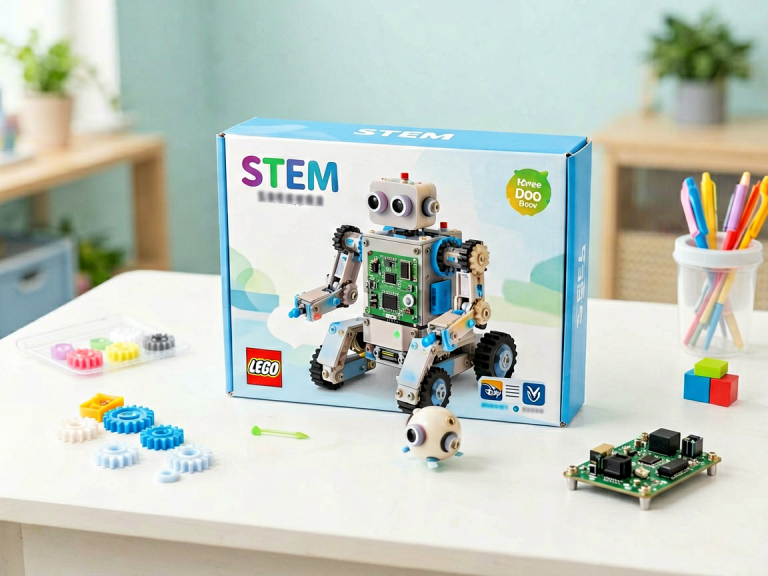
From robot kits like LEGO Mindstorms to board games like “Robot Turtles” or “Code Master,” these toys introduce concepts of sequence, loops, conditionals, and debugging without requiring a screen. They are particularly valuable for developing computational thinking in young children.
1.5 Strategy and Planning Games
Chess, checkers, Hive, and abstract strategy games such as “Blokus” or “Quoridor” fall here. They demand forward planning, anticipation of opponent moves, and adaptive strategy—essentially, the “if-then-else” logic applied to social or competitive contexts.
Understanding these categories helps narrow the choice based on which cognitive skill you wish to nurture. For a well-rounded development, rotate among different types rather than fixating on one.
—
2. The Age-Appropriateness Conundrum: More Than a Label
Toy packaging almost always includes an age recommendation, but these labels are often compromised by marketing or safety regulations. A child’s cognitive readiness is not strictly tied to chronological age. Instead, consider the following sub-factors:
2.1 Developmental Milestones and Cognitive Load
For toddlers (ages 2–4), logic should be concrete and tactile. Simple shape sorters, nesting cups, and large-piece puzzles teach cause-and-effect and basic categorization. Avoid toys with many rules or abstract symbols; the working memory of a three-year-old can handle about one or two steps. For early elementary (ages 5–7), introduce multi-step puzzles and simple board games that require turn-taking and rule-following. Games like “Sleeping Queens” or “Dragomino” blend luck with simple deduction. For ages 8–12, children can handle multi-layered logic: Sudoku, Rubik’s Cube, and strategy games become appropriate. Teenagers and adults can benefit from complex logic systems like Turing Tumble (a mechanical computer) or even escape-room-in-a-box puzzles.
2.2 The “Frustration Window”
A toy that is too easy will be boring; one that is too hard will cause frustration and abandonment. The ideal logic toy sits just beyond the child’s current ability—what Lev Vygotsky called the “zone of proximal development.” A good heuristic: if the child can solve the puzzle without any help about 60–70% of the time, the difficulty is appropriate. For the remaining 30%, they should need a hint or demonstration, not a full solution. Many high-quality logic toys include adjustable difficulty levels (e.g., a puzzle book with “easy,” “medium,” and “hard” pages). Prioritize these.
2.3 Safety and Physical Design
Younger children put toys in their mouths, so avoid small parts for under-threes. Check for non-toxic materials (BPA-free plastics, lead-free paints) and rounded edges. For magnetic toys, ensure magnets are securely embedded and cannot be swallowed. Even for older children, physical comfort matters: small, fiddly pieces can cause eye strain or frustration, while well-designed ergonomics (e.g., larger cubes for small hands) improve the play experience.
—
3. Educational Value vs. Pure Fun: The Critical Balance
One common mistake is to treat logic toys as “learning work” rather than play. Children—and adults—learn best when intrinsically motivated. A toy that is purely didactic, with tedious worksheets or no narrative, may be rejected. Conversely, a toy that is all fun but provides no cognitive challenge is merely entertainment.
3.1 Explicit vs. Implicit Learning
Some toys teach logic overtly: a coding game explicitly says “this is a loop.” Others embed logic in a narrative: a mystery board game requires deduction but never uses the word “logic.” Both have merit. For younger children, implicit learning through storytelling (e.g., “The Three Little Pigs” logic puzzle where you must place houses to protect the pigs from the wolf) is often more engaging. For older children, explicit instruction can be beneficial if paired with a challenge they care about (e.g., building a marble run that requires predicting trajectories).
3.2 Assessing “Replayability”
The best logic toys have high replay value. A puzzle that is solved once and discarded offers limited benefit. Look for toys that can be solved in multiple ways, have variable starting conditions, or include challenge cards. For example, a set of tangram pieces can create hundreds of silhouettes. A logic grid puzzle book offers dozens of unique scenarios. Replayability ensures that the child practices the same cognitive skills in different contexts, strengthening neural pathways.
3.3 Transferability
Does the toy teach skills that transfer to real-world problems? While any logic practice is beneficial, some toys are particularly good at transfer. For instance, strategy games that teach “planning several moves ahead” apply directly to project planning. Programming toys that require debugging (finding and fixing errors) teach a mindset applicable to writing, cooking, or fixing a bike. Avoid toys that rely on memorization of arbitrary trivia; true logic toys should emphasize process over fact.
—
4. Social and Emotional Dimensions of Logic Play
Logic is often perceived as a solitary, “nerdy” pursuit, but many logic toys shine in social settings. The social context can amplify learning.
4.1 Cooperative vs. Competitive Logic Toys
Cooperative toys (where players work together against the game) foster communication, shared reasoning, and empathy. Examples include “Forbidden Island” or “Pandemic,” where solving a logic puzzle requires team collaboration. Competitive toys like chess or “Santorini” teach sportsmanship, anticipation, and strategic thinking under pressure. Both are valuable. For a child who is easily discouraged by losing, start with cooperative games; for a competitive child, ensure they also experience cooperative play to balance their emotional development.
4.2 Adult Involvement and Scaffolding
Research shows that adult-guided play—especially when the adult asks open-ended questions like “What do you think will happen if you move this piece?”—significantly enhances the benefits of logic toys. However, adults should resist the urge to solve the puzzle for the child. The best role is that of a “Socratic partner”: prompting, encouraging, and occasionally hinting, but never taking over. This scaffolding gradually fades as the child’s competence grows.
4.3 Managing Frustration and Building Grit
Logic toys inevitably involve failure. A puzzle cannot be solved on the first try. This presents a golden opportunity to teach perseverance. When selecting a toy, consider how it handles failure. Does it provide constructive feedback? For example, a digital logic game that says “almost—try a different sequence” is more helpful than one that says “wrong” and shuts down. Physical toys often rely on the player to self-correct; that is fine, but younger children may need an adult to help them reframe failure as “data” rather than “defeat.” Choose toys that allow for multiple attempts without punishing the player (e.g., no time limits for young children).
—
5. Practical Considerations: Budget, Space, and Longevity
Beyond cognitive and emotional factors, real-world constraints matter.
5.1 Price vs. Utility
Logic toys range from free (printable puzzles, online logical reasoning games) to hundreds of dollars (programmable robot kits). Price does not directly correlate with educational value. A simple deck of playing cards can teach probability and strategy (e.g., War, Memory, or Poker). An expensive robotics kit may sit unused if the child lacks interest or the instructions are overly complex. Prioritize toys that offer a high “cognitive cost per dollar,” meaning many hours of engaged thought. Multi-purpose toys (e.g., a set of wooden blocks that can be used for stacking, balancing, and building) often offer the best value.
5.2 Physical Footprint and Storage
Large puzzles with many pieces can overwhelm a small living space. Consider whether the toy requires a dedicated table, or whether it can be used on a lap or floor. Magnetic puzzles (e.g., “Magna-Tiles”) are great because they can be built vertically and stored flat. Electronic logic toys require batteries or charging; ensure these are easily replaceable. Also, think about the “mess factor”: some logic toys (e.g., logic riddles that involve moving tokens on a board) are messy and require organization; others (e.g., electronic handheld puzzles) are self-contained and travel-friendly.
5.3 Longevity and Growth
A toy that the child outgrows in two months is not a wise investment. Look for toys with “stretchability.” For example, a Rubik’s Cube can be tackled in stages: first one side, then two layers, then the whole cube. A good coding toy like “Cubetto” has expansion packs for older children. Alternatively, invest in timeless classics: chess, backgammon, and Go have infinite depth and can be enjoyed for a lifetime. For younger children, choose toys that can be used in increasingly complex ways: e.g., pattern blocks can first be used for simple replication, then for creating original designs, then for exploring symmetry and fractions.
—
6. The Screen Dilemma: Digital Logic Toys and Apps
The digital world offers a plethora of logic games—from “Thinkrolls” for toddlers to “The Witness” for adults. The question is not whether digital toys are “bad,” but how to choose wisely.
6.1 Quality vs. Distraction
Many free apps are designed to maximize screen time through addictive mechanics (loot boxes, infinite levels, flashy rewards) rather than genuine cognitive challenge. Look for app-based logic toys that are ad-free, do not require internet connection, and have a clear educational framework. Apps like “Monument Valley” (spatial puzzles) or “DragonBox” (algebra learning disguised as a game) are excellent. However, for children under six, the American Academy of Pediatrics recommends limiting screen time. Prioritize physical toys for younger children, as tactile manipulation engages more neural pathways than swiping a screen.
6.2 Hybrid Toys
Some toys elegantly bridge physical and digital. For example, “Osmo” uses a tablet camera to recognize physical puzzle pieces placed on the table. “Kano” computer kits allow children to build a physical computer and then code on it. These hybrids combine the benefits of tangible interaction with the adaptive feedback of software. They are often pricier but can be highly effective for children who are already drawn to screens.
—
7. Putting It All Together: A Decision Framework
To synthesize the above, here is a step-by-step decision framework for choosing a logic toy:
- Identify the child’s current cognitive sweet spot (age, attention span, existing skills). Use a simple puzzle to test baseline—if they solve a 12-piece jigsaw easily, move to 24 pieces.
- Choose a type of logic (spatial, sequential, deductive, algorithmic, strategic) that aligns with their interests. A child who loves building might prefer spatial toys; a child who loves stories might prefer deduction games.
- Evaluate difficulty and replayability. Check if the toy has multiple levels, expansion packs, or alternative challenges. Consider reading online reviews from parents or educators who describe average solving times.
- Consider the social context. Will the child play alone, with siblings, or with friends? Cooperative games for a group, solo puzzles for independent play.
- Check practical constraints. Budget, space, noise level (some electronic puzzles beep), and material safety.
- Try before you buy. Many libraries or toy libraries lend logic toys. Alternatively, play a free online version of the same concept to see if the child engages.
- Monitor and iterate. After purchase, observe the child’s engagement. If they lose interest quickly, the toy may be too easy, too hard, or not the right type. Rotate toys and revisit them months later—sometimes a young child will suddenly understand a puzzle that previously baffled them.
—
Conclusion: The Toy as a Catalyst, Not a Crutch
Ultimately, the best logic toy is not the one with the most pieces, the steepest difficulty curve, or the flashiest design. It is the one that ignites a spark of curiosity, invites trial and error, and leaves the player feeling just a little bit smarter after each session. Logic toys are tools, not teachers. The real learning comes from the conversations around them: the “What if we tried this?” from a parent, the “I found a different way!” from a child. Choose wisely, but remember that the most powerful logic toy is a brain paired with a willing, playful guide. In a world that increasingly demands complex reasoning, giving a child the gift of a well-chosen logic toy is not a luxury—it is an investment in their future ability to think clearly, creatively, and with resilience.