Outdoor Toys vs Indoor Toys: A Comparative Analysis of Play, Development, and Well-Being
Play is the universal language of childhood, a vital activity through which children explore the world, build skills, and express their imagination. Yet, the toys that facilitate this play are not all created equal. The debate between outdoor toys and indoor toys is more than a matter of personal preference—it touches on fundamental questions about child development, safety, physical health, and the modern pressures of screen-based entertainment. While both categories offer unique benefits and drawbacks, a thoughtful comparison reveals that a balanced approach is essential for raising well-rounded, resilient children. This essay examines the key differences between outdoor and indoor toys across five critical dimensions: physical development, cognitive stimulation, social interaction, safety and supervision, and the impact of technology.
Physical Development and Gross Motor Skills
One of the most obvious distinctions between outdoor and indoor toys lies in the type of physical activity they encourage. Outdoor toys are inherently designed for large, open spaces and often require full-body movement. Bicycles, scooters, jump ropes, trampolines, balls, and climbing frames engage children in running, jumping, balancing, and coordinated muscle use. These activities promote cardiovascular health, strengthen bones, improve balance and spatial awareness, and help children develop gross motor skills that are foundational for sports and everyday tasks. A child who spends time on a swing set learns to pump their legs rhythmically, while a child on a balance bike develops core stability and directional control. Research consistently shows that outdoor play reduces the risk of childhood obesity and improves overall fitness levels.
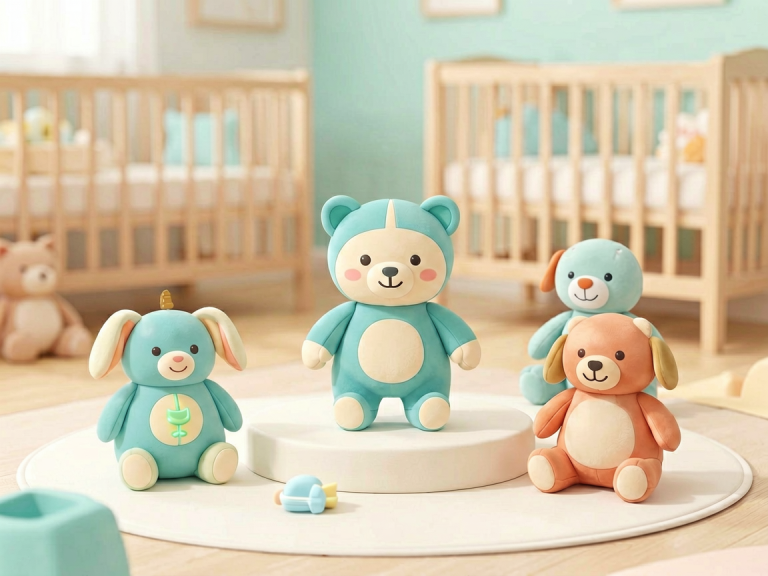
In contrast, indoor toys typically encourage sedentary or fine-motor activities. Building blocks, board games, puzzles, art supplies, and dolls require children to sit at a table or on the floor, using their hands and fingers with precision. While these activities are excellent for developing dexterity, hand-eye coordination, and patience, they do little to elevate heart rate or burn calories. Even active indoor toys like mini-trampolines or dance mats are constrained by space, often limiting vigorous movement. The consequence is that children who rely heavily on indoor toys may miss out on essential physical challenges that prepare their bodies for a lifetime of healthy activity.
Cognitive Stimulation and Creativity
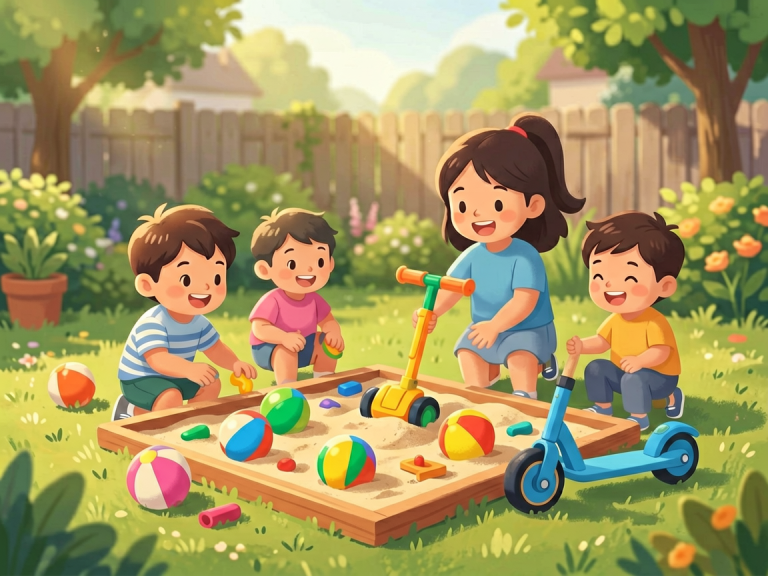
Both categories of toys contribute to cognitive development, but they do so in markedly different ways. Outdoor toys often foster unstructured, open-ended exploration. A simple sandbox with shovels and buckets can become a construction site, a volcano, or a cake bakery—limited only by a child’s imagination. Nature-based outdoor toys, such as bug-catching kits, gardening tools, and water tables, encourage scientific thinking, observation, and cause-and-effect reasoning. A child who experiments with a water channel or builds a fort from sticks learns physics, engineering, and creative problem-solving in a real-world context. The unpredictable outdoor environment (wind, sunlight, uneven terrain) adds an extra layer of complexity that sharpens adaptability.
Indoor toys, on the other hand, are often more structured and designed with specific educational outcomes in mind. STEM kits, magnetic tiles, coding robots, and memory games target logic, sequencing, and abstract reasoning. While these toys are powerful tools for academic learning, they can sometimes limit free-form creativity because instructions and rules are predefined. A child assembling a model airplane follows steps; a child playing with a pile of leaves outdoors invents the rules as they go. The best indoor toys balance structure with flexibility—for instance, open-ended art supplies (clay, paint, loose parts) allow for self-directed creation similar to outdoor play. Yet, the confined indoor setting may still lack the sensory richness of grass, dirt, wind, and living creatures.
Social Interaction and Group Dynamics
The social benefits of toys also differ significantly between indoor and outdoor environments. Outdoor toys naturally promote larger group play and cooperative negotiation. When children play soccer, tag, or hide-and-seek, they must communicate roles, establish boundaries, resolve disputes, and adapt to shifting team dynamics. Playground equipment like seesaws and merry-go-rounds require coordination and trust. Outdoor play provides a relatively egalitarian setting where children of different ages, abilities, and backgrounds can participate side-by-side. The space itself reduces conflict because there is room to spread out and avoid collisions.
Indoor toys often facilitate smaller, more intimate social interactions. Board games teach turn-taking, following rules, and graceful winning or losing. Dollhouses and action figures invite children to create intricate narratives and practice social scripts through role-play. However, indoor play can also lead to more territorial disputes—who gets the remote-control car, who controls the tablet, whose turn it is on the gaming console. Furthermore, the physical proximity required indoors may increase friction among children with different temperaments. In recent years, indoor toys have become increasingly solitary, especially with the rise of digital tablets and single-player video games. This shift raises concerns about declining social skills, empathy, and collaborative problem-solving abilities in the current generation.
Safety, Supervision, and Environmental Factors
Safety is a paramount consideration in the outdoor versus indoor toy debate, and it often tips parental decisions toward indoor options. Outdoor toys carry inherent risks: falls from bikes or climbing frames, collisions during ball games, sunburn, insect bites, and weather-related hazards. Parents must invest in proper safety gear (helmets, knee pads, sunscreen), inspect equipment regularly, and remain vigilant while children play. In many urban environments, safe outdoor spaces may be limited, crowded, or unappealing, pushing families indoors by default.
Indoor toys are generally perceived as safer because the environment is controlled. Floors are padded or carpeted, sharp corners are covered, and there is no risk of traffic or strangers. However, indoor toys have their own safety concerns: small parts that pose choking hazards, toxic paints or plastics in cheap imports, and the growing problem of screen addiction. Moreover, excessive indoor play can lead to Vitamin D deficiency, myopia (nearsightedness), and poor posture from slouching over devices. The clean, climate-controlled indoor environment may protect children from physical injury but can deprive them of the immune-boosting benefits of exposure to soil microbes and fresh air. Striking a balance requires parents to weigh manageable risks against the long-term costs of a sedentary, sterile lifestyle.
The Role of Technology and Modern Trends
No discussion of indoor toys is complete without addressing the digital revolution. Twenty-first-century indoor play is dominated by screens: tablets, smartphones, gaming consoles, and interactive learning apps. Digital toys offer instant feedback, adaptive difficulty, and vast educational libraries. They can teach languages, math, coding, and even social skills through multiplayer games. Yet, concerns about excessive screen time are well-documented: disrupted sleep, reduced attention spans, diminished physical activity, and impaired face-to-face communication.
Outdoor toys have not remained untouched by technology. GPS-enabled treasure hunts, smart balls that track motion, and augmented-reality garden games are attempts to merge the benefits of outdoor play with digital engagement. However, these hybrids often fail to replicate the raw, unmediated experience of natural play. The most compelling outdoor toys remain the simplest: a cardboard box turned into a spaceship, a puddle to jump in, a stick that becomes a magic wand. In an era of constant digital stimulation, parents are increasingly recognizing the value of “unplugged” outdoor time as an antidote to screen fatigue. The toy industry has responded with more nature-inspired designs, sustainable materials, and products that encourage imaginative, physical, and social play—proving that the best outdoor toys often need no batteries at all.
Conclusion: The Case for Balanced Play
Ultimately, the choice between outdoor toys and indoor toys should not be an either-or proposition. Each category enriches childhood in irreplaceable ways. Outdoor toys build strong bodies, resilience, and a connection to the physical world; indoor toys hone fine motor skills, academic thinking, and the ability to concentrate in a controlled setting. The healthiest development occurs when children have ample opportunities for both—climbing trees in the park and solving puzzles at the kitchen table, playing tag with neighbors and building intricate Lego castles alone. Parents, educators, and communities must work together to ensure that children have access to safe outdoor spaces, high-quality indoor toys, and the time to enjoy them without the pressure of overscheduled lives. In the end, the best toys are not defined by their location but by the joy, learning, and human connection they inspire. Let the children run, jump, build, imagine—indoors or out, the magic of play is what truly matters.