The Hidden Danger in Play: Choking Hazards Posed by Robot Toys
Introduction
In an age where technology and childhood increasingly intersect, robot toys have become a staple in countless households. From interactive robotic pets that wag their tails and respond to voice commands to programmable kits that teach basic coding, these intelligent playthings captivate children’s imaginations and promise educational value. However, beneath the flashing lights and cheerful beeps lies a silent and often underestimated threat: choking hazards. While robot toys are designed to delight, many contain small detachable components—button batteries, tiny screws, plastic eyes, and miniature gears—that can easily become lodged in a child’s airway. This article examines the anatomy of robot toys as choking hazards, reviews relevant data and case studies, critiques existing safety regulations, and offers practical strategies for parents and manufacturers to mitigate risks. Understanding these dangers is not about discouraging innovation but about ensuring that the magic of play does not come at the cost of a child’s life.
The Anatomy of a Robot Toy: Small Parts and Risks
Robot toys are inherently complex. Unlike traditional stuffed animals or simple building blocks, they rely on multiple mechanical and electronic components to function. This complexity introduces a wide array of small parts that can pose choking dangers, especially for children under three years old who naturally explore objects by putting them in their mouths.
Button Batteries: A Dual Hazard
One of the most critical risks in robot toys is the button battery. These flat, coin-shaped power sources are commonly used to energize small robotic mechanisms such as motors, speakers, and LED lights. Because they are small (often less than 20 mm in diameter) and shiny, they can be mistaken for candy or coins by toddlers. If swallowed, a button battery can cause severe internal burns within just two hours due to an electrical current that generates hydroxide at the negative pole, damaging esophageal tissue. Moreover, if a battery becomes lodged in the throat, it blocks the airway with fatal consequences. According to a 2022 report from the U.S. Consumer Product Safety Commission (CPSC), more than 3,500 button battery ingestion incidents were reported annually in the United States, with a significant proportion involving toy components. Robot toys that feature easily accessible battery compartments are particularly dangerous if the cover is not secured by a screwdriver or a child-resistant locking mechanism.
Eyes, Antennas, and Other Appendages
Many robot toys are designed with protruding parts that mimic human or animal features: eyes that blink, antennas that wiggle, wheels that roll. While these elements enhance play value, they are often attached with simple adhesives or friction fits rather than permanent fastening methods. A child can pull off a plastic eye or snap off a robotic arm, generating a small object that fits precisely into the size range of a choking hazard (objects with a diameter less than 1.75 inches, as defined by the CPSC’s small parts test cylinder). For instance, the popular “Code-a-Bot” toy line features removable plastic gears that users can swap to change movement patterns. The manufacturer warns that these gears are not for children under three, yet they are sold in sets that appeal to precocious two-year-olds. Similar risks arise from wheels that pop off, antenna tips that unscrew, or decorative gems glued onto a toy’s casing.
Wires and Cords
Less obvious but equally dangerous are the thin wires that connect robotic components. If a child manages to pull a wire loose, they may bite it, sever a small piece, and choke on that fragment. In some cases, exposed wires can also lead to electric shock if the toy is still powered, compounding the hazard. A well-documented incident in 2021 involved a toddler who chewed through the wire of a singing robot dog and aspirated a piece of plastic-coated copper, requiring emergency bronchoscopy.
Case Studies and Statistics: When Play Turns to Peril
The abstract danger becomes concrete when we examine real-world incidents and epidemiological data. These cases reveal that choking on robot toys is not a rare anomaly but a predictable consequence of design flaws and inadequate warnings.
The Case of Leo’s Robot
In March 2023, a 14-month-old boy named Leo from Ohio was playing with a battery-operated robot toy that his sister had received for her birthday. The toy had a removable plastic “helmet” that was intended to be interchangeable with other accessories. While his mother was momentarily distracted, Leo managed to pry off the helmet and place it in his mouth. It became lodged in his pharynx, causing immediate respiratory distress. Despite paramedics arriving within minutes, the helmet—a rigid piece measuring 1.5 inches in diameter—could not be dislodged quickly, and Leo suffered a hypoxic brain injury. He survived but with permanent neurological deficits. An investigation revealed that the packaging omitted any warning that the helmet could be removed by a child’s force, and the toy’s battery compartment was secured only by a single Phillips-head screw, which the child could not access—but the removable helmet was the true culprit.
Epidemiological Trends
According to a 2023 study published in *Pediatrics*, robot toys account for a growing share of choking-related emergency visits among children aged 0–4. While traditional toys like marbles and balloons remain the most common hazards, the study noted a 47% increase in incidents involving electronic toys with detachable parts between 2018 and 2022. The researchers attributed this rise to the proliferation of low-cost, mass-produced robot toys that use cheaper adhesives and less rigorous assembly standards. Many of these toys originate from manufacturers that do not comply with international safety standards such as EN 71 in Europe or ASTM F963 in the United States. Alarmingly, the study found that only 12% of parents surveyed were aware that robot toys could contain button batteries, and fewer than 5% knew that such batteries could cause internal burns.
The Role of Wear and Tear
Another dimension of the hazard is the deterioration of robot toys over time. As children play, repeated dropping, chewing, and impact can loosen parts that were initially secure. A leg that once held firmly may become wobbly after a month of use, eventually detaching under minimal force. A 2020 analysis by the Canadian Pediatric Society warned that second-hand or hand-me-down robot toys are especially risky because their original warnings and packaging are often lost, and the structural integrity may have already been compromised. Parents often assume that a toy that appears intact is safe, but internal cracks in plastic seams or weakening of adhesive spots can turn a benign robot into a ticking time bomb.
Regulatory Landscape and Gaps
Given the documented risks, one might assume that strict regulations govern the design and labeling of robot toys. The reality is more fragmented and often reactive rather than preventive.
The Small Parts Test and Its Limitations
In the United States, the CPSC requires toys intended for children under three years old to undergo a “small parts test.” The test uses a cylinder with a diameter of 1.75 inches and a depth of 2.25 inches. If a toy or any removable component fits entirely inside that cylinder, it is considered a choking hazard and is banned for that age group. However, this test has significant gaps. First, it only applies to toys *intended* for children under three. Many robot toys are marketed for ages 3+ or 5+, even though younger siblings often play with them under supervision. The test does not account for the fact that a child under three may access a toy intended for an older sibling—a scenario that happens daily in millions of homes. Second, the test evaluates components that are *detachable* under normal use or reasonably foreseeable abuse, but “foreseeable abuse” is often interpreted conservatively. Manufacturers may argue that a part would only come off with tools or excessive force, even though a toddler’s bite force can exceed 100 newtons—enough to break many plastic joints.
Button Battery Regulations: Progress but Inconsistency
Button battery safety has gained attention in recent years. The US passed the Reese’s Law in 2022, named after Reese Hamsmith, an 18-month-old who died after swallowing a button battery. The law requires child-resistant packaging for batteries and more secure compartments on devices. Yet enforcement remains inconsistent, especially for imported toys. In 2024, the CPSC recalled over 200,000 robot toys from a single online retailer because the battery compartment could be opened without a tool, but similar defects persist in other products. Moreover, many countries lacking robust consumer protection agencies continue to sell hazardous robot toys with impunity, making global online marketplaces a high-risk channel.
The Educational-Gadget Loophole
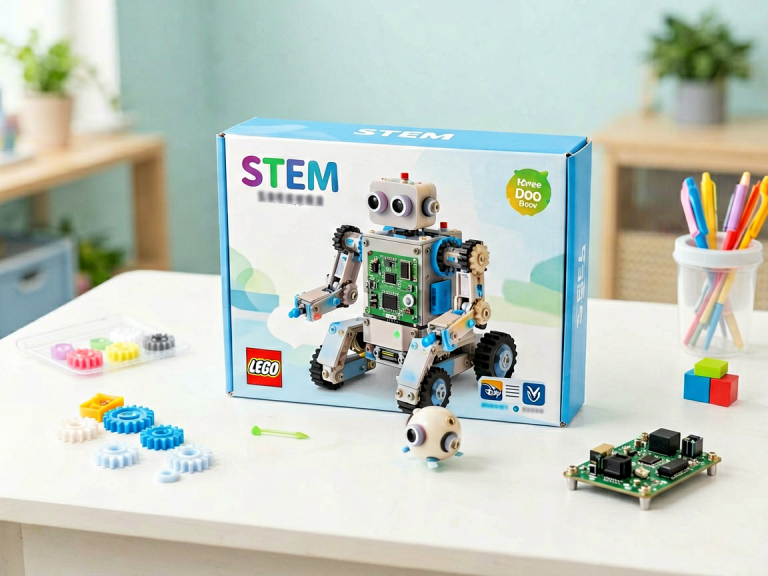
Another regulatory gap involves “educational” robot kits that contain multiple small parts—gears, screws, wires, and microcontrollers. These are often marketed to children as young as 4 or 5, but the small parts warning is usually buried in fine print. Because these kits are categorized as “STEM” or “educational,” they sometimes escape the strictest toy safety evaluations, as regulatory bodies assume they are used under adult supervision during instruction. However, in practice, children often play with these kits independently after the initial lesson. A 2024 report by the European Child Safety Alliance documented several near-fatal incidents involving children who aspirated plastic gears from such kits.
How Parents Can Mitigate Risks
While regulations and manufacturers bear primary responsibility, parents can take proactive steps to reduce the risk of choking from robot toys—without denying their children the joy of technological play.
Rigorous Pre-Purchase Inspection
Before buying a robot toy, parents should examine the product in person or read detailed online reviews focusing on small parts. Look for toys with battery compartments secured by Phillips-head screws that require a tool, not a simple sliding latch. Avoid toys with eyes, buttons, or decorative elements that are glued on rather than molded into the main body. If a part can be removed with normal thumb-and-forefinger pressure, it is too easy for a toddler to pull off. Check the manufacturer’s age recommendation, but remember that a “3+” label doesn’t guarantee safety if a younger child will be in the same environment.
Regular Maintenance and Checks
Even the safest robot toy can become hazardous after repeated use. Parents should perform weekly inspections: try to pull off any protruding parts, shake the toy to see if anything rattles (indicating an internal piece has already come loose), and ensure that battery compartments remain sealed. If a toy shows signs of wear, such as cracks around screw holes or peeling plastic, discard it immediately. Resist the temptation to repair it with tape or glue, as these fixes can fail unpredictably.
Age-Differentiated Play Zones
When families have children of different ages, it is essential to create physical separation between robot toys intended for older kids and the play area of infants and toddlers. A simple child gate or designated “big kid” shelf can prevent a crawling baby from accessing a robotic dragon with removable wings. Also, teach older siblings to keep their robot toys out of reach of younger siblings—a lesson in responsibility that also promotes safety.
Emergency Preparedness
Parents should learn the Heimlich maneuver for infants and children and know the signs of complete airway obstruction: inability to cough, cry, or breathe; bluish skin; and silent panic. If a child swallows a button battery, do not induce vomiting or give them anything to eat or drink; go directly to the emergency room and tell the doctor that a battery may be involved. Having a pair of hemostatic forceps on hand can be useful in some situations, but professional medical help is always the priority.
Conclusion
Robot toys are marvels of modern engineering that can spark creativity and learning in young minds. But their intricate design inevitably introduces small parts that pose genuine choking hazards. The tragic cases of children like Leo and Reese underscore the urgency of addressing these risks not only through stronger regulations but also through informed consumer vigilance. Manufacturers must move beyond the minimum legal requirements and adopt designs that are inherently safe—for instance, using ultrasonic welding instead of adhesives, embedding batteries in sealed compartments, and testing for real-world abuse by curious toddlers. Regulators should close the loopholes that allow toys marketed for older kids to endanger younger siblings, and they should update small parts test protocols to account for bite-induced detachment and component fatigue over time.
On the parent side, awareness is the first line of defense. By understanding the specific dangers of robot toys and taking concrete steps to inspect, maintain, and separate them, families can significantly reduce the risk of a choking incident. The goal is not to reject robot toys but to embrace them with eyes wide open. A child’s laughter as a robot dog does a flip is a beautiful sound—but it should never be silenced by a preventable tragedy. Play is essential, but safety is paramount. In the intersection of technology and childhood, we must build a world where the only things that spark a child’s excitement are the lights on the toy, not the struggle for breath. Let the robots be smart; let the parents be smarter. The next generation of innovators deserves a childhood free from the hidden dangers that lurk inside the very toys meant to empower them.