The Silent Sanctuary: Why Safe Quiet Toys Are Essential for Children’s Development and Well-Being
—
Introduction: The Hidden Noise of Childhood
In a world saturated with flashing lights, electronic beeps, and endless digital notifications, the humble quiet toy often goes unnoticed. Yet for parents, educators, and child development specialists, the category of “safe quiet toys” represents a crucial pillar of healthy childhood. These toys—soft wooden blocks, fabric dolls, silent puzzles, and cloth books—offer more than just a break from auditory chaos. They provide a sanctuary for concentration, a canvas for imagination, and a shield against overstimulation. More importantly, they eliminate many of the physical and psychological risks associated with noisy, battery-operated alternatives. This article explores why safe quiet toys matter, how to identify them, and which types best support a child’s growth from infancy through early school years.
—
Section 1: Defining “Safe Quiet Toys” – What Makes Them Different?
1.1 Safety Beyond the Obvious
When we talk about safety in toys, most parents immediately think of choking hazards, sharp edges, or toxic paints. Quiet toys, by their very nature, often avoid many of these pitfalls because they are usually crafted from natural materials like solid wood, untreated cotton, or non-toxic silicone. However, safety extends further. A truly safe quiet toy must:
- Be free of small, detachable parts that could be swallowed or inhaled.
- Use non-toxic, water-based finishes – no lead, phthalates, or BPA.
- Pass international safety standards such as ASTM F963 (USA) or EN71 (Europe).
- Have no loose strings or cords longer than 12 inches, which pose strangulation risks.
- Be structurally sound – no splinters, weak joints, or sharp corners.
1.2 The Quiet Component: Why Silence Matters
The “quiet” aspect is not merely about volume; it is about the quality of engagement. Electronic toys that sing, flash, and talk often demand passive attention. A child presses a button and receives a reward—a sound, a light. This can hinder creativity because the toy dictates the play. In contrast, quiet toys require the child to generate the action. A set of wooden stacking rings asks the child to decide the order, to balance, to experiment. The silence allows for internal dialogue: “If I put the big ring first, will the tower fall?” This cognitive process is precious. Moreover, quiet toys protect a child’s auditory health. The American Academy of Pediatrics warns that prolonged exposure to toys producing sounds above 85 decibels can cause hearing damage. Many battery-operated toys exceed this threshold. Quiet toys eliminate that risk entirely.
—
Section 2: The Benefits of Safe Quiet Toys – More Than Just Peace and Quiet
2.1 Cognitive Development and Focus
Numerous studies in developmental psychology indicate that children learn best through self-directed, open-ended play. Quiet toys foster what researchers call “sustained attention.” A child arranging wooden blocks on a felt board, for instance, must concentrate on spatial relationships, symmetry, and balance – all without external prompts. This type of play strengthens executive functions like working memory, inhibitory control, and cognitive flexibility. A 2019 study published in *Frontiers in Psychology* found that children who regularly played with non-electronic, quiet toys showed higher levels of creative problem-solving than peers who used interactive digital toys.
2.2 Emotional Regulation and Calm
The modern child’s environment is often loud and fast. From daycare centers filled with shrieking laughter to television commercials blaring at maximum volume, children’s nervous systems are under constant assault. Quiet toys act as a counterbalance. A soft fabric doll or a set of wooden animals invites what occupational therapists call “grounding” – a sensory experience that lowers cortisol levels. When a child holds a smooth, cool wooden block, their breathing often slows. The repetitive action of stacking or sorting can be meditative. This is especially beneficial for children with sensory processing disorders, anxiety, or autism spectrum conditions. The quiet toy becomes a safe object to return to when the world feels overwhelming.
2.3 Social and Language Development
Paradoxically, quiet toys can actually encourage more verbal interaction. When two children play with a set of silent farm animals, they must use their own words to create a narrative. “My cow goes in the barn,” one child says. “No, my horse needs to sleep,” replies the other. The absence of pre-recorded sounds forces them to negotiate, to describe, and to imagine together. Electronic toys, on the other hand, often isolate children into a one-way relationship with the device. Quiet toys promote real, human-to-human connection.
2.4 Physical Safety in the Home
From a practical standpoint, quiet toys are less likely to cause accidents. A child dropping a plastic, battery-powered toy with sharp corners onto a tile floor can result in a cracked tile or a bruised toe. A soft fabric cube, however, is harmless. Furthermore, many quiet toys are designed to be chewed or mouthed by infants, provided they are made of food-grade silicone or natural wood. This reduces the chance of ingesting harmful chemicals leached from plastic. And because they lack batteries, there is zero risk of a child accessing a battery compartment and swallowing a button cell – a known cause of severe internal burns.
—
Section 3: How to Choose Safe Quiet Toys – A Practical Guide for Parents
3.1 Material Matters: What to Look For
When shopping for quiet toys, the material is your first checkpoint. Here are the gold standards:
- Solid hardwoods (maple, beech, birch) – Avoid plywood or MDF, which may contain formaldehyde glues. Look for unfinished or beeswax-coated items.
- Organic cotton and wool – For soft toys, choose fabrics that are certified Oeko-Tex Standard 100, meaning they are free from harmful chemicals.
- Food-grade silicone – Ideal for teethers and bath toys. It is non-porous, easy to clean, and does not leach.
- Natural rubber – Found in some stacking toys and dolls, natural rubber is biodegradable and free from synthetic latex.
3.2 Age-Appropriate Design
Safety guidelines vary by age. For infants under six months, the toy must be large enough to prevent choking – no items smaller than 1.25 inches in diameter. All edges should be rounded. For toddlers (1–3 years), avoid toys with strings longer than 12 inches. For preschoolers (3–5 years), ensure that any small parts are securely attached. The best quiet toys grow with the child: a set of wooden blocks can be used for stacking at age one, for building castles at age three, and for learning fractions at age five.
3.3 Testing for “False Quiet”
Not all quiet toys are created equal. Some toys marketed as “quiet” still produce a faint clicking or rustling sound. While this is generally acceptable, be cautious of toys that use magnetics or small gears – these can occasionally pinch tiny fingers. Also, avoid toys that require batteries even for a single sound effect; if a toy has a battery compartment, it is no longer truly quiet and introduces a potential hazard. The purest quiet toys have no electronic components at all.
—
Section 4: Top Categories of Safe Quiet Toys – Recommendations
4.1 Wooden Stackers and Shape Sorters
These classics never go out of style. Look for a set that includes a variety of geometric shapes in different sizes, all made from untreated or beeswax-finished wood. The act of sorting and stacking develops fine motor skills and hand-eye coordination. Choose a brand that uses smooth, sanded edges and non-toxic, water-based dyes. Brands like PlanToys and Grimm’s are widely respected for safety and quality.
4.2 Fabric Dolls and Soft Animals
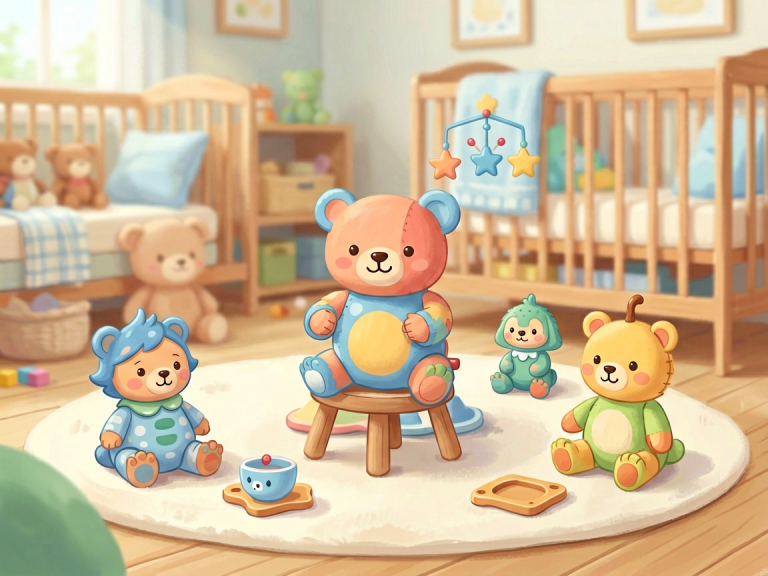
For babies and toddlers, soft dolls made from organic cotton with embroidered faces (no plastic eyes that can come loose) are ideal. They can be hugged, chewed, and launched without causing harm. Look for dolls that are machine-washable – hygiene is critical for toys that end up in mouths. The classic “rag doll” design is a perfect example.
4.3 Silent Puzzles and Peg Boards
Puzzles that use chunky wooden pieces with knobs are excellent for developing problem-solving skills. The knobs should be large enough for a toddler’s grip but not so large that they become choking hazards. Ensure the puzzle board has smooth, rounded edges. Avoid puzzles with paper-based images that can peel off and be ingested. Instead, choose ones where the image is painted or printed directly onto the wood.
4.4 Sensory Bags and Calming Bottles
These are DIY-friendly options that can be made at home with adult supervision, but many safe, commercial versions exist. A sensory bag (filled with clear gel and sealed tightly) allows children to push and squish without mess. Calming bottles – plastic containers filled with water, glitter, and beads – provide visual stimulation without sound. Ensure the container is made from thick, shatterproof plastic and that the lid is glued or screwed shut permanently.
4.5 Stacking Cups and Nesting Bowls
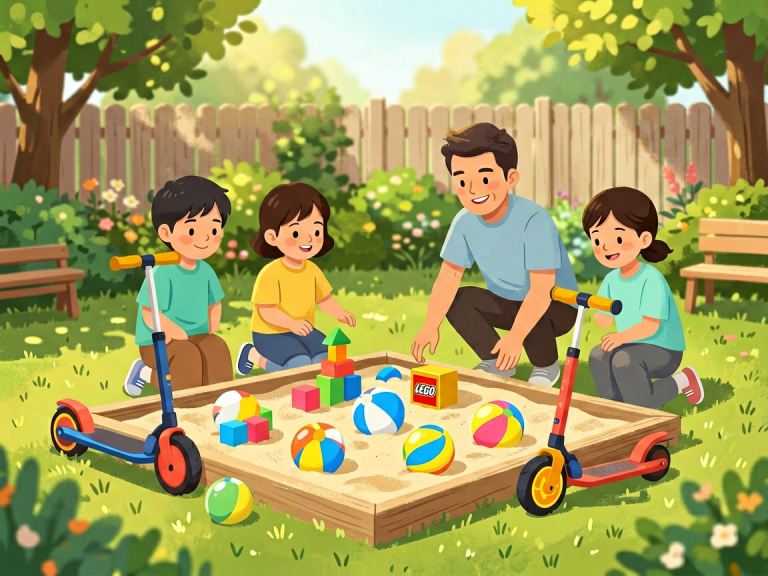
Simple, lightweight, and endlessly versatile, stacking cups made from BPA-free silicone or natural bamboo are among the safest quiet toys. They can be used in the bath, in the sandbox, or on the kitchen floor. The cups should have no sharp edges and should be dishwasher safe for hygiene. They teach concepts of size, order, and volume.
—
Section 5: The Broader Impact – Quiet Toys in a Loud World
5.1 Reducing Screen Dependency
One of the most insidious problems of modern parenting is the “digital pacifier” – handing a child a tablet or smartphone to keep them occupied during a restaurant meal or a car ride. While sometimes necessary, over-reliance on screens has been linked to language delays and attention issues. Quiet toys offer a concrete alternative. A parent can pack a small fabric book or a few wooden animal figures in a diaper bag. These objects invite hands-on play that does not require a battery or a WiFi connection. Over time, children learn to entertain themselves without digital crutches.
5.2 Environmental and Economic Sustainability
Safe quiet toys, because they are often made of natural, durable materials, last longer than plastic electronic gadgets. A well-made wooden toy can be passed down through three generations. This reduces plastic waste and saves money. Moreover, many quiet toy manufacturers prioritize ethical sourcing and fair labor practices. By choosing these toys, parents vote with their dollars for a more sustainable toy industry.
5.3 Encouraging Mindful Parenting
When a child plays quietly, the atmosphere in the home shifts. Parents may find themselves less stressed, more able to engage in conversation or simply observe their child’s creativity. There is a growing movement called “slow parenting” that advocates for fewer, higher-quality toys that encourage deep, uninterrupted play. Quiet toys are the cornerstone of this philosophy. They remind us that sometimes the best thing a child can do is nothing – just building a tower, one silent block at a time.
—
Conclusion: The Power of Stillness
The most profound impact of safe quiet toys is not measurable in decibels or dollars. It is the gift of stillness. In a culture that constantly demands noise, speed, and stimulation, a child who learns to enjoy quiet play develops an inner reserve of calm. They learn that boredom is not an emergency; it is a space invitation for imagination. And they do so safely, without exposure to toxic materials or ear-splitting sounds. Choosing safe quiet toys is not a rejection of modern technology – it is a conscious act of protection, a way of saying to a child: “Your mind is enough. Your hands are enough. You don’t need a battery to create joy.” That message, delivered through a simple wooden block or a soft fabric doll, may be the most valuable plaything of all.
—
*(Word count: approximately 1,520 words)*