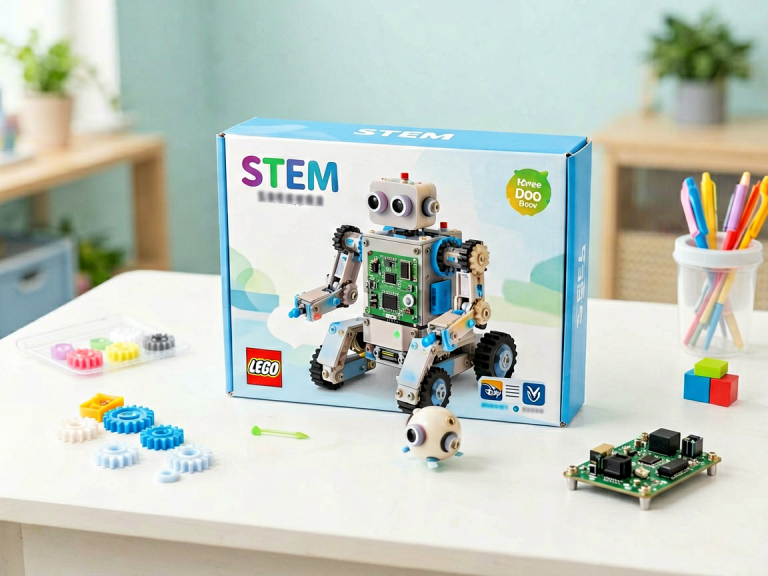
The Hidden Danger in Building Sets: Understanding and Preventing Choking Hazards
Introduction
Building sets have long been celebrated as some of the most valuable educational toys for children. From classic wooden blocks to sophisticated interlocking plastic bricks, these construction playthings stimulate creativity, enhance fine motor skills, and teach early engineering concepts. Parents and educators alike praise them for their developmental benefits. However, beneath the colorful surfaces and imaginative possibilities lies a serious and often underestimated risk: choking hazards. Every year, thousands of children worldwide are treated in emergency rooms for injuries caused by small parts from building sets, and tragically, some cases end in fatal asphyxiation. The problem is not merely a matter of careless supervision—it is a systemic issue involving product design, inadequate labeling, inconsistent global regulations, and a lack of public awareness. This article aims to dissect the multifaceted nature of choking hazards in building sets, explore real-world consequences, examine current safety standards, and offer actionable guidance for manufacturers, regulators, and families. Understanding this hidden danger is the first step toward ensuring that building sets remain a source of joy, not tragedy.
The Anatomy of a Choking Hazard in Building Sets
To effectively address choking hazards, one must first understand what makes a small part dangerous. The standard threshold commonly adopted by international safety bodies such as the U.S. Consumer Product Safety Commission (CPSC) and the European Committee for Standardization (CEN) is the "small parts test cylinder." Any component that fits entirely within a cylinder measuring 1.25 inches (31.7 mm) in diameter and 2.25 inches (57.1 mm) in depth is considered a potential choking hazard for children under three years of age. In building sets, these small parts can take many forms: tiny wheels, miniature figurine accessories such as hats or weapons, connector pegs, screws, buttons, or even irregularly shaped fragments that break off during play. The trouble is that building sets are often marketed with broad age ranges—for instance, a set labeled "Ages 3+" might still contain parts that are dangerously small for a three-year-old. The design complexity of modern building sets exacerbates the issue. Many kits include hundreds of tiny pieces, some of which are essential for the structural integrity of a model. When a child disassembles a creation and a small piece rolls under a sofa or is picked up by a younger sibling who puts it in their mouth, the framework of safety collapses. Furthermore, the materials used—hard plastics, metals, or magnets—can cause additional complications. Magnetic pieces, for example, are especially dangerous because if two are swallowed, they can attract each other across intestinal walls, leading to perforations and life-threatening infections. The anatomy of a choking hazard in building sets is not just about size; it is also about shape, texture, and the context of use.
Real-World Incidents and Stark Statistics
Statistical data illustrate the gravity of the situation. According to the CPSC's most recent annual report on toy-related injuries, more than 50,000 children under the age of 15 are treated in U.S. emergency departments each year for choking incidents involving toys or toy parts. Among toddlers aged one to three, building sets and construction toys account for a disproportionate share of these incidents. In a notable case from 2021, a 22-month-old child in Ohio died after swallowing a small plastic coupling piece from a magnetic building set purchased at a discount store. The packaging stated "Ages 3+" but there was no explicit warning about small parts, and the product had not undergone third-party testing required by U.S. law. In a separate incident in the United Kingdom, a four-year-old boy required emergency surgery to remove a small wheel from a block set that had lodged in his esophagus. The wheel had snapped off from a poorly constructed piece that should have been molded as a single unit. These are not isolated tragedies—they are symptomatic of a broader pattern. A 2020 analysis by the World Health Organization reported that choking on foreign objects ranks among the top five causes of accidental death in children under five globally, and toys, particularly those with detachable small components, are a leading source. The data from China's market surveillance administration similarly shows that building sets account for nearly 30% of all toy-related recalls due to choking hazards. The public often assumes that major brands are immune to these risks, but recalls have affected even the most trusted names. In 2019, a well-known European building block company recalled over 200,000 sets because of a small rubber piece that could detach during vigorous play. These examples underscore that no product is inherently safe; safety is a continuous process of design, testing, and vigilance.
Regulatory Frameworks and Gaps in Protection
Governments around the world have established regulations aimed at reducing choking hazards in building sets, but these frameworks are inconsistent and, in some cases, poorly enforced. The United States relies on the ASTM F963 standard, which is incorporated into the Consumer Product Safety Improvement Act (CPSIA). This standard mandates that toys intended for children under three years old must not contain small parts, and that all toys must undergo periodic testing by an accredited third-party laboratory. However, a significant loophole exists for products that are labeled for ages three and up: they are not subject to the same stringent small-parts testing. A set labeled "Ages 4+" can legally include pieces smaller than the test cylinder, yet the cognitive and motor skills of a four-year-old vary enormously. Many four-year-olds still mouth objects, especially when tired or distracted. The European Union's EN71 standard similarly focuses on age grading and uses the same cylinder test, but it also requires warning labels for toys that contain small parts intended for children over three. Yet enforcement across different member states is uneven. In developing countries, where the majority of the world's toys are actually manufactured, local regulations may be weak or nonexistent. For example, some Chinese toy factories operate under the GB 6675 standard, which closely mirrors international guidelines, but rapid production and low-cost pressure sometimes lead to shortcuts. Counterfeit or unbranded building sets sold on online marketplaces are particularly dangerous; they often bypass all regulatory checks, use inferior materials that break easily, and come with no meaningful age recommendations. A 2022 investigation by an international consumer group tested 50 randomly purchased low-cost building sets from online platforms; 40% contained small parts that exceeded the safe size limit, and 25% had sharp edges or points that posed additional hazards. The regulatory gap is further compounded by the growing trend of "STEM" building sets that incorporate electronic components, tiny screws, and wires—each adding new dimensions of risk. Until global harmonization of standards becomes a reality and enforcement agencies are given adequate resources, the burden of protection falls disproportionately on end users.
The Role of Parents and Caregivers
Given the imperfections of the regulatory system, parents and caregivers must become the last line of defense against choking hazards in building sets. This responsibility begins before a toy is even purchased. The first step is to scrutinize age labels not as absolute guarantees, but as general guidelines. A label of "3+" does not mean a three-year-old will never mouth a piece; it merely means the manufacturer has not designed the product for that child's specific developmental stage. Caregivers should also perform a simple visual and physical inspection: if a piece can pass through a standard toilet paper roll (which approximates the small-parts cylinder), it is unsafe for a child under three, and it may still be risky for older children with oral tendencies. Additionally, building sets that include marbles, magnets, or any spherical objects smaller than 1.75 inches in diameter should not be allowed near children under six. Supervision during play is equally critical. A child building a complex castle may inadvertently drop a tiny flagpole onto the floor, where a crawling baby could find it. Dedicated play areas with cleared corners and regular sweepings reduce the chance of stray parts remaining hidden. After each play session, all pieces should be counted and stored in a sealed container out of reach of younger siblings. This practice also reinforces the habit of keeping sets complete, which reduces the risk that a missing piece is actually inside a child's mouth. Importantly, caregivers should be trained in basic first aid for choking—knowing the Heimlich maneuver for infants and older children can make the difference between life and death. Organizations such as the Red Cross offer free online courses, and parents should refresh these skills annually. Finally, when a building set shows signs of wear—cracked pieces, loose connections, or faded colors that might indicate degradation—it should be discarded immediately. A weakened piece can break off and form a new small part that was never present in the original design.
Industry Responsibility and Safer Design Innovations
While regulatory compliance and parental vigilance are essential, the ultimate responsibility for reducing choking hazards lies with the toy industry itself. Manufacturers have both an ethical and a commercial incentive to prioritize safety. In recent years, several promising design innovations have emerged that can serve as models for the entire sector. One approach is to integrate all small features into larger, non-detachable components. For instance, instead of manufacturing a miniature steering wheel as a separate piece that can be pulled off, a designer can mold it as part of a larger dashboard plate. Similarly, figurines can have hair, hats, and accessories fused to the body, eliminating the possibility of detachment. Another innovation is the use of "tethering" techniques: small decorative items such as flowers or lamps are connected to the main structure by short, non-breakable plastic strings, so even if they come loose, they remain attached. Some companies have also pioneered the use of water-soluble materials for pieces that are meant to be used only during supervised building—if accidentally ingested, these materials dissolve harmlessly in the digestive tract. While this technology is still experimental, it points to a future where the inherent danger of small parts is engineered away. Furthermore, packaging can play a proactive role. Clear, pictographic warnings showing a child in distress with a small part near the mouth—similar to how health warnings appear on cigarette packages—could increase parental attention. QR codes on boxes that link to instructional videos on how to properly store and sort pieces by size would empower consumers. Industry self-regulation through organizations like the International Council of Toy Industries (ICTI) can also drive global improvements, especially if major retailers refuse to stock products that fail third-party audits. However, voluntary measures are insufficient alone. Stronger legal penalties for manufacturers that produce unsafe building sets, combined with mandatory recall insurance, would create a powerful deterrent. Only when the cost of producing a dangerous product exceeds the cost of safe production will the industry fully commit to change.
Conclusion
Building sets are a cornerstone of childhood play, offering unrivaled opportunities for learning and imagination. Yet the very elements that make them engaging—countless tiny pieces, intricate designs, and versatile connectors—also create a persistent and life-threatening choking hazard. From the anatomy of a dangerous part to the regulatory gaps that allow unsafe products to reach shelves, from the heartbreak of preventable tragedies to the hope offered by smarter design, the issue demands a unified response. No single actor can solve it alone. Governments must harmonize and enforce stricter standards; manufacturers must prioritize safety over profit margins; retailers must police their supply chains; and families must stay informed and vigilant. Public health campaigns should treat building set choking hazards with the same seriousness as car seat safety or pool drownings. Every child deserves the chance to build castles, spaceships, and cityscapes without risking their life. By lifting the veil on this hidden danger, we can ensure that the only things swallowed during play are giggles, and the only pieces that disappear are memories. Let this article serve as a call to action—for a world where building sets build minds, not emergency room visits.