Safe Toys for 8-Year-Olds: A Parent’s Guide to Age-Appropriate and Risk-Free Play
Introduction
Choosing the right toys for an eight-year-old is both an exciting and challenging responsibility. At this age, children are transitioning from simple, sensorimotor play into more complex cognitive and social activities. They have better fine motor skills, longer attention spans, and a growing curiosity about the world. However, they are still vulnerable to certain hazards: small parts that can cause choking, toxic materials that can be ingested or absorbed, and structural weaknesses that may lead to injury. The market is flooded with flashy, branded products that promise endless fun, but not all of them are designed with safety in mind. This article provides a comprehensive, evidence-based guide to selecting safe toys for 8-year-olds. It covers why safety matters at this specific age, which certifications to look for, the safest categories of toys, material considerations, and practical tips for parents. By the end, you will have the knowledge to make informed choices that combine joy with peace of mind.
The Importance of Toy Safety for 8-Year-Olds
Why should a parent of an eight-year-old worry about toy safety? After all, the child is no longer a toddler who puts everything in their mouth. The answer lies in the unique developmental stage. At eight, children are highly active, curious, and eager to explore independently. They often play without direct adult supervision, especially when friends visit or during outdoor activities. This autonomy, while valuable, also introduces risks. For instance, an eight-year-old might disassemble a toy and leave small parts on the floor for a younger sibling to find. Or they might use a craft kit with chemicals that are safe for children over 12 but not for their age group. Additionally, many toys labeled “for ages 8+” still contain components that can be hazardous if misused—such as sharp edges in construction sets, long cords that pose strangulation risks, or magnetic pieces that can cause serious internal injuries if swallowed. According to the U.S. Consumer Product Safety Commission, tens of thousands of toy-related injuries occur each year among children aged 5 to 9, with the majority involving cuts, bruises, and choking incidents. Therefore, safety should never be taken for granted just because a child is “older.”
Key Safety Certifications and Standards
When shopping for toys, a quick look at the packaging can reveal crucial information about safety. In the United States, the most important certification is the ASTM F963 standard, which covers mechanical, physical, and chemical hazards. Toys that meet this standard are voluntarily tested by manufacturers. In Europe, the CE mark indicates compliance with the EU Toy Safety Directive, while the EN 71 standard covers specific safety requirements. For a global perspective, the International Council of Toy Industries (ICTI) also issues guidelines. For eight-year-olds, parents should look for labels that explicitly state “non-toxic,” “BPA-free,” “phthalate-free,” and “lead-free.” Additionally, toys containing batteries should have secure compartments that require a screwdriver to open, preventing accidental ingestion of button batteries—a life-threatening hazard. Another critical certification is the ASTM F963-17 or later versions, which address issues like magnetic hazards and projectiles. While these marks are not a guarantee of absolute safety, they indicate that a product has undergone rigorous testing. Parents can also check the CPSC’s recall database online before purchasing a used or new toy.
Categories of Safe Toys for 8-Year-Olds
Selecting toys that are both engaging and safe requires understanding the different categories available for this age group. Below are the recommended types, each with specific safety considerations.
1. STEM and Educational Toys
STEM (Science, Technology, Engineering, and Mathematics) toys are incredibly popular for eight-year-olds because they encourage logical thinking, problem-solving, and hands-on learning. Examples include chemistry sets, circuit-building kits, robotic toys, and coding games. However, safety concerns arise with small electronic components, batteries, and chemicals. When choosing a chemistry set, ensure that the substances are non-corrosive and that the kit includes safety goggles and clear instructions. Avoid sets with glass beakers; plastic versions are safer. Circuit kits should use low-voltage components and have insulated wires. For robotic toys, confirm that gears and moving parts are enclosed to prevent pinching. Some excellent safe options are Snap Circuits Jr., LEGO Boost (which uses large, easy-to-handle bricks), and Osmo coding games that rely on an iPad rather than loose parts.
2. Arts and Crafts Supplies
Eight-year-olds love to draw, paint, glue, and sculpt. Arts and crafts foster creativity and fine motor development, but the supplies must be chosen carefully. Look for paints, markers, and glues that are labeled “non-toxic” and “washable.” Avoid products that contain xylene, toluene, or formaldehyde. Crayons and modeling clays should be AP (Approved Product) certified by the Art and Creative Materials Institute. Scissors should have blunt tips and be age-appropriate—not too sharp. For beadwork or jewelry-making kits, the beads should be large enough (diameter ≥ 1.25 inches) to avoid choking, and strings should be short to prevent strangulation. A great safe choice is Melissa & Doug’s or Crayola’s craft sets, which are designed specifically for elementary-aged children.
3. Outdoor and Physical Activity Toys
Physical play is essential for an eight-year-old’s health, but outdoor toys bring their own risks. Bicycles, scooters, skateboards, and rollerblades require helmets, knee pads, and elbow pads—safety gear should be purchased as a package. When buying a bike, ensure it is the right size: the child should be able to stand over the top tube with both feet flat on the ground. For trampolines, the American Academy of Pediatrics advises against them for children under six, and for older kids, only one jumper at a time with safety netting. Sports equipment like soccer balls, basketballs, and baseball bats should be weight-appropriate; a youth-size ball reduces impact injuries. For water play, such as pool toys, floatation devices must be U.S. Coast Guard approved. Always check for sharp edges on plastic outdoor toys (like slides or climbing structures) and ensure they are anchored firmly to the ground.
4. Board Games and Card Games
Board games are excellent for social development and cognitive skills, but they often come with many small pieces. For eight-year-olds, choose games with pawns, dice, and tokens that are at least 1.25 inches in size to prevent choking. Avoid games with marbles or tiny counters unless they are used only under direct supervision. Card games are generally safer, but watch for sharp corners on cards and avoid games that include small magnets or metal coins. Some highly recommended and safe board games for this age are Ticket to Ride: First Journey, Catan Junior, and Outfoxed!—all have large components and clear age recommendations.
5. Building and Construction Sets
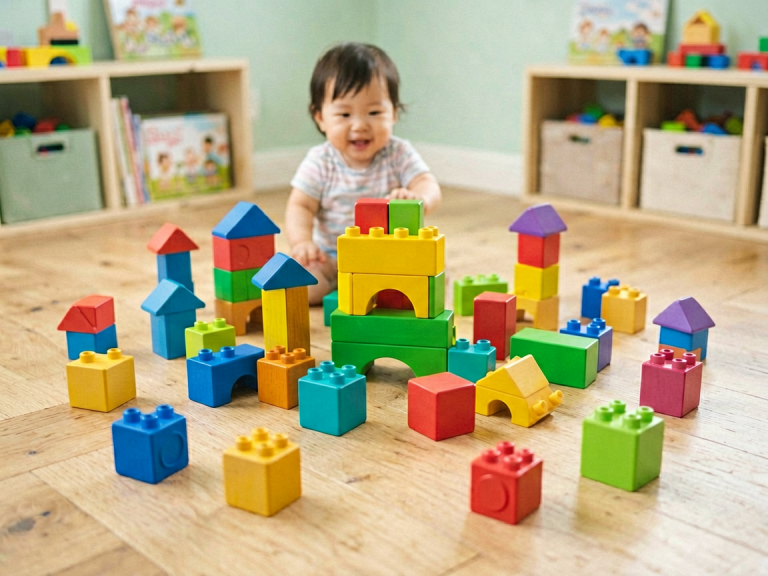
LEGO sets, magnetic building tiles, and wooden block sets are classic favorites. However, small LEGO bricks can be a choking hazard for younger siblings, so keep them separate. For an eight-year-old, the standard LEGO Classic bricks (not Duplo) are fine, but avoid sets with micro-sized pieces (like LEGO Technic pins) unless the child is mature enough. Magnetic building tiles (like Magna-Tiles or PicassoTiles) are safer because the magnets are encased in large plastic shapes. However, always inspect for cracks that might expose the magnets. Wooden construction sets should be made from untreated, splinter-free wood with non-toxic paint. Avoid sets that include tiny nails or screws that could be swallowed.
6. Role-Playing and Imaginative Play
Costumes, play kitchens, doctor kits, and tool benches encourage creativity and empathy. For eight-year-olds, these toys should be durable and free from toxic materials. Costumes should be flame-retardant and should not have long, trailing capes or cords that could catch on objects or cause strangulation. Play kitchen sets with pretend food should avoid small, realistic-looking pieces that could be mistaken for real food and swallowed. Doctor kits should include plastic instruments without sharp edges. Tool benches should have soft, rounded plastic tools rather than metal or wood ones. Brands like Hape and PlanToys are known for their safe, eco-friendly materials.
Materials That Matter: What to Look For and Avoid
The material composition of a toy is often the most critical safety factor. Plastic toys should be free from bisphenol A (BPA), phthalates, and lead. BPA is an endocrine disruptor, while phthalates are associated with developmental issues. Look for the numbers 1, 2, 4, or 5 in the recycling triangle (these are safer plastics; avoid 3, 6, and 7 which may contain harmful chemicals). Wooden toys should be made from solid, sustainably sourced wood like beech or maple, finished with water-based, non-toxic lacquers or beeswax. Avoid particleboard or MDF, which can off-gas formaldehyde. Fabric toys (stuffed animals, tents) should be machine-washable and labeled as flame-resistant. Avoid those with loose buttons, ribbons, or plastic eyes that could come off. Metal toys should be free from sharp edges and lead paint; opt for stainless steel or aluminum over painted tin. Electronic toys should use UL-listed power adapters and have low-voltage requirements.
Tips for Parents When Purchasing Toys
Beyond certifications and materials, parents can adopt a few practical habits to ensure ongoing safety. First, read the age label carefully. “Ages 8+” is a guideline based on developmental abilities, not just difficulty. Even if your child is advanced, do not ignore warnings about small parts or choking hazards—they are based on anatomical size, not intelligence. Second, perform a “feel test”: run your fingers over every edge and surface of the toy to detect burrs, splinters, or sharp points. Shake the toy to see if any small parts rattle loose. Third, consider the play environment. A toy safe for the living room might not be safe for a bedroom with a young sibling present. Fourth, inspect toys regularly for wear and tear. Broken plastic can create sharp edges; batteries can leak chemicals; magnets can become loose. Replace or discard damaged toys promptly. Fifth, supervise first-time use. Even the safest toy can become dangerous if used improperly—for instance, a child might swing a plastic sword too close to another’s face. Finally, encourage the child to participate in toy selection. Explain why some toys are unsafe and let them practice making good choices. This builds lifelong awareness.
Conclusion
Selecting safe toys for eight-year-olds does not have to be a daunting task if parents arm themselves with knowledge and a critical eye. By understanding the specific risks of this age group—from choking hazards to toxic materials—and by seeking out reputable certifications and well-designed products, you can create a play environment that nurtures growth, imagination, and joy without unnecessary danger. Remember that the best toys are not always the most expensive or the most advertised; they are the ones that align with your child’s interests, abilities, and your family’s safety standards. Regularly reassess the toy collection as your child grows, and do not hesitate to remove anything that no longer meets the criteria. With careful thought and a commitment to quality, you can ensure that every toy brought into your home contributes to happy, healthy, and safe development for years to come.