The Ultimate Fine Motor Skill Toys Guide for Parents: From Grasping to Writing
Introduction
Every parent wants to give their child the best start in life, and one of the most overlooked yet critical areas of early development is fine motor skills. These are the small, precise movements of the hands, fingers, and wrists that enable children to perform tasks like picking up a spoon, buttoning a shirt, or holding a pencil. The right toys can transform playtime into a powerful learning experience, building the muscle strength, coordination, and dexterity needed for daily activities and future academic success. But with countless products on the market, how do you choose? This guide will walk you through the science behind fine motor development, age-appropriate toy recommendations, safety considerations, and practical tips to turn play into purposeful growth. Whether you have a newborn or a preschooler, this comprehensive resource will help you curate a toy box that truly supports your child’s hand-eye coordination, finger control, and cognitive development.
Why Fine Motor Skills Matter
Fine motor skills are not just about manual dexterity—they are deeply connected to brain development, independence, and self-esteem. When a child successfully manipulates a small object, their brain creates neural pathways that link sensory input with motor output. These skills are foundational for:
- Self-care tasks: Dressing, brushing teeth, using utensils, and tying shoes.
- Academic learning: Writing, drawing, cutting with scissors, and using a keyboard.
- Cognitive growth: Problem-solving, spatial awareness, and concentration.
- Social interaction: Sharing toys, building structures with peers, and creative play.
Research shows that children who struggle with fine motor tasks in early childhood may later face difficulties with handwriting or classroom participation. By intentionally choosing toys that challenge and strengthen these muscles, parents can prevent frustration and build confidence. However, fine motor development is not a race—every child progresses at their own pace. The goal is to provide a variety of stimulating experiences, not to force milestones.
Age-by-Age Toy Recommendations
*Infants (0–12 Months): Building the Foundation*
At this stage, babies are discovering their hands and learning to coordinate grasp. Toys should focus on sensory exploration, reaching, and simple hand movements.
- High-Contrast Rattles and Soft Grippers: Lightweight, easy-to-hold toys with bright patterns encourage visual tracking and palmar grasp (using the whole hand).
- Activity Gyms with Hanging Toys: Lying on their back, infants bat at dangling objects, developing hand-eye coordination and the ability to swat and eventually grasp.
- Textured Teethers: Different surfaces (bumpy, smooth, ridged) provide tactile feedback, strengthening the muscles used in chewing and gripping.
- Soft Blocks and Fabric Books: Squeezing, batting, and eventually picking up these items builds finger strength and cause-and-effect understanding.
*Toddlers (1–3 Years): Refining Manipulation*
Toddlers begin using their pincer grasp (thumb and forefinger) and show interest in more deliberate actions. Toys that require two-handed coordination and small movements are ideal.
- Stacking Rings and Nesting Cups: Placing rings on a peg or stacking cups inside each other works on wrist stability and graded force (how hard to push).
- Shape Sorters: Inserting shapes into corresponding holes challenges visual-spatial skills and precise finger placement.
- Large Pegboards and Jumbo Lacing Beads: Pushing pegs into holes or threading beads onto a string strengthens thumb-to-forefinger coordination and bilateral hand use (using both hands together).
- Scooping and Pouring Sets: Simple pouring from a small cup into a bowl (using sand, rice, or water) develops wrist rotation and grip control.
- Fat Crayons and Finger Paints: Grasping chunky crayons or painting with fingers encourages early mark-making without the frustration of thin tools.
*Preschoolers (3–5 Years): Preparing for School*
This is the stage where fine motor skills become more refined. Children can perform tasks requiring more precision, such as cutting, drawing recognizable shapes, and fastening buttons.
- Child-Safe Scissors and Playdough: Cutting playdough “snakes” or paper strips builds hand strength and bilateral coordination (holding paper with one hand, cutting with the other).
- Lacing Cards and Threading Kits: Cards with holes for lacing a shoelace pattern improve finger sequencing and eye-hand coordination.
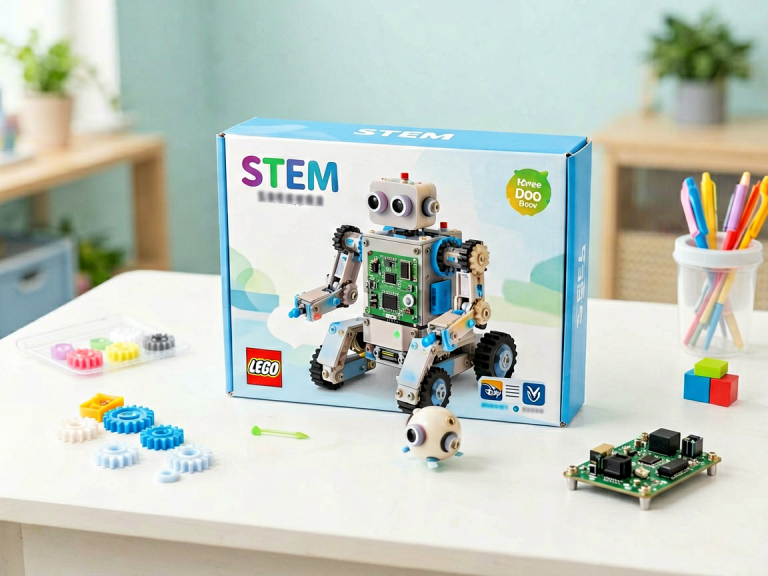
- Small Construction Kits (e.g., LEGO Duplo, Magformers): Snapping pieces together and pulling them apart exercises the small muscles of the hand and promotes problem-solving.
- Tweezers or Tongs and Counting Bears: Using tweezers to transfer small objects from one container to another is a classic occupational therapy activity for developing a three-finger grasp.
- Puzzles with Small Knobs or Pegs: Lifting pieces by the knob instead of the edge forces the use of the fingertips, isolating finger movements.
- Sticker Books and Dot Markers: Peeling stickers off a sheet and placing them on a target enhances pincer grasp and spatial control.
*School-Age (5+ Years): Refining for Writing and Daily Life*
Fine motor toys for older children should focus on endurance, speed, and complex sequences. While many school activities involve writing, playtime can reinforce these skills without pressure.
- Advanced Construction Sets (e.g., K’Nex, Erector Sets): Small screws, nuts, and bolts demand precision and sustained attention.
- Beading Kits with Smaller Beads: Creating jewelry or patterns requires careful fingertip manipulation and planning.
- Handwriting Practice Tools: Ergonomic pencil grips, slanted writing boards, and finger fidgets can support muscle memory.
- Origami and Model Building: Folding paper along precise lines or assembling plastic models challenges fine motor control and following instructions.
- Maze Books and Trace-A-Line Games: Using a pencil or finger to trace paths without lifting helps improve line control and pressure regulation.
- Typing Tutor Games: For children ready to use a keyboard, fun typing programs build finger independence and speed.
What to Look for in Fine Motor Toys
Not all toys marketed as “educational” truly build fine motor skills. Keep these criteria in mind when shopping:
- Progressive Challenge: The toy should have adjustable difficulty (e.g., larger shapes first, then smaller) so your child can grow with it.
- Open-Ended Play: Toys that can be used in multiple ways (e.g., playdough with tools, blocks that can stack or become a tower) encourage creativity and repeated practice.
- Proper Grip Size: For young children, handles and knobs should be thick enough for a small hand to grasp comfortably. Avoid tiny parts that pose choking hazards.
- Sensory Feedback: Toys that make a sound, vibration, or change appearance when manipulated (e.g., pop-up toys, snap-on covers) reinforce the action and keep children engaged.
- Real-Life Connections: Items that mimic daily tools (e.g., child-safe tweezers, play screwdrivers, small tongs) help transfer skills to practical tasks.
- Minimal Batteries: Simple, manual toys are often more effective for motor development than electronic ones that do the work for the child.
Safety Tips for Fine Motor Play
While fine motor toys are incredibly beneficial, safety must always come first:
- Choking Hazards: Check age labels. For children under 3, avoid anything smaller than a toilet paper tube (diameter < 1.75 inches). Small beads, buttons, and detachable parts can be dangerous.
- Material Safety: Choose toys made from non-toxic, BPA-free materials. Wood should be smooth and splinter-free; paints should be lead-free.
- Supervision with Playdough and Small Objects: Commercial playdough is safe if non-toxic, but watch for ingestion. Sand or water play requires adult oversight to prevent accidental swallowing.
- Proper Sizing for Cutting Tools: Scissors should be blunt-tipped and designed for children. Teach safe handling (cut away from body, never running with scissors).
- Regular Inspections: Check for broken pieces, sharp edges, or loose parts that could break off. Discard damaged toys immediately.
- Age Appropriateness: Even if a toy is “educational,” if it’s too advanced, it may frustrate your child and lead to unsafe experimentation (e.g., a 2-year-old using small magnet building pieces).
How to Incorporate Fine Motor Play into Daily Routines
Toys are most effective when used intentionally. Try these strategies to maximize their benefits:
- Follow Your Child’s Lead: Observe what your child is naturally interested in. If they love pouring, provide a pouring station with measuring cups and dry beans. If they like stacking, offer blocks of different sizes.
- Short, Frequent Sessions: Young children have short attention spans—5 to 10 minutes of focused fine motor play is more valuable than 30 minutes of distracted play.
- Verbal Encouragement: Describe what your child is doing: “You’re using your thumb and pointer finger to pick up that tiny bead!” This builds vocabulary and body awareness.
- Pair with Other Activities: Combine fine motor play with sensory or gross motor activities. For example, fill the bathtub with pouring cups and floating toys, or place a sticker chart on a low wall so your child reaches up (crossing midline).
- Rotate Toys: Keep a small selection of fine motor toys available and rotate them every few weeks. This maintains novelty and ensures your child doesn’t become bored or overwhelmed.
- Model and Co-Play: Sit with your child and perform the same actions. Show them how to turn a screwdriver or string a bead, then let them try. Co-play builds social connection and provides direct demonstration.
- Integrate into Self-Care: Let your child practice buttoning their own pajamas, zipping their jacket, or scooping their own cereal. These real-life tasks are the ultimate fine motor “toys.”
Conclusion
Fine motor skill development is a journey that begins in infancy and continues well into the school years. By intentionally selecting toys that challenge the small muscles of the hands, you are giving your child the tools they need to become independent, confident learners. Remember that every child develops at their own pace—some may excel at threading beads but struggle with scissors, and that is perfectly normal. The most important thing is to create a positive, pressure-free environment where play feels like discovery, not practice. With the guidance in this article, you can confidently choose toys that not only entertain but also empower. So go ahead—fill your child’s toy box with stacking cups, lacing cards, and squishy playdough. Watch as their little fingers grow stronger, their concentration deepens, and their joy in mastering new skills lights up their face. After all, the best toy is the one that sparks both learning and laughter.