Beyond the Button: Why Open-Ended Toys Outshine Single-Purpose Playthings in Child Development
—
Introduction: The Silent Curriculum of Play
Every parent has faced the dilemma: a brightly colored, battery-operated toy that sings, flashes, and moves by itself versus a simple set of wooden blocks. The former promises instant engagement; the latter seems almost primitive. Yet decades of child development research and early childhood education practice suggest that the humble block, the versatile doll, and the open-ended art material often outperform their high-tech, single-purpose counterparts in fostering the skills children truly need. This article examines the fundamental differences between open-ended and single-purpose toys, exploring their respective impacts on creativity, problem-solving, social interaction, and long-term learning. While both types have a place in a child’s toy box, understanding their unique roles can help parents make more intentional choices.
—
1. Defining the Two Categories
1.1 What Are Open-Ended Toys?
Open-ended toys are those that can be used in multiple ways, without a fixed outcome or prescribed function. A set of wooden blocks can become a castle, a bridge, a spaceship, or a counting tool. Playdough can be rolled into a snake, pressed into a flower, or shaped into a pretend pizza. Other examples include: loose parts (buttons, stones, fabric scraps), construction sets (LEGO bricks, magnetic tiles), art supplies (paints, clay, paper), dolls and action figures without elaborate accessories, and simple vehicles like a wooden truck. The hallmark of open-ended play is that the child—not the toy—drives the narrative and the method of use.
1.2 What Are Single-Purpose Toys?
Single-purpose toys are designed to perform a specific function or achieve a predetermined result. They often come with instructions, buttons, or mechanisms that dictate how the child should interact with them. Common examples include: electronic learning toys that ask multiple‑choice questions, battery‑operated cars that move only when a button is pressed, singing dolls that sing a single song, puzzle‑like toys with only one correct way to assemble, and many screen‑based game devices that offer limited branching. These toys may entertain a child effectively, but their “closed” nature can restrict the range of possible play experiences.
—
2. Cognitive and Creative Development
2.1 The Creativity Advantage of Open-Ended Toys
One of the most profound benefits of open-ended toys is their ability to nurture divergent thinking—the capacity to generate many different solutions to a single problem. When a child picks up a wooden block, she must decide: Is it a building brick, a plate for a pretend meal, a phone, or a character in a story? Each decision requires imagination, mental flexibility, and symbolic thinking. Research by psychologist Kyung Hee Kim (2011) on creativity decline in children has linked the overuse of structured, passive play materials to a drop in creative potential. Open-ended toys, in contrast, force the child to become the author of her own play narrative.
For example, a set of magnetic tiles can be used to construct geometric shapes, make a dollhouse, build a tunnel for marbles, or even create patterns for a light table. Each play session can be entirely different. Over time, the child learns to view objects not as fixed entities but as raw materials for invention—a mindset that transfers directly to academic subjects like mathematics, writing, and science.
2.2 The Limitations of Single-Purpose Toys
Single-purpose toys, while often engaging, tend to foster convergent thinking—finding the one correct answer or the one correct way to play. When a child presses a button and the toy sings “A-B-C,” the interaction is largely passive. The child may memorize the song but does not explore the concept of letters in a deeper, more flexible way. Similarly, an electronic spelling toy that says “correct” or “try again” offers minimal opportunity for self‑correction or creative problem‑solving. The child is rewarded for compliance, not for invention.
Moreover, the novelty of single‑purpose toys can wear off quickly. Once the child has exhausted the predetermined functions, the toy often ends up in the corner. Open‑ended toys, by contrast, grow with the child: the same set of blocks that a toddler stacks can later be used by a school‑age child to explore engineering principles like balance and load‑bearing.
—
3. Social and Emotional Skills
3.1 Collaborative Play and Negotiation
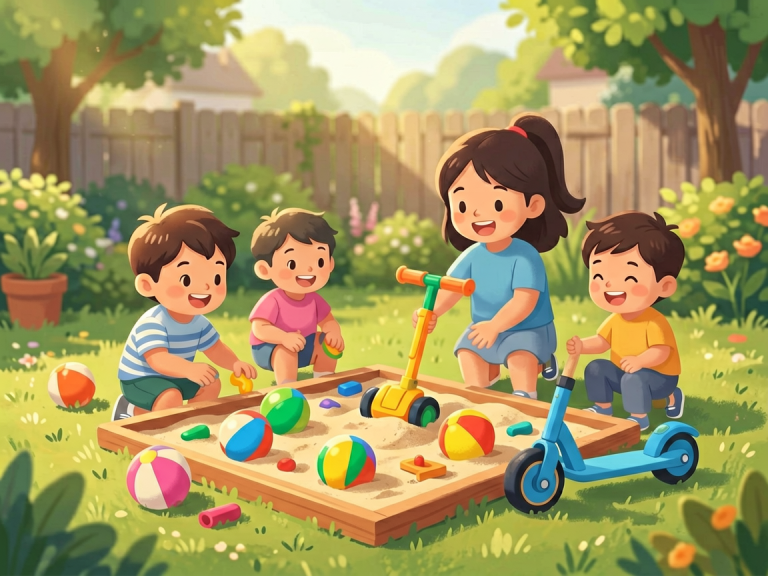
Open-ended toys naturally encourage cooperative social play. When two children share a box of LEGOs or a collection of loose parts, they must negotiate roles, rules, and storylines. “I’ll build the tower, you build the wall,” or “Let’s pretend this blue block is the ocean.” This negotiation builds language skills, empathy, and the ability to see another’s perspective. In studies of preschool play, researchers have observed that children using open‑ended materials spend more time in sustained, collaborative pretend play compared to those using single‑purpose toys.
Single‑purpose toys, especially those with fixed functions (like a single‑track train set or a video game with a pre‑written story), often lead to parallel play rather than cooperative play. One child may operate the toy while another watches, or they take turns pushing the button. The interaction is less rich in verbal exchange and imagination. While taking turns is a valuable skill, the depth of social learning is limited.
3.2 Frustration Tolerance and Mastery
Open‑ended play naturally includes “failure.” A block tower falls. A playdough sculpture collapses. Because there is no “right” answer, the child can simply try again, adjusting her strategy. This process builds resilience, self‑regulation, and a growth mindset—the belief that abilities can be developed through effort. Single‑purpose toys, especially electronic ones that deliver immediate correctness feedback, can create a need for constant external validation. A child who hears “wrong” from a toy may become discouraged, whereas a fallen block tower is a neutral event that invites the child to experiment anew.
—
4. Language Development and Early Literacy
4.1 Narrative Building with Open Materials
Open-ended toys are unparalleled tools for language development. When a child plays with a simple doll and a few pieces of fabric, she creates a story: “The baby is sick, so I need to take her to the hospital.” She narrates actions, uses vocabulary related to emotions, actions, and objects, and practices sequencing (first we do this, then that). This narrative competence directly correlates with reading comprehension, as both involve understanding story structure, cause and effect, and character motivation.
Single‑purpose toys that include recorded speech or songs may expose a child to vocabulary, but the vocabulary is fixed and not generated by the child. Hearing a toy say “The cow says moo” is different from a child inventing a dialogue between two farm animals. The active production of language—which open‑ended play demands—is a stronger predictor of later literacy than passive vocabulary exposure.
4.2 The Role of Symbolic Representation
Open-ended toys also support the development of symbolic thinking—the understanding that one thing can stand for another. A block becomes a phone; a stick becomes a magic wand. This ability is the foundation of reading and writing, where printed symbols (letters) represent sounds and meanings. Children who engage in rich pretend play tend to have an easier time understanding that a written word can represent an object or idea. Single‑purpose toys, which are often literal (a toy phone that looks exactly like a phone and rings), do little to exercise this symbolic capacity.
—
5. Economic and Practical Considerations
5.1 Longevity and Value
From a financial perspective, open‑ended toys tend to offer greater value over time. A high‑quality set of building blocks can be used from age one through the early elementary years, while a battery‑operated robot may be abandoned after a few weeks. Many minimal‑parenting movements and early childhood experts advocate for a “fewer, better” approach: invest in durable, open‑ended materials that grow with the child rather than rotating through endless single‑purpose gadgets.
Single‑purpose toys are often marketed based on their novelty and specific appeal (e.g., a toy that say the alphabet in a funny voice). Once that novelty fades, the toy has little to offer. Open‑ended toys, by contrast, become more interesting as the child’s cognitive abilities expand. A two‑year‑old may simply stack blocks; a six‑year‑old may use the same blocks to experiment with levers and pulleys.
5.2 Environmental Impact
The environmental footprint of toys is another consideration. Single‑purpose toys often contain batteries, plastic electronics, and components that are difficult to recycle. When they break, they frequently end up in landfills. Open‑ended toys, especially those made of natural materials (wood, fabric, metal) or high‑quality plastic, can last for years or be passed down to siblings. Loose parts can also be sourced from everyday household items (cardboard tubes, bottle caps, fabric scraps), reducing the need for new manufactured products.
—
6. The Role of Single-Purpose Toys: Not All Bad
It would be inaccurate to suggest that single‑purpose toys have no value. In certain contexts, they can be helpful. For example, a simple puzzle with a single correct solution can teach a toddler shape recognition and fine‑motor persistence. A musical instrument that plays one note on demand can help a child understand cause and effect. Educational apps that offer structured math practice can reinforce skills learned in school. Single‑purpose toys can also provide comfort through predictability—a child may find security in a toy that always does the same thing.
The key is moderation and intentionality. A child’s toy collection should not be dominated by single‑purpose items. Instead, parents can curate a balance: a majority of open‑ended materials that encourage creative, self‑directed play, supplemented by a few carefully chosen single‑purpose toys that serve a specific developmental need (e.g., a tricycle for gross‑motor development, or a memory card game for cognitive practice). The danger arises when single‑purpose toys become the default because they promise convenience and quiet—and when they replace the messy, unpredictable, and deeply beneficial process of open‑ended play.
—
7. Practical Advice for Parents and Educators
7.1 How to Choose Open-Ended Toys
When shopping for toys, ask: “Can this be used in more than one way?” Look for raw materials rather than finished products. A set of wooden blocks, a bag of kinetic sand, a collection of fabric scraps, a box of wooden animals—these are all excellent. Avoid toys that dictate a specific script, such as a play kitchen set that only sells a particular food set, or a doll that only comes with one pre‑attached storyline. Instead, provide the basics and let the child’s imagination fill in the details.
7.2 How to Encourage Open-Ended Play
Sometimes the challenge is not the toy but the mindset. Children accustomed to high‑stimulation electronic toys may initially find open‑ended materials “boring.” Parents can model play: sit down and start stacking blocks, making up a story, or drawing. Ask open‑ended questions: “What do you think this block could be?” “What happens if we put this here?” Resist the urge to give instructions. Let the child make mistakes, change plans, and explore. The goal is not a perfect product but a process of discovery.
7.3 Rotating Toys and Limiting Screen Time
To maintain interest, consider rotating open‑ended toys every few weeks—put some away and bring out others. This renews novelty without the need for new purchases. Also, limit screen‑based single‑purpose play (apps, electronic learning toys) to short, focused sessions. The American Academy of Pediatrics recommends that children aged 2–5 have no more than one hour of high‑quality screen time per day, and that screen time should not replace active, creative play.
—
Conclusion: Giving Children the Gift of Imagination
The debate between open‑ended and single‑purpose toys is not about declaring one side superior and the other worthless. Instead, it is about recognizing that the kind of play children engage in shapes the kind of thinkers they become. Open‑ended toys invite children to ask “What if?”—the question at the heart of scientific inquiry, artistic expression, and meaningful human connection. Single‑purpose toys, while occasionally useful, tend to answer questions before children have a chance to ask them. In a world that increasingly demands creativity, adaptability, and resilience, giving a child a handful of simple blocks may be one of the most generous gifts we can offer. The child who can transform a wooden block into a castle, a telephone, or a friend is a child who has learned the most important lesson of all: that the power to create lies within themselves, not inside a battery‑operated box.