Beyond the Label: Understanding Age Recommendations for Plastic Toys
Introduction: The Little Numbers That Matter
Every parent, caregiver, or gift-giver has encountered the tiny, often overlooked label on a plastic toy package: “Ages 3+,” “Not suitable for children under 36 months,” or “Ages 8 and up.” At first glance, these numbers seem like simple guidelines—a quick way to determine whether a toy is “too babyish” or “too advanced.” But age recommendations for plastic toys are far more than marketing suggestions. They are the result of decades of developmental psychology, engineering safety standards, and statistical injury data. Ignoring them can lead to choking hazards, cognitive frustration, or even long-term developmental setbacks. This article explores the rationale behind plastic toy age recommendations, how they differ by developmental stage, and how parents can use them as tools rather than rules.
I. The Science Behind the Numbers
1. Safety as the Primary Driver
The most critical reason for age recommendations on plastic toys is physical safety—especially the risk of choking. Young children, particularly those under three years old, explore the world through their mouths. Small plastic parts, such as wheels, detachable eyes, or battery covers, can become airway obstructions. The U.S. Consumer Product Safety Commission (CPSC) and its international counterparts use a “small parts test” cylinder (1.25 inches in diameter and 2.25 inches deep) to evaluate toys. Any component that fits entirely into this cylinder is deemed a choking hazard for children under three. Thus, the “3+” label is not arbitrary; it represents a developmental milestone when most children have outgrown the compulsive mouthing phase and have stronger chewing and swallowing coordination.
Beyond choking, plastic toys pose risks from sharp edges, toxic chemicals, and magnetic parts. For example, toys intended for infants (0–12 months) must be free of phthalates, BPA, and lead, and they must be durable enough to withstand repeated dropping and chewing. For older children, the dangers shift: small batteries, powerful magnets, or projectile parts require stricter age cutoffs (often 8+ or 14+). The age label is, in essence, a summary of these hazard profiles.
2. Developmental Readiness and Cognitive Matching
Safety alone cannot explain why a toy meant for a five-year-old might bore a nine-year-old or frustrate a toddler. Age recommendations also align with cognitive, motor, and social development. Jean Piaget's theory of cognitive development outlines stages: sensorimotor (0–2 years), preoperational (2–7 years), concrete operational (7–11 years), and formal operational (11+). Plastic toys are designed to match these stages.
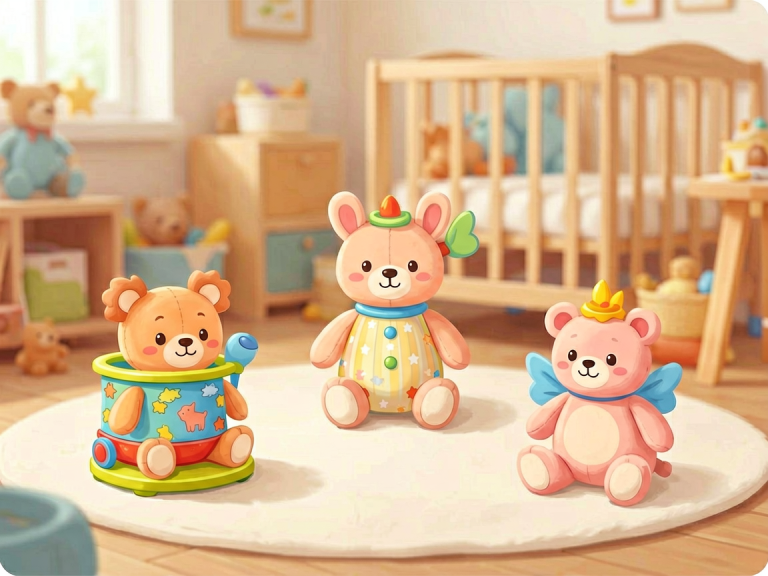
- 0–2 years (sensorimotor): Toys emphasize cause-and-effect, sensory stimulation, and gross motor skills. Examples include plastic rattles, stacking rings, and soft plastic teethers. These toys are large, brightly colored, and free of small parts. The recommended age is usually birth–24 months.
- 2–4 years (early preoperational): Toddlers engage in symbolic play but still lack impulse control. Plastic toy cars, simple puzzles (5–10 pieces), and large blocks are common. Age labels often state “2+” or “3+” to indicate that small parts may appear but are still relatively large.
- 4–7 years (late preoperational): Children develop fine motor skills, language, and imagination. Plastic construction sets (e.g., LEGO Duplo or standard LEGO), action figures, and board game pieces appear. Age labels range from 4+ to 7+. These toys may contain smaller pieces but are designed to be assembled with adult supervision.
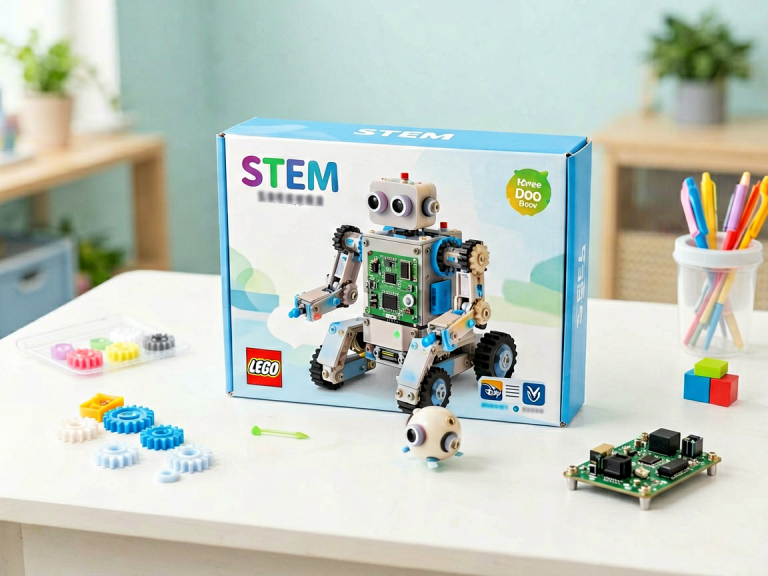
- 8+ years (concrete operational): Kids can handle complex instructions, advanced logic, and smaller components. Plastic science kits, intricate Lego sets, and electronic toys with tiny screws and batteries carry age recommendations of 8+, 10+, or even 14+.
Ignoring these milestones can backfire: a three-year-old given a complex plastic model kit may become frustrated and lose interest, while an eight-year-old given a toddler rattle will quickly discard it.
II. Common Plastic Toy Categories and Their Age Recommendations
1. Plastic Building Blocks and Construction Sets
This category is a classic example of how age recommendations evolve. For toddlers, there are large, hollow plastic blocks (e.g., Mega Bloks First Builders) recommended for ages 1–3. They are lightweight, have rounded edges, and cannot be swallowed. For preschoolers, Duplo sets (ages 1½–5) use blocks twice the size of standard LEGO. Standard LEGO sets, with their tiny bricks, start at age 4 (for simple sets) but most complex kits are designed for ages 7–12. The age on the box often reflects both the piece count and the complexity of the assembly instructions.
2. Plastic Action Figures and Dolls
Action figures and fashion dolls made of hard plastic usually recommend ages 3+ (to avoid small accessories) or 4+ (when weapon accessories or hair clips appear). For instance, a small plastic dinosaur with no detachable parts might be safe for 18 months, but a figurine with a removable sword or a tiny hat would be labeled 3+. Some high-detail collectible figures target ages 8+ because they contain interchangeable hands, armor, or magnetic stands.
3. Plastic Musical Toys
Plastic maracas, xylophones, and drum sets are common for infants and toddlers. Age recommendations here focus on noise level and small parts. A plastic tambourine with a sealed jingle edge might be safe from 6 months, but a toy piano with a detachable battery cover would be labeled 3+. For electronic plastic instruments with wires or USB ports, the age jumps to 8+ due to electrical safety concerns.
4. Plastic Vehicles and Playsets
Die-cast metal cars are often coated in plastic, but the plastic parts (wheels, spoilers, windshields) can break off. Most hot wheels or matchbox cars recommend ages 3+ for this reason. Larger plastic trucks, like dump trucks with removable loads, often target ages 2–5 because the loads can be mouth-sized. Playsets (e.g., plastic farm or pirate ship) have an age range that accounts for the number of small pieces; a pirate ship with a dozen plastic cannons and treasure coins would be 4+ or 5+.
5. Plastic Arts and Crafts Kits
Modeling clay, plastic molds, and bead kits are common. Bead kits with small plastic beads are nearly always 5+ or 8+ due to choking risk. Plastic lacing cards for toddlers are usually 3+. For science kits that involve plastic tubes, valves, and small batteries, the minimum age is often 8+.
III. How to Interpret Age Labels Beyond the Number
1. The “+” Symbol and Its Significance
An age label such as “3+” means the toy has been tested and found to present no unreasonable risk for children who have reached that age. It does not mean a two-year-old will automatically be harmed—but it does indicate that the toy was not designed with the oral-exploration stage in mind. Some toys carry a range like “18 months–3 years,” which is more precise. Others simply say “Not for children under 3.” Both are warnings.
2. The Hidden Pitfall: “Choking Hazard” vs. “Sharp Edges”
Sometimes a toy labeled “5+” may still contain sharp plastic edges if the manufacturing quality is poor. Always check the packaging for additional warning phrases: “Warning: Choking Hazard—Small Parts,” “Warning: Contains Magnets,” or “Warning: Sharp Points.” These clauses overrule the general age recommendation. For instance, a plastic toy that is technically large enough to pass the small parts test but has a thin sharp seam could still be dangerous for a three-year-old who might try to bite it.
3. The Role of Supervision and Individual Variability
No age label replaces adult judgment. Some three-year-olds are still heavy mouth-behaviors; others are advanced and handle small pieces carefully. Conversely, a six-year-old with developmental delays might still put plastic pieces in his mouth. Parents should observe their child’s specific behaviors—teething, pica tendencies, or impulse control—and err on the side of caution. Age recommendations are population-wide statistics, not individual guarantees.
IV. The Environmental and Economic Angle
1. Durability and Longevity of Plastic Toys
Plastic toys are often marketed as “indestructible,” but age recommendations also consider wear and tear. A soft plastic teether for infants will degrade over time; a hard plastic action figure can last for years. If a toy is intended for an older child but purchased for a younger sibling, parents must check for cracks, chipped plastic, or loose parts caused by previous use. Age recommendations assume the toy is new and intact.
2. The Problem of “Too Much, Too Soon”
Marketing often pushes advanced plastic toys to younger children, promising “educational benefits.” For example, a plastic tablet with glowing buttons and sounds might be labeled “6 months+,” but occupational therapists warn that such toys can overstimulate infants and reduce exploratory play. Age recommendations are not just about safety but about appropriate sensory input. A plastic toy that flashes rapid lights and loud sounds may be overwhelming for a 6-month-old, even if it passes choking tests.
V. Practical Tips for Choosing Plastic Toys by Age
1. Infants (0–12 months)
- Look for “BPA-free,” “phthalate-free,” and “lead-free” labels.
- Avoid any toys with batteries, magnets, or string longer than 12 inches.
- Choose large, one-piece plastic shapes (e.g., plastic books, textured teethers, stacking cups).
2. Toddlers (1–3 years)
- Seek plastic toys that are washable, non-toxic, and have no sharp corners.
- Avoid toys labeled with “small parts” warnings. Even if a part is large, test with your own mouth: if it fits in your mouth, it’s too small.
- Good options: plastic chunky puzzles, large vehicles, shape sorters, push-pull toys.
3. Preschoolers (3–5 years)
- Acceptable to have small parts, but still avoid tiny pieces like beads or screws.
- Look for “3+” labels on construction sets or figurines.
- Supervise play, especially for the first use, and teach children not to put toys in their mouths.
4. School-Age Children (5–12 years)
- Plastic toys with intricate parts, batteries, or magnetic components are appropriate.
- Encourage following instructions for assembly (a skill-building exercise).
- Check for small magnet warnings; ingested magnets can cause intestinal perforation.
5. Teens and Adults (12+)
- Many collectible plastic toys (e.g., Gunpla model kits, artist-designed figures) target ages 14+ due to fine motor demands and small sharp sprues.
- Age recommendations for these items are more about skill level than safety.
Conclusion: A Label Is a Starting Point
Plastic toys are ubiquitous, affordable, and versatile—but their age recommendations are not mere suggestions. They encapsulate complex safety testing, developmental research, and manufacturing standards. As consumers, we must respect them while also applying common sense. A “3+” label on a plastic toy does not mean a two-year-old will automatically choke, but it does mean the toy was not designed with that risk in mind. By understanding the rationale behind these numbers, we can choose toys that are both safe and stimulating, turning plastic into a tool for growth rather than a hazard. The next time you pick up a brightly colored package, pause to read that small text. It holds more wisdom than you might think.