Unlocking Potential: The Best Educational Toys for 6-Year-Olds to Foster Growth and Learning
Introduction
The age of six marks a remarkable turning point in a child’s development. Children at this stage are transitioning from the purely imaginative world of early childhood into a more structured environment where logic, problem-solving, and social skills begin to flourish. They can follow multi-step instructions, read simple words, and engage in cooperative play. Selecting the right educational toys for a 6-year-old is not merely about keeping them occupied—it is about nurturing their natural curiosity, building foundational academic skills, and encouraging emotional resilience. The best toys strike a delicate balance between fun and challenge, offering open-ended possibilities that adapt to a child’s growing abilities. Below, we explore five key categories of educational toys that are proven to support cognitive, creative, physical, and social development in six-year-olds.
STEM Toys That Spark Curiosity
STEM (Science, Technology, Engineering, and Mathematics) toys are perhaps the most powerful tools for cultivating a child’s analytical thinking and love for discovery. At age six, children are naturally inquisitive about how things work. They ask “why” constantly, and STEM toys provide tangible answers.
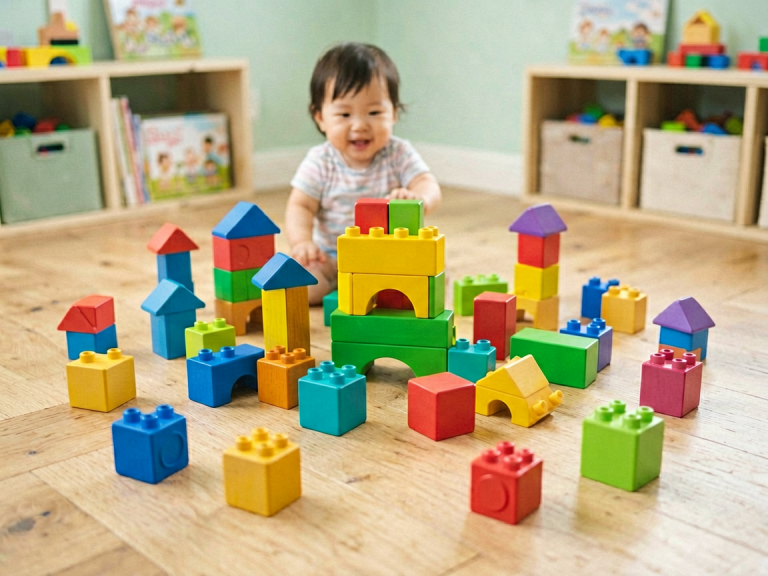
Building and Construction Sets – Classic interlocking bricks (like LEGO Classic or magnetic tiles) remain top choices, but for 6-year-olds, sets that include gears, wheels, and simple mechanical parts are even better. These toys teach spatial reasoning, cause-and-effect, and basic engineering principles. For example, a child who builds a spinning carnival ride with a crank learns about rotational motion and gear ratios without realizing they are doing physics.
Beginner Coding and Robotics – Simple coding kits that use picture-based commands or physical programming blocks (such as Botley or Code-a-Pillar) introduce algorithmic thinking without requiring literacy. A 6-year-old can plan a sequence of steps for a robot to navigate a maze, which strengthens sequencing skills and logical deduction.
Science Experiment Kits – Choose kits that focus on safe, mess-free explorations like crystal growing, magnetic forces, or water absorption. These activities allow children to hypothesize, observe, and draw conclusions—the core scientific method. A simple volcano eruption kit, for instance, leads to questions about chemical reactions, and the excitement of the “explosion” rewards curiosity.
Creative Arts and Crafts for Imagination
While STEM toys feed the analytical side of the brain, creative arts toys nourish emotional expression, fine motor control, and divergent thinking. Six-year-olds are capable of detailed artwork and enjoy creating objects that have a purpose.
Advanced Craft Kits – Look for kits that involve weaving, sewing, bead threading, or paper crafting that result in a finished product like a bracelet, a stuffed animal, or a pop-up card. These activities strengthen hand-eye coordination and patience. More importantly, they give children a sense of accomplishment and pride.
Storytelling and Role-Play Sets – Dress-up costumes with realistic accessories (e.g., doctor’s kit, chef’s apron, or postal worker uniform) allow 6-year-olds to immerse themselves in grown-up roles. This type of imaginative play builds vocabulary, empathy, and social understanding as children negotiate scenarios with peers.
Open-Ended Art Supplies – A high-quality set of washable markers, watercolors, modeling clay, and blank paper is essential. Unlike coloring books, open-ended supplies encourage original creation. Children can draw maps of imaginary lands, sculpt animals, or create greeting cards for family members. The lack of a fixed outcome fosters risk-taking and creative problem-solving.
Board Games and Puzzles for Cognitive Skills
Board games and puzzles are among the most effective educational toys for 6-year-olds because they combine multiple learning domains: critical thinking, memory, strategy, and social interaction.
Strategy Games – Games like *Ticket to Ride: First Journey* or *My First Carcassonne* are designed for young children but require planning, resource management, and flexible thinking. Playing these games teaches children to anticipate consequences and adapt to changing situations. Losing a round also provides a safe environment to practice emotional regulation.
Memory and Pattern Games – Classic memory card games with themes (animals, numbers, letters) remain excellent. For a twist, try games that involve pattern repetition (e.g., *Simon* or *Bop It!*). These improve short-term recall and auditory processing speed.
Jigsaw Puzzles – A 100-piece jigsaw puzzle is appropriate for a 6-year-old who has good concentration. Puzzles enhance visual-spatial skills, persistence, and the ability to break a large problem into smaller parts. Working on a puzzle together as a family also builds teamwork and patience.
Language and Literacy Toys
Reading and writing skills accelerate rapidly at age six. Toys that make these activities playful rather than drill-like can transform a reluctant learner into an enthusiastic reader.
Phonics-Based Board Games – Games such as *Zingo! Word Builder* or *Alphabet Island* use letter tiles and picture cards to reinforce sound-letter correspondence. Children actively build words while competing in a low-pressure game setting.
Story Cubes and Prompt Cards – Sets of dice with pictures (people, places, objects) encourage children to create oral or written stories. A 6-year-old can roll the dice and then dictate a tale, which builds narrative structure, vocabulary, and imagination. Parents can write down the story for the child to read back later, bridging spoken and written language.
Interactive Reading Toys – Devices like the LeapFrog LeapReader or a simple audio book player allow children to follow along with printed text while hearing correct pronunciation. These tools support independent reading practice and are especially helpful for children who need extra auditory reinforcement.
Physical and Outdoor Educational Toys
Cognitive development is inseparable from physical health. Active toys that challenge gross motor skills, balance, and coordination also enhance brain function by improving blood flow and developing the cerebellum.
Balance Bikes and Scooters – For 6-year-olds, a lightweight, adjustable balance bike or a two-wheel scooter helps refine proprioception and decision-making speed. Riding requires steering, braking, and anticipating obstacles—all forms of real-world problem-solving.
Obstacle Course Kits – Modular sets with cones, jump ropes, stepping stones, and tunnels turn the backyard into a mini gym. Setting up a course and timing the child’s run promotes sequencing skills (remembering the order of stations) and self-regulation (controlling speed and direction).
Gardening and Nature Exploration Sets – A child-size shovel, magnifying glass, and a bug-catching container encourage outdoor scientific observation. Digging and planting teach biology, responsibility, and patience. A simple project like growing bean seeds in a clear cup allows the child to witness root growth daily, blending physical activity with science education.
Conclusion
The best educational toys for 6-year-olds are those that align with their developmental stage: they challenge without frustrating, inspire without dictating, and connect to real-world experiences. No single toy can cover every area, so a balanced collection of STEM kits, creative tools, board games, language aids, and active play equipment will provide a rich environment for holistic growth. As parents and educators, we should remember that the greatest learning often happens when a child is fully engaged and having fun. By choosing toys that respect their autonomy and feed their innate curiosity, we give them the best possible foundation for a lifetime of joyful learning.