Unlocking Young Minds: The Best Problem-Solving Toys for Kids
Introduction
In an era dominated by screens and passive entertainment, the value of toys that challenge a child’s intellect has never been greater. Problem-solving toys are not merely diversions; they are the building blocks of critical thinking, resilience, creativity, and logical reasoning. When children engage with a puzzle, a construction set, or a strategic game, they learn to break down complex challenges, test hypotheses, recover from failure, and celebrate incremental victories. This article explores the best categories of problem-solving toys for kids, explaining why each type works and how it contributes to cognitive development. From classic wooden blocks to modern robotics kits, these toys transform playtime into a rigorous yet joyful training ground for the mind.
Why Problem-Solving Toys Matter
Before diving into specific recommendations, it is helpful to understand the developmental benefits. Problem-solving toys require children to actively engage their prefrontal cortex—the part of the brain responsible for planning, decision-making, and impulse control. Unlike passive toys that simply entertain, these tools demand persistence. A child who tries to fit a triangular block into a square hole learns spatial reasoning; a child who navigates a maze learns sequential logic; a child who builds a stable tower learns cause and effect. Moreover, these toys often involve trial and error, which teaches emotional regulation and the ability to cope with frustration. As psychologist Jean Piaget famously argued, children construct knowledge through hands-on interaction with their environment. Therefore, the best problem-solving toys are those that offer open-ended possibilities, multiple solutions, and age-appropriate challenges.
1. Construction Sets: Engineering the Future
Construction toys are the quintessential problem-solving tools because they merge creativity with structural physics. From simple wooden blocks to intricate magnetic tiles and advanced LEGO Technic sets, they encourage children to plan, design, and revise.
Wooden Blocks and Magnetic Tiles
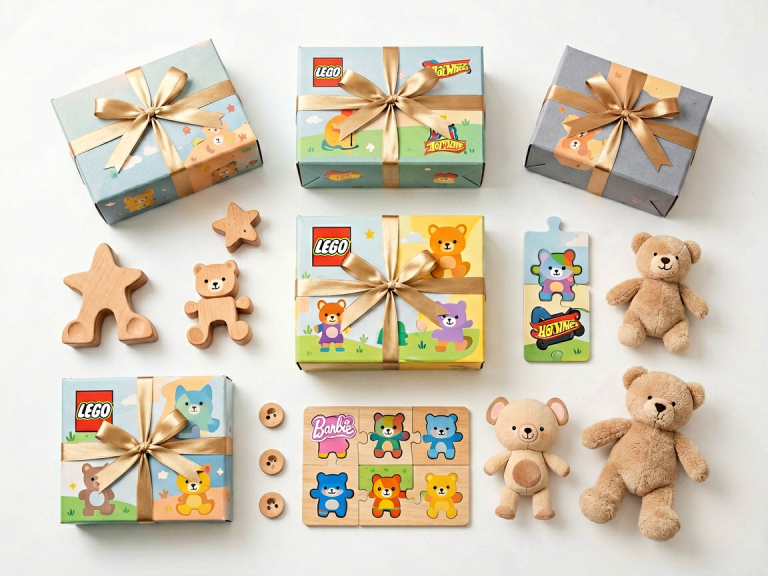
For toddlers and preschoolers, classic wooden blocks are unparalleled. Stacking and balancing them requires fine motor control and an intuitive grasp of gravity. More advanced options like Magna-Tiles or Magformers introduce magnetic connections, allowing children to build 3D shapes, bridges, and houses. These sets teach symmetry, stability, and the concept of base support. A child trying to build a tower that does not topple must experiment with weight distribution, ultimately learning that a wider base is more stable—a lesson in physics that will serve them well in later school years.
LEGO and Compatible Building Sets
For older children, LEGO sets—especially the Classic Creative bricks or the Technic line—demand following complex instructions while also leaving room for freeform creation. When a child builds a LEGO car that moves, they must align gears, axles, and wheels correctly. If the car doesn’t roll, they must debug the assembly: Are the wheels aligned? Is the axle too tight? This process mirrors real-world engineering troubleshooting. Moreover, open-ended brick sets allow children to invent their own machines, fostering divergent thinking.
2. Puzzles and Brain Teasers: Sharpening Logical Thinking
Puzzles are perhaps the most direct form of problem-solving toys. They require pattern recognition, patience, and systematic reasoning.
Jigsaw Puzzles
Traditional jigsaw puzzles—from 24-piece cardboard puzzles for young children to 1,000-piece puzzles for older kids—train spatial visualization and attention to detail. A child must sort pieces by edge and color, then try different combinations. When a piece does not fit, they learn to set it aside and try again later, developing strategic patience. For added challenge, 3D puzzles (like globe puzzles or building models) introduce depth perception and multi-axis thinking.
Logic Puzzles and Brain Teasers
Rush Hour, IQ Puzzler Pro, and ThinkFun’s Gravity Maze belong to a category of compact, portable puzzle games that present a specific goal—such as moving a red car out of a traffic jam or making a marble reach a target. These games require the child to plan several moves ahead, anticipate obstacles, and reconsider assumptions. For instance, in Gravity Maze, the player must place transparent towers on a grid so that a marble rolls from a start point to an end point using gravity. Each level introduces more restrictions, forcing the child to think in terms of cause, effect, and sequential logic.
3. Strategy Board Games: Social Problem-Solving
Board games that involve strategy, resource management, and negotiation push children to think critically under social pressure. Unlike solo puzzles, these games introduce an element of unpredictability—the actions of other players—which teaches adaptability.
Classic Strategy Games
Games like *Checkers*, *Chess*, *Settlers of Catan (Junior edition)*, and *Ticket to Ride* (first journey version) are excellent. Chess, in particular, is a masterpiece of problem-solving: every move must consider both immediate gain and long-term position. A child learns to think several turns ahead, analyze opponents’ intentions, and sacrifice a piece for a larger advantage. Similarly, *Catan* requires resource management and negotiation—a child must decide whether to trade wood for brick now or wait, weighing risks and benefits.
Cooperative Games
Cooperative board games, such as *Outfoxed!*, *Race to the Treasure*, or *Forbidden Island*, emphasize teamwork. Players must pool their problem-solving skills to achieve a common goal against the game’s mechanics. This teaches communication, division of labor, and consensus-building. For example, in *Outfoxed!*, children work together to solve a mystery by gathering clues and eliminating suspects—a fantastic exercise in deductive reasoning.
4. Coding and Robotics Toys: Digital Problem-Solving
In a technology-driven world, toys that introduce computational thinking are invaluable. These toys teach children how to decompose a problem into smaller steps, recognize patterns, and debug errors.
Screen-Free Coding Games
*Botley the Coding Robot* and *Code-a-Pillar* are excellent for preschoolers and early elementary students. Children arrange physical coding cards or press buttons to create a sequence of commands (e.g., forward, left, turn around). When the robot does not reach the target, the child must retrace the sequence and identify the mistake—a hands-on introduction to debugging. This directly mirrors the iterative process of software development.
Programmable Robotics Kits
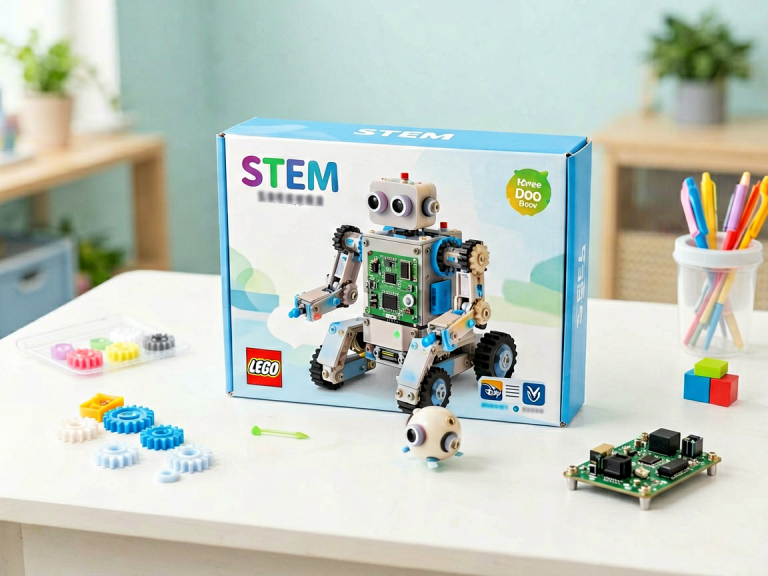
For older children, *LEGO Mindstorms*, *Sphero BOLT*, or *Makeblock mBot* offer more complexity. Kids assemble the robot and then program it using block-based languages or even Python. Challenges like “make the robot follow a black line” or “autonomously navigate a maze” require children to understand loops, conditionals, and sensor feedback. The tangible result—a moving robot—provides instant gratification and motivation to keep improving.
5. Art and Design Toys: Creative Problem-Solving
Problem-solving is not limited to logic and engineering; it also involves aesthetic and functional creativity. Toys that combine art with engineering foster “design thinking”—the ability to identify a need and create a solution.
Melissa & Doug Design-Your-Own Sets
Items like magnetic dress-up dolls, wooden stamp sets, or mosaic kits encourage children to create patterns, combine colors, and plan compositions. While these seem purely artistic, they require decision-making: “Which piece goes where to create a balanced picture?” The child learns to evaluate visual harmony and adjust based on constraints.
Kinetic Sand and Modeling Clay
Open-ended sculpting materials, such as Kinetic Sand or Play-Doh with extruders and molds, allow children to build structures, vehicles, or creatures. They must think about structural integrity: “If I make the legs too thin, will my dinosaur stand?” As they experiment, they internalize basic principles of material science and gravity.
How to Choose the Right Problem-Solving Toy
Selecting the best toy depends on the child’s age, interests, and current skill level. For a two-year-old, a simple shape-sorter is sufficient; for a ten-year-old, a programmable robot may be appropriate. However, the most effective toys share several characteristics: they are open-ended (allowing multiple solutions), they offer graduated difficulty (so the child can progress), and they require active rather than passive engagement. Avoid toys that do everything for the child or that have only one correct answer. Instead, look for toys that invite experimentation and reward persistence.
Conclusion
The journey of problem-solving is one of the most valuable skills a child can acquire. Through construction sets, puzzles, strategy games, coding robots, and artistic design kits, children learn that failure is not an end but a stepping stone. They develop confidence in their own ability to analyze, adapt, and overcome. By investing in high-quality problem-solving toys, parents and educators are not just buying entertainment—they are planting seeds for a lifetime of critical thinking. So next time you shop for a gift, consider a toy that asks “What if?” and “How can I fix this?” rather than one that simply flashes lights and makes noise. The young mind that learns to solve problems through play will become the innovative adult who solves real-world challenges tomorrow.