Unlocking Imagination: Top Creativity Toys Under $25 That Inspire Kids and Adults Alike
In a world saturated with screens and passive entertainment, the value of a simple, tangible toy that sparks creativity cannot be overstated. The best toys do not just keep children busy; they invite them to explore, experiment, and express themselves in ways that build problem-solving skills, confidence, and joy. The wonderful news is that you do not need a big budget to fuel these creative adventures. There is a rich universe of creativity toys under $25 that offer hours of open-ended play, from classic building blocks to innovative art kits. Whether you are a parent looking for a gift, a teacher seeking classroom supplies, or an adult craving a mindful hobby, these affordable tools prove that imagination is the most valuable ingredient of all. Below, we explore five categories of budget-friendly creativity toys, each designed to unlock different facets of inventive thinking.
1. Art Supplies That Spark Self-Expression
Nothing quite compares to the raw freedom of a blank page and a handful of vibrant tools. Art supplies under $25 are perhaps the most accessible gateway to creativity, allowing children and adults to transform thoughts into visual stories. A set of 24 high-quality colored pencils, for example, can cost less than ten dollars and offer enough color range for shading, blending, and detailed drawing. Pair these with a compact spiral sketchbook (often available for around $5–$8), and you have a portable studio that encourages daily sketching, doodling, and journaling.
Watercolor paint sets are another brilliant option. Many beginner-friendly palettes come with a brush and a small pad of paper for under $15. The unpredictable blend of water and pigment teaches patience and experimentation—every brushstroke is a lesson in cause and effect. For those who prefer hands-on texture, modeling clay or air-dry clay (available in multi-color packs for $10–$20) invites sculpting of anything from miniature animals to abstract shapes. Unlike play dough, these clays dry hard and can be painted later, adding a second layer of creative work. Even simple items like a set of colorful washi tapes, stickers, and a pack of origami paper can inspire children to make collages, cards, and folded creatures. The key is that none of these supplies come with a rigid instruction manual; they are invitations to invent, erase, and try again—a process that lies at the heart of creative development.
2. Building Sets for Endless Construction
The joy of building something from nothing is timeless, and construction toys under $25 are some of the most effective creativity accelerators on the market. Classic wooden building blocks, for instance, remain a staple because they scale to any age: a toddler stacks them to learn balance; a grade-schooler designs a castle with archways and towers; an adult uses them as meditation tools for abstract structures. A 50-piece set of unfinished wooden blocks can be found for around $20, and they can later be painted or decorated, merging construction with art.
Magnetic tile sets, such as small starter packs from brands like PicassoTiles or Magformers, often run between $20 and $25 for 30 to 40 pieces. These translucent squares and triangles snap together with satisfying clicks, allowing builders to create 3D geometric forms, houses, and even simple machines. The magnetic connection teaches spatial reasoning without frustration—pieces stay together but are easy to rearrange. For a different tactile experience, a set of 500-pieces straw connectors (like Strawbees or K’NEX) costs around $15 and lets children build oversized sculptures, bridges, and even wearable structures. The thin plastic straws and connectors are lightweight and forgiving, encouraging trial and error. All these building sets share a common trait: there is no single correct outcome. Each piece is a variable in a child’s unique equation of imagination, and every new assembly is a fresh problem to solve.
3. Science Kits for Little Explorers
Science and creativity are deeply intertwined—both rely on curiosity, hypothesis, and observation. Affordable science kits under $25 transform a child’s bedroom or kitchen table into a mini laboratory, where learning feels like play. A classic volcano eruption kit, for example, typically includes baking soda, citric acid, a plastic volcano mold, and food coloring for around $12. While the eruption itself is exciting, the deeper creativity lies in customizing the experiment: adding glitter for a “lava” effect, changing the color combinations, or testing how different amounts of each ingredient alter the reaction. Children learn that science is not about memorizing facts but about asking “what if?”
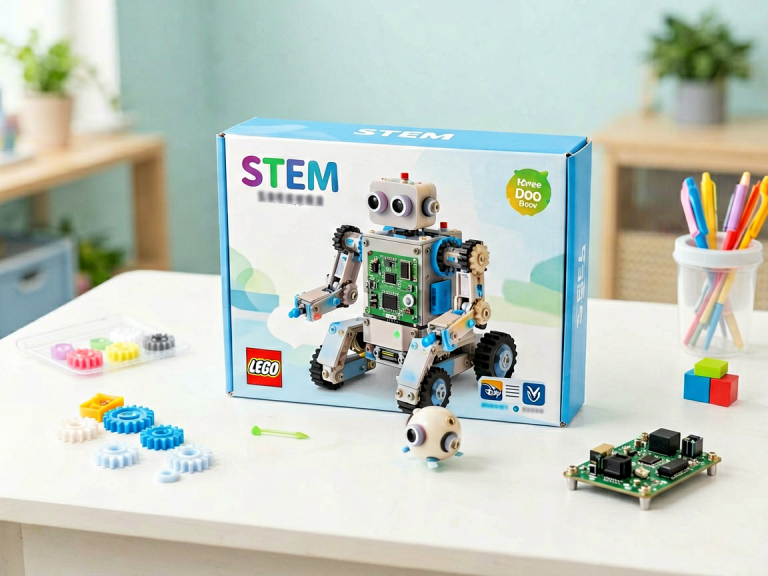
Another excellent option is a crystal-growing kit. For roughly $15, children can grow dazzling crystals on rocks or in a solution, then design their own “geode” displays. The waiting time teaches patience and observation, while the final product is a real piece of art. For older kids (ages 8 and up), a simple circuit kit that includes LEDs, copper tape, and a coin-cell battery (available for about $18–$20) introduces the magic of electricity. They can create light-up greeting cards, paper lanterns, or even a small alarm system. The act of connecting wires and watching a bulb glow instills a sense of discovery, and the open-ended nature of the kit means they can apply the same principles to countless projects. Similarly, a solar-powered toy car kit (under $15) lets kids build a vehicle that runs on sunlight, then experiment with different wheel sizes, chassis shapes, and reflectors to make it faster or more stable. These kits prove that hands-on science is one of the most fertile grounds for creative thinking.
4. Imaginative Play and Storytelling Tools
Dramatic play—the act of pretending to be someone or something else—is a cornerstone of childhood creativity. Simple, budget-friendly toys can fuel entire worlds of narrative. A basic set of wooden or plastic animal figures (12 to 15 pieces often cost $10–$15) allows children to invent stories set in jungles, farms, or fantasy lands. Adding a small fabric blanket or a cardboard box transforms a living room into a stage. For children who love to dress up, a cape or a simple mask set (both under $10) can turn them into superheroes, wizards, or animals. The costume itself is less important than the role it unlocks; a child in a cape will automatically adopt a heroic voice and solve imagined problems.
Puppets are another powerful storytelling tool. A set of hand puppets—whether generic animals or fantasy characters—can be found for around $15–$20. Puppetry engages not only imagination but also language skills, as children create dialogue and plots. Even a single puppet can spark a monologue or a conversation with a toy companion. For older children or adults, a deck of “storytelling cards” (such as Rory’s Story Cubes, which typically cost $10–$15) offers a compact yet profound creative prompt. Each cube has images on its faces—a key, a moon, a hand, a castle—and players roll them to weave a spontaneous story. This game works in groups or solo, and it exercises narrative thinking, sequencing, and creativity under constraints. All these toys share a low-tech, high-imagination principle: they provide a framework but leave the story to the teller.
5. Puzzles and Logic Games That Challenge the Mind
Creativity is not only about art and building; it also involves solving problems in novel ways. Puzzles and logic games under $25 sharpen cognitive flexibility while offering deep satisfaction. A 100-piece jigsaw puzzle of a colorful nature scene (often $8–$12) teaches pattern recognition and perseverance. But more creative are “puzzle sets” that have no fixed image, such as tangram puzzles. A wooden tangram set (about $10) comes with seven geometric pieces that can form hundreds of silhouettes—animals, letters, houses. The challenge is to see the shapes inside an outline, which trains spatial logic and creative recombination.
Another fantastic option is a set of “logic puzzle” cards or a small game like “Cat Stax” (a 3D stacking puzzle from Brainwright, around $12) or “Qwirkle” (a tile-matching game, $20). These games require players to think ahead, recognize patterns, and sometimes bend the rules to find a way. For a more open-ended experience, consider a set of “dice” that feature shapes, colors, or words. Rolling them creates random constraints that force you to think laterally. For instance, “Build a shelter using only three cylinders and a flat square” is a prompt that can be answered with everything from a paper tube fort to a Lego creation. The essence of these toys is that they treat the mind like a muscle; by giving it a range of small, intriguing puzzles, we strengthen its ability to make unexpected connections—a vital skill for creativity in any field.
Conclusion
Creativity is not a luxury reserved for those with expensive toolkits or elite educations. It is a muscle that grows through practice, and the most effective practice often comes from simple, affordable objects that invite exploration. From a box of crayons and a pad of paper to a bag of magnetic tiles and a deck of story cubes, the best creativity toys under $25 prove that a small investment can yield enormous returns in imaginative thinking, problem-solving, and pure joy. Whether you are shopping for a child, a student, or your own inner artist and inventor, remember that the real magic is not inside the package—it is in the hands and minds of the person who uses it. So the next time you are looking for a gift that truly matters, choose something that says, “Go ahead—make something new.” The world has enough passive consumers; what it needs is more curious creators. And with these affordable toys, anyone can begin that journey today.