The Ultimate Guide to the Best Toys for 5-Year-Olds: Sparking Growth, Creativity, and Joy
Five-year-olds are at a magical crossroads. They have left toddlerhood behind but are not yet ready for the structured rules of formal school. Their imaginations are exploding, their motor skills are sharpening, and their social awareness is blooming. Choosing the right toys at this age is not just about keeping them busy—it’s about nurturing their cognitive development, emotional intelligence, physical coordination, and creativity. The best toys for 5-year-olds are those that offer open-ended play, encourage problem-solving, and allow room for both solitary exploration and cooperative fun. Below, we break down the top categories and specific recommendations that have proven to captivate children this age while delivering genuine developmental benefits.
Creative and Artistic Toys: Unleashing the Inner Creator
At five, children are beginning to represent the world around them through drawings, sculptures, and pretend stories. Giving them tools to express these ideas is invaluable. Crayola’s My First Fingerpaint Kit (or similar washable paint sets) remains a classic because it satisfies the sensory craving and allows for large-muscle movement. But for more refined control, a high-quality wooden art easel with a chalkboard on one side and a whiteboard on the other can become the centerpiece of daily creative play. Add a set of washable markers, tempera paint sticks, and chunky chalk so the child can switch between mediums without frustration.
Another standout is Play-Doh’s Kitchen Creations sets. Five-year-olds love to mimic cooking, and Play-Doh’s squeezable, moldable texture strengthens hand muscles needed for writing. The sets often include cookie cutters, a mini oven, and utensils that encourage pretend play while also building fine motor control. For parents who want less mess, Melissa & Doug’s Water Wow! series offers reusable water-reveal coloring pads—a travel-friendly option that never stains.
Don’t overlook craft kits like Klutz’s Make Your Own Squishies or Lakeshore Learning’s Design & Play Tool Kits. These provide step-by-step instructions that teach sequencing and patience, while the end product (a squishy, a cardboard car, or a painted birdhouse) gives a huge sense of accomplishment.
STEM and Building Toys: Laying the Foundation for Logical Thinking
Five-year-olds are naturally curious about how things work. They ask “why” constantly, and the best toys channel that curiosity into structured exploration. Magnetic building tiles (such as Magna-Tiles or PicassoTiles) are non-negotiable in this age group. Unlike traditional blocks, magnetic tiles click together easily, allowing children to build 3D houses, castles, cars, and geometric shapes without the frustration of balancing. They teach symmetry, magnetism, and spatial reasoning. Study after study shows that magnetic tile play correlates with improved math readiness in kindergarten.
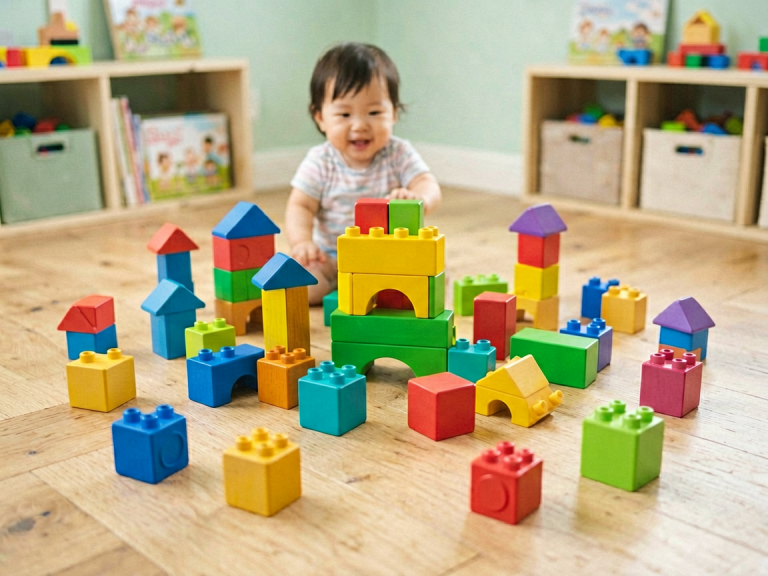
Next, consider a simple LEGO Classic set (the large box, not the specialty theme sets). At five, children can follow basic instructions but still prefer free-form building. LEGO bricks develop finger strength, creativity, and the ability to plan ahead. A set like LEGO Classic 11022 (or similar) contains enough bricks in many colors to build a helicopter one day and a rocket the next. For a more focused STEM experience, Learning Resources’ Botley the Coding Robot is outstanding: this screen-free robot teaches cause-and-effect and basic programming logic through simple button commands. Kids can set up obstacle courses and program Botley to navigate them, learning sequencing, debugging, and critical thinking without staring at an iPad.
Another gem is Geometric Stick Puzzles or Curiosity Kits’ Magnetism Exploration Set. These encourage kids to test hypotheses: “Will the magnet attract this spoon? What happens if I turn the stick this way?” The open-ended nature means the toy grows with the child for two or three years.
Imaginative Role-Play and Dress-Up: Building Social and Language Skills
The world of “let’s pretend” reaches its peak at age five. Children want to be firefighters, doctors, astronauts, chefs, or even just “mommy and daddy.” Dress-up trunks filled with costumes (doctor coat, chef hat, firefighter helmet, fairy wings) can inspire hours of collaborative play with friends or siblings. The key is realism: a toy doctor kit with a working stethoscope, a blood-pressure cuff, and a reflex hammer (like the ones from Melissa & Doug) makes the experience more authentic and language-rich.
For fans of teamwork, a wooden play kitchen or a tool bench is a must. A play kitchen with pots, pans, fake food, and a cash register encourages role-playing shopping, cooking, and serving—activities that naturally involve counting, sorting, and vocabulary building. Similarly, a workbench with plastic tools, nuts, and bolts teaches fine motor manipulation and problem-solving as kids “fix” pretend objects.
Don’t underestimate simple puppet theaters and hand puppets. Five-year-olds love creating dialogues between animals or characters. This boosts narrative skills and emotional understanding as they explore different feelings through puppets. A set of finger puppets or a hand-puppet family (like those from Folkmanis) can accompany bedtime stories or be used in self-directed plays.
Active and Gross Motor Toys: Energy Meets Coordination
Five-year-olds have boundless energy, and physical play is crucial for developing balance, coordination, and strength. Balance bikes (pedal-free bikes) are ideal if the child hasn’t yet learned to ride a two-wheeler; they teach steering and balancing without reliance on training wheels. Once confident, a 16-inch pedal bike with training wheels becomes the next step. Alternatively, a scooter (three-wheeled or two-wheeled, depending on skill) provides excellent leg exercise and a sense of speed.
Indoor active toys are equally important. A nugget couch or modular foam play set can be configured into a climbing wall, a fort, or a soft landing for jumping. This type of open-ended physical toy encourages imaginative movement—toddlers can turn it into a pirate ship, a trampoline, or a reading nook. Another favorite is the Hula Hoop Hop or a simple plastic bowling set; both promote hand-eye coordination and can be played alone or with others.
Outdoor enthusiasts should consider a kid-size gardening kit—trowel, gloves, seeds, and a small watering can. Gardening teaches responsibility, science (seed germination), and patience, all while getting fresh air and exercise.
Puzzles and Board Games: Cultivating Patience and Social Rules
Puzzles evolve quickly at this age. A 24-to-48-piece jigsaw puzzle is perfect for a five-year-old. Look for puzzles with familiar themes (animals, vehicles, fairy tales) and large pieces. Puzzles improve visual discrimination, hand-eye coordination, and the ability to focus for longer periods. Ravensburger’s “My First Puzzles” line is well-regarded for its thick, durable pieces and vibrant images.
Board games introduce turn-taking, following rules, resilience in losing, and cooperative problem-solving. Start with “Cooperative” games like Hoot Owl Hoot! Or Peaceable Kingdom’s Race to the Treasure, where all players work together against the board, eliminating the sting of losing. Classic Candy Land and Chutes and Ladders remain popular because they teach number recognition and counting without reading. For a more strategic option, Sequence for Kids blends matching with simple card play.
Don’t forget memory matching games—they are fantastic for concentration and can be themed to a child’s interest, such as dinosaurs, princesses, or outer space.
Conclusion: Quality Over Quantity
The best toys for 5-year-olds are not necessarily the most expensive or the flashiest. They are the ones that invite the child to take an active role—building, creating, moving, pretending, and thinking. A toy that quietly sits on a shelf is a wasted investment. Look for toys that have multiple uses, that can be used alone or with others, and that grow with the child’s abilities. Above all, remember that a five-year-old’s favorite toy might simply be a cardboard box with a crayon and a parent ready to play along. But if you carefully curate a small collection from the categories above—art, STEM, role-play, active, and puzzles—you will provide a rich environment that supports every aspect of their development during this vibrant, formative year.