Unlocking Imagination: The Transformative Power of Creativity Toys for Elementary Kids
In an era dominated by screens, structured schedules, and standardized testing, the simple act of play has never been more critical—nor more misunderstood. For elementary-aged children, typically between the ages of six and twelve, play is not merely a break from learning; it is the very engine of learning itself. Among the most powerful catalysts for this kind of deep, meaningful play are creativity toys. These are not the flashy, battery-operated gadgets that entertain for a few minutes before being discarded. Rather, creativity toys are open-ended, thought-provoking tools that invite children to explore, experiment, fail, and try again. They are the unsung heroes of cognitive development, emotional resilience, and innovative thinking. This article delves into why creativity toys matter so profoundly for elementary kids, what types of toys best nurture these skills, and how parents and educators can thoughtfully integrate them into daily life.
The Neuroscience of Creative Play: Why It Matters
Before we examine specific toys, it is essential to understand the developmental stakes. The elementary years are a golden window for brain development. During this period, the prefrontal cortex—the region responsible for executive functions like planning, decision-making, and impulse control—is rapidly growing. Yet this growth is not automatic; it requires stimulation. Creative play, especially with toys that have no single "right" answer, forces the brain to forge new neural pathways. When a child builds a lopsided tower with wooden blocks and watches it tumble, the brain is not just registering failure. It is actively analyzing cause and effect, hypothesizing alternative strategies, and strengthening neural connections that underpin problem-solving.
Furthermore, creativity toys combat what psychologists call the "convergent thinking trap." Our education system often rewards convergent thinking—finding the single correct answer to a problem. While this skill has its place, the real world demands divergent thinking: the ability to generate multiple solutions, to see connections where others see only gaps. Creativity toys are divergent thinking gyms. A set of magnetic tiles, for example, can become a castle, a spaceship, a geometric sculpture, or a bridge. Each iteration requires a fresh mental model. Over time, this practice builds cognitive flexibility, which correlates strongly with academic success, emotional intelligence, and even career adaptability in adulthood.
The Hallmarks of True Creativity Toys
Not every toy that claims to be "creative" actually delivers. To distinguish genuine creativity toys from passive entertainment, look for three key characteristics. First, they are open-ended. A simple pack of modeling clay offers infinite possibilities; a pre-molded plastic dinosaur offers one. Second, they encourage process over product. The joy should come from the act of making, not from a perfect finished item. Third, they invite collaboration or self-directed iteration. A child playing alone should feel the urge to revise, add, or start over. This iterative loop is where deep learning lives.
Categories of Creativity Toys That Transform Learning
Construction and Building Toys: Foundations of Spatial and Logical Thinking
Perhaps the most iconic category of creativity toys is construction sets. Wooden blocks, LEGO bricks, magnetic tiles, and interlocking gears are staples for good reason. When elementary kids engage with these materials, they are not just stacking or snapping pieces together. They are internalizing principles of physics, geometry, and structural engineering. A child who builds a bridge that must support a toy car learns about balance and load distribution. A child who designs a marble run learns about gravity, momentum, and trajectory. Because these toys are modular and reusable, every session offers a new problem to solve. Moreover, the frustration of a collapsing structure teaches persistence—a far deeper lesson than any worksheet could convey.
Art and Craft Supplies: Unleashing Visual and Emotional Expression
Art materials—paints, pastels, collage kits, yarn, beads, and recycled materials—are the purest form of creativity toys. Unlike digital drawing apps, physical art supplies engage fine motor skills, spatial awareness, and tactile exploration. For elementary kids, the act of mixing colors, ripping paper, or weaving a simple loom provides sensory feedback that screens cannot replicate. More importantly, art offers a safe space for emotional expression. A child who cannot articulate feelings of anger or anxiety may pour those emotions into a chaotic painting or a jagged clay sculpture. The creative process becomes a form of therapy. Teachers and parents often observe that children who regularly engage with open-ended art materials show greater emotional regulation and reduced anxiety.
Science and Discovery Kits: Fostering Curiosity and Hypothesis Testing
While traditional science kits might seem like "educational" rather than "creative" toys, the best ones blur that line. Consider a set that allows a child to grow crystals, build a simple circuit, or create chemical reactions with safe household substances. These kits invite children to ask "What if?"—the fundamental question of creativity. When a child hypothesizes that adding more baking soda will make a volcano erupt higher, tests it, and observes the result, they are engaging in the same iterative process as a research scientist. The key is that the kit must allow for variation and failure. A rigid, step-by-step experiment with a predetermined outcome is not creative; it is a recipe. Look for kits that include open-ended challenges, such as "design a vehicle that can travel across a string using only the materials provided."
Imaginative Play Sets: Storytelling and Social Cognition
Dolls, action figures, puppet theaters, dress-up costumes, and miniature worlds (like a wooden barn or a castle) may seem basic, but they serve a vital creative function: they are vehicles for narrative. When a child stages a conversation between two stuffed animals, they are practicing dialogue, empathy, and theory of mind—the ability to understand that others have different thoughts and feelings. These skills are foundational for social competence. For elementary kids, imaginative play also helps process real-life experiences. A child who recently moved to a new city might repeatedly enact a story about a character finding a new home. Through this repetition, they gain mastery over their emotions. The best imaginative play sets are minimal and suggestive rather than overly detailed. A plain wooden dollhouse invites more invention than a fully furnished plastic one.
Coding and Technology Toys: Digital Creativity with Tangible Feedback
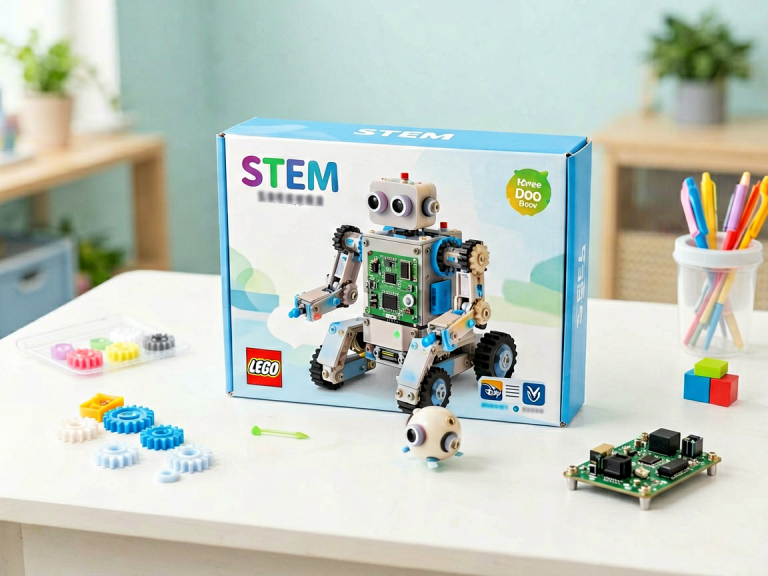
It would be a mistake to dismiss technology as the enemy of creativity. The right digital tools can be powerful creativity toys, especially for elementary kids who are digital natives. Programmable robots like Sphero or Ozobot, block-based coding platforms like Scratch, and build-your-own-computer kits like Kano offer a bridge between the physical and digital worlds. When a child codes a robot to navigate a maze they built from cardboard, they are learning sequencing, debugging, and logical thinking. The creative challenge is real: there are many ways to solve the maze, and the child must decide which algorithm works best. The key is that these toys prioritize creating over consuming. A child who spends hours building a video game level is exercising the same creative muscles as a child who builds a fort from blankets.
How to Select and Use Creativity Toys Effectively
Selecting the right creativity toys requires thoughtful consideration of the child's developmental stage, interests, and temperament. For a six-year-old, large wooden blocks and simple art supplies are ideal—they need materials that are safe, durable, and easy to manipulate. For a ten-year-old, more complex construction sets, science kits with greater autonomy, or beginning coding tools may be more engaging. The best approach is to observe the child's natural inclinations. Does she love building towers? Invest in magnetic tiles. Does he lose himself in drawing? Provide high-quality markers, different paper textures, and inspiration books.
Equally important is the environment in which these toys are used. A cluttered, noisy room full of distractions undermines the deep focus that creative play requires. Designate a "creation station"—a table or corner with easy access to materials, natural light, and minimal interruptions. Resist the urge to instruct or correct. When a child builds a car with no wheels, do not immediately point out the missing parts. Instead, ask open-ended questions: "How do you think you might make it move?" This preserves the child's ownership of the creative process.
Finally, rotate toys periodically. Children can become bored with even the most creative materials if they are always available. Stash half the toys away for a few weeks, then swap them out. This renews interest and forces the child to re-engage with familiar materials in new ways.
The Long-Term Impact: Creativity as a Life Skill
The benefits of creativity toys extend far beyond the elementary years. Research in developmental psychology suggests that children who engaged in extensive creative play demonstrate higher levels of innovation, collaboration, and adaptability in adolescence and adulthood. They are more likely to pursue careers in fields that require original thinking—not just the arts, but also engineering, entrepreneurship, medicine, and education. More importantly, they tend to be more resilient. A person who learned through play that failure is a stepping stone, not a final verdict, is better equipped to handle the inevitable setbacks of life.
In a world that often prioritizes speed, efficiency, and conformity, creativity toys are a quiet revolution. They affirm that there is value in messing about, in wondering, in making something imperfect but personal. For elementary kids, these toys are not just playthings; they are the tools with which they build their own minds. As parents, educators, and caregivers, our role is not to direct that building, but to provide the blocks, the paint, the circuits, and the stories—and then step back and watch the magic unfold.
Conclusion: Choose Toys That Ask Questions, Not That Give Answers
In the end, the best creativity toys for elementary kids share one essential trait: they ask questions. How tall can you build this tower? What happens if you mix blue and yellow? Can you make a story where the hero is a cupcake? These are not questions with a single correct answer. They are invitations to explore, to dream, and to discover. In a child's hands, a simple cardboard box can become a submarine, a castle, or a time machine. Our job is to ensure that those hands are never empty—and that the tools we place in them are worthy of the boundless imagination they hold. By choosing creativity toys wisely, we are not just filling a toy box; we are planting seeds that will grow into a lifetime of curiosity, courage, and invention.