Unlocking Imagination: The Ultimate Guide to Creativity Toys as Gift Ideas
In a world increasingly driven by standardized tests, screen time, and structured activities, the gift of creativity is perhaps the most valuable present one can offer a child. Creativity toys are not merely playthings; they are the building blocks of innovation, problem-solving, and emotional intelligence. When we choose a gift that sparks imagination, we are investing in a child’s ability to think divergently, to explore the unknown, and to express themselves authentically. This guide delves deep into the philosophy and practicalities of selecting creativity-enhancing toys as gifts, offering a comprehensive overview for parents, relatives, and friends who wish to give something truly transformative.
The Importance of Creative Play in Child Development
Before diving into specific gift ideas, it is essential to understand why creative play matters. Research in developmental psychology and neuroscience consistently shows that unstructured, imaginative play is crucial for cognitive flexibility, social skills, and even academic achievement. When a child builds a castle from cardboard boxes, draws a fantastical creature, or invents a new game with friends, they are engaging in complex mental processes: planning, hypothesizing, experimenting, and adapting. These are the same skills that underpin success in STEM fields, the arts, and entrepreneurship.
Creativity toys differ from passive entertainment (like a pre-programmed robot or a video game with fixed outcomes) in that they require active participation and leave room for open-ended discovery. They do not dictate the final result; instead, they provide tools and materials that the child can combine, modify, and reinvent. This autonomy builds confidence and resilience, as children learn that mistakes are not failures but opportunities to try a different approach. Therefore, when shopping for a gift, prioritizing toys that offer multiple uses and encourage divergent thinking is a strategy that pays lifelong dividends.
Building Blocks and Construction Sets: The Foundation of Spatial Reasoning
One of the most time-tested categories of creativity toys is construction sets. From classic wooden blocks to intricate magnetic tiles and LEGO bricks, these toys are unparalleled in developing spatial awareness, engineering intuition, and artistic expression. What makes them exceptional gifts is their scalability: a set of simple wooden blocks can be used by a toddler to stack towers, then by a preschooler to build a zoo, and later by a school-age child to construct a working pulley system.
For older children, consider advanced construction sets like K'NEX or Meccano, which introduce gears, motors, and structural principles. However, even traditional LEGO has evolved: sets like "LEGO Classic" boxes contain no instructions, encouraging purely imaginative building. Alternatively, magnetic building tiles (such as Magna-Tiles or Picasso Tiles) are incredibly versatile and allow for the creation of 3D geometric shapes, bridges, and even marble runs. These toys not only foster creativity but also teach physics concepts like balance, gravity, and load distribution in a tactile, memorable way.
When choosing a construction set as a gift, think about the child's current interests. A child fascinated by space might enjoy a space-themed building kit, but the best gifts often are those that are not theme-specific, leaving the narrative entirely up to the child. A large set of neutral-colored blocks or a starter pack of magnetic tiles can become a castle one day and a spaceship the next.
Art and Craft Kits: Unleashing Visual Expression
Art supplies are the quintessential gift for nurturing creativity. However, not all art kits are created equal. The best art-focused gifts provide high-quality materials and freedom, rather than pre-printed coloring pages or kits that demand a specific outcome. Consider a "create your own" kit: a set of watercolor paints with a blank sketchbook, a modeling clay set with basic sculpting tools, or a weaving loom with a variety of yarns. These gifts empower the child to make their own choices about color, shape, and composition.
For younger children (ages 3–6), washable markers, finger paints, and play dough are excellent choices. Look for non-toxic, easy-to-clean options. For older children, introduce more sophisticated mediums: acrylic paints, charcoal pencils, calligraphy pens, or even a basic screen-printing kit. Art kits that combine multiple mediums, such as a "mixed media" kit containing collage materials, stamps, and pastels, can inspire endless experimentation.
Another wonderful idea is a subscription box for art projects. Services like KiwiCo or Little Passports offer monthly deliveries of materials and project instructions that encourage creativity while also teaching art history or techniques. However, be cautious: the best subscription boxes are those that leave room for the child to deviate from the instructions. A gift that says "here are the materials, now make something uniquely yours" is far more valuable than one that says "follow these steps to make this exact picture."
Science and Experiment Kits: Merging Logic with Imagination
Creativity is not limited to the arts. Scientific exploration demands just as much imaginative thinking. A chemistry set, a microscope, or a robot-building kit can be a phenomenal gift that blends analytical thinking with creative problem-solving. The key is to choose kits that are open-ended rather than those that only demonstrate a single, predetermined experiment.
For example, a "snap circuits" kit allows children to build their own electronic devices by combining components in countless ways. They can start by creating a simple light switch, then modify the circuit to add a buzzer, a fan, or a sensor. This kind of toy teaches electrical engineering principles while encouraging the child to ask "what if I connect this wire here?" Similarly, a crystal-growing kit is fun, but a more creative alternative is a "make your own bath bomb" kit that includes different scents, colors, and molds, allowing the child to experiment with ratios and textures.
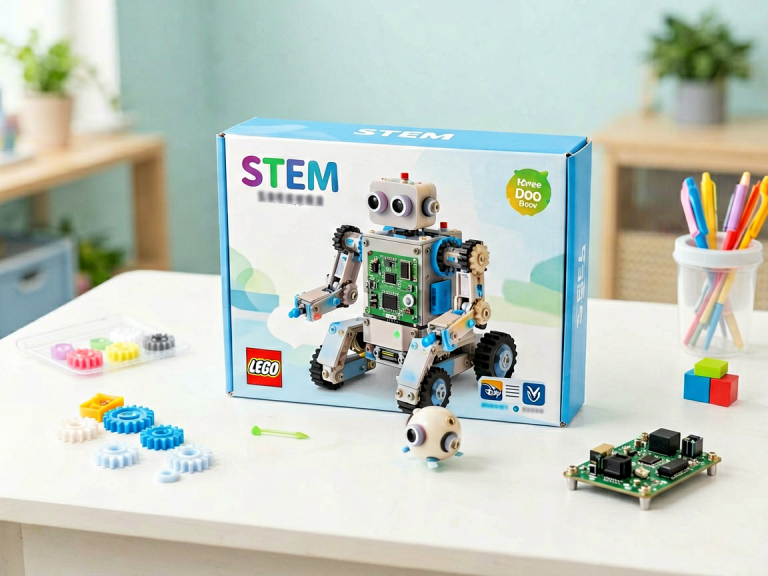
For older children (ages 8 and up), consider a coding and robotics kit like Sphero or Lego Mindstorms. These toys combine programming with physical construction, requiring both logical sequencing and creative design. The child must figure out how to make the robot navigate an obstacle course, but they also can decorate it, name it, and invent stories around its adventures. Science gifts that include a journal or logbook for recording observations and hypotheses further encourage the scientific mindset, turning the child into a little inventor.
Role-Playing and Pretend Play: The Theater of the Mind
Dress-up costumes, puppets, and playsets are timeless gifts that ignite narrative creativity. When a child dresses as a firefighter, a princess, or an astronaut, they step into another world, practicing social roles, language, and emotional regulation. The most effective role-playing gifts are those that provide just enough structure to inspire, but not so much that they dictate the story.
A wooden playset, such as a dollhouse or a castle, with minimal furniture and no fixed storylines, allows a child to populate it with their own characters and conflicts. A simple set of hand puppets or a finger puppet theater can lead to hours of improvised performances. Even a collection of scarves, hats, and fabric pieces can become costumes for a pirate, a wizard, or a time traveler.
For children who enjoy more structured storytelling, consider a "storytelling game" like Rory's Story Cubes, where dice with pictures are rolled and used to inspire a verbal story. These games are compact, portable, and endlessly replayable. Role-playing also extends to collaborative games where players work together to create a shared narrative, such as "Dixit" or "Mysterium." These gifts not only boost creativity but also strengthen communication and empathy.
Digital Creativity Tools: Balancing Screen Time with Imagination
In an age where children are surrounded by screens, digital tools for creativity can be a double-edged sword. However, when chosen carefully, they can be powerful allies. Instead of a video game that merely consumes attention, consider gifts that allow children to create their own digital worlds. Tablet apps like "Procreate" (for drawing), "GarageBand" (for music composition), or "Stop Motion Studio" (for making animations) are excellent.
Alternatively, consider a kid-friendly camera or a simple video editing app that lets the child produce their own movies. A digital drawing tablet (like a Wacom or an iPad with an Apple Pencil) opens up endless possibilities for digital art. The key is to ensure that the digital tool is used for creation, not passive consumption. Pair the digital gift with a physical output tool, like a printer that can print their digital artwork, to bridge the virtual and physical worlds.
Tips for Choosing the Perfect Creative Gift
Selecting a creativity toy that will be genuinely loved and used requires thoughtful consideration. Here are several practical tips:
- Know the child's current passions. A child obsessed with dinosaurs might adore a dinosaur bone excavation kit or a set of dinosaur figurines for open-ended play. Aligning the gift with their existing interests ensures immediate engagement.
- Consider age and developmental stage. A complex chemistry set would frustrate a four-year-old, while a simple stacking toy would bore a ten-year-old. Always check age recommendations and think about the child's fine motor skills and attention span.
- Prioritize open-endedness. The best creativity toys have no "right" way to be used. If the packaging shows only one finished product, it's likely a one-time-play toy. Look for materials that can be used in many different ways.
- Avoid kits that rely on batteries or software that will become obsolete. A wooden block set lasts for generations. A high-tech robot that requires a specific app may be useless once the app is no longer updated.
- Think about the gift of time and space. Sometimes the best creativity gift is not a toy at all, but a dedicated creative corner: a small art table, a shelf for displays, or a weekly "maker time" with a grandparent. Pairing a physical gift with the promise of time together to explore it amplifies its value.
- Embrace mess. Many creativity toys involve paint, glue, or loose parts. Do not let fear of mess deter you. Offer to include a smock or a drop cloth, but know that the mess is a sign of deep engagement.
Conclusion: Giving the Gift of Infinite Possibility
A creativity toy is far more than a fleeting distraction; it is an invitation to explore, to dream, and to create something that has never existed before. When we give a child a set of blocks, a box of crayons, or a science kit, we are telling them: "I believe in your ideas. Your imagination matters." In a world that often prioritizes conformity and efficiency, this message is revolutionary. The best gift ideas are those that respect the child's autonomy and provide the raw materials for their own unique journey of discovery.
Whether you choose a classic construction set, a sophisticated art supply, an open-ended science kit, or a digital creation tool, the underlying principle remains the same: choose toys that ask questions rather than giving answers. Such gifts will be played with, discarded, revisited, and transformed countless times. They will gather dust only when the child has moved on to another creative phase—and that is fine, because the skills they built will last a lifetime. So next time you are searching for a present, remember: the most memorable gifts are those that unlock the infinite potential of a child’s mind. Give creativity, and watch the magic unfold.