The Toys That Don’t End Up Under the Bed: A Guide to What Kids Actually Play With for Under $25
Every parent knows the feeling. You spend hours researching the perfect gift, click “buy now” with a sense of triumph, and then watch as your child opens the box, plays with it for exactly seven minutes, and returns to the cardboard box it came in. We have all been there. The toy graveyard—that shadowy corner of the playroom where expensive, battery-operated gadgets go to gather dust—is a universal parenting phenomenon. But it doesn’t have to be this way. After observing hundreds of children at play, interviewing early childhood educators, and, yes, interrogating my own kids (and their friends), I’ve discovered a pattern. The toys that kids *actually* use—the ones that get dragged to the dinner table, smuggled into the car, and fought over at playdates—share three common traits: they are open-ended, they invite repetition, and they cost under $25. Here is a guide to the real gems that deserve a spot in your cart.
The Power of Open-Ended Play: Why Less Is More
The first mistake we make as adults is confusing complexity with value. A toy that lights up, sings, and requires three AA batteries is not automatically “better” than a simple wooden block. In fact, research in developmental psychology consistently shows that children are drawn to toys that allow them to be the active participant, not just a passive observer. Open-ended toys—objects that have no single “correct” way to play—engage a child’s imagination, problem-solving skills, and social abilities in ways that rigid, scripted toys cannot. And the best part? Most open-ended toys are remarkably cheap.
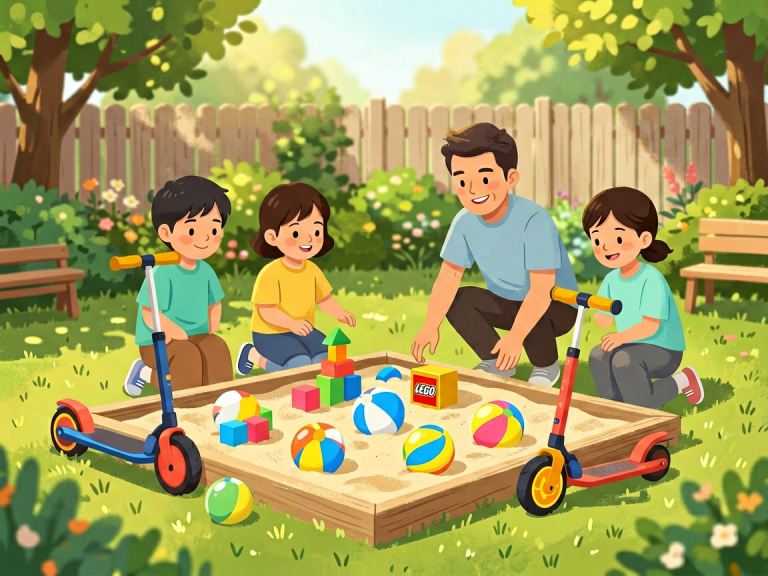
Consider the humble set of plastic building bricks. Not the licensed, character-themed sets that cost fifty dollars and come with a thirty-page instruction manual, but a generic bucket of basic bricks—the kind you can find for around $15–$20. These bricks are the gold standard of “actually played with” toys. A five-year-old will build a tower, knock it down, rebuild it as a castle, then a rocket ship, then a dog house. An eight-year-old will sort them by color, create patterns, or build a marble run by stacking bricks at angles. The same bricks serve different purposes at different ages. They never get boring because they never run out of possibilities. I have seen a single bucket of bricks entertain three children for an entire rainy afternoon. The only limit is the child’s imagination, and that is exactly the point.
Another unsung hero is the set of silicone nesting cups (under $10). Designed initially for the bath or the sandbox, these cups become everything: stacking towers, measuring tools, musical instruments when banged together, pretend teacups for a teddy bear picnic, or molds for mud pies. Toddlers love the cause-and-effect of stacking and knocking; preschoolers invent elaborate pretend scenarios around them. The simplicity is exactly what makes them successful. There are no lights, no buttons, no instructions—just pure, raw play potential.
Toys That Move: The Undeniable Appeal of Wheels, Balls, and Spinning Things
If there is one category that consistently ranks high in “actual use,” it is toys that move. Children are biologically programmed to track motion. It’s why a baby’s eyes follow a mobile, why a toddler will chase a rolling ball across the room, and why an older child will spend hours perfecting a skateboard trick. Movement satisfies a deep cognitive need for cause and effect, spatial awareness, and physical engagement. And under $25, there are fantastic options.
Take the classic hot wheel track set (you can find basic loops and launcher sets for about $12–$18). But here’s the secret: don’t buy the themed, branded tracks that only work with specific cars. Instead, buy a few simple track pieces and a bag of generic die-cast cars (often sold in packs of ten for under $10). The child will create their own ramps, jumps, and obstacle courses. They will test different cars to see which goes fastest, which flips over, which slides off the track. This is not just play; it is physics experimentation disguised as fun. I have watched a seven-year-old spend forty minutes adjusting the angle of a ramp by a few millimeters, trying to make a car complete a loop-the-loop. That level of focus is rare with most toys, and it only costs a few dollars.
Another motion-based winner is the frisbee—specifically, a soft, flexible one designed for kids (under $10). The beauty of a frisbee is that it demands cooperation, even if it’s just two people throwing back and forth. It gets kids running, jumping, and coordinating. It can be used in the park, the beach, the backyard, or even a large living room. Unlike a football or a baseball, the frisbee is relatively gentle and forgiving. A four-year-old can learn to throw it (badly, but with joy), and a twelve-year-old can practice advanced tricks. And when the frisbee inevitably lands in a tree, solving that problem becomes another part of the play.
Don’t overlook the bubble machine (under $20, and the refill solution is cheap). Yes, you can blow bubbles with a wand, but a bubble machine creates a continuous stream of floating, shimmering spheres that mesmerizes children of all ages. The chase, the pop, the attempt to catch bubbles without touching them—it’s a full-body, laughter-filled activity. Even teenagers will drop their phones for a few minutes to run through a bubble cloud. And the best part? It works for parties, for solitary play in the yard, or as a calming sensory activity for an overstimulated child.
The Quiet Champions: Toys That Spark Solitary Concentration
Not all play is high-energy. Some of the most valuable toys are those that invite a child to sit quietly, focus deeply, and enter a state of “flow”—that magical mental space where time disappears. These toys are especially important in a world full of screens and constant notifications. And they are often the cheapest of all.
Consider the puzzle. Not a 1000-piece landscape that requires a table for a week, but a 48-piece or 100-piece wooden floor puzzle (usually $10–$15). The challenge of fitting pieces together to reveal a complete image engages visual-spatial reasoning and fine motor skills. But more importantly, it teaches patience and persistence. When a child struggles to find the right piece and finally snaps it into place, the satisfaction is genuine. I’ve seen a five-year-old return to the same puzzle three times in one day, each time getting faster, each time discovering a new strategy. Puzzles also have a remarkable calming effect; many parents use them as a wind-down activity before bedtime.
Another quiet masterpiece is the set of magnetic tiles (magnets encased in plastic squares and triangles). A basic set of 50 pieces can be found for around $20–$25. These tiles click together with a satisfying magnetic snap, and they allow children to build 3D structures that defy gravity: towers, castles, cubes, geometric shapes. The magic is that they don’t fall apart easily, which is a huge advantage over stacking blocks. Kids can create intricate designs without the frustration of collapse. They also teach basic engineering principles—a square needs support, a triangle is stronger than a square, and arches distribute weight. Many preschools and kindergartens use magnetic tiles as a learning tool, but parents can easily buy a set for home use. I have seen two children, ages four and seven, collaborate on a “magnetic castle” that took them an hour to build. During that hour, there was no arguing, no screen time, no interruptions—just pure, focused cooperative play.
Don’t forget the play dough (homemade is even cheaper, but a set of several colors costs about $8). The tactile sensation of squishing, rolling, cutting, and shaping dough is deeply satisfying for young children. It’s also a social toy: kids will negotiate over colors, “share” tools (or fight over the rolling pin), and create elaborate pretend scenarios involving food, animals, or monsters. The only downside is that play dough dries out, but that’s a small price for hours of actual use.
Why These Toys Win: A Cheat Sheet for Parents
If you are still skeptical, let me offer a quick litmus test. Before buying any toy under $25, ask yourself three questions: 1. Can this toy be used in more than one way? 2. Does it require my child to actively create, build, or invent something, or does it just entertain them passively? 3. Will it still be interesting tomorrow, next week, or next month?
The toys that pass these three tests are the ones that end up being played with—not just unwrapped. The building bricks, the magnetic tiles, the nesting cups, the simple track sets, the bubbles, the frisbee, and the puzzles—these are the quiet heroes of childhood play. They don’t have flashy packaging or celebrity endorsements. They don’t need batteries. They don’t make promises they can’t keep. But they do offer something far more valuable: the chance for a child to be the author of their own play, to learn through trial and error, to cooperate with others, and to experience the deep satisfaction of a self-directed activity.
So the next time you find yourself scrolling through toy aisles or online listings, resist the temptation of the shiny, expensive, single-purpose gadget. Instead, head for the aisle that looks almost boring—the one with plain plastic bricks, simple wooden puzzles, and bags of balls. That’s where the real magic lives. And your child will thank you, not with words, but with hours of absorbed, joyful, genuinely playful play. That is the best return on investment any parent can hope for.