Beyond the Hype: Toy Gift Ideas That Kids Will Actually Use
Every holiday season, living rooms across the world fill with wrapping paper, ribbons, and the unmistakable excitement of a child tearing open a present. But weeks later, a curious phenomenon occurs: many of those shiny, expensive toys end up forgotten in the corner of the playroom, gathering dust. Parents sigh as they trip over the same neglected gadget for the hundredth time. The sad truth is that not every toy that looks appealing in a commercial or on a store shelf will capture a child’s real, sustained interest. So what separates a toy that gets played with daily from one that is abandoned after ten minutes? The answer lies in understanding how children actually play—their innate curiosity, their need for autonomy, and their love for open-ended possibilities. This article explores thoughtful gift ideas that align with real child behavior, ensuring that the presents you give will be cherished, used, and loved long after the holiday glow fades.
The Problem with Passive Toys
Before diving into specific suggestions, it is important to recognize why so many toys fail to hold a child’s attention. Many modern toys are designed to entertain, not to engage. They light up, make noise, and perform actions with minimal input from the child. While these toys can be momentarily mesmerizing, they often lack the depth required for sustained play. Children are not passive consumers of entertainment; they are active learners and creators. Toys that do everything for them—talking dolls that recite pre-recorded phrases, cars that zoom on pre-programmed tracks, or electronic gadgets with limited interaction—tend to lose their novelty quickly. In contrast, toys that invite participation, imagination, and problem-solving become tools for endless discovery. The best gifts empower children to take control of their play experience, adapting to their changing interests and developmental stages.
Open-Ended Building: The Foundation of Lasting Play
Blocks, Magnets, and Modular Sets
Perhaps no category exemplifies “toys kids actually use” better than open-ended building sets. Classic wooden blocks, magnetic tiles, LEGO bricks, and interlocking plastic gears all share a crucial feature: they have no single correct outcome. A set of simple wooden blocks can become a castle in the morning, a spaceship after lunch, and a racetrack by dinner. The same magnetic tiles that form a 3D cube can later be rearranged into a bridge, a house, or an abstract sculpture. This flexibility aligns perfectly with how children’s minds work—they constantly invent new scenarios, test hypotheses, and refine their constructions.
What makes building toys especially valuable is their scalability. A two-year-old may simply enjoy stacking and knocking down blocks, learning cause and effect and developing fine motor skills. A five-year-old will create elaborate structures, incorporating symmetry and balance. An eight-year-old might follow complex instructions for a LEGO Technic set, gaining spatial reasoning and patience. And because no two creations are ever identical, these toys never truly become “finished.” They grow with the child. For gift-givers, the message is clear: invest in quality building sets that offer a wide range of possibilities. Avoid sets that lock the child into a single model; instead, choose bulk bricks, magnetic tiles, or construction rods that allow freeform creation.
Building as Social Play
Another hidden benefit of building toys is their power to facilitate social interaction. When siblings or friends collaborate on a giant block tower or a magnetic tile city, they must negotiate, share ideas, and solve problems together. This cooperative play strengthens communication skills and empathy—things no app or video can teach. So when you gift a substantial set of building materials, you are not just giving a toy; you are giving the raw material for countless hours of shared joy and learning.
The Undying Appeal of Role Play and Costumes
Dress-Up Trunks and Imaginative Props
Ask any parent what toys their children consistently gravitate toward, and they will likely mention a well-worn cape, a plastic stethoscope, or a battered chef’s hat. Role-play toys—costumes, props, mini kitchens, doctor kits, tool benches—are among the most enduringly popular gifts across early childhood. The reason is simple: children learn about the world by imitating the adults around them. When they put on a firefighter helmet, they are not just playing; they are rehearsing bravery and responsibility. When they pretend to cook a meal, they are practicing sequencing, creativity, and nurturing.
What makes role-play toys so effective is that they require the child to supply the story. A cardboard box becomes a spaceship; a stick becomes a magic wand. The best role-play gifts are those that offer a springboard for imagination without dictating the narrative. A simple set of animal masks, a collection of scarves and hats, a cash register with play money, or a wooden kitchen with pots and pans—these items invite endless scenarios. Avoid overly detailed costumes with specific characters (like a licensed superhero suit) because they often limit play to a single identity. Instead, opt for generic yet evocative items: a doctor’s coat, a set of fabric crown, a tool belt with wooden tools. These promote flexible thinking and longer play sessions.
The Power of Storytelling Through Play
Role play also supports language development. As children narrate their actions (“Now I’m going to take your temperature”), they build vocabulary and sentence structure. They learn to take on different perspectives, which fosters emotional intelligence. And because this play is self-directed, children are deeply invested in it. They will return to the same dress-up trunk again and again, each time inventing new plots. For a gift that keeps on giving, consider combining a costume kit with a few open-ended props—a basket of fabric squares can be a tablecloth, a superhero cape, or a curtain for a puppet show. The possibilities are truly endless.
Active Play: Getting Kids Moving in Joyful Ways
Outdoor and Gross Motor Toys That Inspire Movement
In an age of screens and sedentary indoor activities, gifts that encourage physical movement are more valuable than ever. But not all active toys are equal. A simple jump rope, a hula hoop, a set of sidewalk chalk, a frisbee, or a child-sized basketball hoop often sees far more use than an expensive ride-on vehicle or a giant slide. Why? Because these low-tech tools allow children to invent their own games and set their own challenges. A jump rope can be used for solo skipping, group jump-rope rhymes, or as a pretend lasso. Sidewalk chalk turns a driveway into a colorful canvas for hopscotch, mazes, or connect-the-dots. These toys demand creativity and physical coordination, and they work in a variety of spaces—backyard, park, sidewalk, or even an indoor hallway.
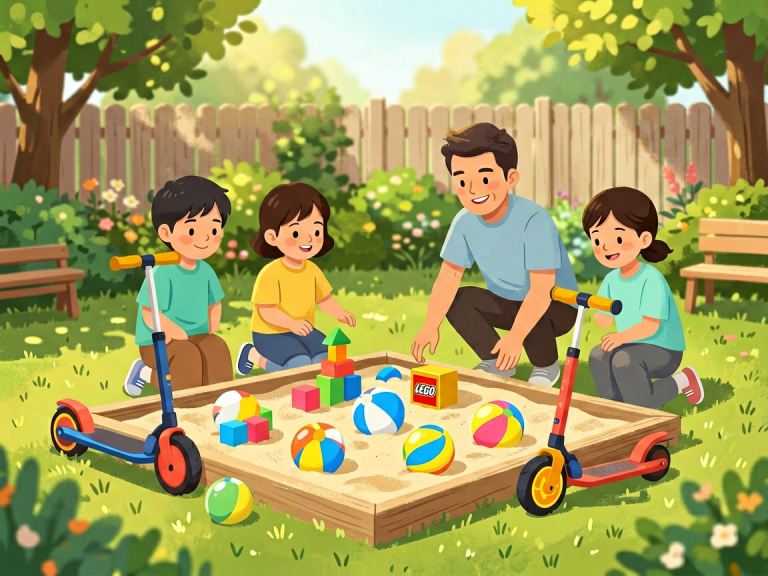
Another winning category is the classic scooter or balance bike. Unlike a tricycle or a bike with training wheels, a balance bike teaches natural balance and coordination, and children use it for years. Similarly, a simple kick scooter (without batteries) provides endless gliding fun and helps build leg strength and spatial awareness. The key is to choose toys that require the child’s active effort, not passive riding. Powered vehicles, while exciting at first, often lose appeal because the child is just a passenger. Unpowered toys, on the other hand, put the child in control of speed, direction, and play style.
Obstacle Course Kits and Movement Games
For families with a bit more space, consider an obstacle course kit—cones, rings, a balance beam, and a tunnel. These items can be set up in countless configurations, challenging children to crawl, jump, balance, and race. The best part is that children often redesign the course themselves, turning play into a problem-solving activity. Such toys also promote social play, as children take turns, cheer each other on, and create collaborative games. And because they are durable and compact, they store easily for indoor use on rainy days. Active play gifts are not just about burning energy; they are about building confidence, resilience, and joy in movement.
STEM Toys That Respect a Child’s Curiosity
Kits That Encourage Experimentation
STEM (Science, Technology, Engineering, Math) toys have become popular gift options, but many fail because they are too prescriptive or too advanced. A chemistry set that requires adult supervision and yields predetermined results might be used once and then discarded. The most successful STEM toys are those that allow children to explore, fail, and try again. A simple set of ramps and balls teaches gravity and momentum as children adjust the height and angle. A collection of magnets reveals invisible forces through playful discovery. A basic circuit kit with snap-together components lets children light up bulbs and buzz a buzzer without soldering or frustration.
The key to a great STEM gift is that it feels like play, not school. Consider a marble run with magnetic pieces, a building set that includes gears and pulleys, or a solar-powered car that works in direct sunlight. These toys hide the learning inside the fun. Children don’t need to understand the physics of friction to enjoy watching a marble zigzag down a track—they simply absorb the principle through repeated play. And because these toys often produce unpredictable results (the marble may fly off, the gear may jam), children learn resilience and problem-solving naturally. For a truly engaging STEM gift, look for sets that are modular, expandable, and have no single “right answer.”
Coding Toys for Modern Minds
For older children (around 5–10), coding toys that combine physical play with digital logic can be a huge hit. But avoid sterile apps or screens-only experiences. Instead, choose tangible coding sets like a robot you program with wooden blocks or a grid-based game where commands are placed physically on a board. These toys teach sequencing, logic, and debugging in a tactile way that engages the whole body. Children can see their code come to life as the robot moves across a mat, and they can physically rearrange the instructions when something goes wrong. This kinesthetic learning is far more memorable than tapping on a tablet. More importantly, these toys invite iteration: children will spend hours creating new paths, adding obstacles, and challenging themselves, all while building foundational skills for the digital age.
The Underrated Gift of Art and Creating
Simple Art Supplies That Inspire Masterpieces
Finally, never underestimate the power of high-quality, open-ended art supplies. A set of watercolor paints with a thick paper pad, a collection of washable markers in a wide range of colors, a pack of modeling clay that doesn’t dry out, or a sketchbook and good graphite pencils—these are gifts that children actually use because they offer pure creative freedom. Unlike a paint-by-number kit or a craft-in-a-box that prescribes a specific outcome, simple art supplies let children express their own ideas. A three-year-old may scribble joyfully; a seven-year-old may draw detailed scenes. The same set of supplies serves both.
Enhance the experience by adding a few unusual tools: a set of sponge stamps, a pack of tracing paper, a pair of child-safe scissors, or a roll of washi tape. These small additions spark new techniques and keep the medium fresh. And because art supplies are consumable, children return to them regularly—each new sheet of paper is a blank canvas for a new adventure. For a truly memorable gift, consider a small art easel or a lap desk that gives children a dedicated space to create. The message is clear: their creativity is valued, and the materials are there for them to explore at their own pace.
The Joy of Messy Play
Don’t shy away from “messy” play gifts like kinetic sand, play dough with tools, or finger paints. While parents may initially groan about cleanup, children are magnetically drawn to sensory materials. The key is to choose high-quality, non-toxic versions and provide a contained space—a plastic tablecloth or a large tray. Sensory play is not just fun; it is scientifically shown to support cognitive development, fine motor skills, and emotional regulation. When a child kneads dough, sifts sand, or swirls paint with their fingers, they are engaging in deep, focused play that calms the nervous system and builds neural connections. These toys are used repeatedly because they satisfy a fundamental human need to touch, manipulate, and transform the world.
Conclusion: Choosing Toys That Honor the Child
The most important principle when selecting a gift is to think not about what looks impressive, but about what invites the child into a richer relationship with the world. Toys that kids actually use are those that respect their agency, fuel their imagination, and adapt to their growing skills. They are not content to be watched; they ask to be touched, twisted, built, and reimagined. Whether it is a set of wooden blocks, a doctor’s kit, a scooter, a marble run, or a box of crayons, the best gifts are those that become part of a child’s daily life—not just the highlight of a single morning. So this year, look past the flashy packaging and the celebrity-endorsed trends. Choose toys that honor the child’s natural desire to learn, create, and play. You will be rewarded not only with a grateful child but also with the quiet satisfaction of knowing your gift will be used, loved, and remembered long after the holiday season ends.