The Power of Logic Toys: Cultivating Critical Thinking in Children Through Play
In an age dominated by screens and passive entertainment, the humble logic toy stands as a quiet but powerful counterweight. For parents and educators seeking to nurture sharp, independent minds, logic toys for kids are not mere pastimes—they are essential tools for cognitive development. These deceptively simple objects, from wooden puzzles to electronic coding kits, teach children how to think rather than what to think. They build patience, problem-solving skills, and the ability to break complex challenges into manageable steps. This article explores why logic toys matter, what types are most effective at different ages, and how to choose the right ones to spark a lifelong love of learning.
The Cognitive Benefits of Logic Toys
Logic toys do more than occupy a child's hands; they actively engage the prefrontal cortex, the part of the brain responsible for planning, decision-making, and self-regulation. When a child sits down with a set of tangram pieces or a logic grid puzzle, they are not merely playing—they are practicing executive functions. Research in developmental psychology consistently shows that children who regularly engage with structured logic games exhibit stronger working memory, better impulse control, and higher levels of mental flexibility.
One of the most significant benefits is the development of sequential reasoning. A child trying to solve a sliding block puzzle must think several moves ahead, anticipating consequences and adjusting strategies when a path is blocked. This is the very essence of computational thinking, a skill that translates directly into success in mathematics, science, and even reading comprehension. Unlike passive screen time, which often rewards quick reactions, logic toys demand sustained concentration and iterative trial-and-error. Failure becomes a learning opportunity rather than a frustration, teaching resilience and a growth mindset.
Moreover, logic toys help children master spatial reasoning. Building with blocks, assembling 3D puzzles, or navigating a maze on a board requires the brain to mentally rotate objects and understand relationships between shapes. Studies have linked strong spatial skills to later achievement in STEM fields, particularly engineering and architecture. By giving children hands-on logic toys, we are literally building the neural pathways that will support abstract thinking in adolescence and adulthood.
Types of Logic Toys for Different Ages
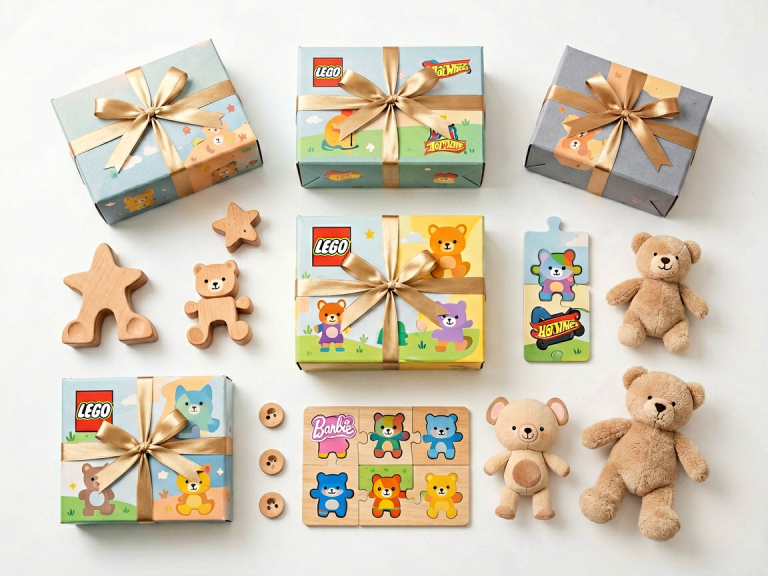
Not all logic toys are created equal, and the best choice depends heavily on a child's developmental stage. For toddlers and preschoolers, the focus should be on simple cause-and-effect relationships and basic pattern recognition. Shape sorters, stacking rings, and color-matching puzzles are ideal. These toys introduce the concept that objects have properties and can be organized according to rules. At this age, the key is sensory engagement: wood or fabric textures, bright colors, and large pieces that are easy to grasp. Brands like Melissa & Doug produce excellent wooden logic puzzles that encourage children to match shapes to corresponding holes or complete simple jigsaw patterns.
For children aged 5 to 8, the complexity can increase significantly. Magnetic tile sets (such as Magna-Tiles or PicassoTiles) allow kids to build 3D structures while experimenting with symmetry, balance, and geometry. Logic grid puzzles presented as story-based books (like the "Logic Puzzles for Clever Kids" series) teach children to use clues to eliminate possibilities and deduce the correct answer. Board games such as "Rush Hour" or "Cat Crimes" introduce sequential logic in a playful, competitive format. These games require players to move vehicles out of a traffic jam or deduce the location of a cat based on evidence, respectively. They combine visual-spatial thinking with deductive reasoning.
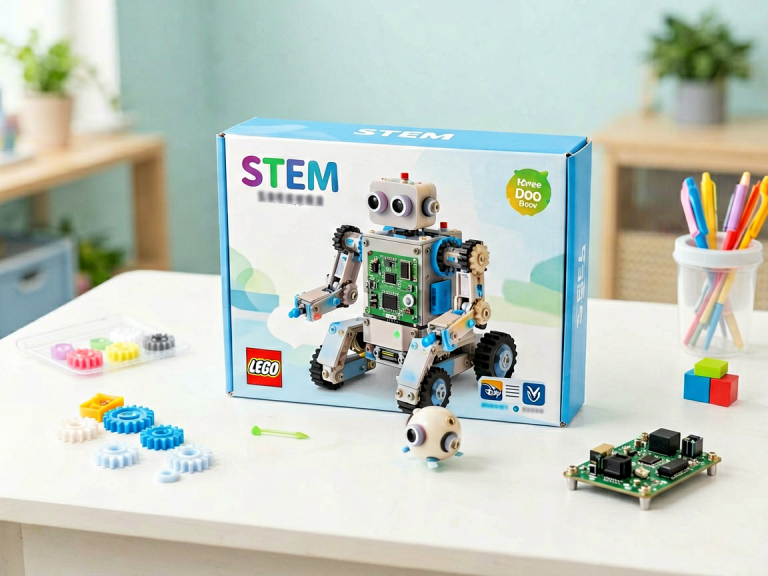
For older children aged 9 and up, coding and programming logic toys become highly effective. Products like LEGO Boost or Sphero BOLT teach the fundamentals of algorithms, loops, and conditionals in a tangible, hands-on way. A child learns that if a sensor detects a wall, the robot must turn left—a direct application of "if-then" logic. Also excellent are mechanical puzzle boxes and Rubik's Cube derivatives, which require advanced planning and pattern memorization. For the most dedicated young logicians, Kano computer kits allow children to build their own computer and code simple games, merging hardware and software logic.
How to Choose the Right Logic Toy
With an overwhelming array of options on the market, selecting the right logic toy requires careful consideration. The single most important factor is open-endedness. A good logic toy does not have just one right answer; it invites exploration and multiple solution paths. For instance, a set of wooden blocks can be arranged in infinite ways, teaching trial and error without a single correct outcome. In contrast, a tablet app that only gives a "correct" or "incorrect" response may discourage experimentation. Open-ended toys stimulate divergent thinking, which is just as crucial as convergent thinking (finding the one correct answer).
Another key factor is age-appropriateness. A toy that is too simple will bore a child; one that is too complex will frustrate them. The "Goldilocks" principle applies: the challenge should be just slightly above the child's current ability level. Many logic toy manufacturers, such as ThinkFun, label their products with age ranges and skill levels. Parents should also observe their child's natural interests. A child who loves building stories might enjoy narrative logic games like "Clue" or "Outfoxed!," while a child obsessed with numbers might prefer KenKen puzzles or MathLink cubes.
Physical vs. digital is another important consideration. While digital logic games have their place—they can provide instant feedback and adaptive difficulty—physical toys offer tactile feedback that is irreplaceable for developing fine motor skills and deep concentration. The act of physically turning a puzzle piece or stacking a block creates a stronger neural connection than tapping a screen. For maximum benefit, experts recommend a balance: use physical logic toys as the primary tool and supplement with high-quality digital apps (like "DragonBox" or "The Logical Journey of the Zoombinis") only sparingly.
Finally, consider the toy's durability and sustainability. Logic toys are often passed down through siblings or kept for years. Well-made wooden puzzles, metal mechanical puzzles, and high-quality plastic building sets justify their higher upfront cost because they withstand heavy use. Avoid toys with hundreds of tiny, easily lost pieces, as frustration from missing parts can outweigh the educational benefit.
Integrating Logic Toys into Daily Life
To reap the full benefits of logic toys, consistency and parental involvement matter. The most effective approach is to set aside a daily "thinking time"—just 15 to 20 minutes—free from distractions. During this time, a parent or older sibling can work alongside the child, modeling strategies like "What happens if I try this?" or "Let's check the clues again." This co-play is invaluable because it teaches metacognition: the child learns to verbalize their thought process, which reinforces logical steps.
Schools are increasingly recognizing the value of logic toys as well. Many classrooms incorporate STEM bins filled with LEGO, pattern blocks, and logic puzzles for free play or early-finisher activities. Some educators use "logic centers" where children rotate through different stations—a tangram station, a coding station with Bee-Bots, a logic puzzle station—to develop diverse cognitive skills. For homeschooling families, logic toys can be the core of a hands-on curriculum in math and science.
One often overlooked aspect is the social dimension. Many logic toys, such as cooperative board games (e.g., "Forbidden Island" or "Castle Panic"), require players to work together to solve a common problem. These games teach children that logic is not a solitary activity; it can be collaborative and forgiving. They learn to negotiate strategies, share reasoning, and accept that another player's idea might be better than their own. These social-emotional skills are every bit as important as the cognitive ones.
Conclusion: A Foundation for Lifelong Learning
Logic toys for kids are far more than entertainment. They are the gym equipment for the developing mind, building strength in reasoning, persistence, and creative problem-solving. In a world that increasingly rewards quick answers and superficial understanding, these toys teach children the value of slow, deliberate thought. They show that failure is not an endpoint but a necessary step on the path to discovery.
As parents and educators, our goal is not to raise children who can merely memorize facts, but to nurture thinkers who can analyze, synthesize, and innovate. By choosing quality logic toys and integrating them into daily routines, we give children the most precious gift: the ability to think for themselves. Whether it is a toddler stacking rings or a preteen coding a robot, every moment spent with a logic toy is an investment in a sharper, more resilient, and more curious future. The child who learns to love logic today will become the adult who solves complex problems tomorrow—and perhaps even changes the world.