The Vital Role of Safe Problem-Solving Toys in Children’s Cognitive and Emotional Development
Introduction: More Than Just Play
In an era dominated by screens and passive entertainment, the humble toy remains one of the most powerful tools for childhood development. Yet not all toys are created equal. While flashy electronic gadgets may capture attention for a few minutes, it is the quiet, intentional design of problem-solving toys that truly builds a child’s capacity for critical thinking, perseverance, and creativity. However, as parents and educators, we cannot overlook the single most important prerequisite: safety. A toy that poses physical or chemical risks is not just ineffective—it is dangerous. This article explores the essential characteristics of safe problem-solving toys for children, categorizes the most effective types, and offers practical guidance for selecting toys that nurture young minds without compromising well-being. By understanding the intersection of safety and cognitive challenge, caregivers can transform playtime into a foundation for lifelong learning.
—
I. What Are Problem-Solving Toys and Why Do They Matter?
Problem-solving toys are specifically designed to present a challenge that requires a child to think, experiment, and find a solution. Unlike passive toys that simply entertain, these items demand active participation. Common examples include puzzles, building blocks, construction sets, mazes, logic games, and coding kits. Their value lies in their ability to develop:
- Cognitive flexibility: Children learn to approach a problem from multiple angles.
- Fine motor skills: Manipulating small pieces strengthens hand-eye coordination.
- Persistence and resilience: Encountering failure and trying again builds emotional grit.
- Spatial reasoning: Understanding how pieces fit together enhances mathematical thinking.
However, the benefits are only realized when the toys are safe. A toddler choking on a small part or a child inhaling toxic paint fumes negates any educational advantage. Therefore, safety must be the foundation upon which all other considerations are built.
—
II. The Non-Negotiable: Key Safety Criteria for Problem-Solving Toys
When evaluating a problem-solving toy, parents must look beyond the packaging claims. Safety involves several layers, from materials to design to age-appropriateness.
A. Material Safety
Children explore the world through their mouths, especially under the age of three. Thus, all materials must be non-toxic. Look for:
- BPA-free plastics and phthalate-free components.
- Lead-free paints and finishes (check for ASTM F963 or EN71 certifications).
- Natural wood with smooth, splinter-free surfaces.
- Avoidance of small magnets, which can cause severe internal injuries if swallowed.
B. Physical Design and Choking Hazards
Problem-solving toys often contain small parts like puzzle pieces or blocks. The U.S. Consumer Product Safety Commission (CPSC) mandates that small parts must not fit into a choke tube (diameter 1.25 inches, depth 2.25 inches). For children under three, any toy with parts smaller than this is unsafe. Additionally:
- Edges should be rounded, and corners soft.
- Batteries (if any) must be secured in a compartment requiring a screwdriver.
- Strings or cords should be shorter than 12 inches to prevent strangulation.
C. Durability and Stability
A toy that breaks easily can create sharp edges or release small parts. Choose toys made from robust materials that withstand drops, throws, and enthusiastic assembly. Construction sets with interlocking pieces should click firmly but also release without excessive force. For balance-based toys (like stacking towers), the base must be wide enough to prevent tipping.
D. Age Labeling and Developmental Match
Age recommendations on toys are not arbitrary; they reflect research on cognitive and physical readiness. A puzzle meant for a 5-year-old may frustrate a 3-year-old, leading to rough handling and potential safety issues. Conversely, a toy designed for older children may contain small parts hazardous to toddlers. Always adhere to the manufacturer’s age guidance, and consider the individual child’s skills.
—
III. Top Categories of Safe Problem-Solving Toys (With Examples)
The market offers a wide array of safe, engaging problem-solving toys. Below are four proven categories, each addressing different aspects of cognitive development.
A. Classic Wooden Puzzles and Shape Sorters
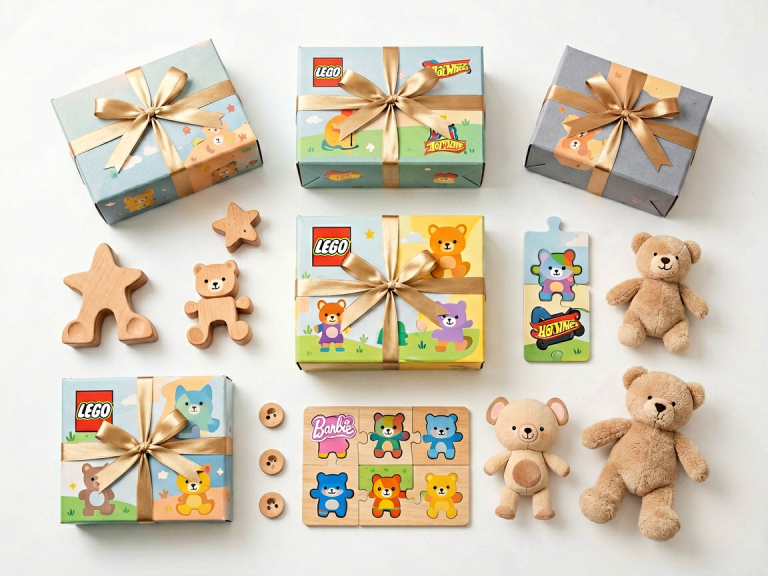
These timeless toys teach pattern recognition, spatial reasoning, and cause-and-effect. High-quality wooden puzzles have chunky pieces with knobs that are easy for small hands to grasp. Safety tips: Ensure the wood is untreated or finished with water-based, non-toxic lacquer. Check that puzzle boards have smooth edges and that the knobs are securely attached. Examples include Melissa & Doug’s farm puzzle or the Grimm’s shape sorting set.
B. Construction and Building Sets
From simple Duplo blocks to more complex magnetic tiles (like Magna-Tiles or PicassoTiles), construction toys encourage planning, geometric understanding, and creativity. Safety considerations: Magnetic tiles must have fully encased magnets that cannot be dislodged. Block sets should be made of BPA-free plastic or solid wood with non-toxic dyes. Avoid sets with tiny decorative pieces (e.g., fake flowers or flags) that could break off. For older children, interlocking bricks (like LEGO Duplo for ages 1.5–3, or regular LEGO for 4+) are excellent if adult supervision is provided.
C. Logic and Strategy Games
Board games and card games that require logical deduction—such as “Guess Who?”, “Connect 4”, or age-appropriate Sudoku puzzles—teach turn-taking, planning, and rule-following. Safety features: Look for cards with rounded corners and thick, tear-resistant material. Game pieces should be large enough to avoid swallowing. Many modern games use cardboard or plastic tokens; ensure the printing is non-toxic. For younger children, cooperative games (where everyone works together) reduce frustration and promote social problem-solving.
D. STEM Kits and Coding Toys
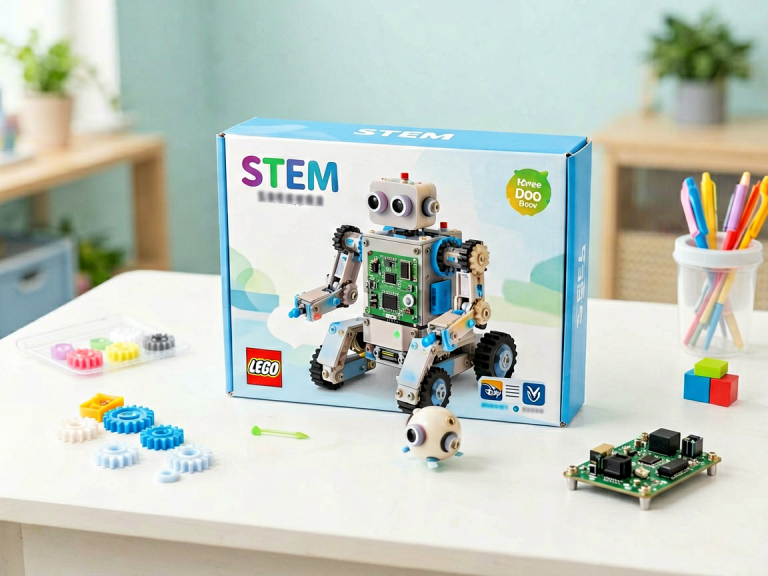
For children aged 5 and up, introductory coding toys like Botley the Robot or littleBits electronics kits provide hands-on problem solving. Safety: Electronic toys should operate on low voltage (battery-powered) and have no exposed wires or sharp connectors. Kits containing small resistors, LEDs, or wires must be clearly labeled for ages 8+ due to choking and shock hazards. Opt for kits with large, snap-together components. Always check for UL (Underwriters Laboratories) certification.
—
IV. How to Choose the Right Safe Problem-Solving Toy for Your Child
Selecting a toy involves balancing safety, developmental stage, and the child’s interests. Follow this step-by-step process:
Step 1: Assess the Child’s Current Abilities
Observe how your child handles existing toys. Can they stack blocks without frustration? Do they enjoy sorting items by color or size? Choose a toy that is slightly beyond their current skill level to encourage growth, but not so challenging that it causes constant failure.
Step 2: Read Independent Safety Reviews
Do not rely solely on product descriptions. Websites like the U.S. PIRG Education Fund’s Trouble in Toyland report, the European Toy Safety Standard (EN 71), or independent reviews from organizations like Good Housekeeping Institute provide objective safety data. Look for recalls and safety warnings.
Step 3: Inspect the Toy in Person
Before purchasing, examine the toy for sharp edges, loose parts, or strong chemical smells. For wooden toys, run your hand over the surface to check for splinters. For plastic toys, bend the pieces gently to see if they crack. If possible, test the toy with the child in the store (or a supervised play area).
Step 4: Consider Open-Ended vs. Closed-Ended Designs
Open-ended toys (like building blocks) allow unlimited solutions and grow with the child. Closed-ended toys (like a specific puzzle with one solution) teach completion and accuracy. A balanced collection of both is optimal. Both types must be safe, but open-ended toys often have fewer small parts and therefore less risk for toddlers.
Step 5: Supervise and Rotate
No toy is 100% safe without adult supervision, especially for children under 3. Rotating toys every few weeks keeps them engaging and allows you to inspect for wear and tear. Discard any toy that shows damage, such as splintering wood, peeling paint, or broken plastic edges.
—
V. The Educational Power of Safe Problem-Solving Play
Beyond safety, the true magic of these toys lies in how they scaffold learning. When a child attempts to fit a triangle block into a square hole and fails, the brain begins to form neural pathways that associate shape with function. Each attempt rewires the brain for better pattern recognition. Similarly, building a tower that collapses teaches the physics of balance and gravity without the child ever reading a textbook.
Moreover, safe problem-solving toys foster independence. A child who successfully completes a puzzle gains a sense of agency: “I did this myself.” This confidence spills over into academic subjects like math and reading. Research from the American Academy of Pediatrics highlights that unstructured, hands-on play with manipulative toys is linked to improved executive function, including working memory and self-control.
Crucially, when toys are safe, parents can step back and allow exploration without constant anxiety. A child who is free to experiment—even to fail—develops a growth mindset. They learn that mistakes are not catastrophes but opportunities. This emotional resilience is arguably more valuable than any single skill.
—
VI. Conclusion: Play That Protects and Challenges
The best gift we can give a child is the chance to think, solve, and create in a secure environment. Safe problem-solving toys bridge the gap between entertainment and education. They respect the child’s physical well-being while stretching their intellectual capacity. As you build your child’s toy collection, let safety be the compass that guides every purchase. Choose materials that are non-toxic, designs that are age-appropriate, and challenges that ignite curiosity.
In a world that often overstimulates children with flashing lights and passive content, the simple joy of fitting a wooden puzzle piece into its correct slot—or balancing a stack of blocks with steady hands—remains unparalleled. These are the moments when a child’s brain lights up with the satisfaction of discovery. And when we ensure those moments occur in complete safety, we are not just buying toys. We are building the foundations of a thoughtful, resilient, and capable human being.
So the next time you browse a toy aisle, pause. Look past the glitter and loud packaging. Ask yourself: Does this toy invite my child to think? And is it safe enough for me to let them try? If the answer to both is yes, you have found a treasure.