Screen-Free vs. App-Based Toys: Navigating the Digital Playground for Optimal Child Development
Introduction
In an era where digital technology permeates nearly every aspect of daily life, the debate over the best types of toys for children has never been more heated. On one side stand screen-free toys—the classic building blocks, wooden puzzles, stuffed animals, and board games that have entertained generations. On the other side are app-based toys, which integrate smartphones, tablets, or dedicated devices to deliver interactive, gamified experiences. Parents, educators, and child development specialists are increasingly asking: which type of toy truly supports healthy growth? The answer is not a simple binary, but a nuanced comparison that touches on cognitive development, social skills, physical activity, creativity, safety, and even long-term behavioral patterns. This article explores the key differences between screen-free and app-based toys, weighing their respective benefits and drawbacks to help caregivers make informed choices in a rapidly evolving landscape.
The Rise of App-Based Toys: Convenience and Engagement
App-based toys have exploded in popularity over the past decade, propelled by the ubiquity of smartphones and tablets. From coding robots that require a companion app to augmented reality (AR) puzzles that bring 3D images to life, these toys promise to merge the physical and digital worlds. Their primary allure is engagement: app-based toys often incorporate adaptive difficulty, instant feedback, rewards systems, and rich multimedia—elements that can hold a child’s attention far longer than a traditional toy might. For example, a math-learning app paired with a physical counting device can adjust problems in real time based on a child’s performance, offering personalized scaffolding that a static toy cannot.
Proponents argue that app-based toys prepare children for a tech-driven future. They teach digital literacy, problem-solving in interactive environments, and even coding fundamentals. Many such toys are designed with input from developmental psychologists and align with curriculum standards, making them attractive to parents who worry about kindergarten readiness. Moreover, app-based toys can be updated remotely, meaning they never become “outdated” in the same way a physical board game might. For busy parents, the convenience of downloading new content without buying a new product is a significant factor.
However, the digital nature of these toys also raises red flags. The American Academy of Pediatrics (AAP) has long warned against excessive screen time for young children, recommending that children aged 2 to 5 have no more than one hour per day of high-quality programming. App-based toys, by their very design, encourage prolonged screen exposure. Even when the toy has a physical component—like a plastic car that is controlled by a tablet—the child’s gaze is inevitably drawn to the glowing screen. This can disrupt sleep patterns, contribute to eye strain, and reduce the amount of time spent in unstructured, imaginative play.
The Enduring Appeal of Screen-Free Toys: Simplicity and Depth
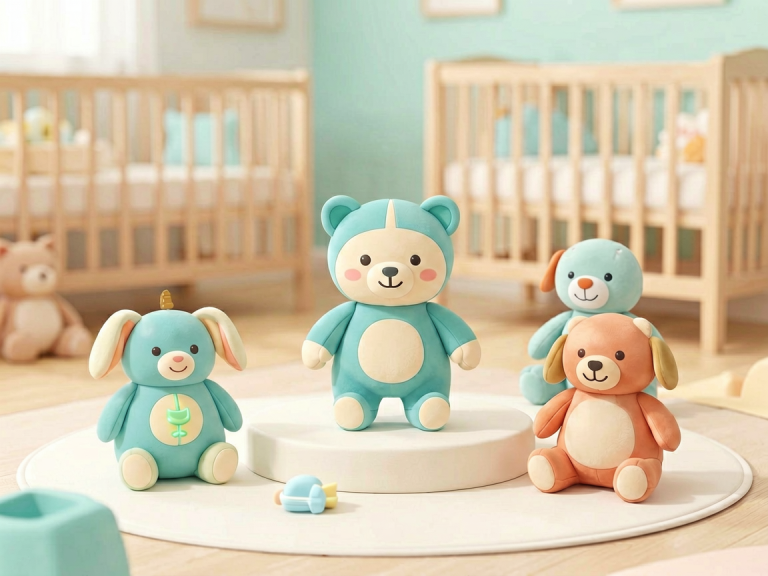
Screen-free toys, by contrast, require no batteries, no Wi-Fi, and no app store. They are often made of wood, fabric, or molded plastic, and their functionality is entirely determined by the child’s imagination. A set of wooden blocks can become a castle, a spaceship, a mountain range, or a dozen other things in the span of an hour. A simple doll or action figure can be the protagonist of endless storylines. This open-endedness is the hallmark of screen-free play.
Research in developmental psychology consistently highlights the superiority of unstructured physical play for fostering creativity, executive function, and emotional regulation. When a child interacts with a screen-free toy, they must invent rules, negotiate roles with peers, and problem-solve without external cues. For instance, building a tower with blocks teaches spatial reasoning, motor skills, and the physics of balance—all through trial and error. There is no “wrong” way to play; the toy does not judge or provide a score. This low-stakes environment encourages risk-taking and resilience, as children learn that a collapsed tower is not a failure but an invitation to rebuild differently.
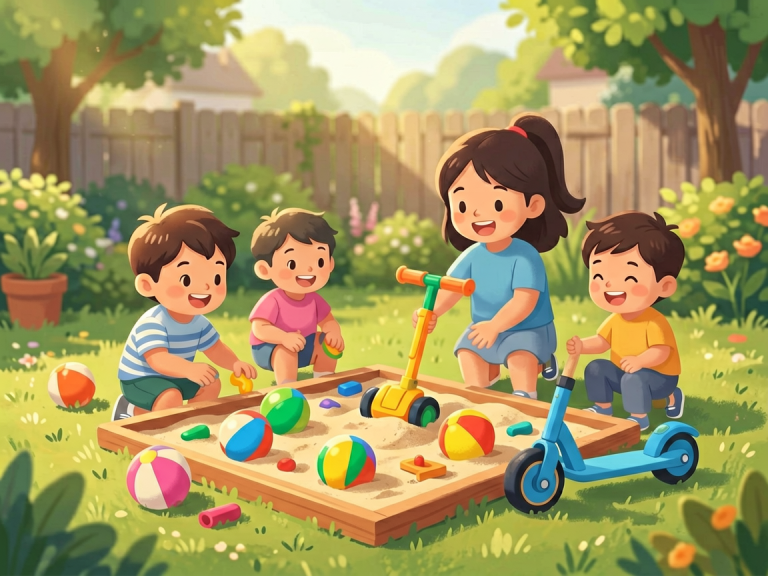
Screen-free toys also promote genuine social interaction. Board games like “Candy Land” or card games like “Go Fish” require face-to-face communication, turn-taking, and reading social cues such as body language and tone of voice. These skills are diminished in app-based multiplayer experiences, where children may be physically together but mentally absorbed in separate screens. Even cooperative app-based games often reduce interaction to tapping a screen rather than talking, laughing, or exchanging physical objects. The tactile feedback of touching a smooth wooden piece or the satisfying snap of a magnetic block provides sensory input that screens cannot replicate—input that is crucial for the developing brain’s neural connectivity.
Comparative Analysis: Cognitive Development
When comparing cognitive outcomes, both toy types have strengths, but they target different domains. Screen-free toys are exceptional at fostering divergent thinking—the ability to generate multiple solutions to a single problem. A child with a set of colored tiles may arrange them into patterns, spell words, count, or create mosaic art. The toy does not dictate a single “correct” use, so the child’s brain roams freely, building neural pathways associated with creativity and flexible thinking.
App-based toys, in contrast, excel at convergent thinking—arriving at a single correct answer through guided steps. An app that teaches phonics, for instance, presents a letter and expects the correct sound. This can be highly effective for drilling foundational skills like letter recognition, number facts, or vocabulary. The immediate feedback loop (correct answer gets a star; wrong answer gets a red X) can accelerate learning in narrow, measurable domains. However, there is a risk that children become conditioned to expect external validation for every action, potentially undermining intrinsic motivation. Moreover, the seductive allure of colorful animations and sound effects can lead to a phenomenon known as “passive consumption,” where the child is more engaged by the sensory rewards than by the underlying learning objective.
A 2021 meta-analysis published in the journal *Pediatrics* found that while well-designed educational apps can improve early literacy and math scores, the effect sizes were small compared to the gains from high-quality, screen-free parent-child interactions. This suggests that the medium matters less than the quality of engagement. A child building a block tower with a parent who asks open-ended questions (“What do you think will happen if you put this block here?”) gains more than a child using an app in isolation.
Comparative Analysis: Social Interaction
Perhaps the starkest contrast lies in social development. Screen-free toys inherently facilitate parallel play and cooperative play. Two children playing with a train set must communicate to avoid collisions, share pieces, and decide on a storyline. These negotiations build empathy, conflict resolution, and language skills. Even solitary play with screen-free toys—like a child whispering to a stuffed animal—develops narrative thinking and emotional processing.
App-based toys, especially those designed for individual use, often isolate the child. Even when marketed as “multiplayer,” many app-based experiences involve each child interacting with their own screen, limiting the richness of real-world social cues. A recent study from the University of Washington observed preschool playgroups and found that children using app-based toys had 40% fewer verbal exchanges per minute than those playing with traditional toys. The screen acts as a barrier, reducing eye contact and the nuanced back-and-forth that builds social competence. Furthermore, the digital nature of app-based toys can lead to frustration and conflict when a child’s tablet runs out of battery, or when the Wi-Fi is too slow, adding a layer of stress absent from physical toys.
Comparative Analysis: Safety, Privacy, and Physical Health
Screen-free toys are generally safer in terms of physical health and data privacy. Wooden blocks, unless poorly manufactured with toxic paint, pose no digital security risks. They do not collect personal information, track a child’s location, or require an internet connection that could be exploited. For parents concerned about digital footprints, screen-free toys offer complete peace of mind.
App-based toys, conversely, have raised serious privacy concerns. Many apps designed for children collect data for advertising or poorly secured servers. The infamous case of a connected doll that could be hacked to speak inappropriate phrases is a cautionary tale. Even reputable brands require accounts, emails, and sometimes location permissions, which can expose children to surveillance capitalism. Physically, prolonged screen use is associated with myopia (nearsightedness), reduced physical activity, and poor posture. A child who spends 45 minutes building with Lego bricks is standing, moving, and using fine motor skills in a dynamic way; a child using an app-based coding game may sit stationary for the same period, engaging only their fingers and eyes.
The Role of Parental Choice and Balance
No parent can—or should—eliminate all screen-based play. The key is intentionality. Screen-free toys should form the foundation of a child’s play environment, especially in the early years (0–3), where brain development is most sensitive to real-world sensory and social experiences. As children grow, high-quality app-based toys can supplement this foundation, but only when used with clear boundaries: limited time, co-viewing or co-playing with a caregiver, and a focus on creative rather than purely consumptive apps.
Educators often advocate for a “digital diet” where screen time is balanced with physical play. For instance, a child could spend 15 minutes exploring a planet-themed app, then build a spaceship out of cardboard boxes. The best toy is not the one with the most bells and whistles, but the one that sparks the most meaningful interaction—whether that interaction is with a screen, a block, or, most importantly, with another human being.
Conclusion
In the ongoing debate between screen-free and app-based toys, the evidence points to a clear verdict: screen-free toys offer a more holistic, developmentally rich play experience, particularly for younger children. They promote creativity, social bonding, sensory integration, and physical activity in ways that app-based toys struggle to replicate. App-based toys are not without merit—they can efficiently teach specific skills and engage tech-savvy children—but they come with significant trade-offs in privacy, screen exposure, and depth of play. The healthiest approach is not to choose one category over the other, but to curate a thoughtful mix where screen-free toys dominate the soil in which a child’s imagination grows, while app-based toys serve as occasional, supplementary tools. Ultimately, the best toy is the one that invites a child to look up, reach out, and connect—with the world, with others, and with the endless possibilities of their own mind.