The Unseen Curriculum: How Creativity Toys Shape the Minds of Tomorrow
In an era dominated by screens, algorithms, and structured extracurricular schedules, the humble toy often gets relegated to a mere distraction—something to keep children quiet while adults attend to more “important” matters. Yet research in developmental psychology, neuroscience, and education increasingly points to a different reality: play, especially with creativity-oriented toys, is not a break from learning but the very engine of it. Creativity toys—those open-ended, process-driven tools that invite experimentation rather than prescribed outcomes—constitute what I call the “unseen curriculum.” They teach skills that no worksheet, no standardized test, and no app can fully replicate: the ability to tolerate ambiguity, to generate novel solutions, to collaborate without a script, and to find joy in the act of making. This article explores why creativity toys deserve a central place in every child’s environment, what specific benefits they offer, and how parents and educators can select and use them effectively.
—
Defining Creativity Toys: More Than Just “Fun”
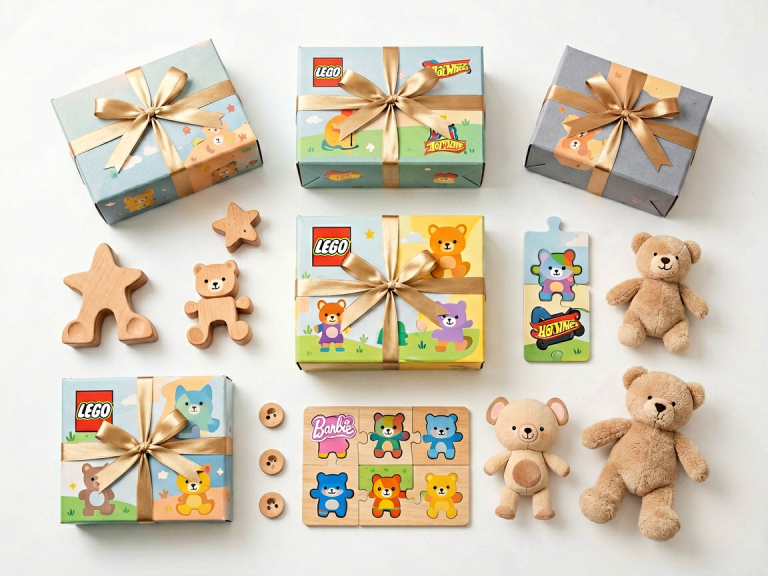
Before examining their impact, it is essential to understand what makes a toy “creative.” A creativity toy is not defined by its price tag, its electronic features, or its popularity in advertisements. Instead, it is defined by its *open-endedness*. A set of wooden blocks, a box of clay, a collection of loose parts (buttons, fabric scraps, beads), a blank notebook with crayons, or a construction kit with no fixed instructions—these are classic examples. The opposite would be a toy that dictates a single correct way to play: a battery-operated singing doll, a puzzle with only one solution, or a video game with a linear storyline. Creativity toys invite the child to be the author of the experience; they provide raw materials, not finished stories.
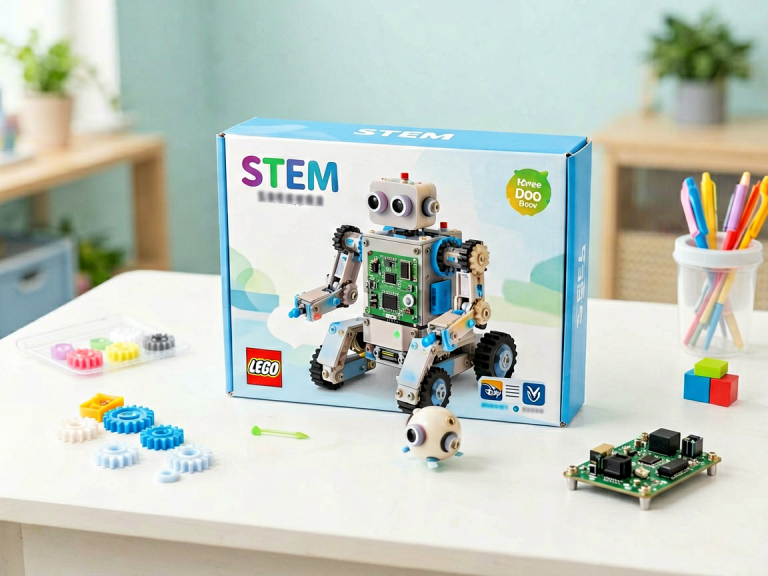
This distinction matters because the modern toy market is flooded with products that promise to stimulate creativity but actually limit it. Many “STEM toys” claim to teach coding or engineering, yet they come with step-by-step manuals that turn exploration into a chore. True creativity toys leave room for failure, mess, and divergent thinking. They allow a child to use a cardboard box as a spaceship one day, a castle the next, and a time machine the day after. This fluidity is precisely what builds cognitive flexibility—the ability to adapt one’s thinking to new situations, a skill increasingly prized in the 21st-century workforce.
—
Cognitive Benefits: Building Problem-Solving and Critical Thinking
One of the most powerful arguments for creativity toys lies in their ability to cultivate higher-order cognitive skills. When a child plays with open-ended materials, they are constantly engaged in a process of hypothesis testing: “If I stack these blocks this way, will the tower fall? What if I add a heavier block at the bottom? What if I use a cushion as a base?” These are not trivial questions—they are the foundations of scientific reasoning. Psychologist Jean Piaget famously argued that children construct knowledge through active interaction with their environment. Creativity toys provide the richest possible environment for this construction.
Consider a simple activity: building a bridge from craft sticks, tape, and string. The child must first define the problem (need to span a gap), then generate possible solutions (arched bridge? suspension? cantilever?), then test those solutions, often failing repeatedly. Each failure provides feedback, prompting revision. This iterative cycle mirrors the design thinking process used by engineers, architects, and entrepreneurs. A child who has practiced this through play will approach academic problems with greater resilience and resourcefulness. They learn that “I don’t know the answer yet” is not a dead end but a starting point.
Moreover, creativity toys stimulate what neuroscientists call “divergent thinking”—the ability to generate multiple solutions to a single problem. While convergent thinking (finding the one right answer) is heavily emphasized in schools, divergent thinking is the engine of innovation. Studies have shown that children who engage regularly with open-ended play materials score higher on tests of creative potential, such as the Torrance Tests of Creative Thinking. They are better at seeing connections between seemingly unrelated concepts, a skill that underpins breakthroughs in every field from art to physics.
—
Emotional and Social Growth: The Quiet Lessons of Play
Beyond cognition, creativity toys serve as powerful vehicles for emotional regulation and social development. When a child is deeply absorbed in building, drawing, or crafting, they enter a state of “flow”—a psychological concept described by Mihaly Csikszentmihalyi as complete immersion in an activity. Flow is associated with reduced anxiety, increased self-esteem, and a sense of mastery. For children who struggle with emotional regulation, having a creative outlet can be transformative. The act of molding clay or arranging pattern blocks can be as calming as deep breathing, offering a non-verbal way to process feelings.
Socially, creativity toys encourage collaboration in a way that competitive games often do not. A group of children given a pile of LEGOs (without a specific model) will naturally negotiate roles, share ideas, and resolve conflicts. “I think we should build a rocket.” “No, let’s make a dinosaur.” “What if we combine them—a dinosaur that flies to space?” This negotiation requires perspective-taking, compromise, and joint decision-making. In contrast, toys that prescribe a single outcome (like a pre-made LEGO set) often lead to one child following instructions while others feel left out or frustrated. Open-ended toys democratize play, allowing each child to contribute uniquely based on their temperament and interests.
Furthermore, creativity toys offer a safe space for failure. In many academic settings, mistakes are penalized; a wrong answer on a quiz leads to a lower grade. But in creative play, mistakes are simply part of the process. A tower that falls, a painting that “ruins” a page, a robot that won’t move—these are not failures but data points. The child learns to view setbacks as information, not as indictments of their worth. This resilience is perhaps the most important emotional lesson any toy can teach.
—
Types of Creativity Toys and Their Unique Contributions
Not all creativity toys are created equal. Understanding the different categories can help parents and educators make informed choices. Here are four broad types, each offering distinct developmental benefits:
1. Construction and Building Toys: Blocks, magnetic tiles, interlocking bricks, and modular systems. These toys develop spatial reasoning, mathematical thinking, and fine motor skills. They also teach principles of physics—balance, gravity, structural integrity. Because children can build and rebuild endlessly, these toys foster a growth mindset: the belief that skills can be developed through effort.
2. Art and Craft Materials: Clay, paint, markers, paper, fabric, glue, recycled objects. These materials encourage sensory exploration and emotional expression. Unlike construction toys, they often have no predetermined outcome; a lump of clay can become anything. This open-endedness is crucial for children who struggle with perfectionism—it invites them to enjoy the process rather than fixate on the product.
3. Loose Parts and Natural Materials: Buttons, shells, stones, twigs, bottle caps, fabric scraps, sand, water. Inspired by the “loose parts theory” of architect Simon Nicholson, these items offer infinite possibilities. They are especially valuable for outdoor and unstructured play. A collection of pinecones and leaves can be used to create patterns, tell stories, or build small structures. Loose parts stimulate imagination because they have no prescribed meaning—a stone can be a character, a coin, a building block, or a planet.
4. Pretend Play and Role-Playing Sets: Blankets, costumes, puppets, miniature figures, and open-ended play scenes (like a dollhouse with no fixed furniture). While these might seem less “educational” than building toys, they are critical for narrative development and social understanding. Through pretend play, children rehearse real-life scenarios (going to the doctor, hosting a tea party), experiment with different identities, and develop empathy by imagining another’s perspective.
—
Practical Guidance for Parents and Educators
Given the clear benefits, how can adults maximize the potential of creativity toys? First, remember that *less is often more*. A small selection of high-quality, open-ended toys is far better than a cluttered room full of single-purpose plastic gadgets. The drive to own more can paradoxically reduce creativity, as children flit from one toy to another without deep engagement. Choose toys that can be used in multiple ways and that grow with the child. A set of wooden blocks, for example, can fascinate a toddler (stacking) and still engage a ten-year-old (building complex structures).
Second, resist the urge to direct or correct. When a child is building a lopsided tower or painting a purple sky, the adult instinct is often to intervene: “Why don’t you put a bigger block at the bottom?” or “The sky should be blue.” But this well-meaning guidance can undermine the child’s ownership of the experience. Instead, ask open-ended questions: “What do you think will happen if you add another block?” or “Tell me about your picture.” This validates the child’s agency and encourages them to think for themselves.
Third, create a space that invites mess. Creativity is inherently disorderly. Paint spills, blocks scatter, clay gets under fingernails. If children are constantly told to clean up or be careful, their play becomes inhibited. Designate a corner of the home or classroom where mess is acceptable—use a washable mat, provide aprons, and establish clear expectations about cleanup time. When children feel free to experiment without fear of reprimand, their imaginative leaps grow bolder.
Finally, model creativity yourself. Children learn more from what we do than from what we say. If they see you doodling, repairing something with tape, or building a birdhouse, they internalize the message that making is valuable. Joint creative activities—painting together, building a fort, designing a board game—offer rich opportunities for bonding while demonstrating that creativity is not just for children but for everyone.
—
Conclusion: Investing in the Unseen
The most profound learning often happens in moments that cannot be measured by a test score. When a child spends an afternoon transforming a cardboard box into a spaceship, they are not just playing—they are building the neural architecture for problem-solving, resilience, and empathy. They are learning to trust their own ideas, to collaborate with others, and to find delight in the act of creation. In a world that increasingly prizes conformity and quick answers, creativity toys offer children a vital counterbalance: a space to ask “What if?” and to discover that the answer is often more interesting than any instruction manual could predict.
As parents, educators, and policymakers consider how best to prepare children for an uncertain future, we would do well to remember that the most important skills—adaptability, imagination, courage—cannot be taught through a screen or a standardized curriculum. They are built, block by block, brushstroke by brushstroke, in the quiet, messy, glorious hours of unstructured play. The toys we choose may seem small, but the curriculum they deliver is vast. It is time we gave it the attention it deserves.