The Power of Play: Selecting Educational Age-Appropriate Toys for Kids
Introduction: More Than Just Fun and Games
From the moment a child grasps a rattle to the moment they solve their first complex puzzle, toys serve as the silent architects of cognitive, emotional, and physical development. Yet in a market flooded with flashing lights, loud sounds, and ever-changing trends, parents and educators often face a bewildering challenge: how to choose toys that are not only entertaining but genuinely educational — and, crucially, appropriate for a child’s specific stage of growth. The concept of “educational age-appropriate toys” is far more than a marketing label; it represents a carefully calibrated bridge between a child’s natural curiosity and the developmental milestones they are ready to achieve. Selecting the right toy at the right time can foster problem-solving skills, fine motor coordination, language acquisition, and even social-emotional intelligence. Conversely, a toy that is too advanced may frustrate a child, while one that is too simple may bore them and fail to stimulate growth. This article explores how to navigate the world of educational toys by breaking down age-based recommendations and explaining the underlying principles that make certain toys genuinely beneficial for a child’s development.
The Foundations: Birth to 2 Years – Sensory Exploration and Basic Motor Skills
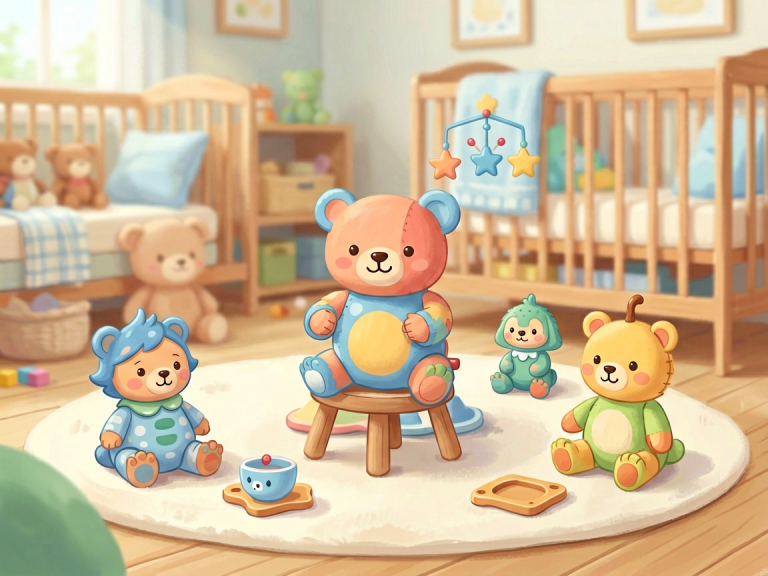
In the first two years of life, a child’s brain undergoes explosive growth, forming more than a million new neural connections every second. During this critical window, toys should primarily engage the senses — sight, sound, touch, and eventually taste and smell — while encouraging the development of gross and fine motor skills. At this stage, “educational” does not mean counting or letter recognition; it means fostering cause-and-effect understanding, object permanence, and hand-eye coordination.
Sensory Toys for Infants (0–12 Months)
Rattles, soft textured balls, crinkly fabric books, and high-contrast black-and-white mobiles are ideal. These toys help infants practice grasping, shaking, and tracking movement. For example, a simple wooden rattle not only entertains but also teaches the baby that their action (shaking) produces a sound — a fundamental lesson in causality. Teething rings with different textures stimulate oral exploration and tactile awareness. Importantly, all toys for this age must be free of small parts, non-toxic, and easy to clean, as mouthing is a primary means of discovery.
Toddlers (12–24 Months): Movement and Problem-Solving
As babies become toddlers, they develop walking, climbing, and basic problem-solving abilities. Educational toys for this stage include stacking rings, shape sorters, push-and-pull toys, and simple nesting cups. These toys teach spatial relationships, size differentiation, and hand-eye coordination. For instance, a shape sorter requires a toddler to match a triangle block to the triangular hole, promoting logical thinking and persistence. Age-appropriate “cause-and-effect” toys, such as a pop-up toy with buttons that make animals jump, reinforce the idea that their actions have predictable outcomes. Soft blocks for building simple towers introduce early engineering concepts without frustration. Language development can be supported by board books with simple pictures and words, as well as toys that produce animal sounds when pressed.
The Wonder Years: 2 to 4 Years – Language, Imagination, and Early Logic
The preschool years are marked by an explosion in vocabulary, pretend play, and an emerging understanding of rules and sequences. Educational toys for this age group should encourage creativity, social interaction, and foundational academic skills — but always through play, not formal instruction.
Imaginative and Role-Playing Toys
Dress-up costumes, play kitchens, tool sets, and dollhouses allow children to imitate the world around them. When a two-year-old “cooks” a pretend meal or a three-year-old “fixes” a toy car with a plastic wrench, they are not just playing — they are practicing narrative thinking, sequencing (first you mix, then you bake), and emotional empathy. These toys also promote language development as children narrate their actions or engage in dialogue with a playmate or adult. Age-appropriate means that costumes are easy to put on and remove, and toys have large, safe pieces without sharp edges.
Building and Construction Sets
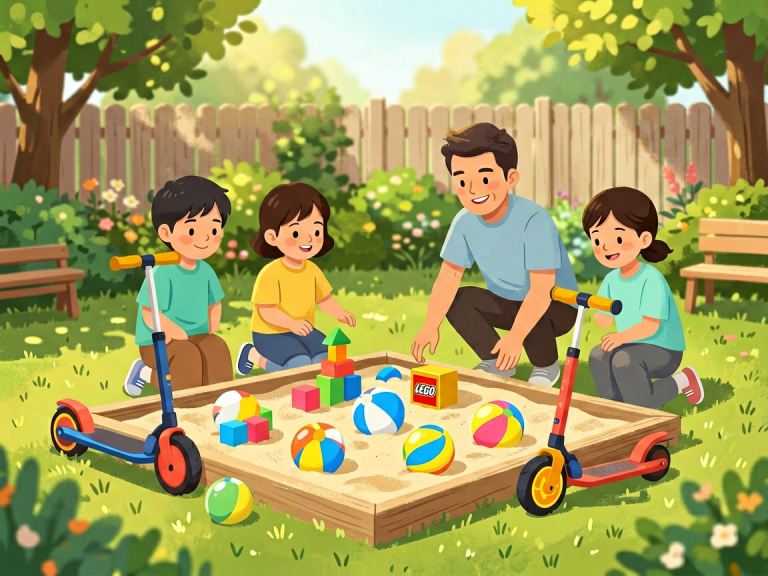
Large wooden blocks, Duplo-style bricks (larger than classic LEGO), and magnetic tile sets are excellent for this age. They teach basic physics (balance, gravity), hand-eye coordination, and spatial awareness. A child who builds a tower and then watches it fall learns about structural stability in a concrete, memorable way. Moreover, building toys encourage problem-solving: “How can I make the bridge longer? What if I put the big block at the bottom?” Choose sets that offer open-ended possibilities rather than strict models, so the child’s imagination drives the learning.
Simple Puzzles and Matching Games
Puzzles with 4 to 12 large pieces help develop shape recognition, patience, and fine motor pincer grip. Matching games — where a child pairs identical pictures or colors — lay the groundwork for pattern recognition and memory. These toys also introduce the concept of rules and turn-taking when played with a partner, an essential social skill.
The Inquisitive Stage: 4 to 6 Years – Literacy, Numeracy, and Scientific Thinking
Between ages four and six, children are typically in preschool or kindergarten, where they begin formal instruction in letters, numbers, and basic science. However, the most effective learning still happens through hands-on, playful experiences. Educational toys at this stage should bridge concrete play and abstract concepts.
Alphabet and Number Toys
Magnetic letters, foam number puzzles, and “letter hunt” games turn literacy into a tactile experience. A child who physically places the letter “A” next to an apple picture is more likely to remember the association than one who simply sees it on a worksheet. Similarly, counting beads, abacuses, and simple board games that involve moving pieces along a numbered path teach one-to-one correspondence and basic addition/subtraction in a fun context. The key is that these toys should feel like games, not drills.
Science and Nature Exploration Kits
Simple magnifying glasses, bug catchers, planting sets, and water play tables encourage observation and inquiry. For example, a child who uses a magnifying glass to examine a leaf is practicing scientific habits: careful observation, comparison, and questioning (“Why does this leaf have veins?”). Age-appropriate science kits might include a simple volcano (baking soda and vinegar) or a color-mixing set. These toys satisfy the natural “why?” phase and build foundational critical-thinking skills.
Advanced Building Sets and Art Materials
At this age, children can handle smaller building bricks (like standard LEGO) that require more precise motor control. Sets that include gears, wheels, and basic mechanics introduce concepts of cause and effect, motion, and simple machines. Art supplies — child-safe scissors, glue, washable markers, modeling clay — remain essential for fine motor development and creative expression. Open-ended art projects, such as making a collage from recycled materials, stimulate divergent thinking (many possible solutions) rather than convergent thinking (one right answer).
Competence and Collaboration: 6 to 8 Years – Strategy, Logic, and Social Skills
As children enter the primary school years, their attention span lengthens, and they become capable of more complex, multi-step tasks. They also begin to understand competition, cooperation, and rule-based systems. Educational toys for this age should challenge them intellectually while promoting teamwork and perseverance.
Board Games and Card Games
Games like *Checkers*, *Connect Four*, *Uno*, and *Junior Monopoly* teach turn-taking, strategy, counting, and dealing with both winning and losing. Cooperative games (where players work together against the game) are especially valuable for building empathy and communication. Age-appropriate board games for this stage have clear, simple rules that can be learned in minutes but offer enough depth to remain engaging. They also provide a screen-free opportunity for family interaction, which research shows supports emotional regulation and social competence.
Science and Engineering Kits
More sophisticated kits — such as building a simple circuit with bulbs and batteries, making a model of the solar system, or growing crystals — introduce hands-on chemistry, physics, and biology. At this age, children can follow multi-step instructions in a manual, which teaches patience and reading comprehension. Kits that allow for experimentation and error (e.g., a bridge-building kit that tests weight limits) are particularly effective because they normalize failure as part of the learning process. The American Academy of Pediatrics emphasizes that such “constructive failure” builds resilience.
Language and Creative Writing Tools
Storytelling games, magnetic poetry sets, and “create your own comic” books encourage writing and reading in a low-pressure, enjoyable way. A child might roll dice to determine a story’s characters, setting, and conflict, then write a short narrative. These toys implicitly teach plot structure, vocabulary, and grammar without the stress of a formal assignment. For children who are already reading fluently, chapter books combined with related activity sets (e.g., a *Magic Tree House* book paired with a scavenger hunt) deepen comprehension and engagement.
Mastery and Complexity: 8 Years and Up – Abstract Thinking, STEM, and Lifelong Learning
From age eight onward, children’s cognitive abilities expand to include abstract reasoning, hypothesis testing, and sustained focus on long-term projects. Educational toys at this stage should mirror real-world applications and allow for deep exploration.
Robotics and Coding Kits
Programmable robots (like LEGO Mindstorms, Sphero, or simple coding apps paired with toys) introduce computational thinking in a tangible way. Children learn to sequence commands, debug errors, and understand cause-and-effect on a digital level. Even without a screen, unplugged coding games — where children use arrows to move a robot across a grid — teach algorithm design. These skills are directly transferable to 21st-century problem-solving and are best learned through playful trial and error rather than passive instruction.
Advanced Construction and Mechanics
Complex model kits (airplanes, cars, architecture sets) that require hundreds of pieces and detailed instructions build concentration and fine motor dexterity. Some sets incorporate gear ratios, pulleys, or hydraulic systems, effectively introducing engineering principles. Kits that allow for customization — such as creating a motorized vehicle from scratch — encourage innovation. Age-appropriate means that the instructions are clear and the pieces are manageable, but the challenge should be significant enough to require effort and time.
Strategy Games and Logic Puzzles
Games like chess, *Settlers of Catan* (junior version), *Rush Hour*, and *Mastermind* develop critical thinking, planning, and pattern recognition. These games can be played solo or with others and often become lifelong hobbies. Similarly, three-dimensional puzzles (like a wooden brainteaser cube) and logic puzzle books build persistence and analytical skills. For children who enjoy math, hands-on materials like fraction cubes or geometric construction kits turn abstract concepts into concrete experiences.
Conclusion: The Art of Choosing Wisely
Selecting educational age-appropriate toys for kids is not about buying the most expensive or the most technologically advanced item on the shelf. It is about understanding the child’s current developmental stage and providing tools that gently stretch their abilities while keeping play joyful. A one-year-old does not need a tablet; they need a block to grasp. A five-year-old does not need a workbook; they need a magnetic letter set and a friend to play with. An eight-year-old does not need a passive video; they need a robot they can program themselves.
The best educational toys share certain characteristics: they are open-ended (allowing multiple uses), they encourage active rather than passive engagement, and they grow with the child — a set of wooden blocks can be stacked by a toddler, used for counting by a preschooler, and turned into a medieval castle by a school-age child. They also foster skills that extend beyond academics: patience, creativity, social negotiation, and the willingness to try again after failure.
Parents and educators should resist the marketing hype and instead observe their children. Watch what captivates their attention, what frustrates them just enough to keep trying, and what makes them want to share their discovery with others. That is the true test of an educational age-appropriate toy: it does not replace a curious mind — it awakens one. In a world that increasingly values speed, grades, and outcomes, let us remember that the most profound learning happens when a child is fully absorbed in play, building not just a tower or a story, but the foundations of a thinking, feeling, and resilient human being.