The Ultimate Parent’s Guide to Problem-Solving Toys: Building Critical Thinkers Through Play
Introduction
In an age of screens, instant gratification, and passive entertainment, the art of *thinking*—truly wrestling with a challenge, testing a hypothesis, persevering through failure, and celebrating a hard-won success—is in danger of becoming a lost skill. Yet the foundational ability to solve problems is arguably the most important life skill we can give our children. It influences everything from academic performance and social relationships to career success and emotional resilience.
Enter problem-solving toys. These are not just “educational” in the marketing sense; they are engineered tools that invite a child to engage in deliberate, active mental work. Puzzles, construction sets, logic games, and open-ended building materials all fall under this umbrella. But with toy stores (and online marketplaces) overflowing with options, how can a busy parent separate the genuinely developmental from the merely distracting?
This guide is designed to help you navigate the landscape of problem-solving toys. We will explore why they matter, how to choose age-appropriate options, which types offer the most cognitive bang for your buck, and how to maximize the learning potential of each play session. By the end, you will feel empowered to build a toy collection that nurtures your child’s brain *and* their love for tackling tough challenges.
—
Why Problem-Solving Toys Matter More Than Ever
Cognitive Development and Executive Function
When a child picks up a problem-solving toy, their brain lights up in ways that passive play (e.g., watching a video or pressing a button for a pre-programmed response) cannot match. These toys activate the prefrontal cortex—the region responsible for executive functions such as planning, working memory, impulse control, and cognitive flexibility.
For example, a toddler fitting a square block into a square hole is not just learning shapes. They are learning cause and effect (“If I turn it, it fits”), spatial reasoning, persistence (“It didn’t work the first time, I’ll try again”), and emotional regulation (managing the frustration of failure). As children grow, more complex toys—like 3D puzzles, mechanical building sets, or multi-step strategy games—demand that they hold multiple pieces of information in mind, sequence actions, and adjust strategies when initial plans fail.
These skills are not innate; they are cultivated through repeated, challenging practice. Problem-solving toys provide that practice in a low-stakes, intrinsically rewarding environment.
Fostering a Growth Mindset
Carol Dweck’s research on mindset has shown that children who believe intelligence can be developed through effort (a “growth mindset”) outperform those who see ability as fixed. Problem-solving toys are a perfect vehicle for building this mindset.
When a child struggles with a 50-piece jigsaw puzzle, they learn that “I can’t do it *yet*” is a temporary state. Each attempt teaches them something: “This edge piece has a straight side, so it goes on the border.” They internalize the value of strategy over luck, and effort over innate talent. After repeated successes born from persistence, they begin to see themselves as capable problem-solvers. This self-concept carries into math homework, social conflicts, and future career challenges.
Screen-Free, High-Engagement Time
In a world where screen time is often unavoidable, problem-solving toys offer a powerful alternative. They require tactile involvement, manual dexterity, and sustained attention. Unlike many digital games that offer quick rewards (coins, level-ups) to keep children hooked, a wooden brain-teaser rewards only genuine understanding. There is no skip button, no cheat code—just your brain and the problem. This builds patience and deep focus, two attributes that are increasingly rare and increasingly valuable.
—
How to Choose the Right Problem-Solving Toys for Your Child
1. Age and Developmental Stage
The best toy for a 2-year-old is very different from the best toy for a 12-year-old. Here is a rough guide:
- Ages 1–3 (Toddler/Preschool): Focus on cause and effect, shape sorting, nesting cups, simple peg puzzles (with knobs), and large interlocking blocks. The goal is not logic puzzles but rather sensorimotor problem-solving: “How do I make this block stay on top?” “Which hole does this shape go into?”
- Ages 3–5 (Preschool to Kindergarten): Introduce pattern recognition (pattern blocks, sequencing cards), simple jigsaw puzzles (12–24 pieces), basic board games (like *Candy Land* or *Hi Ho! Cherry-O*), and construction sets with larger pieces (Duplo, Magna-Tiles). The emphasis shifts to planning and following simple rules.
- Ages 5–7 (Early Elementary): Encourage more complex puzzles (48–100 pieces), strategy-based board games (e.g., *Connect 4*, *Blokus*), early coding toys (like *Code-a-pillar* or *Botley*), and building kits with gears or connectors (e.g., *K’NEX* or *LEGO Classic*). Children can now hold a multi-step plan in their head.
- Ages 7–9 (Middle Elementary): Introduce logic puzzles (like *Rush Hour* or *Logic Links*), math-based games (e.g., *Prime Climb*), mazes, intricate building sets (*LEGO Technic*, marble runs), and introductory strategy games (*Catan Junior*, *Chess* for beginners).
- Ages 9–12 (Pre-Teen): At this stage, children can handle abstract reasoning. Offer complex 3D puzzles (wooden brain-teasers, Rubik’s Cube variations), engineering sets (motorized models, robotics kits like *LEGO Mindstorms*), escape room board games, programming toys (like *Sphero* or *micro:bit*), and deep strategy games (*Settlers of Catan*, *Ticket to Ride*).
2. Open-Ended vs. Closed-Ended
Closed-ended toys have a single correct solution—like a traditional jigsaw puzzle or a Rubik’s Cube. They teach convergent thinking: there is one right answer, and the child must reason logically to reach it.
Open-ended toys (e.g., building blocks, magnetic tiles, clay, loose parts) have no fixed outcome. They foster divergent thinking: the child imagines multiple possibilities, tries them, and adapts. Children can build a castle, a rocket, or a fantasy creature.
A balanced collection should include both. Closed-ended toys teach precision, sequence, and patience. Open-ended toys teach creativity, flexibility, and innovation.
3. Interest Alignment and Challenge Level
A child who loves animals might engage more deeply with a 3D wooden puzzle of a tiger than with a geometric brain-teaser. A child fascinated by vehicles might prefer a gear-building set over a jigsaw. Pay attention to your child’s natural passions—problem-solving happens best when the child is intrinsically motivated.
Also, the challenge should be in the “Zone of Proximal Development”—hard enough to be interesting, but not so hard that it causes overwhelming frustration. If a child can solve a puzzle in two minutes, it is too easy. If they cry in despair after ten seconds, it is too hard. The sweet spot is when they need a little adult scaffolding—a hint, a small demonstration—and then can complete the task independently.
—
Types of Problem-Solving Toys Worth Investing In
1. Construction and Building Sets
From classic wooden blocks to LEGO, Magna-Tiles, and *Straws & Connectors*, these toys teach spatial reasoning, structural integrity, balance, and trial-and-error. They also naturally encourage math concepts (symmetry, geometry, counting).
2. Puzzles
Jigsaw puzzles develop visual-spatial skills, pattern recognition, and persistence. Logic puzzles (like *Simon Tatham’s Puzzles* app in physical form, or *ThinkFun’s* series) train deductive reasoning.
3. Strategy Board Games
Games like *Clue, Qwirkle, Settlers of Catan*, or *Blokus* require players to anticipate opponents’ moves, manage resources, and adjust plans. They also build social skills like turn-taking and grace in losing.
4. Coding and STEM Kits
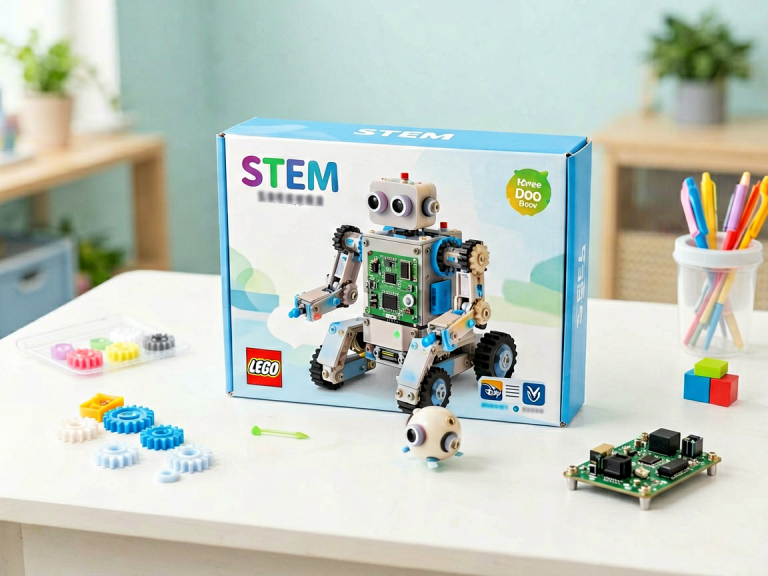
Toys like *Osmo, Botley, Sphero, LEGO Boost*, or *Snap Circuits* teach computational thinking: breaking a big problem into smaller steps (algorithms), debugging, and sequential logic.
5. Brain Teasers and Puzzlers
Portable wooden or metal puzzles, tangrams, the Rubik’s Cube, and *Sudoku* books are excellent for independent quiet time. They train mental flexibility and concentration.
—
How to Maximize the Learning Potential
- Model Problem-Solving: Sit with your child and narrate your own thinking. “Hmm, this piece doesn’t fit here. I think I need to rotate it. Oh, now the corners match. Let me try the other end.”
- Ask Productive Questions: Instead of saying “No, that’s wrong,” ask “What made you try that?” or “What could you try differently?” Encourage reflection.
- Celebrate Effort, Not Speed: Praise the struggle. “I noticed you tried five times to get that gear to spin—that was amazing persistence!”
- Rotate Toys: Introduce new toys periodically to maintain novelty. Put away others for a month; they will feel fresh when reintroduced.
- Resist the Urge to Give Answers: It is tempting to “help” by doing the hard part for your child. But the learning happens in the struggle. Let them fail, and only offer minimal hints when frustration becomes unproductive.
—
Potential Pitfalls to Avoid
- Over-Scheduling: Problem-solving toys work best when children have unhurried, uninterrupted time. Avoid cramming “educational play” into 10-minute windows.
- Age-Inappropriate Complexity: A 4-year-old given a 100-piece puzzle will likely feel defeated, not challenged. Always err on the side of slightly too easy rather than too hard.
- Gender Stereotypes: Problem-solving is for all children. Do not assume girls won’t enjoy construction sets or boys won’t like puzzles with unicorn themes. Offer variety.
- Neglecting the Joy Factor: If a toy feels like a chore, the child will resist. The best problem-solving toys are fun first—the learning comes as a happy side effect.
—
Conclusion
Problem-solving toys are not a luxury or a passing trend; they are an essential part of childhood development. In a world that demands critical thinking, adaptability, and resilience, these toys give children a safe playground to develop those very muscles. As a parent, you do not need to buy every expensive gadget on the market. A few well-chosen puzzles, blocks, and strategy games—used with patience, encouragement, and genuine interest—can equip your child with a mindset that will serve them for life.
Start with one new toy that fits your child’s current interests and developmental level. Sit on the floor with them, ask a thoughtful question, and watch their brain light up. The problem they solve today is a small step toward the bigger problems they will solve tomorrow.
Happy playing—and learning!