The Power of Problem-Solving Toys: Nurturing Critical Thinking in Elementary-Aged Children
Introduction
In an age dominated by screens and passive entertainment, the role of tangible, hands-on play has never been more vital. For elementary school children—typically aged five to twelve—the brain is undergoing a period of rapid development in areas such as logic, spatial reasoning, and executive function. Problem-solving toys, specifically designed to challenge young minds, offer a unique and powerful way to cultivate these essential skills. Unlike simple amusement, these toys require children to plan, test hypotheses, make mistakes, and iterate. They transform abstract concepts like mathematics, engineering, and strategy into concrete, engaging experiences. This article explores the multifaceted world of problem-solving toys for elementary kids, explaining why they matter, what types are most effective, how to select them wisely, and the profound cognitive and social benefits they deliver. Whether you are a parent, educator, or guardian, understanding these tools can help you foster a lifelong love of learning and resilience in the children you care for.
—
Why Problem-Solving Toys Matter
The elementary years are a golden window for cognitive development. During this stage, children shift from purely concrete thinking to the beginnings of abstract reasoning. Problem-solving toys act as a bridge between these modes. They encourage children to engage in what educational psychologists call "productive struggle"—the process of working through a challenge that is just above their current ability level. This struggle is not merely frustrating; it is the crucible in which neural connections are strengthened.
Consider the difference between a passive toy like a stuffed animal and an active problem-solving toy like a logic puzzle. The former provides comfort; the latter demands engagement. When a child sits down with a set of interlocking gears or a maze-building kit, they must exercise attention, memory, and planning. They must envision an outcome and then execute steps to reach it. This process builds what researchers call "executive function"—the mental toolkit that includes working memory, cognitive flexibility, and inhibitory control. Strong executive function in childhood is a predictor of academic success, career readiness, and even emotional regulation in adulthood.
Moreover, problem-solving toys teach a crucial lesson that is often missing from school curricula: failure is not an endpoint but a stepping stone. A child who builds a tower that collapses learns to analyze why it fell—was the base too narrow? Were the blocks misaligned?—and then tries again. This iterative process embeds a growth mindset, the belief that abilities can be developed through effort. In a world that often prizes perfection, these toys offer a safe space for experimentation.
—
Key Types of Problem-Solving Toys for Elementary Kids
Not all problem-solving toys are created equal. The best ones align with a child's developmental stage and spark genuine curiosity. Here are several categories that have proven effective for elementary-aged children.
Building and Construction Sets
Classic examples include LEGO bricks, magnetic tiles, and wooden block sets. But beyond basic stacking, advanced sets introduce gears, pulleys, and motorized components. A child building a working crane must understand leverage and weight distribution. Kits like LEGO Technic or K’NEX require following complex instructions, which trains sequential thinking. For younger elementary kids (ages 5–7), simple interlocking blocks that allow for open-ended creativity are ideal. For older kids (ages 8–12), sets that involve moving parts or structural engineering challenges—such as building a bridge that can hold a certain weight—deepen the learning.
Logic and Strategy Games
Board games and puzzles that require reasoning are excellent. Games like "Rush Hour" (where a child must slide cars to free a red car from a traffic jam) teach sequential logic and planning. "Robot Turtles" introduces basic programming concepts without a screen. "Mastermind" requires deductive reasoning. For solo play, three-dimensional puzzles—like Rubik’s Cubes or wooden brain teasers involving rings and pegs—demand spatial manipulation and trial-and-error thinking. These toys often have multiple difficulty levels, allowing children to progress as their skills improve.
Coding and STEM Kits Without Screens
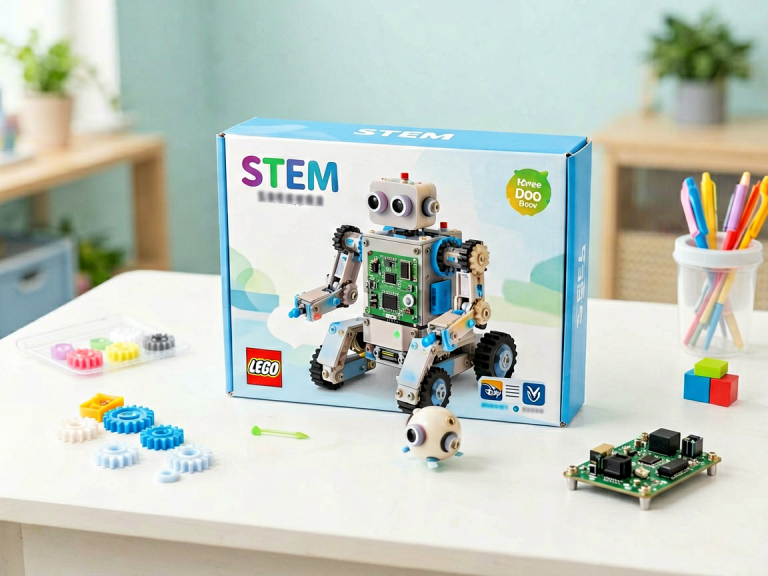
For many parents, concern about screen time is real. Fortunately, there are numerous problem-solving toys that teach coding principles using physical components. "Code-a-Pillar" by Fisher-Price lets preschoolers sequence segments to make a caterpillar move. For elementary kids, "Botley the Coding Robot" or "Cubetto" use color-coded blocks to program actions. More advanced kits like "littleBits" or "Snap Circuits" involve wiring components to create lights, sounds, and even small machines. These toys demystify technology and make abstract computational thinking tangible. Children learn about cause and effect, debugging, and systematic testing—all core problem-solving skills.
Maze, Labyrinth, and Obstacle-Course Toys
Toys that require navigating a ball or vehicle through a path encourage spatial awareness and patience. Products like "Gravity Maze" (a marble-run logic game) or "ThinkFun’s Laser Maze" (involving mirrors and beam splitters) require children to predict trajectories and adjust for obstacles. These toys blend physics intuition with logical deduction. Similarly, DIY marble-run sets allow children to design their own tracks, testing angles and slopes to achieve a successful flow. The open-ended nature of these toys means that the challenge can be reset or expanded infinitely.
Puzzle Kits and Escape-Room Games
Floor puzzles with 100 pieces or more develop pattern recognition and patience. But a newer trend is the children’s escape-room game: boxes that contain locks, clues, and riddles to solve within a time limit. These cooperative experiences force children to communicate, share hypotheses, and combine different pieces of information. They also introduce narrative, which motivates children to persist through difficulty because they want to "save the day."
—
How to Choose the Right Problem-Solving Toys
Selecting a toy that matches a child’s interests and abilities is crucial. A toy that is too easy will bore; one that is too hard will frustrate to the point of abandonment. Here are practical guidelines.
Consider Age and Developmental Stage
Children aged 5–7 benefit from toys that involve simple cause and effect, fine motor skills, and basic sequencing. Hand-eye coordination is still developing, so large pieces and clear visual cues help. For example, a wooden shape-sorter with extra shapes or a simple magnetic tile set works well. Children aged 8–10 can handle multi-step instructions, planning several moves ahead, and abstract symbols. This is the ideal age for logic games, early coding kits, and complex building sets. By ages 11–12, children can engage in strategic games that involve multiple variables, long-term planning, and even competition against others. Chess, advanced robotics kits, and escape-room challenges are appropriate.
Look for Open-Ended vs. Closed-Ended Options
Closed-ended toys have a single correct solution, like a puzzle where the pieces fit in only one way. These teach convergent thinking and persistence. Open-ended toys, like a box of wooden blocks or a magnetic construction set, have infinite possibilities. These foster divergent thinking, creativity, and flexibility. A balanced mix is ideal. A child who spends 20 minutes solving a specific puzzle can then spend another 20 minutes building a castle that uses the same problem-solving muscles in a freer context.
Prioritize Quality and Safety
Elementary kids are active and often impulsive. Toys should be durable, non-toxic, and free of small parts that could be choking hazards for younger siblings. Also consider whether the toy can be reused or reconfigured. A one-and-done puzzle might be less economical than a modular building set that can be rebuilt in countless ways. Reading reviews from other parents and educators can help assess whether a toy truly promotes thinking rather than simply being a gimmick.
Involve the Child in the Choice
Whenever possible, let the child express interest. A toy that aligns with their existing passions—like dinosaurs, space, or cars—will be more engaging. If a child is fascinated by construction vehicles, a gear-building kit with a dump-truck theme will feel less like a lesson and more like play.
—
The Cognitive and Social Benefits
Problem-solving toys do not only sharpen the mind; they also nurture social and emotional growth. Here are some of the documented benefits.
Enhanced Executive Function
As mentioned earlier, these toys train working memory (holding multiple pieces of information in mind), cognitive flexibility (switching between strategies when one fails), and inhibitory control (resisting the urge to give up or take shortcuts). A study published in *Child Development* found that children who regularly engaged in complex block play showed better mathematical reasoning later on. The spatial skills developed by building and puzzle toys directly correlate with success in STEM fields.
Improved Persistence and Self-Regulation
When a child faces a difficult challenge in a toy, they must regulate their emotions. Instead of throwing the pieces in frustration, they learn to take a deep breath and try another approach. This self-regulation is a skill that transfers to homework, sports, and friendships. Parents often report that children who play with challenging puzzles become more resilient in school.
Social Skills Through Cooperative Play
Many problem-solving toys are designed for two or more players. Cooperative board games, such as "Forbidden Island" or "Outfoxed," require children to work together to solve a mystery or achieve a common goal. They learn to listen to others’ ideas, negotiate, and build on each other’s strengths. Even competitive strategy games like "Blokus" or "Qwirkle" teach sportsmanship and perspective-taking. A child must anticipate an opponent’s moves, honing theory of mind—the ability to understand that others have different thoughts and intentions.
Language and Communication Development
When children describe their strategies to siblings or parents, they practice using precise language. "If I move the red gear up, then the blue one will spin faster" requires them to articulate cause and effect. Asking questions about a puzzle, such as "How did you know that piece goes there?" encourages them to explain their reasoning. These verbal exchanges deepen comprehension and prepare children for academic discourse.
—
Integrating Problem-Solving Toys into Daily Life
Having a toy box full of puzzles is not enough. The way adults interact with children during play dramatically influences the learning outcome. Here are strategies for parents and educators.
Be a Facilitator, Not a Director
Resist the urge to solve the problem for the child. Instead, ask open-ended questions: "What do you think would happen if you tried that?" "Can you think of another way to fit these pieces?" If a child becomes stuck, offer a hint rather than the solution. For example, in a maze game, say "Look at the shape of the orange piece—does it remind you of something?" This preserves the child’s sense of ownership and discovery.
Create a "Think Time" Environment
Children need uninterrupted blocks of time to engage deeply. Avoid rushing them to finish a puzzle because dinner is ready. Consider setting up a dedicated play area with a table where ongoing projects can be left out. This allows a child to return to a challenging toy over days or weeks, which is how true learning consolidates.
Rotate Toys to Maintain Novelty
Having too many choices can overwhelm. Periodically rotate toys in and out of circulation. A set that was set aside for a month will feel fresh again. Also, introduce new toys that build on previous skills. If a child masters basic wooden blocks, move to a set with ramps and balls. This scaffolding ensures continued growth.
Model Problem-Solving Behavior
Children learn by watching adults. When you encounter a household problem—a leaking faucet, a misplaced item—think aloud. "I’m going to try turning the handle clockwise first. If that doesn’t stop the leak, I’ll check the washer." This demonstrates that problem-solving is a normal, everyday activity. Similarly, share your own failures and how you learned from them.
Encourage Journaling or Drawing
For older elementary kids, keeping a "challenge log" can deepen the learning. After finishing a puzzle or game, ask them to draw the solution or write a few sentences about what they tried. This metacognitive reflection—thinking about their thinking—solidifies the strategies they used.
—
Conclusion
Problem-solving toys for elementary kids are far more than mere diversions. They are tools that build the intellectual and emotional infrastructure for a lifetime of learning. By challenging young minds to plan, test, fail, and succeed, these toys cultivate critical thinking, resilience, creativity, and collaboration. In a world that increasingly demands adaptability and innovative thought, the humble puzzle block or strategy game is a powerful ally. Parents and educators who intentionally select and integrate these toys into children’s daily routines are giving a gift that extends far beyond the playroom. As the Chinese proverb says, "Tell me and I forget, teach me and I may remember, involve me and I learn." Problem-solving toys involve children fully—and that involvement is where true growth begins. Whether it is a five-year-old aligning magnetic tiles or a twelve-year-old debugging a robot’s path, every moment of productive struggle is a brick in the foundation of a brilliant, capable mind. So next time you see a child frowning over a knotty puzzle, recognize it not as frustration, but as the beautiful work of learning.