The Ultimate Guide to Safe Learning Toys for Kids: Balancing Fun, Education, and Peace of Mind
Introduction
Every parent or caregiver knows the delight of watching a child’s eyes light up when they receive a new toy. But behind that joy lies a profound responsibility: ensuring that the toy not only sparks imagination and learning but also poses zero risk to the child’s health and safety. In recent years, the market for children’s toys has exploded with colorful, tech‑enhanced, and “educational” options. Yet, among the noise, the concept of safe learning toys for kids has become a critical priority. A safe learning toy is one that combines age‑appropriate design, non‑toxic materials, robust construction, and purposeful educational value. This article explores every facet of what makes a learning toy truly safe and how parents can make informed choices that foster development without compromising well‑being. From regulatory standards to material science, from age‑grading to play‑based learning, we will delve deep into the world of safe, educational play.
—
The Importance of Safety in Learning Toys
The first question any thoughtful parent asks is: “Why does safety matter so much when it comes to learning toys?” The answer lies in the very nature of how children interact with their environment.
Young children explore the world through their senses. They put objects in their mouths, throw them, drop them, and sometimes even try to take them apart. A learning toy that is not designed with safety in mind can become a hazard in seconds. Choking on small parts, exposure to toxic chemicals like lead or phthalates, sharp edges that cause cuts, or loose strings that pose strangulation risks are all real dangers. According to the U.S. Consumer Product Safety Commission (CPSC), thousands of toy‑related injuries are treated in emergency rooms each year.
Moreover, learning toys are often used repeatedly over long periods. A child may spend hours with a single puzzle, building block set, or electronic learning device. If that toy contains harmful substances or has structural flaws, the cumulative risk multiplies. This is why safety is not just a checklist item; it is the foundational layer upon which any educational benefit must rest. A toy that is not safe cannot truly be a learning toy, because the anxiety and potential harm it introduces disrupt the very environment of relaxed, joyful discovery that fuels cognitive growth.
—
Key Safety Standards and Certifications Worldwide
Understanding safety standards is the first step toward making wise purchases. Different regions have established rigorous regulations to protect children. When shopping for safe learning toys for kids, look for the following certifications:
- CE Marking (Europe) : Indicates that the toy meets EU health, safety, and environmental requirements.
- ASTM F963 (USA) : The standard consumer safety specification for toy safety, covering mechanical, physical, and chemical hazards.
- EN 71 (Europe) : A comprehensive set of European standards for toy safety, including flammability, migration of certain elements, and physical properties.
- CPSC (USA) : The U.S. Consumer Product Safety Commission enforces regulations on lead content, phthalates, and small parts.
- ISO 8124 : International standards for toy safety that many manufacturers follow.
Parents should also be aware of third‑party testing labels, such as those from Intertek or SGS, which indicate that the product has been independently verified. For a learning toy that targets infants and toddlers (ages 0–3), the most critical safety requirement is the absence of small parts that could cause choking. The “small parts” test cylinder is a simple mental yardstick: if a toy component can fit inside a toilet paper roll, it is too small for a child under three.
—
Materials Matter: Non‑Toxic and Durable Construction
The materials used in a learning toy directly influence its safety profile. The best safe learning toys for kids are made from natural, non‑toxic, and sustainable materials whenever possible.
- Wood : Solid wood (such as beech, maple, or rubberwood) is a classic choice. Look for toys finished with water‑based, non‑toxic paints or waxes. Avoid composite woods that may contain formaldehyde‑based glues.
- Plastic : Not all plastics are created equal. High‑quality, BPA‑free, phthalate‑free plastics (such as ABS or polypropylene) are generally safe. However, parents should avoid soft, flexible plastics that may tear and create small pieces, or those with a strong chemical smell.
- Fabric : Soft toys should be machine‑washable and free from loose buttons, beads, or ribbons. Look for fabrics labeled “flame retardant‑free” and “non‑toxic dye.”
- Paint and finishes : Lead‑free, cadmium‑free, and non‑toxic paints are essential. Water‑based finishes are preferable to solvent‑based ones.
Durability is equally important. A toy that breaks easily exposes sharp edges, splinters, or small pieces that become choking hazards. Well‑made learning toys have rounded corners, securely attached parts, and reinforced stitching. When in doubt, a simple test is to try to pull, twist, or shake the toy. If any piece seems even slightly loose, avoid it.
—
Age‑Appropriate Design: A Crucial Factor
One of the most common mistakes parents make is buying a learning toy that is outside their child’s developmental stage. A toy that is too advanced may cause frustration, while one that is too simple may bore the child—but the safety implications are even more serious.
- Infants (0–12 months) : Toys should be large enough that they cannot be swallowed. Look for rattles, teethers, and soft blocks that are one‑piece molded or sewn. Avoid toys with long cords (over 12 inches) that could cause strangulation.
- Toddlers (1–3 years) : At this stage, children begin to explore cause and effect. Stacking cups, shape sorters, and simple puzzles with chunky pieces are ideal. Ensure that all pieces are too large to fit into the small parts cylinder.
- Preschoolers (3–5 years) : Safety concerns shift toward avoiding sharp edges and toxic materials. Learning toys like magnetic building sets, counting beads on sturdy wires, and art supplies labeled “non‑toxic” are great. Be cautious with magnets—if a toy uses small, powerful magnets, ensure they are securely embedded.
- School‑age (5+) : While older children are less prone to choking, chemical safety remains important. STEM kits, science experiments, and electronic learning toys should be tested for heat, electrical safety, and small battery hazards.
Always read the manufacturer’s age recommendation—it is based on safety research, not just skill level.
—
Educational Value Meets Safety: What to Look For
A safe learning toy should do more than just avoid harm; it should actively promote cognitive, motor, social, and emotional development. Here are some categories of safe learning toys that have proven educational benefits:
- Building and construction sets : Wooden blocks, magnetic tiles, and interlocking bricks develop spatial reasoning, creativity, and fine motor skills. Choose large pieces with smooth edges.
- Puzzles and shape sorters : These teach problem‑solving, hand‑eye coordination, and shape recognition. Ensure that puzzle pieces are thick and have rounded corners.
- Sensory toys : Textured balls, stacking rings, and water‑play toys stimulate the senses. Look for materials that do not leach chemicals when wet.
- Language and literacy toys : Alphabet puzzles, picture books with sturdy pages, and simple electronic readers that pronounce words. Avoid toys with tiny buttons that could be pried off.
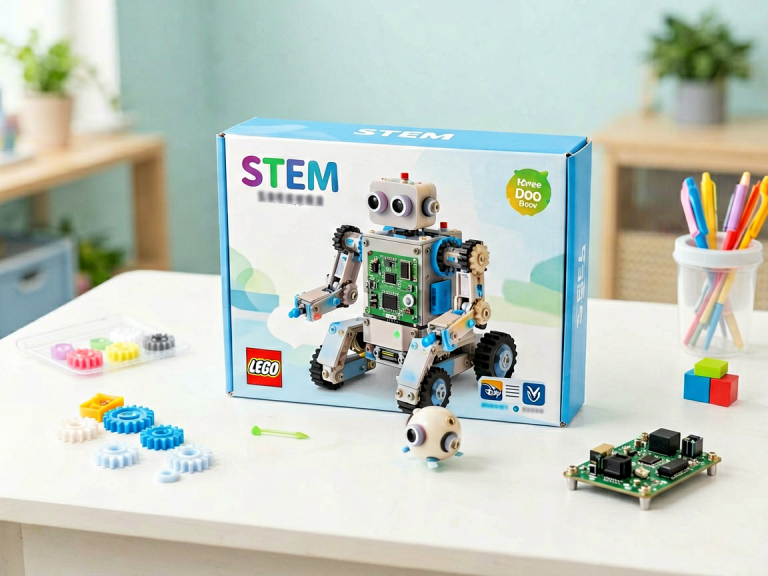
- STEM/STEAM kits : For older children, chemistry sets, circuit kits, and robotics toys teach scientific thinking. Only purchase kits that clearly state “non‑toxic” and include safety goggles or gloves when needed.
The best learning toys are those that encourage open‑ended play—where a child can use the same toy in multiple ways. This not only sparks creativity but also reduces the risk of the toy being misused in a dangerous manner.
—
Tips for Parents: How to Choose Safe Learning Toys
Navigating the toy aisle can be overwhelming. Here is a practical checklist to help you select safe learning toys for kids:
- Check for certifications – Look for the CE, ASTM, or EN 71 logo.
- Read labels carefully – Look for “non‑toxic,” “BPA‑free,” and “phthalate‑free.”
- Avoid small parts for younger children – Use the toilet paper roll test.
- Examine construction – Pull, twist, and shake the toy. Check for sharp edges or points.
- Beware of magnets and batteries – For children under 3, avoid toys with button batteries or loose magnets.
- Consider the noise level – Some electronic toys can damage hearing if too loud. Look for volume controls or “quiet” settings.
- Choose washable or easy‑to‑clean materials – Hygiene is part of safety, especially for stuffed toys and cloth books.
- Buy from reputable brands – Established manufacturers often have more rigorous quality control.
- Stay updated on recalls – Visit websites like recalls.gov (USA) or ec.europa.eu/safety‑gate (EU) to check for any recalls.
- Trust your instincts – If a toy looks flimsy, smells strange, or has parts that seem likely to break, do not buy it.
—
Conclusion
Safe learning toys for kids are not a luxury; they are a necessity. In a world where children are exposed to countless products from a very young age, parents must be vigilant but not overwhelmed. The good news is that a vast array of well‑designed, rigorously tested, and genuinely educational toys exist today. By focusing on non‑toxic materials, age‑appropriate design, durable construction, and recognized safety certifications, you can create a play environment that nurtures your child’s development while giving you peace of mind.
Remember, a truly safe learning toy is one that allows a child to explore, fail, try again, and ultimately succeed—without ever compromising their health. So the next time you see that bright‑colored puzzle or that set of wooden blocks, take a moment to look past the flashy packaging and check the details. Your child’s safety is the most essential lesson of all.
—
*Word count: approximately 1,050 words*