The Ultimate Creativity Toys Buying Guide: Unlocking Imagination Through Play
In a world increasingly dominated by screens and passive entertainment, the role of toys in fostering creativity has never been more critical. Creativity is not just about arts and crafts; it is the foundation of problem-solving, innovation, emotional intelligence, and resilience. The right toy can spark a child’s curiosity, encourage divergent thinking, and provide hours of open-ended exploration. But with an overwhelming array of products on the market—from blinking, talking gadgets to minimalist wooden blocks—how do parents, educators, and gift-givers choose wisely? This comprehensive buying guide dives deep into the philosophy, categories, and practical considerations behind creativity toys, helping you make informed decisions that nurture a child’s innate imaginative powers.
Why Creativity Toys Matter More Than Ever
Before we explore specific toys, it is essential to understand the developmental significance of creative play. Research in child psychology consistently shows that unstructured, imaginative play enhances executive function skills—such as planning, self-regulation, and cognitive flexibility. Unlike toys that prescribe a single outcome (push a button, get a sound), creativity toys empower children to become the architects of their own experiences. They invite experimentation, mistake-making, and revision, which are the very processes that fuel innovation in adulthood. In an era where standardized testing and structured activities dominate childhood, creativity toys offer a sanctuary for free thinking. Buying them is not just a purchase; it is an investment in a child’s ability to adapt, invent, and find joy in the process of learning.
Key Principles for Selecting Creativity Toys
Open-Ended vs. Closed-Ended: The Golden Rule
The single most important criterion when evaluating a creativity toy is whether it is open-ended or closed-ended. Open-ended toys have no fixed purpose or end result. A set of wooden blocks, a bin of LEGO bricks, a collection of fabric scraps, or a box of clay can be used in infinite ways. A child might build a castle, a spaceship, a creature, or simply stack and knock them down. Closed-ended toys, by contrast, have a single correct way to play—think of a puzzle with only one solution, a board game with strict rules, or a battery-operated robot that only walks forward. While closed-ended toys have their place (developing logic, patience, and following instructions), they do not inherently nurture creativity. For a strong creative development, the majority of a child’s toy collection should be open-ended. When shopping, ask yourself: “After the first play session, can my child still find new ways to use this?” If the answer is yes, you are on the right track.
The Power of Simplicity: Less Is More
In the age of sensory overload, simple toys often prove most powerful for creativity. A plain wooden doll, a set of colored scarves, or a simple cardboard box triggers more imaginative play than a highly detailed action figure with a pre-recorded voice. Why? Because simplicity leaves gaps for the child’s mind to fill. A plain block can become a person, a car, a mountain, or a piece of cake. A detailed, branded figurine, on the other hand, already defines its identity and limits the child’s narrative. This principle extends to materials: natural textures like wood, cotton, and wool engage the senses without overwhelming them. Avoid toys that flash, beep, or talk excessively unless they serve a very specific educational purpose. The best creativity toys are silent partners that wait for the child to give them life.
Age Appropriateness Without Underestimating
Creativity toys should match a child’s developmental stage, but not in a way that underestimates their potential. For infants and toddlers (ages 0–2), sensory exploration is paramount. Look for toys that engage touch, sight, and sound in safe ways: textured stacking rings, soft cloth books, rattles, and simple shape sorters. For preschoolers (ages 3–5), imaginative role-play blossoms. Costumes, play kitchens, train sets, and building blocks become central. At this age, art supplies like washable markers, finger paints, and modeling dough should be non-toxic and easy to manipulate. For school-age children (ages 6–9), complexity can increase as fine motor skills improve. Construction kits with gears, pulleys, and connectors; advanced art sets with watercolors, charcoal, or clay; and science kits that allow open-ended experimentation (like a simple chemistry set or a microscope) are excellent. For tweens and teens (ages 10+), creativity toys may shift toward more sophisticated tools: digital art tablets, 3D pens, coding robots, sewing machines, or even analog tools like calligraphy pens and leatherworking kits. The key is to choose toys that challenge without frustrating—a fine line that requires knowing the child’s interests and abilities.
Categories of Creativity Toys: A Detailed Exploration
1. Construction and Building Toys
Construction toys are the archetype of open-ended play. From classic wooden unit blocks to magnetic tiles, these toys teach spatial awareness, physics, and planning in an organic way. When buying construction toys, consider the versatility of the connecting system. LEGO’s classic brick system is universally compatible and allows for infinite creations, but beware of themed sets (e.g., a Star Wars Millennium Falcon) that come with specific instructions. While these can be fun, they often become “build once, display forever” items. For pure creativity, buy a large bucket of basic bricks without a predetermined model. Similarly, magnetic building sets (like Magna-Tiles or PicassoTiles) are fantastic for younger children because they connect easily, enabling quick creation of 3D structures. Even better, they are translucent and work on light tables for added sensory play. Wooden blocks, especially those in natural shapes like arches, cylinders, and planks (such as Grimm’s or Bauspiel), offer unmatched tactile pleasure and endless architectural possibilities. When purchasing, check for smooth edges, non-toxic paints, and sturdy construction.
2. Art and Craft Supplies
Art supplies are perhaps the most direct avenue for creative expression. However, the market is flooded with pre-packaged kits that limit outcomes—like a “paint-by-numbers” set or a “make one bracelet” kit. Instead, invest in raw materials. High-quality drawing sets (graphite pencils, charcoal, pastels, and blending stumps) allow a child to explore shading, texture, and line. Watercolor sets with a brush and a mixing palette encourage experimentation with color theory. For younger children, choose washable, non-toxic tempera paints and large paper rolls, and accept that mess is part of the process. Modeling materials deserve special mention: air-dry clay, polymer clay, and playdough (homemade avoids preservatives) offer tactile feedback and can be reworked repeatedly. Look for clay that does not crack easily and that hardens without a kiln. For textile art, simple embroidery kits, weaving looms, or even a collection of fabric scraps and yarn can lead to incredible creations. When buying art supplies, prioritize quality over quantity. A single good set of watercolors will inspire more than ten cheap, dried-out sets.
3. Imaginative Role-Play and Dress-Up
Role-play toys transport children into different worlds and identities, fostering empathy, language skills, and narrative thinking. The best items here are generic and open—a simple wooden play kitchen with removable pots and pans, a set of plain colored scarves that can be capes, veils, or rivers, a collection of hats from different professions (a chef’s toque, a firefighter’s helmet, a witch’s pointed hat). Avoid branded costumes that lock the child into a specific character (only Elsa, only Superman). Instead, provide loose parts that can be combined: a cardboard box becomes a spaceship, a blanket becomes a castle tent, a collection of plastic animals becomes a jungle. Puppets are another excellent role-play tool; hand puppets with neutral faces allow the child to project emotions. Even simple wooden dolls with no painted features (such as Waldorf-style dolls) encourage endless storytelling. When selecting role-play toys, consider durability and safety. Avoid small parts for children under three, and ensure that fabric items are machine-washable.
4. STEM and Invention Kits (With a Creative Twist)
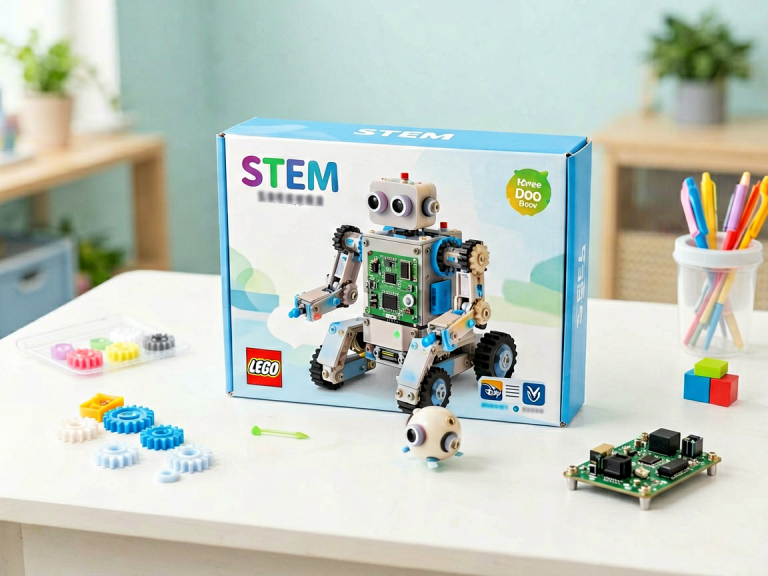
Science, technology, engineering, and math (STEM) toys can be highly creative if they emphasize experimentation over predetermined results. Look for kits that allow for open-ended building, such as a simple electrical circuit kit where wires, bulbs, switches, and motors can be combined in countless ways. A basic arduino or micro:bit starter kit for older children lets them code and create custom devices. For younger ones, a marble run (like Gravitrax or Quadrilla) combines physics with creative design. Careful: many “STEM” kits come with rigid instructions that produce one specific outcome (e.g., a robot that only moves forward). These are not creativity toys; they are assembly exercises. True creative STEM toys encourage trial and error, redesign, and personalization. When buying, read reviews from parents or educators who emphasize open-ended use. Also consider kits that combine art and tech, like a light-up fashion sewing kit or a 3Doodler pen that extrudes plastic for freehand sculpture.
5. Nature and Loose Parts
Loose parts are collections of materials that have no single intended use. They include pinecones, stones, shells, wooden rings, fabric squares, buttons, and recycled materials like bottle caps and cardboard tubes. While not traditionally packaged as “toys,” loose parts are among the most powerful creativity tools. They encourage sorting, stacking, threading, building, and symbolic play. Parents can create a “loose parts kit” by visiting a craft store or simply saving items from around the house. Nature-based toys, such as wooden animals, mineral specimens, and magnifying glasses, connect children to the natural world and inspire outdoor exploration. When buying loose parts, ensure they are safe—no sharp edges, no choking hazards for young children, and no toxic finishes. Wooden rings from curtain rings are excellent; smooth stones from a river are even better.
Practical Buying Checklist
Before making a purchase, run through this checklist to ensure the toy truly supports creativity:
- Open-endedness: Can the child use this toy in more than three different ways?
- Simplicity: Does it have minimal electronic components? (If it requires batteries, question its creative value.)
- Material quality: Is it made of natural materials (wood, cotton, metal, paper) rather than cheap plastic? Is it durable enough to survive rough handling?
- Safety: Does it meet safety standards (ASTM, EN71)? Are there any small parts, sharp edges, or toxic paints?
- Child’s interest: Does it align with the child’s existing passions? A child who loves animals may prefer a set of wooden animal figures over a block set.
- Longevity: Will this toy still be engaging in six months? Avoid fads and licensed characters that may lose appeal quickly.
- Cost vs. value: An expensive toy is not necessarily better. A $10 bag of beautiful wooden blocks may offer more creative mileage than a $50 themed playset.
Conclusion: The Gift of Possibility
The best creativity toy is not a toy at all—it is a permission slip for the imagination to run wild. When you choose a set of simple blocks over a flashy robot, a pile of fabric scraps over a branded costume, or a box of clay over a pre-molded kit, you are telling a child, “Your ideas matter. You are the creator.” This message is the most powerful gift you can give. The next time you enter a toy store, resist the glitter and the noise. Look for the quiet, unassuming objects that invite children to bend, build, tear, reimagine, and rebuild. In those humble materials, creativity thrives. And in that thriving, a child discovers not only the joy of play but also the confidence to shape their world.
*Words count: ~1,450*