The Ultimate Age-Appropriate Toys Buying Guide: Nurturing Development Through Play
—
Introduction
Toys are far more than mere entertainment; they are the tools through which children explore the world, develop critical skills, and express their creativity. However, a toy that is perfect for a six‑year‑old might be hazardous or boring for a toddler. Choosing age‑appropriate toys is both an art and a science—it requires understanding children’s developmental stages, safety requirements, and individual interests. This comprehensive guide will walk you through every age group, from infancy to adolescence, helping you make informed, thoughtful purchases that will delight children and support their growth. Whether you are a parent, grandparent, teacher, or gift‑giver, this guide will equip you with the knowledge to choose toys that are safe, engaging, and developmentally beneficial.
—
Why Age Appropriateness Matters
The concept of “age‑appropriate” is not a marketing gimmick; it is grounded in child development research. Toys designed for a specific age range take into account children’s cognitive abilities, motor skills, attention spans, and even social‑emotional needs.
- Safety First: Small parts, sharp edges, or toxic materials can be dangerous for babies and toddlers who explore by mouthing objects. Age labels help prevent choking hazards and other injuries.
- Skill Development: A toy that is too advanced may frustrate a child, while one that is too simple can lead to boredom. The right toy provides a “just‑right” challenge, promoting problem‑solving, fine motor coordination, and language development.
- Emotional & Social Growth: Age‑appropriate toys also encourage age‑specific social interactions—such as parallel play for toddlers or cooperative games for older children—which are essential for building empathy and teamwork.
By respecting age guidelines, you ensure that playtime remains joyful, safe, and educational.
—
Safety Considerations Across All Ages
Before diving into age‑specific recommendations, it is crucial to understand universal safety principles:
- Check for Recalls & Certifications: Look for labels like ASTM (American Society for Testing and Materials) or CE (European Conformity) which indicate that the toy meets safety standards.
- Avoid Small Parts for Children Under 3: The Consumer Product Safety Commission recommends using a “small‑parts tester” (a tube about 1.25 inches in diameter) to identify choking hazards.
- Non‑Toxic Materials: Especially for babies and toddlers who put everything in their mouths, choose toys made from BPA‑free plastic, lead‑free paint, and organic fabrics.
- Battery & Electrical Safety: Toys with batteries should have secure compartments that require a screwdriver to open. Avoid toys with long cords that could pose strangulation risks.
- Age Labels as a Starting Point: Remember that every child develops at their own pace. Use age recommendations as a guide, but also observe your child’s abilities and interests.
—
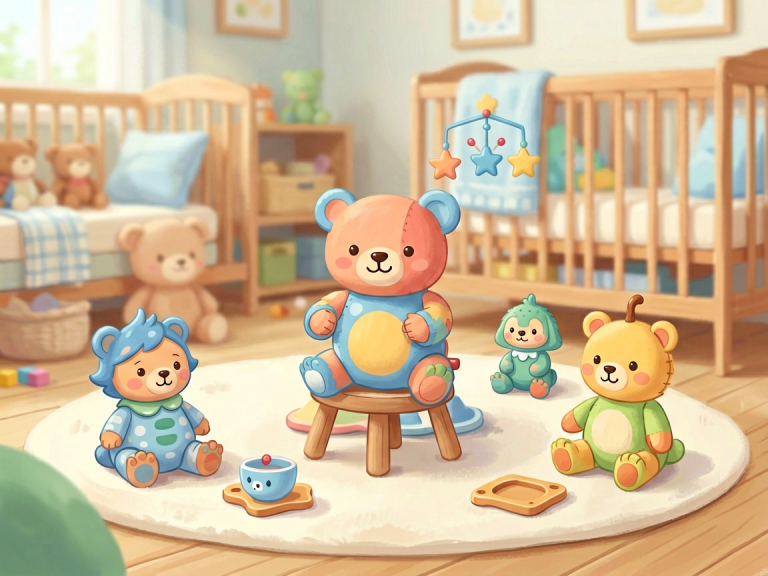
Toys for Infants (0–12 Months)
Infants are sensory explorers. Their world is a whirlwind of sounds, textures, colors, and movements. The best toys for this stage stimulate the senses and encourage early motor skill development.
- Sensory & Rattles: Soft rattles, crinkle toys, and textured balls help babies understand cause and effect. Choose items with high‑contrast patterns (black, white, and red) that are easier for young eyes to focus on.
- Activity Gyms & Play Mats: Overhead hanging toys that babies can bat at promote hand‑eye coordination. Mirrors on mats allow them to discover their own reflection—a key step in self‑awareness.
- Teething Toys: BPA‑free silicone teethers with various textures soothe sore gums. Some can be chilled in the refrigerator for extra relief.
- Soft Books & Cloth Blocks: Fabric books with crinkle pages, flaps, and mirrors introduce early literacy concepts. Stacking cloth blocks help develop grasping and releasing skills.
- Musical Toys: Simple shakers or baby‑safe xylophones (without small mallets) introduce rhythm and sound differentiation.
What to Avoid: Avoid toys with long strings, loose batteries, or any detachable parts. Also, be wary of toys that play loud, jarring sounds—babies’ hearing is sensitive, and excessive noise can be overwhelming.
—
Toys for Toddlers (1–3 Years)
Toddlers are on the move! They are learning to walk, run, climb, and—most importantly—to assert their independence. Toys for this age group should encourage physical activity, language development, and imaginative play.
- Push & Pull Toys: A wagon, a wooden push cart, or a toy lawnmower helps toddlers practice walking and balance. Look for stable bases that won’t tip over easily.
- Shape Sorters & Simple Puzzles: Wooden or plastic shape sorters teach spatial relationships and problem‑solving. Puzzles with large, knobbed pieces are ideal for little fingers.
- Building Blocks: Large, lightweight blocks (foam or cardboard) allow toddlers to stack, knock down, and experiment with gravity. Duplo®‑style bricks are also excellent.
- Pretend Play Sets: Toy kitchens, tool benches, and doctor kits foster imagination and social skills. Include realistic props like plastic food, utensils, and play phones.
- Art Supplies: Chunky crayons, washable markers, and finger paints encourage creativity and fine motor control. Always supervise art time to prevent ingestion.
- Ride‑On Toys: Low‑to‑the‑ground ride‑ons (without pedals—these are “push” vehicles) give toddlers a sense of mobility and strengthen leg muscles.
Safety Tips: Ensure that ride‑on toys have a wide base to prevent tipping. For outdoor play, check for sharp edges and always use helmets when applicable.
—
Toys for Preschoolers (3–5 Years)
Preschoolers are bursting with curiosity and language skills. They engage in more complex pretend play, begin to understand rules, and refine their fine motor abilities. Toys should challenge their growing cognitive and social capacities.
- Construction & Engineering Sets: Magnetic tiles, interlocking building sets (like LEGO® Duplo or standard bricks), and marble runs teach geometry, planning, and cause‑and‑effect.
- Art & Craft Kits: Child‑safe scissors, glue sticks, modeling clay (non‑toxic), and bead‑stringing sets improve dexterity. Paint‑by‑number or sticker books also boost concentration.
- Board Games: Simple games like “Candy Land” or “The Sneaky, Snacky Squirrel Game” introduce turn‑taking, counting, and patience. Cooperative games (where players work together) are especially beneficial.
- Dress‑Up & Role‑Play Costumes: Firefighter hats, princess dresses, and doctor coats encourage storytelling and empathy. Provide a variety of accessories to expand scenarios.
- Early Science & Nature Kits: Bug viewers, magnifying glasses, and simple gardening sets spark an interest in the natural world. Magnetic and water science kits (with adult supervision) can be fascinating.
- Musical Instruments: A child‑size keyboard, drum, or set of maracas helps develop rhythm and auditory discrimination. Look for instruments that are sturdy and have a pleasant tone.
Cognitive Checkpoint: Preschool toys often incorporate letters, numbers, and shapes. However, avoid forcing academic skills; play‑based learning is far more effective at this age.
—
Toys for School‑Age Children (6–9 Years)
As children enter elementary school, their cognitive abilities expand rapidly. They can follow multi‑step instructions, engage in strategic thinking, and enjoy more complex social play. Toys should promote logical reasoning, creativity, and physical activity.
- Advanced Building Sets: LEGO® Classic or Technic sets, K’NEX, and magnetic construction kits challenge children to follow blueprints or create original designs. Robotics kits (like Lego Boost) introduce basic coding.
- Science & Experiment Kits: Crystal‑growing sets, volcano kits, and simple circuits allow hands‑on exploration of chemistry and physics. Look for kits that include clear instructions and safety goggles.
- Strategy Board Games: Games like “Settlers of Catan Junior,” “Blokus,” “Sequence,” and “Chess” teach planning, critical thinking, and patience. Card games (Uno, Spot it!) also sharpen memory and speed.
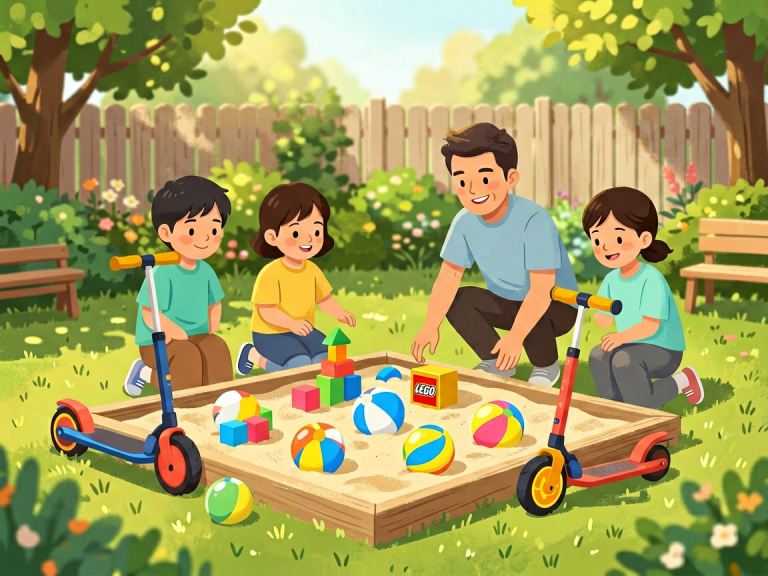
- Active Outdoor Toys: Jump ropes, scooters, skateboards (with protective gear!), frisbees, and soccer balls encourage physical fitness and coordination. An age‑appropriate bike (with training wheels if needed) is a classic choice.
- Craft & DIY Kits: Friendship bracelet makers, embroidery kits, wood‑burning tools (with supervision), and bead‑looming sets allow creative expression and fine‑tune dexterity.
- Puzzles & Brain Teasers: Jigsaw puzzles with 200–500 pieces, Rubik’s cubes, and logic puzzles challenge persistence and visual‑spatial skills.
Digital Considerations: Screen‑based toys (tablets, educational apps) can be beneficial in moderation. Choose interactive, content‑rich apps that require problem‑solving rather than passive watching.
—
Toys for Tweens and Teens (10+ Years)
Older children and teenagers have diverse interests and a growing need for independence and self‑expression. The best toys and hobbies for this age group often double as tools for learning, social connection, or personal development.
- STEM & Coding Kits: Advanced robotics (like VEX or Arduino), coding games (e.g., “Codemasters” or “Raspberry Pi” projects), and electronics kits (snap circuits) prepare tweens for future tech‑focused careers.
- Model Building & Collectibles: Scale models of cars, airplanes, or architectural replicas (e.g., metal Earth models or LEGO® Architecture) require patience and precision. Collectible trading card games (Pokémon, Magic: The Gathering) also offer strategic depth.
- Creative Tools: Digital drawing tablets (like Wacom Intuos), graphic design software, or high‑quality cameras encourage artistic pursuits. Musical instruments (guitar, keyboard, ukulele) remain excellent choices.
- Social & Party Games: Games like “Codenames,” “Ticket to Ride,” “Exploding Kittens,” or “Catan” are ideal for group play. Escape room board games provide collaborative problem‑solving.
- Sports & Active Gear: Skateboards, rollerblades, bicycles, and basketball hoops (or indoor sports equipment like a ping‑pong table) keep teens physically active. Fitness trackers can gamify exercise.
- Books & Subscription Boxes: While not “toys” per se, curated book subscriptions, craft boxes, or science experiment deliveries (KiwiCo, Little Passports) sustain curiosity and learning.
Important Note: At this stage, peer influence is strong. Involve the teen in the decision‑making process—a toy that reflects their genuine interests will be used and treasured far more than something forced upon them.
—
Tips for Choosing the Right Toy
Beyond age labels, keep these strategies in mind:
- Observe the Child’s Current Stage: A child may be advanced in one area (e.g., language) but average in another (e.g., motor skills). Choose toys that challenge without overwhelming.
- Think “Open‑Ended”: Toys that can be used in multiple ways—like blocks, craft supplies, or dress‑up clothes—encourage creativity and have longer play value.
- Avoid the “Battery‑Powered” Trap: Electronic toys that do everything for the child often limit imagination. Batteries are best used for tools (e.g., a kid‑friendly drill set) rather than as the main feature.
- Involve the Child (When Appropriate): For children over three, let them choose from a shortlist of safe, age‑appropriate options. This builds decision‑making skills and ensures the gift will be beloved.
- Check for Longevity: Does the toy adapt as the child grows? Many construction sets, art supplies, and reversible board games can be used for years.
- Quality Over Quantity: A few well‑chosen, durable toys are better than a mountain of cheap, breakable items that quickly lose appeal.
—
Conclusion
Selecting age‑appropriate toys is one of the most powerful ways to support a child’s development—intellectually, socially, emotionally, and physically. From the soothing rattle of a baby’s first toy to the intricate strategy of a teen’s board game, each playful object has the potential to teach, inspire, and connect. By paying attention to safety standards, developmental milestones, and a child’s unique personality, you can transform gift‑giving into an investment in their future. Remember, the best toy is one that sparks joy, curiosity, and a love of learning—regardless of the price tag. Happy playing!