The Importance of Age-Appropriate Toys for Child Development: A Comprehensive Guide
Toys are far more than mere sources of entertainment for children. They are the tools through which young minds explore the world, develop essential skills, and shape their understanding of themselves and others. However, not all toys are created equal, and the appropriateness of a toy for a child’s age is a critical factor that influences safety, engagement, and developmental benefit. Choosing age-appropriate toys means selecting items that match a child’s physical, cognitive, emotional, and social abilities at a given stage. This article delves into why age-appropriate toys matter, how to identify them for different developmental phases, and what parents and caregivers should consider to nurture healthy growth through play.
Understanding Developmental Stages and Their Relevance to Toy Selection
Every child develops at their own pace, but there are well-established milestones that characterize different age groups. Recognizing these stages helps adults choose toys that challenge without frustrating, stimulate without overwhelming, and encourage exploration without posing safety risks. A toy that is too advanced may lead to disappointment or even injury, while one that is too simple can result in boredom and missed learning opportunities. The key is to find the delicate balance where a toy is just slightly beyond the child’s current abilities, thereby promoting growth through what child development expert Lev Vygotsky called the “zone of proximal development.” Moreover, age-appropriate toys respect the child’s sensory, motor, and cognitive limitations. For example, an infant’s world is built on sensory input—sights, sounds, textures, and tastes—so toys that are soft, brightly colored, and free of small parts are ideal. As children grow, their play becomes more symbolic, social, and rule-based, requiring toys that encourage imagination, cooperation, and logical thinking. Understanding these shifts is the foundation for making informed toy choices.
Toys for Infants: 0–12 Months – Sensory Exploration and Bonding
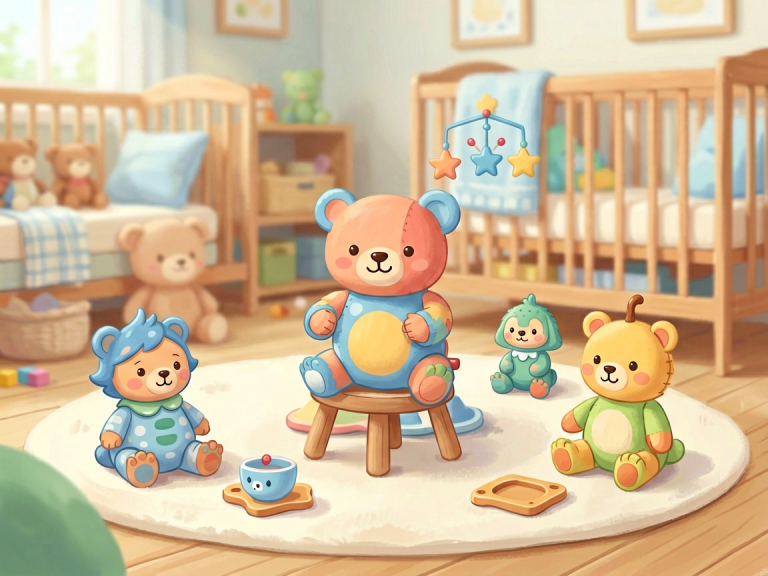
The first year of life is a period of rapid brain development, with neurons forming connections at an astonishing rate. At this stage, infants learn primarily through their senses and through interactions with caregivers. Age-appropriate toys for infants should be safe, stimulating, and designed to support bonding. Rattles, soft cloth books, teething rings, and activity gyms with dangling objects are excellent choices. They provide visual contrast (black and white patterns are especially engaging for newborns), auditory feedback, and tactile variety. Textures like velvet, rubber, and corduroy help develop tactile discrimination. Importantly, all items must be free of small parts that could become choking hazards, and they should be made from non-toxic materials since babies explore by mouthing. Mirrors designed for infants allow them to begin recognizing their own reflection, fostering early self-awareness. Mobiles with gentle movement and music can soothe and entertain, but they must be securely attached and out of reach to prevent entanglement. Another critical aspect is parent-child interaction: toys that encourage peek-a-boo, pat-a-cake, or simple cause-and-effect (like a toy that makes a sound when pressed) promote social engagement and emotional security. Remember that for infants, the human face and voice are the most powerful “toys” of all; thus, any toy should be a supplement to, not a replacement for, caregiver interaction.
Toys for Toddlers: 1–3 Years – Movement, Exploration, and Imitation
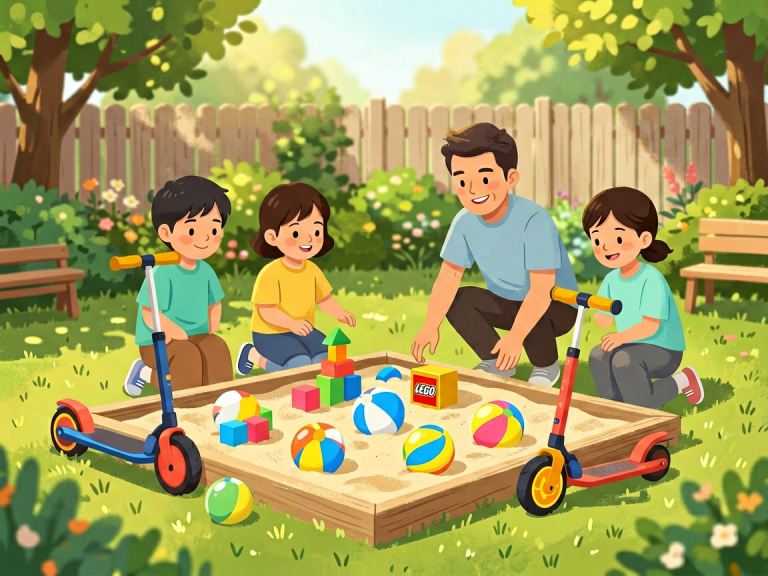
Toddlers are on the move. They are mastering walking, running, climbing, and using their hands with increasing dexterity. Their cognitive world expands as they begin to understand object permanence, imitate others, and engage in simple pretend play. Toys for this age group should support gross motor skills, fine motor control, and the burgeoning imagination. Push-and-pull toys, ride-on vehicles, and soft balls for rolling and tossing encourage balance and coordination. Building blocks—wooden or large plastic—allow toddlers to stack, knock down, and create simple structures, teaching spatial awareness and cause and effect. Simple puzzles with large knobs help develop hand-eye coordination and problem-solving. Shape sorters and stacking rings are classic staples that combine motor skills with early math concepts like size and shape. Pretend play becomes significant: toy telephones, play kitchens, dolls with simple accessories, and animal figures let toddlers mimic the adult world they observe. These “imitative toys” help children process daily experiences and develop language as they narrate their actions. Safety remains paramount: avoid toys with sharp edges, long cords (strangulation risk), or small balls that could be swallowed. At this age, toddlers are increasingly curious about how things work, so toys that require simple actions—pressing a button to hear a sound, turning a wheel to make a figure move—are highly engaging. Musical instruments like drums, xylophones, and maracas provide auditory stimulation and rhythm sense. However, volume should be controlled to protect hearing. Additionally, because toddlers often play side-by-side rather than cooperatively (parallel play), having multiple copies of popular toys can reduce conflicts in group settings.
Toys for Preschoolers: 3–5 Years – Creativity, Social Skills, and Early Academics
Preschoolers are explorers of imagination. They engage in elaborate pretend play, often assigning roles and following loosely defined plots. Their language explodes, and they begin to understand rules, taking turns, and sharing. Fine motor skills have improved to the point where they can use safety scissors, hold crayons with a tripod grip, and manipulate smaller objects. Age-appropriate toys for this stage should foster creativity, social interaction, and foundational academic skills. Art supplies—washable markers, finger paints, play-dough, and sticker sets—allow children to express emotions and develop fine motor control. Dress-up clothes and props (hats, scarves, toy cash registers, doctor kits) fuel dramatic play, which is crucial for emotional regulation and perspective-taking. Board games with simple rules, such as “Candy Land” or “Memory,” teach turn-taking, counting, and patience. Construction sets with larger pieces, like wooden train tracks or magnetic tiles, encourage spatial reasoning and cooperative building. Puzzles with 12 to 24 pieces challenge memory and focus. For early literacy and numeracy, magnetic letters and numbers, simple matching games, and rhyming games are effective, but they should be presented playfully, not as drills. Science exploration kits (e.g., magnifying glasses, bug viewers, and simple magnets) satisfy curiosity about the natural world. At this age, children also benefit from toys that encourage physical activity: tricycles, balance bikes, jump ropes (with supervision), and balls for kicking and throwing. Safety considerations include ensuring art supplies are non-toxic and washable, avoiding toys that require electrical plugs (battery-operated only with child-safe battery compartments), and checking for small parts that may still be risky for some 3-year-olds. Remember that preschoolers often have vivid imaginations and may be frightened by overly realistic or aggressive themes; gently steer away from toys that promote violence.
Toys for School-Age Children: 6–12 Years – Complexity, Strategy, and Mastery
As children enter the school-age years, their cognitive abilities expand dramatically. They can think logically, follow multi-step instructions, and engage in abstract reasoning. Their social worlds become more complex, with friendships based on shared interests and cooperation. Fine motor skills are refined enough for intricate construction, writing, and drawing. Age-appropriate toys for this group should challenge their intellect, support skill development, and provide opportunities for both solitary and group play. Science kits (chemistry sets, crystal-growing labs, microscopes) allow hands-on experimentation. Building sets like LEGO Technic, K’NEX, or motorized models teach engineering principles and patience. Strategy board games—chess, checkers, Settlers of Catan (junior versions), or card games like Uno—develop critical thinking, planning, and sportsmanship. Art and craft kits that involve sewing, knitting, beadwork, or pottery offer fine motor challenge and creative outlet. Sports equipment—basketballs, soccer balls, jump ropes, skateboards (with proper safety gear)—promotes physical fitness and teamwork. Electronic and digital toys can be appropriate in moderation: educational apps, coding robots (like Sphero or Dash), and age-appropriate video games that require problem-solving rather than passive consumption. However, screen time should be balanced with active, hands-on play. Books and reading games remain vital; chapter books, graphic novels, and puzzle books encourage literacy and imagination. For children interested in music, simple instruments like keyboards or ukuleles can be introduced. Safety concerns shift at this age: larger, more complex toys may have small parts or require electrical components, so parental supervision is still important for some activities (e.g., chemistry experiments). Also, be mindful of peer pressure—children may want toys that are popular but not necessarily developmentally suitable. Discuss reasons for choices and allow the child to have input within safe boundaries.
Safety and Quality Considerations Across All Ages
Regardless of the child’s age, safety should always be the first priority when selecting toys. Look for labels that indicate compliance with safety standards, such as ASTM (American Society for Testing and Materials) or EN71 (European standard). Check for sharp edges, loose parts, and potential pinch points. Materials should be non-toxic, especially for younger children who mouth toys. Avoid toys with long cords or strings that could pose a strangulation hazard for infants and toddlers. Batteries should be secured in compartments that children cannot open, as button batteries are particularly dangerous if swallowed. For older children, ensure that electronic toys have adequate electrical safety and do not overheat. Quality is also important: well-made toys last longer, withstand rough play, and often provide a better play experience. Wooden toys, for instance, are durable and can be passed down, while flimsy plastic toys may break easily, creating sharp edges. Additionally, consider the toy’s potential for open-ended play—toys that can be used in multiple ways encourage creativity and extend the toy’s lifespan. Avoid overly prescriptive toys that dictate exactly what a child must do; instead, favor those that invite exploration and adaptation.
The Role of Parents and Caregivers in Toy Selection and Play
Ultimately, the most valuable element in any child’s play is the presence of a caring adult. Parents and caregivers should not simply buy toys and hand them over; they should observe their child’s interests, assess their developmental stage, and use toys as tools for connection. When selecting a toy, ask: Does it match my child’s current skills? Does it offer a slight challenge? Is it safe? Will it engage my child for more than a few minutes? Does it encourage interaction with others or independent exploration? Equally important is the way adults engage with children during play. Sitting on the floor, building a block tower together, asking open-ended questions (“What happens if we put this piece here?”), and following the child’s lead transforms a toy from a passive object into an active learning experience. Limit screen-based toys for very young children—the American Academy of Pediatrics recommends no screen time for children under 18 months (except video calling) and very limited screen use for older preschoolers. For school-age children, set reasonable boundaries for digital play and ensure that toys from different categories (physical, creative, intellectual, social) are available. Rotate toys periodically to maintain interest and reduce clutter. Finally, remember that a child’s imagination is the most powerful toy of all; a cardboard box can become a castle, a spaceship, or a cozy cave. Trust your instincts, prioritize safety, and let the child’s joy guide your choices.
Conclusion: Investing in Childhood Through Thoughtful Play
Age-appropriate toys are not merely a guideline for shopping—they are a commitment to respecting a child’s growth, abilities, and safety. From the first rattle that captures an infant’s gaze to the complex strategy game that challenges a preteen’s mind, each toy has the potential to shape a child’s development in meaningful ways. By understanding the stages of childhood, prioritizing safety and quality, and actively participating in play, parents and caregivers can create an environment where children thrive. Play is the work of childhood, and the right toys are the tools of that work. Choose wisely, play often, and watch as your child learns, grows, and discovers the world—one toy at a time.