Building Minds: A Comparative Analysis of Science Kits vs. Building Toys in Childhood Development
Introduction
In an era where STEM education is championed as a cornerstone of modern learning, parents and educators are constantly searching for the most effective tools to spark curiosity and cultivate critical thinking in children. Among the most popular choices are science kits and building toys. At first glance, both seem to offer hands-on, engaging experiences that promise to teach children about the world around them. However, beneath the surface of colorful packaging and promising product descriptions lies a fundamental distinction in how these two categories of toys approach learning, creativity, and skill development. Science kits are typically structured, goal-oriented sets that guide a child through a predetermined experiment or procedure—often with a specific scientific principle in mind. Building toys, such as LEGO, wooden blocks, magnetic tiles, or K’NEX, on the other hand, offer open-ended construction possibilities that emphasize spatial reasoning, engineering intuition, and imaginative play. This article delves into a detailed comparison of science kits and building toys, examining their educational philosophies, cognitive impacts, engagement longevity, and practical considerations. By the end, you will have a nuanced understanding of which tool might best serve a child’s developmental stage and interests.
The Educational Philosophy Behind Each
Science Kits: Structured Discovery
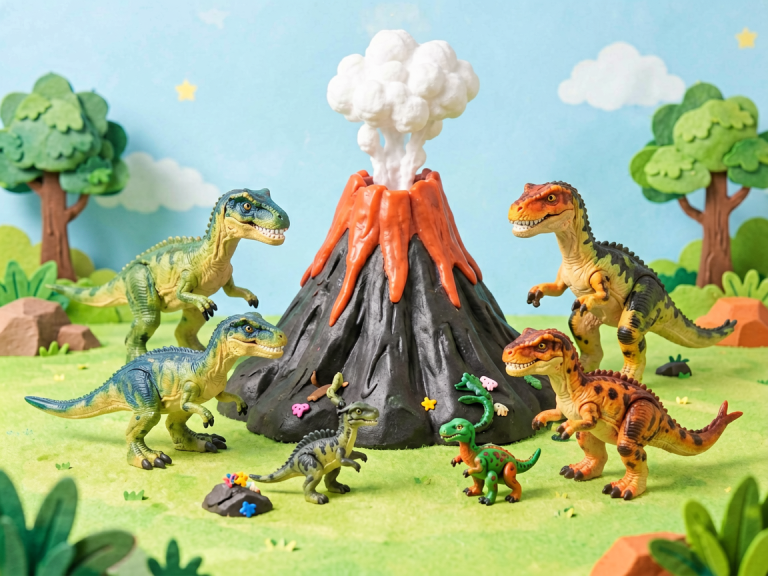
Science kits are designed with a clear pedagogical objective: to demonstrate a specific scientific concept through a step-by-step procedure. Whether it is a volcano eruption using baking soda and vinegar, a crystal-growing set, or a simple circuit-building kit, the child is guided by instructions toward a predetermined outcome. The philosophy here is that by following a process—observing, hypothesizing, executing, and analyzing results—children internalize the scientific method. This structured approach is excellent for teaching procedural knowledge and cause-and-effect relationships. For example, a chemistry kit might require the child to measure precise amounts of chemicals, mix them in a particular order, and then observe a color change. The lesson is explicit: “This is how acid-base reactions work.” The limitation, however, is that the learning is often confined to the kit’s specific experiment. Once the reaction is over, the child may not see how to apply that principle to a new, unscripted scenario.
Building Toys: Open-Ended Exploration
Building toys, in stark contrast, operate on a philosophy of open-ended creativity. A set of wooden blocks or magnetic tiles does not come with a single “correct” final product. Instead, it provides a set of components with intrinsic physical properties—weight, magnetic polarity, interlocking mechanisms—that the child can combine in infinite ways. The learning emerges organically from the act of building: a tower that keeps falling teaches stability and balance; a bridge that sags teaches tension and compression; a spinning top that wobbles teaches symmetry. There is no manual to tell the child they have failed; instead, every collapse is a data point for the next attempt. This approach fosters a growth mindset and resilience, as children learn that failure is not an end but part of the iterative design process. Moreover, building toys are inherently interdisciplinary—they touch on physics, mathematics (through geometry and symmetry), and even art and storytelling.
Cognitive and Creative Development
How Science Kits Shape the Brain
Science kits excel at developing convergent thinking—the ability to arrive at a single correct answer through logical steps. When a child follows a kit’s instructions to successfully create a working electromagnet, their brain is reinforcing pathways associated with attention to detail, sequencing, and cause-and-effect reasoning. Studies have shown that such structured activities can improve a child’s ability to follow complex instructions and enhance short-term memory. However, the downside is that science kits often leave little room for divergent thinking. The child does not have the freedom to say, “What if I change the amount of vinegar?” because the kit’s success—and the “wow” factor—depends on a specific recipe. Some modern kits try to mitigate this by including “experiment extensions,” but the core experience remains tightly scripted.
The Creative Flexibility of Building Toys
Building toys, conversely, are a powerhouse of divergent thinking. When a child picks up a handful of LEGO bricks, they face a blank canvas. They must decide what to build, how to build it, and what to do when a structural problem arises. This process activates the prefrontal cortex, which handles planning, decision-making, and flexible problem-solving. Moreover, building toys naturally integrate spatial intelligence—the ability to visualize and manipulate objects in three dimensions—which is a strong predictor of success in STEM fields, particularly engineering and architecture. Research from MIT and other institutions has demonstrated that children who engage in free-form block play develop stronger mathematical skills and better language abilities (as they narrate their creations). Unlike science kits, building toys also foster social and collaborative play. Two children building a castle together must negotiate, share ideas, and resolve conflicts—skills that science kits rarely require, as they are often solitary or adult-guided activities.
Engagement and Longevity
Science Kits: High Initial Spark, Quick Burnout
One of the most common complaints about science kits is their limited replay value. A child might be thrilled to make slime or launch a rocket, but once the experiment is complete, the kit’s components are often depleted or soiled. Many kits are single-use: the baking soda and vinegar are gone, the crystal solution is consumed, or the chemical powders are spent. Even reusable kits, like those involving microscopes or circuits, tend to have a finite number of suggested experiments. After a dozen or two activities, the novelty wears off, and the kit gets pushed to the back of a closet. This is not inherently bad—learning can happen in short bursts—but it means that science kits offer a “consumable” experience. They are excellent for a rainy afternoon or a birthday party, but less effective for sustained, long-term engagement.
Building Toys: Timeless and Reusable
Building toys, by contrast, offer virtually infinite replayability. A set of 500 LEGO bricks can be used to build a spaceship today, a medieval castle tomorrow, and a futuristic city next week. The only limit is the child’s imagination—and sometimes the number of bricks. Magnetic tiles grow more complex as the child’s skills develop; a two-year-old might simply stack them, while an eight-year-old might design a complex 3D structure with arches and cantilevers. This longevity makes building toys a better long-term investment. They also adapt to the child’s developmental stage: a toddler exploring cause and effect by knocking down a block tower is learning just as much as a pre-teen designing a motorized LEGO robot. Furthermore, building toys often encourage “remixing”: a child can combine multiple sets, integrate found objects, or even use the pieces for non-building purposes (like sorting, pattern-making, or counting). This versatility means that a well-chosen building toy can remain engaging for years.
Practical Considerations: Cost, Mess, and Space
Science Kits: Cost and Cleanup
Science kits vary widely in price, but many high-quality kits (such as those from Thames & Kosmos or National Geographic) can cost $30–$100 each. Given their limited use, the cost-per-play session can be relatively high. Additionally, many science kits are messy. Volcano kits leave a baking soda paste on the table; crystal-making kits require waiting days and can stain surfaces; chemistry kits often involve liquids that can spill. Parents should be prepared for supervised cleanup and potential stains or odors. Storage is also an issue: some kits come with many small components (test tubes, pipettes, safety goggles) that need to be organized, and once the consumable materials are used, the kit becomes a collection of random parts.
Building Toys: Upfront Investment, Long-Term Value
Building toys like LEGO, Magna-Tiles, or wooden blocks require a higher upfront investment—a good set can start at $40 and go up to $200 or more—but they rarely require replacement. The pieces are durable, washable, and reusable. They are also relatively low-mess: no powders, liquids, or sticky substances. However, they do require space. A sprawling LEGO city can take over a dining table, and keeping pieces organized is a challenge that many parents know well. But the trade-off is that building toys can be used in multiple ways: for independent play, collaborative play, or even as a tool for teaching fractions or geometry. Some newer sets incorporate technology (e.g., LEGO Boost or LEGO Mindstorms), bridging the gap between building toys and science kits by introducing programming and robotics.
Which Is Right for Your Child? A Contextual Decision
Neither category is inherently superior; the choice depends on the child’s age, temperament, and learning goals. For a child who thrives on clear instructions and enjoys the satisfaction of “doing the experiment correctly,” a science kit can provide a powerful introduction to scientific inquiry. It can also be a fantastic tool for a specific school unit—for example, a solar system kit to accompany a class on astronomy. For a child who is a tinkerer, who loves to take things apart and imagine new possibilities, building toys are likely a better fit. They offer the freedom to fail, iterate, and invent without the pressure of a predetermined outcome.
Moreover, the ideal approach may be to combine both. A child who builds a simple machine from a construction set may then use a science kit to explore the physics of gears and levers in a more structured way. The two types of toys can complement each other: building toys develop the foundational spatial and problem-solving skills, while science kits provide the formal conceptual framework. Many educators advocate for a “spiral curriculum” where children first explore through free play (building toys) and then formalize that understanding through guided experiments (science kits). For example, a child who builds a tall tower with blocks has unconsciously understood the concept of a stable base; a subsequent science kit on center of gravity can make that understanding explicit.
Conclusion
In the debate between science kits and building toys, the real winner is the child who has access to both—at the right time and in the right balance. Science kits offer a window into the disciplined, hypothesis-driven world of professional science, while building toys nurture the creative, iterative, and resilient mindset of an engineer or inventor. Both are essential for developing a well-rounded, curious, and capable young mind. The best toys are not those that teach the most facts in the shortest time, but those that inspire a child to ask “what if?” and “why not?” Science kits answer the “why” with elegance; building toys ask the “what if” with endless possibility. Together, they form a complementary toolkit for nurturing the next generation of thinkers, creators, and problem-solvers. As you consider your next purchase, think not about which toy is “better,” but about which experience your child needs most right now—and remember that the greatest learning often happens when the lines between play and science blur into a single, joyful exploration.