Science Kits vs. Building Toys: Which Sparks Better Learning and Play?
Introduction
The toy aisle today is no longer a simple choice between a doll and a car. Parents, educators, and even children themselves are increasingly confronted with a more sophisticated question: *Which is better — science kits or building toys?* Both categories promise to educate, entertain, and foster crucial developmental skills. Science kits, with their test tubes, microscopes, and chemistry sets, invite children to explore natural phenomena through structured experimentation. Building toys, from classic wooden blocks to advanced LEGO Technic or magnetic tiles, encourage construction, spatial reasoning, and open-ended engineering.
But the word “better” is inherently subjective. What works for a curious five-year-old may frustrate a ten-year-old with a knack for logic. What builds confidence in one child might stifle creativity in another. This article will dissect the two categories across multiple dimensions — educational value, creativity, skill development, cost, longevity, and adaptability — to help you decide which is superior for a given child, context, or goal. Ultimately, I argue that neither is universally better; the optimal choice depends on the child’s age, temperament, and learning stage, and that a balanced exposure to both yields the richest outcomes.
Educational Value: Structured Learning Versus Exploratory Play
Science Kits: Guided Discovery
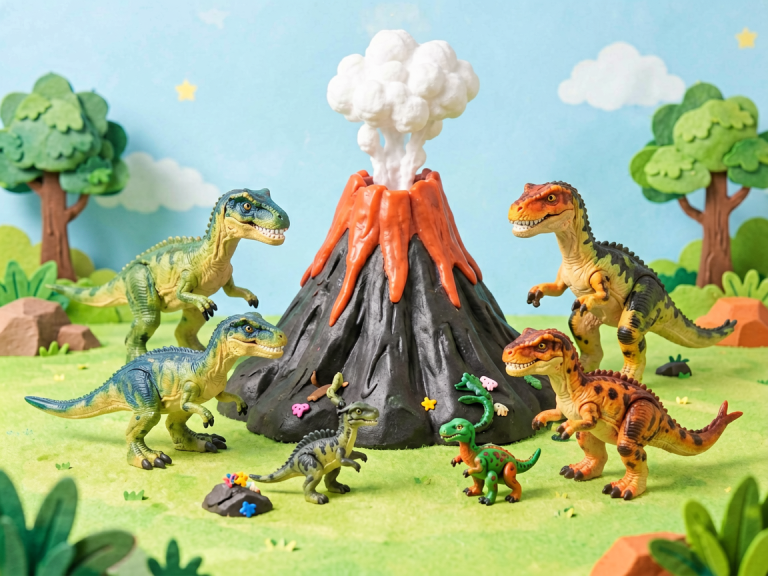
Science kits are designed with a clear pedagogical structure. They come with step-by-step instructions, pre-measured materials, and an expected outcome — a volcano that erupts, a crystal that grows, a circuit that lights a bulb. This structure is excellent for teaching procedural knowledge: how to follow directions, how to record observations, and how to understand cause-and-effect in a controlled environment. For example, a chemistry kit that combines baking soda and vinegar teaches about acid-base reactions in a memorable, hands-on way. The child learns not just the concept but the scientific method: hypothesis, experiment, observation, conclusion.
Moreover, many modern science kits incorporate STEM (Science, Technology, Engineering, Mathematics) principles explicitly. They often include booklets that explain the science behind each experiment, turning play into a mini-lesson. For parents who want to supplement school learning or introduce complex topics like physics, biology, or coding in an accessible manner, science kits are a powerful tool.
Building Toys: Open-Ended Problem Solving
Building toys, by contrast, usually lack explicit instructions. Even sets like LEGO come with step-by-step manuals, but the true value of building toys lies in what happens *after* the model is built — the dismantling, the mixing of pieces, the creation of original structures. Building toys teach *divergent thinking*. A child given a box of magnetic tiles has no single correct answer; they can build a castle, a rocket, a bridge, or an abstract sculpture. This open-endedness fosters creativity, spatial visualization, and iterative design. Children learn through trial and error: a tower falls because the base is too narrow; a bridge collapses because the weight distribution is uneven. These are lessons in physics and engineering, but learned organically, without a manual.
Research supports that constructive play with building toys improves mathematical reasoning, executive function, and even language development as children describe and negotiate their creations with peers. However, the learning is less systematic. A child might never explicitly learn the term “moment of inertia” even if they intuitively understand it while building a spinning top. So, for targeted educational outcomes, science kits may have the edge; for holistic cognitive development, building toys are formidable.
Creativity and Imagination: Boundaries Versus Freedom
Science Kits: Creativity Within Constraints
Critics often argue that science kits stifle creativity because they mandate a predetermined result. A child following a recipe for a slime kit may feel they have “created” slime, but the procedure was scripted. However, this view ignores an important nuance: constraints can inspire creativity. Many advanced science kits, such as those for electronics or robotics, allow for modifications. Once a child understands how a circuit works, they can repurpose components to build their own alarm system or light display. The creativity lies in the *application* of knowledge, not just the construction. Furthermore, scientific creativity — forming hypotheses, designing experiments, interpreting unexpected results — is a higher-order skill that kit-based play can cultivate.
That said, for very young children (ages 3–6), rigid science kits may cause frustration if the experiment fails or if the child lacks the fine motor skills to follow precise steps. In such cases, the creativity is limited to the “wow” factor of the result, not the process.
Building Toys: Infinite Possibilities
Building toys are the undisputed champions of open-ended creativity. A set of 100 wooden blocks can become a house, a spaceship, a zoo, or a math lesson in counting and symmetry. There are no wrong answers. This freedom is critical for early childhood development, as it encourages self-directed play, risk-taking, and narrative building. A child who builds a “robot” out of LEGO can then invent a story about that robot, blending engineering with imaginative play.
Building toys also scale with age. Simple interlocking bricks for toddlers give way to complex mechanical sets (like gears, pulleys, and motors) for older children. The same collection of pieces can yield new challenges year after year. For sustained creative engagement, building toys generally outperform science kits, which often lose appeal once the experiments are exhausted.
Skill Development: Hard Skills and Soft Skills
Science Kits: Fostering Analytical and Technical Skills
Science kits excel at teaching hard skills: pipetting, measuring, timing, coding (in the case of robotics kits), and understanding scientific vocabulary. They also promote patience and precision — if you add too much of one chemical, the reaction fails. This attention to detail is valuable in academic settings and future careers. Additionally, science kits often require reading comprehension (instructions are text-heavy) and basic arithmetic (mixing ratios, recording data). For children who enjoy order and predictability, science kits provide a satisfying sense of mastery.
Building Toys: Developing Spatial, Social, and Emotional Skills
Building toys build a broader range of soft skills. Spatial reasoning — the ability to visualize objects in three dimensions — is significantly improved through block play. Fine motor skills are honed through grasping, stacking, and connecting pieces. Socially, collaborative building teaches negotiation, sharing, and communication. Emotionally, children learn resilience: a tower that keeps falling teaches them to try a different approach without giving up.
Building toys also promote *systems thinking*. When constructing a marble run or a pulley system, a child must consider how each part affects the whole. This is a foundational skill for engineering and programming. In contrast, many science kits focus on isolated experiments — a single reaction or observation — rather than interconnected systems.
Age Appropriateness and Longevity
Science Kits: Age-Specific but Finite
Most science kits are marketed for narrow age ranges. A “My First Chemistry Set” for ages 4–6 contains safe, large pieces and simple activities like color mixing. But once the child masters those, the kit is essentially used up — the chemicals are consumed, the specimens are examined, the novelty fades. High-end kits, like those from Thames & Kosmos or Snap Circuits, offer multiple projects and can last for years, but eventually the child outgrows them. The consumable nature of many science kits (powders, liquids, seeds) means recurring costs for refills.
Building Toys: Scalable and Reusable
Building toys, especially non-consumable ones like LEGO, Magna-Tiles, or K’Nex, can serve a child from toddlerhood through adolescence and even adulthood. A 3-year-old stacks Duplo blocks; a 10-year-old builds a motorized crane; a 15-year-old designs a custom drone. The same pieces are repurposed for increasingly complex projects. This longevity offers excellent value for money. Furthermore, building toys encourage *iteration* — a child can return to a design months later and improve it, something science kits rarely allow.
Cost and Accessibility
Cost is a practical consideration. Good science kits are often more expensive per use than building toys. A sophisticated robotics kit might cost $80–$150 and provide 10–20 hours of structured activity. A $100 LEGO set can be built, dismantled, and rebuilt in countless ways for hundreds of hours. However, cheap science kits (like a simple volcano set) can be equally affordable. The key is to consider the *cost per engagement*. Building toys generally win on this metric.
Accessibility is another factor. Science kits may require adult supervision, especially for chemistry or electrical experiments. Some materials (e.g., small magnets, chemicals) pose safety risks for young children. Building toys, especially those with large pieces, are generally safer for independent play. For busy parents, building toys offer more freedom for the child to play alone.
Conclusion: There Is No Winner — Only the Right Match
So, which is better? The answer is not a binary choice but a spectrum. For a child who thrives on structure, whose curiosity is piqued by cause-and-effect experiments, and who benefits from explicit educational content, science kits are a fantastic investment. They provide clear goals, measurable outcomes, and a direct link to school subjects. For a child who loves to imagine, tinker, and build without constraints, building toys offer a richer, more flexible, and longer-lasting play experience. They nurture creativity, spatial intelligence, and problem-solving in a natural, self-directed manner.
The ideal approach, I believe, is to provide both. A child who builds a LEGO moon base can later use a science kit to learn about lunar gravity. A child who grows crystals can then use building toys to construct a display case. The two categories complement each other: science kits supply the *what* (knowledge of how the world works), while building toys supply the *how* (the means to apply that knowledge in imaginative ways). Parents and educators should not view this as a contest but as a toolkit. The “better” choice is the one that matches the child’s current developmental needs, interests, and temperament — and that, over the years, evolves alongside them.
In the end, the most important thing is not the type of toy but the quality of engagement. Whether a child is mixing potions or assembling a castle, they are learning, growing, and — most crucially — having fun. And that, more than any comparison, is what truly matters.