The Power of Play: Why Educational Toys Are Essential for Elementary Kids
Introduction: More Than Just Fun and Games
In an era dominated by screens and passive entertainment, the humble toy is often underestimated. Yet for elementary-aged children—those vibrant minds between the ages of six and twelve—toys are not mere distractions. They are the tools through which children explore the world, test hypotheses, develop social skills, and build the cognitive architecture that will support lifelong learning. Educational toys, in particular, serve a dual purpose: they entertain while simultaneously teaching foundational concepts in science, mathematics, language, and critical thinking. This article explores the transformative role of educational toys for elementary kids, examining their benefits, key categories, selection criteria, and the science behind their effectiveness.
The Developmental Landscape of Elementary-Aged Children
Before diving into the toys themselves, it is crucial to understand who these toys are for. Elementary school children are in a period of rapid cognitive and social development. According to Jean Piaget's theory of cognitive development, children aged seven to eleven typically enter the concrete operational stage. They begin to think logically about concrete events, understand the concept of conservation, and grasp cause-and-effect relationships. They are also developing executive function skills such as planning, organizing, and self-regulation. Socially, they move from parallel play to cooperative play, learning to share, negotiate, and work in teams.
Educational toys designed for this age group must therefore bridge the gap between concrete hands-on experiences and increasingly abstract concepts. A simple building block set, for example, can teach geometry, balance, and engineering principles, while a board game can reinforce turn-taking, strategy, and number recognition. The best toys do not merely deliver information; they invite children to discover it for themselves.
Why Educational Toys Matter: Cognitive and Non-Cognitive Benefits
The benefits of educational toys extend far beyond academic preparedness. Research in developmental psychology and neuroscience consistently shows that play is the primary vehicle for learning in childhood. Here are some of the most significant advantages.
Cognitive Development
Educational toys stimulate multiple areas of the brain simultaneously. For instance, a construction kit like LEGO or magnetic tiles requires spatial reasoning, planning, and fine motor control. When a child builds a tower and it falls, they learn about gravity and stability—not through a textbook, but through direct experience. Puzzles enhance problem-solving and pattern recognition. Science kits introduce the scientific method: ask a question, form a hypothesis, conduct an experiment, observe results, and draw conclusions. These hands-on activities create neural connections that are far more robust than those formed by passive learning, such as watching a video.
Language and Literacy Skills
Many educational toys are designed to build vocabulary and comprehension. Word games, storytelling cards, and phonics puzzles help children recognize letter sounds, spell common words, and construct sentences. Board games that require reading instructions or answering trivia questions naturally encourage literacy. Moreover, when children play together, they engage in dialogue, negotiate rules, and explain their reasoning—all of which strengthen oral language skills.
Social and Emotional Growth
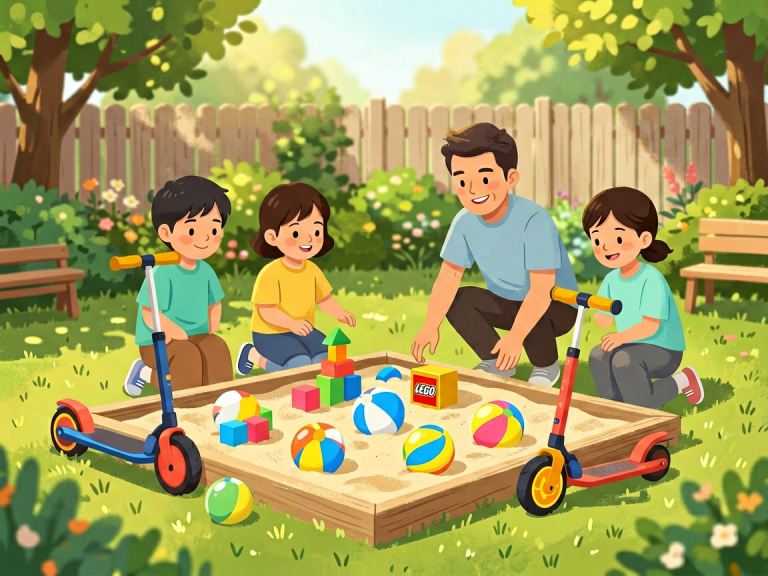
Playing with educational toys often involves collaboration. A group of children building a marble run or solving a complex puzzle must communicate, share resources, and resolve conflicts. These interactions teach empathy, patience, and the value of compromise. Similarly, toys that require turn-taking (like many board games) help children manage frustration and delay gratification. For a child who loses a game, the experience of losing gracefully is a crucial emotional lesson that cannot be taught through direct instruction.
Creativity and Imagination
Contrary to the misconception that educational toys are rigid or didactic, many of them actively foster creativity. Open-ended toys—such as building blocks, art supplies, or programmable robots—have no single correct answer. A set of wooden blocks can become a castle, a spaceship, or a farm. A robotics kit can be assembled in countless configurations. This type of play encourages divergent thinking, the ability to generate multiple solutions to a problem, which is a hallmark of creative intelligence.
Key Categories of Educational Toys for Elementary Kids
Not all educational toys are created equal. The most effective ones align with a child's developmental stage and interests. Below are some of the most impactful categories.
STEM and Engineering Toys
STEM (Science, Technology, Engineering, Mathematics) toys have gained enormous popularity in recent years, and for good reason. They demystify complex subjects and make them accessible. Examples include:
- Building Sets: LEGO Classic, K’Nex, Magna-Tiles, and wooden block sets. These teach geometry, balance, and structural integrity.
- Circuit Kits: Snap Circuits or LittleBits allow children to create working circuits, switches, and even simple radios. They introduce electricity in a safe, hands-on way.
- Robotics Kits: Products like LEGO Mindstorms, Sphero, or Dash & Dot let children program robots to move, sense, and react. They teach coding logic, sequencing, and debugging.
- Microscopes and Science Kits: Child-friendly microscopes, crystal-growing kits, and volcano eruption sets make biology and chemistry tangible.
Language and Literacy Toys
These toys target reading, writing, and vocabulary development.
- Phonics Games: Zingo! Word Builder, Bananagrams, and alphabet puzzles help with letter-sound correspondence.
- Storytelling Kits: Story Cubes or magnetic storyboards encourage children to create and narrate their own tales, building narrative skills.
- Board Games with Reading Components: Scrabble Junior, Boggle, or Trivial Pursuit for kids promote word recognition and spelling in a fun context.
Mathematics and Logic Toys
Math anxiety often begins in elementary school, but playful exposure can prevent it.
- Math Manipulatives: Cuisenaire rods, base-ten blocks, and fraction tiles help children visualize abstract numerical concepts.
- Number Games: Sum Swamp, Math Dice, and Race to 10 reinforce addition, subtraction, and multiplication facts.
- Logic Puzzles: Rush Hour, Gravity Maze, and Sudoku for kids develop deductive reasoning and spatial intelligence.
Creative and Open-Ended Toys
These toys have no predetermined outcome, making them ideal for fostering imagination.
- Art Supplies: High-quality crayons, clay, watercolor paints, and drawing tablets encourage self-expression.
- Dress-Up and Role-Play: Costumes, puppets, and play kitchens allow children to enact scenarios, building social understanding and empathy.
- Construction Material: Loose parts like popsicle sticks, cardboard, and tape can be transformed into anything a child imagines.
Cooperative and Social Games
Unlike competitive games, cooperative toys require players to work together toward a common goal.
- Cooperative Board Games: Outfoxed!, Castle Panic, and The Game of Life Junior (cooperative mode) teach teamwork and shared decision-making.
- Team-Building Activities: Coding games like Robot Turtles or building challenges like "Can you build a bridge that holds ten coins?" promote collaboration.
How to Choose the Right Educational Toys for Your Child
With so many options available, parents and educators may feel overwhelmed. The following criteria can guide selection.
Age Appropriateness
Always check the manufacturer's age recommendation. A toy that is too advanced can frustrate a child, while one that is too simple can bore them. For elementary kids, look for toys that challenge without causing excessive frustration. The "Goldilocks" principle applies: not too hard, not too easy, but just right.
Alignment with Interests
A child who loves dinosaurs will be more engaged with a dinosaur-themed paleontology kit than with a generic chemistry set. Observe what naturally excites your child—animals, machines, art, sports—and choose toys that connect to those passions. Intrinsic motivation is the strongest driver of deep learning.
Open-Endedness vs. Specificity
Some toys, like puzzles, have a clear endpoint. Others, like building blocks, have infinite possibilities. A balanced collection should include both. Closed-ended toys teach persistence and goal achievement; open-ended toys teach creativity and flexibility.
Quality and Durability
Children at this age are active and sometimes rough. Cheap plastic toys that break easily lead to frustration. Invest in well-made toys from reputable brands. Wooden toys, metal parts, and sturdy plastic can withstand years of use. Additionally, consider whether the toy can be used in multiple ways over time.
Screen-Free Engagement
While some educational apps and digital games have value, screen-based play often lacks the tactile, sensory feedback that hands-on toys provide. Whenever possible, prioritize analog toys that require physical manipulation. The act of touching, holding, and moving objects is critical for fine motor development and spatial understanding.
Social Potential
Toys that can be played with alone are fine, but those that naturally invite collaboration are even better. Board games, building sets large enough for two or more children, and outdoor equipment all encourage social interaction. In an age of increasing social isolation, face-to-face play is invaluable.
The Role of Parents and Educators: Facilitating Meaningful Play
Even the best educational toy will not teach effectively if it is simply handed to a child without guidance. Adults play a crucial role in scaffolding the learning experience. Here are some practical strategies.
Play Along Without Taking Over
Join your child in their play, but let them take the lead. Ask open-ended questions: "What do you think will happen if we add another block here?" or "How could we make this structure taller?" Such questions prompt critical thinking without giving direct answers.
Create a Rich Play Environment
Designate a play area with easy access to a variety of educational toys. Rotate toys periodically to maintain novelty. Keep the area organized so children can find what they need and put things away independently.
Connect Play to Real-World Learning
If your child builds a bridge with blocks, take them outside to see a real bridge and discuss how it works. If they play a math game, point out how the skills they used are useful when counting money or measuring ingredients. These connections make learning relevant.
Embrace Mistakes as Learning Opportunities
When a tower collapses or a robot doesn't move as planned, resist the urge to fix it immediately. Instead, say, "That didn't work. What could we try differently?" This cultivates a growth mindset and resilience—qualities that are far more valuable than any single correct answer.
Conclusion: Investing in the Future Through Play
Educational toys for elementary kids are not a luxury; they are a necessity. In a world that demands creativity, critical thinking, and collaboration, the skills developed through purposeful play are exactly what children need to thrive. From building blocks that teach physics to board games that foster social skills, these tools lay the foundation for a lifetime of curiosity and learning. Parents, educators, and caregivers should carefully select toys that are age-appropriate, aligned with children’s interests, and designed to encourage exploration rather than passive consumption. By investing in quality educational toys and, more importantly, by participating in the play ourselves, we give children the greatest gift: the understanding that learning is not a chore but an adventure. And that adventure begins with a toy.