The Timeless Power of Play: Why Screen-Free Toys Are Essential for 3-Year-Olds
Introduction: The Case for Unplugged Play
In an age where digital devices have become ubiquitous, even toddlers are often handed tablets or smartphones to keep them occupied. Yet a growing body of research in early childhood development underscores a crucial truth: for three-year-olds, screen-free toys are not merely an alternative to technology—they are essential for healthy cognitive, social, emotional, and physical growth. At the age of three, children are in a period of extraordinary brain plasticity, where every sensory experience, every hands-on interaction, and every imaginative leap wires the neural pathways that will support learning for the rest of their lives. Screen-based entertainment, while sometimes convenient, tends to be passive and one-dimensional. It offers pre-packaged stimuli that leave little room for creativity, problem-solving, or the kind of repetitive, exploratory play that young children naturally crave. This article explores the profound benefits of screen-free toys for three-year-olds, categorizes the most impactful types, and offers practical guidance for parents and caregivers who wish to enrich their child’s play environment.
The Cognitive Benefits: Building Brains Through Hands-On Exploration
Three-year-olds are at the peak of what developmental psychologists call the “sensorimotor” and “preoperational” stages. Their understanding of the world is built not through passive observation but through active manipulation. Screen-free toys that require physical engagement—such as building blocks, puzzles, and nesting cups—provide exactly this kind of learning.
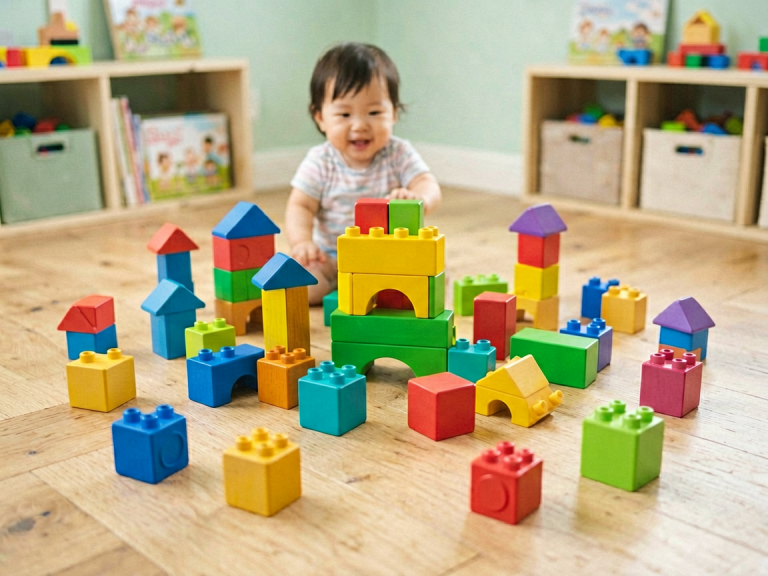
Building blocks, for instance, are deceptively simple. When a three-year-old stacks a tower and watches it tumble, they are not just having fun—they are internalizing concepts of gravity, balance, cause and effect, and spatial relationships. Each attempt to rebuild strengthens fine motor control and hand-eye coordination. Unlike a digital game that corrects a mistake instantly, physical blocks demand patience and persistence. This process cultivates executive function skills: the ability to plan, focus attention, and regulate emotions when things do not go as expected.
Puzzles offer similarly rich cognitive rewards. A simple wooden puzzle with large, chunky knobs challenges a three-year-old to recognize shapes, colors, and patterns, and to practice the mental rotation of objects. It also introduces the concept of trial and error in a safe, tangible way. When a piece does not fit, the child must mentally adjust their approach—an early lesson in flexible thinking. Research has shown that such hands-on problem-solving activities are far more effective at developing logical reasoning than any app designed for the same purpose.
Social and Emotional Growth: Learning to Connect and Regulate
Screen-free toys are powerful tools for social development. At three, children are beginning to engage in parallel play and early cooperative play. Toys that are inherently social—such as play kitchens, dollhouses, train sets, and simple board games—encourage turn-taking, sharing, and negotiation. When two three-year-olds push a toy car back and forth, they are practicing the rudiments of conversation and empathy. When they argue over who gets the red block, they learn to manage frustration and articulate their desires verbally—skills that no screen can teach.
Moreover, screen-free play promotes emotional regulation. Digital media often overstimulates children with rapid scene changes and loud sounds, which can lead to meltdowns when the device is taken away. In contrast, a quiet activity like threading large beads onto a string or sorting colored stones into a muffin tin has a calming, almost meditative effect. These toys allow children to control the pace of their own play, which builds self-soothing abilities and a sense of agency. A child who builds a tower from magnetic tiles feels a genuine sense of accomplishment—not the hollow dopamine hit from a digital reward—and this intrinsic motivation is the foundation of healthy self-esteem.
Motor Skills and Physical Development: The Body as the Primary Learning Tool
Three-year-olds are constantly refining their gross and fine motor skills. Screen-free toys that require movement are far superior to any digital substitute. For gross motor development, think of push-and-pull toys, tricycles, balance bikes, or even a simple cardboard box that becomes a fort, a spaceship, or a sled. These activities strengthen core muscles, improve balance, and develop proprioception—the body’s awareness of its own position in space. A child who climbs, jumps, and crawls is wiring their vestibular system, which is directly linked to attention and impulse control later in life.
Fine motor skills, critical for writing and self-care, are best honed through toys that demand precise finger movements. Lacing cards, play dough, crayons and paper, pop beads, and simple construction sets like Duplo offer endless opportunities for pincer grasp development. Play dough, in particular, is a sensory powerhouse: squeezing, rolling, pinching, and flattening it strengthens the small muscles of the hand while providing calming tactile input. Unlike a touchscreen, which requires only a light tap, play dough requires actual force and dexterity—a workout for the developing hand.
Creativity and Imagination: The Open-Ended Advantage
Perhaps the greatest gift of screen-free toys is their capacity to spark open-ended imagination. In digital games, the storyline and rules are predetermined. The child follows a script. But a set of wooden blocks, a pile of leaves, a collection of scarves, or a simple wooden train track can become anything. A three-year-old can use a cardboard tube as a telescope, a microphone, or a tunnel for toy cars. This kind of symbolic play is the cornerstone of creativity and abstract thinking.
Open-ended toys—those that have no single correct use—are especially valuable. Think of loose parts: fabric scraps, pinecones, corks, bottle caps, ribbons, and small bowls. When combined with a dollhouse or a toy barn, these objects become food, bedding, treasure, or currency. The child is the director of their own narrative. This is where language flourishes: a child playing with a toy farm will narrate what the cow is eating, how the tractor is driving, and why the sheep is sad. Each scenario builds vocabulary, storytelling ability, and theory of mind—the understanding that others have thoughts and feelings different from one’s own.
Practical Recommendations for Choosing Screen-Free Toys
Not all screen-free toys are equal. For three-year-olds, the best toys are those that are safe, durable, and appropriate for their developmental stage. Here are key criteria:
- Safety first: Avoid small parts that pose choking hazards. All toys should be made of non-toxic materials, with no sharp edges.
- Open-endedness: Prioritize toys that can be used in multiple ways. A set of basic wooden unit blocks is far more valuable than a single-purpose electronic toy.
- Sensory richness: Look for toys that offer varied textures, sounds, weights, and colors. Wood, fabric, metal, and natural materials are often better than plastic.
- Simplicity: Avoid toys with batteries, flashing lights, or recorded sounds. The child’s own creativity should be the engine of the play.
- Encouragement of movement: Toys that require the child to stand, reach, bend, or walk are better than those that keep them seated passively.
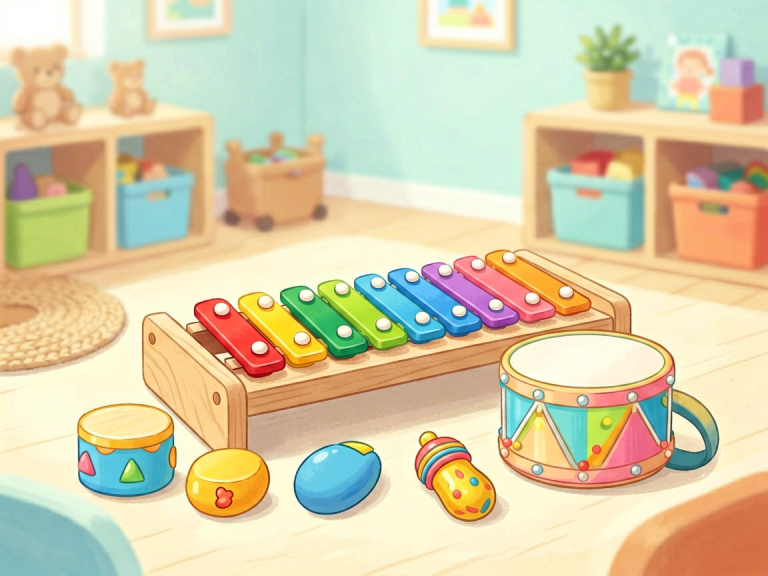
Specific recommendations include: a set of basic wooden blocks (e.g., unit blocks or Kapla planks), a wooden train set with magnetic cars, a play kitchen with simple pots and wooden food, a set of chunky wooden puzzles, play dough (homemade is best), lacing beads, a child-sized broom and dustpan (for imitative play), a doll or stuffed animal with removable clothing, a simple musical instrument like a xylophone or shaker eggs, and a collection of loose parts stored in a low shelf where the child can access them independently.
Conclusion: A Call to Unplug and Engage
Choosing screen-free toys for a three-year-old is not about depriving them of modern technology; it is about giving them the richest possible foundation for the future. The toddler years are a once-in-a-lifetime window for hands-on, sensory-rich, and socially embedded learning. In a world that often pushes children toward passive consumption, parents and caregivers have both the opportunity and the responsibility to curate an environment that celebrates active creation. When we offer a child a set of blocks instead of a tablet, we are not just handing them a toy—we are giving them permission to build, to fail, to try again, to imagine, and to grow. The clatter of wooden blocks hitting the floor is the sound of a brain building itself. And that is a soundtrack far more valuable than any digital lullaby.
*Word count: approximately 1,050 words.*