Screen-Free vs. App-Based Toys: Which Path Best Nurtures Childhood Development?
Introduction
In today’s digital age, the toy aisle has become a battlefield between two distinct philosophies: the tactile, imagination-driven world of screen-free toys, and the interactive, algorithm-fueled universe of app-based toys. Parents, educators, and child development experts are increasingly divided over which type of plaything best supports a child’s cognitive, social, and emotional growth. While app-based toys promise personalized learning and endless engagement, screen-free toys champion open-ended creativity, hands-on problem-solving, and unfiltered human interaction. This article offers a balanced, evidence-informed exploration of both categories, comparing their merits and drawbacks to help caregivers make thoughtful decisions for the children in their lives. The stakes are high: the toys children play with today shape the neural pathways, habits, and values they carry into adulthood.
The Case for Screen-Free Toys: Unplugged Creativity and Real-World Skills
Fostering Open-Ended Imagination and Problem-Solving
Screen-free toys—such as wooden blocks, building sets, dolls, art supplies, puzzles, and board games—do not come with pre-programmed narratives or digital instructions. A pile of LEGO bricks can become a castle, a spaceship, or a dinosaur hospital, depending solely on the child’s imagination. This open-ended quality is crucial for developing what psychologists call “divergent thinking,” the ability to generate multiple solutions to a single problem. When a child builds a tower that keeps falling, they must experiment with balance, symmetry, and weight distribution independently—without a screen telling them the “correct” answer. Such trial-and-error experiences cultivate resilience, patience, and a growth mindset. Research published in the journal *Pediatrics* has consistently linked unstructured play with improved executive function skills, including self-regulation and cognitive flexibility.
Encouraging Physical Activity and Sensory Development
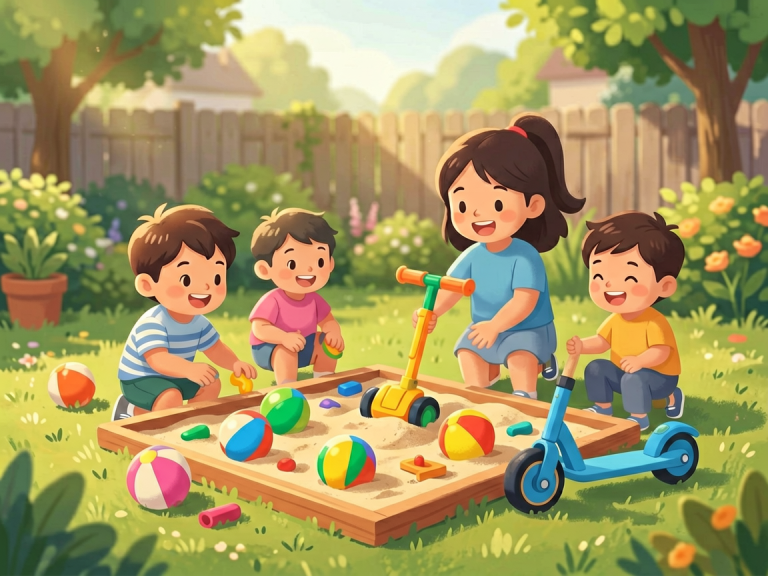
Many screen-free toys require gross and fine motor skills. Stringing beads, stacking rings, molding clay, or assembling a wooden train track all involve hand-eye coordination, tactile feedback, and spatial awareness. Unlike swiping a tablet, these activities engage multiple senses simultaneously—the weight of a block, the texture of a felt ball, the sound of a wooden car rolling across the floor. This multisensory input is particularly important for children under six, whose brains are rapidly forming neural connections through physical exploration. Furthermore, outdoor screen-free toys like jump ropes, bicycles, and sand tables promote vigorous physical activity, combating the sedentary habits that often accompany screen-based play. The World Health Organization recommends that children aged 3–4 should spend no more than one hour per day on sedentary screen time and should engage in at least 180 minutes of physical activity—a goal that screen-free toys naturally support.
Strengthening Social Bonds and Emotional Intelligence
When children play with screen-free toys together, they must negotiate rules, share resources, and read nonverbal cues. A simple game of pretend play with dolls or action figures becomes a laboratory for empathy: children assign roles, resolve conflicts, and practice taking turns. Board games, in particular, teach sportsmanship—how to win gracefully and lose with dignity. These interactions are fundamentally different from the isolated, headphone-wearing experience of an app-based game. A 2019 study from the University of Cambridge found that children who engaged in more traditional, unstructured play showed superior social competence and lower rates of anxiety compared to peers whose play was dominated by digital devices. Screen-free toys do not pause or offer hints; they demand that children talk, listen, and adapt in real time.
The Allure of App-Based Toys: Digital Engagement and Personalized Learning
Adaptive Learning and Immediate Feedback
App-based toys—such as interactive tablets with educational apps, smart robots, and coding games—leverage artificial intelligence to tailor experiences to a child’s skill level. For example, a reading app might automatically adjust difficulty based on the child’s performance, offering extra practice on specific letter sounds while advancing quickly through mastered concepts. This personalized scaffolding can be highly effective for academic skills like phonics, mathematics, and logic. A meta-analysis published in *Review of Educational Research* found that well-designed educational apps produced moderate to large gains in children’s early literacy and numeracy when used in moderation. The instant feedback—correct answers rewarded with stars, sounds, or animations—can also boost motivation, especially for children who struggle with traditional worksheets.
Introducing Digital Literacy and Future-Ready Skills
We live in a world where digital competence is non-negotiable. App-based toys can serve as an early introduction to technology, teaching children how to navigate interfaces, follow on-screen instructions, and understand cause-and-effect relationships in a digital environment. Some toys, like programmable robots (e.g., Sphero or Bee-Bot), explicitly teach the basics of coding and computational thinking. These skills are increasingly valued in school curricula and later careers. Moreover, app-based toys often include multimedia elements—animations, songs, voiceovers—that can captivate a child’s attention longer than a static puzzle. For children with certain learning differences, such as autism spectrum disorder, some carefully selected apps provide visual schedules and social stories that are difficult to replicate with physical toys alone.
Potential Pitfalls: Overstimulation, Passivity, and Screen Time Concerns
Despite these benefits, app-based toys come with significant risks. Many apps are designed using behavioral reinforcement techniques—rewards, variable schedules, and “loot boxes”—that can foster compulsive use. A child may tap away at a math game for an hour but learn only superficially because the game prioritizes engagement over deep understanding. Furthermore, app-based toys often reduce the need for physical manipulation and social interaction. A child learning to spell on a tablet may lack the fine-motor practice of writing letters with a crayon. The American Academy of Pediatrics warns that excessive screen time in early childhood is associated with language delays, reduced attention spans, and poorer sleep quality. Not all app-based toys are equal, however; the key lies in selecting high-quality, ad-free, and open-ended apps that encourage creativity rather than passive consumption.
Comparative Analysis: Cognitive, Social, and Physical Development
Cognitive Growth: Depth vs. Breadth
Screen-free toys tend to promote deep, sustained concentration. A child building a complex bridge with magnetic tiles must hold a mental model, monitor progress, and adjust strategies over an extended period. This deep engagement supports “executive attention” and working memory. In contrast, app-based toys often cycle through quick stimuli—new images, sounds, and challenges—which can train the brain to seek novelty but may hinder the ability to focus on a single task for long. However, some high-quality apps encourage deep thinking (e.g., puzzle games like Monument Valley for older children). The difference is one of design intention: screen-free toys are inherently open-ended, while apps require deliberate curation to avoid surface-level interaction.
Social Development: Face-to-Face vs. Mediated Interaction
Screen-free toys thrive in group settings. A set of play kitchen utensils invites children to role-play sharing meals, cleaning up, and cooperating. These scenarios build theory of mind—the understanding that others have different thoughts and feelings. App-based toys, even those with multiplayer modes, often lack the rich nonverbal communication of face-to-face play. A child might compete in an online math race but never see the other player’s body language or hear the tone of voice. That said, some app-based toys can be used collaboratively, such as co-creating digital art on a shared tablet. The parent’s role in mediating usage is critical: when a parent sits beside a child and talks through the app’s content, the toy becomes a tool for joint engagement rather than a babysitter.
Physical Health: Active vs. Sedentary
Here the contrast is stark. Screen-free toys inherently encourage movement—whether it’s crawling after a ball, building with blocks on the floor, or jumping during a game of hopscotch. App-based toys, by their nature, tether a child to a stationary position, often for prolonged periods. Studies have linked increased screen time to childhood obesity, poor posture, and eye strain. The blue light emitted from screens can also disrupt melatonin production, affecting sleep. Screen-free toys do not pose these risks. However, some app-based toys incorporate physical activity through motion sensors (e.g., dance games on a tablet that require the child to move). These are the exception rather than the rule, and they often still demand less total movement than traditional active play.
Finding the Balance: A Holistic Approach for Modern Families
Age-Appropriate Recommendations
For infants and toddlers (ages 0–3), the consensus among pediatricians is clear: screen-free toys are optimal. Sensory toys, soft blocks, stacking rings, and musical shakers support the rapid brain development of this stage. The American Academy of Pediatrics recommends avoiding all screen time for children under 18 months, except for video calls. For preschoolers (ages 3–5), limited, co-viewed use of high-quality educational apps can supplement hands-on play, but the majority of playtime should still be screen-free. For school-age children (ages 6–12), a balanced schedule might include 30–60 minutes of supervised app-based learning alongside free play with construction sets, board games, and outdoor equipment. The goal is not to demonize digital toys but to ensure they do not displace essential real-world experiences.
Practical Strategies for Parents
Parents can adopt several strategies to integrate both types of toys wisely. First, establish clear screen-time boundaries (e.g., no screens during meals or before bed). Second, prioritize app-based toys that are open-ended—for example, a drawing app that allows free creation rather than a game with predefined outcomes. Third, use app-based toys as a starting point for offline activities: after playing a geology app, go outside and collect rocks to classify. Fourth, model balanced behavior: children learn from observing their parents. If a parent is constantly on a phone, a child will see screens as the default. Finally, rotate toys regularly to maintain novelty and interest across both categories.
The Irreplaceable Value of Unstructured Play
No matter how sophisticated app-based toys become, they cannot replicate the profound developmental benefits of true unstructured play. A child who digs in the dirt creates their own narrative. A child who argues over a board game learns negotiation. A child who builds a fort from blankets solves a spatial problem with no digital assistance. These experiences build a foundation of agency, creativity, and interpersonal skill that no algorithm can substitute. Screen-free toys are not a nostalgic preference; they are a cognitive and emotional necessity. Yet app-based toys, used judiciously, can enrich that foundation by offering tools for learning that were unimaginable a generation ago.
Conclusion
The debate between screen-free toys and app-based toys is not a binary choice but a spectrum of possibilities. Each category has distinct strengths and limitations, and the wisest approach depends on the child’s age, temperament, developmental needs, and the family’s values. Screen-free toys excel at fostering deep creativity, physical activity, and authentic social interaction—qualities that are becoming alarmingly rare in an increasingly digitized world. App-based toys offer personalized learning, exposure to digital literacy, and engagement with interactive feedback that can motivate some children to persist in academic tasks. The healthiest childhood environment is one that combines both—but with careful intention. Parents must act as gatekeepers, curating a toy ecosystem that prioritizes hands-on exploration, human connection, and ample time outdoors, while leveraging digital tools as supplements rather than substitutes. In the end, the best toy is not the one with the flashiest screen or the most sensory features, but the one that invites a child to ask, “What if?”—and then gives them the space to discover the answer for themselves.