The Power of Play: How Learning Toys Shape the Minds of Preschoolers
—
Introduction: Beyond Entertainment
In the bustling world of early childhood, play is not merely a pastime—it is the primary lens through which preschoolers learn, explore, and make sense of their environment. Among the myriad tools that facilitate this process, learning toys stand out as carefully designed instruments that blend fun with foundational skill-building. For parents, educators, and caregivers, understanding the profound impact of these toys is essential. While a simple wooden block may appear unremarkable, in the hands of a three-year-old it becomes a bridge to spatial reasoning, creativity, and problem-solving. This article delves into the multifaceted roles that learning toys play in preschooler development, exploring cognitive, social, emotional, and motor benefits, and offering practical guidance on selecting the most effective toys for this critical age.
Learning toys for preschoolers are not one-size-fits-all. They range from shape sorters and puzzles to building sets, art supplies, and electronic interactive devices. Each category targets specific developmental milestones, and when chosen thoughtfully, they can transform playtime into a rich learning experience. Research in developmental psychology consistently underscores that the first five years of life are a period of rapid neural growth. During this window, the brain forms connections at an astonishing rate, and the quality of stimulation—including the toys children interact with—can significantly influence cognitive architecture. Therefore, investing in high-quality learning toys is an investment in a child's future curiosity, resilience, and academic readiness.
—
Cognitive Development: Building Blocks of the Mind
One of the most immediate benefits of learning toys is their ability to enhance cognitive skills. Preschoolers are naturally inquisitive, constantly asking “why” and “how.” Toys that encourage exploration and experimentation satisfy this curiosity while teaching cause and effect, classification, and sequencing.
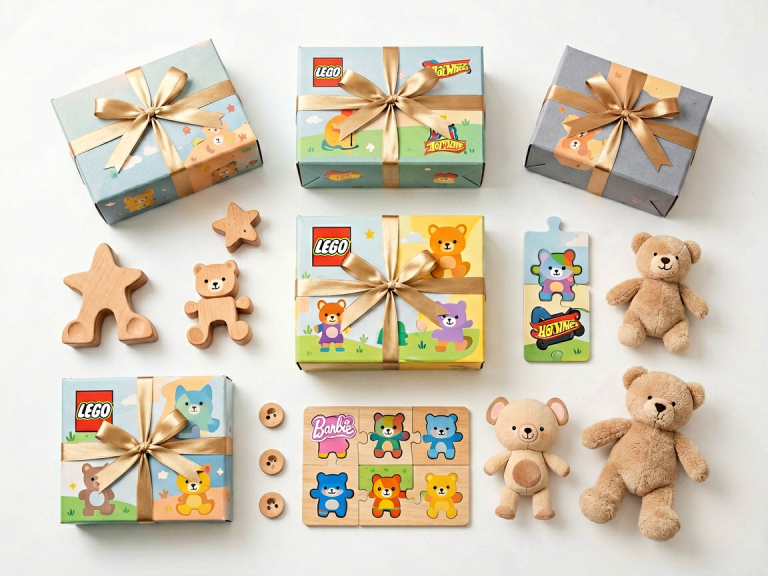
Take, for example, simple wooden puzzles. When a child attempts to fit a piece into the correct slot, they are not just playing—they are engaging in visual-spatial reasoning, pattern recognition, and fine motor coordination. Each failed attempt teaches persistence and problem-solving. Similarly, stacking rings or nesting cups introduce concepts of size, order, and gravity. These fundamental cognitive exercises lay the groundwork for later mathematical and scientific thinking.
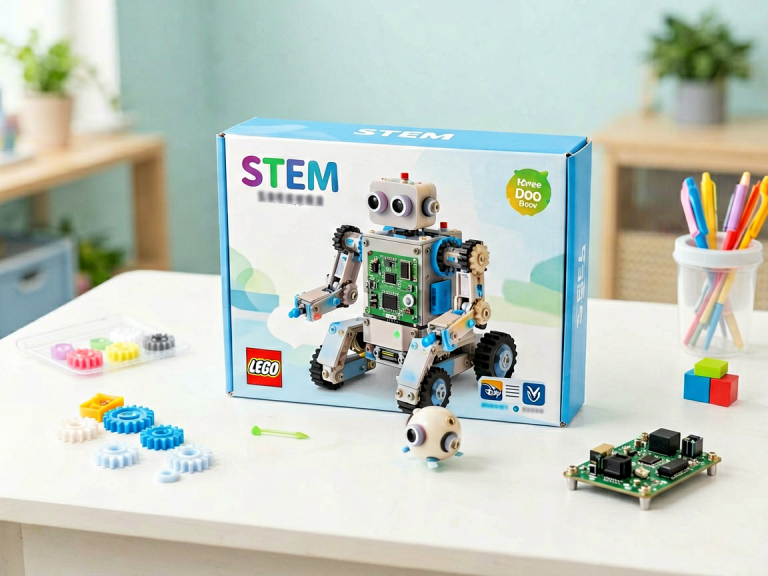
More complex toys, such as magnetic tiles or interlocking bricks, allow children to build three-dimensional structures. This process requires planning, balance, and symmetry. A preschooler who builds a tower must consider stability, count pieces, and visualize the final outcome. Such activities strengthen executive functions—the mental skills that include working memory, flexible thinking, and self-control. According to a study published in the journal *Early Childhood Research Quarterly*, children who regularly engage with construction toys demonstrate higher levels of spatial ability, which is a strong predictor of future achievement in STEM fields.
Furthermore, language-rich toys like alphabet puzzles, storytelling cards, or interactive talking books expand vocabulary and phonemic awareness. When a toy says “A is for apple,” the child not only hears the letter name but also associates it with a visual image and a sound. This multisensory reinforcement is crucial for reading readiness. In a digital age, some parents worry about screen time, but well-designed electronic learning toys—those that require active participation rather than passive viewing—can be beneficial. Tablets with age-appropriate apps that teach letter tracing or number recognition, for instance, offer personalized feedback and motivate children through gamification.
—
Social and Emotional Growth: Learning to Relate and Regulate
While cognitive skills often dominate discussions of learning toys, their contribution to social and emotional development is equally vital. Preschool is a time when children begin to navigate relationships, manage emotions, and understand perspectives beyond their own. Many learning toys are designed specifically to foster these interpersonal skills.
Board games, for example, teach turn-taking, patience, and graceful winning or losing. A simple game of “Candy Land” or “Chutes and Ladders” requires children to wait for their turn, follow rules, and cope with disappointment when they slide down a chute. These experiences are microcosms of real-world social interactions. Cooperatives games—where players work together toward a common goal—are especially powerful. They encourage teamwork, communication, and shared decision-making. A child who learns to say “Let’s try this strategy” or “You go first” is building essential collaboration skills that will serve them in school and beyond.
Role-playing toys, such as kitchen sets, doctor kits, or dress-up costumes, allow children to experiment with different identities and scenarios. When a preschooler pretends to be a doctor examining a stuffed animal, they are practicing empathy and nurturing behaviors. They learn to ask questions, offer comfort, and solve problems—“What does the puppy need to feel better?” This type of imaginative play also helps children process their own experiences and emotions. For instance, a child who has recently visited the hospital might reenact the visit to gain a sense of control and understanding.
Emotional regulation is another area where learning toys can have a profound effect. Sensory toys, such as stress balls, fidget spinners, or textured mats, provide calming input for children who are overwhelmed or anxious. For preschoolers who struggle with big feelings, a “calm-down jar” filled with glitter and water can serve as a visual tool to breathe and focus while watching the glitter settle. These toys do not solve emotional challenges on their own, but they offer a constructive outlet and a moment of pause. When used with guidance from an adult, they become part of a larger toolkit for self-regulation.
—
Motor Skills: From Grasping to Grasping Concepts
Physical development in preschoolers involves both gross motor skills (large movements like running and jumping) and fine motor skills (small movements like gripping and manipulating objects). Learning toys target both, and improvements in these areas often go hand-in-hand with cognitive gains.
Gross motor toys such as balance beams, tricycles, or play tunnels encourage whole-body coordination and strength. A child learning to pedal a tricycle must coordinate leg movements with steering and balance—a complex task that builds neural pathways for multitasking. Similarly, hopping on a small trampoline or dancing to music with a toy microphone enhances rhythm and body awareness.
Fine motor toys, however, are arguably more directly linked to academic readiness. Activities like threading beads onto a string, using tweezers to pick up pom-poms, or turning the pages of a board book require precise hand-eye coordination. These skills are prerequisites for writing, drawing, and using scissors. Lacing cards, for example, not only teach a pattern but also strengthen the small muscles in a child’s hand that will later grip a pencil. Building with small blocks or assembling LEGO Duplo pieces demands pincer grip and finger dexterity. Occupational therapists often recommend such toys for children who are developing their fine motor skills at a slower pace.
Art supplies represent another rich category. Crayons, markers, playdough, and scissors allow preschoolers to create while strengthening hand muscles. The act of squeezing a playdough ball, rolling it into a snake, or cutting along a line is both creative and therapeutic. Moreover, creating art helps children express emotions that they may not yet have the words for. A child who draws a big red circle might be conveying anger, or simply exploring color. The adult’s role is to observe and ask open-ended questions rather than direct the outcome.
—
Choosing the Right Learning Toys: A Practical Guide
With countless learning toys on the market, selecting the right ones can be overwhelming. The best toys are not necessarily the most expensive or technologically advanced; they are the ones that align with a child’s developmental stage and interests. Here are key principles to consider:
Age-appropriateness is paramount. Toys labeled for ages 3–5 are designed with safety and complexity in mind. A toy that is too advanced will frustrate a child, while one that is too simple will bore them. Look for toys that offer a “just right” challenge—something the child can mostly do on their own but with a small stretch that encourages growth.
Open-endedness is another hallmark of high-quality learning toys. Unlike single-purpose toys that dictate a specific outcome (e.g., a toy phone that only makes one sound), open-ended toys like blocks, playdough, or art materials can be used in countless ways. They spark imagination and allow children to take the lead. A cardboard box can become a spaceship, a cave, or a car—far more valuable than a plastic spaceship with limited features.
Safety must always be non-negotiable. Check for non-toxic materials, no small parts that could be choking hazards, and sturdy construction. The American Academy of Pediatrics recommends avoiding toys with loud noises that could damage hearing and ensuring that any electronic toys have secure battery compartments.
Variety is important to stimulate different domains. A well-rounded toy collection should include items that foster cognitive, social, emotional, and motor skills. Rotate toys periodically to maintain interest and prevent overstimulation. Children often play more deeply with fewer toys that are changed every few weeks.
Minimalism is a growing trend in early childhood education. Research suggests that too many toys can overwhelm preschoolers and reduce the quality of their play. A classic study by scientists at the University of Toledo showed that toddlers who played in an environment with four toys were more creative and engaged longer than those with sixteen toys. Quality over quantity is the mantra.
—
The Role of Adults: Guided Play and Interaction
Even the best learning toy is only a tool; its effectiveness depends on how it is used. The most powerful learning happens when an adult is present to scaffold—offering support, asking questions, and extending the play. This is known as “guided play,” a middle ground between free play and direct instruction.
For example, when a child is building a tower with blocks and it keeps falling, a parent might ask, “I wonder what would happen if we tried a bigger block at the bottom?” This simple prompt encourages the child to think scientifically about balance and weight. Similarly, while playing with a shape sorter, a caregiver can name the shapes and colors: “You found the red triangle! Can you find the blue square?” These verbal interactions build vocabulary and concept knowledge.
Adults also model social skills during play. By taking turns, expressing emotions appropriately, and showing enthusiasm, they teach children how to engage with others. Moreover, playtime is an opportunity for bonding. When a child feels loved and supported during play, they develop a positive association with learning that lasts a lifetime.
—
Conclusion: Play Is the Work of Childhood
The phrase “learning toys” might sound like a clever marketing term, but it encapsulates a profound truth: for preschoolers, all play is learning. The toys that capture their attention and challenge their minds are the same ones that shape their futures—not just academically, but as thoughtful, capable, and empathetic individuals. From the simplest wooden block to the most sophisticated interactive globe, each toy offers a window into a child’s developing world.
As parents and educators, our responsibility is not to dictate every moment of play, but to curate an environment rich with possibility. We must choose toys that respect a child’s agency, that invite exploration, and that celebrate the messy, joyful process of discovery. In doing so, we give preschoolers the greatest gift of all: a lifelong love of learning.
Let them play. Let them build, sort, pretend, and create. For in these small moments of play, the architecture of a mind is born—and the world becomes a more wondrous place, one toy at a time.