Beyond the Classroom: How Learning Toys Shape the Minds of Elementary Kids
—
Introduction: The Silent Classroom
In a typical elementary school classroom, a child sits at a desk, staring at a worksheet filled with math problems. Her mind wanders. The equations blur. But at home, the same child spends hours arranging magnetic tiles into intricate towers, sorting colorful counters by prime numbers, or decoding secret messages with a cipher wheel. She does not realize she is learning. She is simply playing.
This contrast reveals a profound truth about childhood education: learning is most effective when it feels like play. For elementary-aged children—roughly ages 6 to 12—the brain is a sponge, but it is also a restless explorer. Traditional rote instruction often fails to capture their imagination. Learning toys, however, bridge the gap between structured academics and natural curiosity. These toys are not mere distractions; they are carefully designed tools that scaffold cognitive, social, and emotional development.
In this article, we will explore why learning toys matter for elementary kids, examine different categories of such toys, discuss criteria for choosing them, and offer practical suggestions for integrating them into daily life. By the end, you will see that the best investment in a child’s future may not be a textbook or a tutoring session—it may be a box of wooden blocks or a chemistry set.
—
Why Learning Toys Matter for Elementary Kids
Cognitive Development Through Hands-On Exploration
The elementary years are a critical window for developing executive functions—skills like working memory, self-control, and cognitive flexibility. Learning toys provide the perfect environment to exercise these muscles. For instance, construction sets such as LEGO or magnetic building blocks require a child to plan, sequence steps, and adapt when a structure collapses. This process is not just fun; it strengthens neural pathways associated with problem-solving and spatial reasoning.
Research in developmental psychology consistently shows that active, hands-on learning outperforms passive instruction for long-term retention. A 2019 study published in *Frontiers in Psychology* found that children who used manipulative toys (like fraction circles) demonstrated a deeper understanding of mathematical concepts than those who learned from diagrams alone. The tactile feedback—the feel of a piece clicking into place—creates multiple sensory memories that solidify abstract ideas.
Social and Emotional Growth
Learning toys are rarely used in isolation. Board games, cooperative puzzles, and role-playing kits teach children how to take turns, negotiate rules, handle disappointment, and celebrate shared victories. For elementary kids, who are navigating complex peer relationships, these skills are as vital as reading or arithmetic.
Consider a simple game of *Blokus* or *Qwirkle*: children must plan their moves while considering opponents’ strategies. They learn to delay gratification, manage frustration when blocked, and think empathetically about others’ perspectives. Emotional regulation is not taught by lecture; it is practiced through repeated, low-stakes social interactions. Learning toys provide exactly that practice.
Fostering Lifelong Curiosity
Perhaps the most underappreciated benefit of learning toys is their ability to cultivate a mindset of exploration. When a child discovers that mixing red and blue paint yields purple, or that a certain gear ratio makes a windmill spin faster, they experience the joy of discovery. That joy becomes intrinsically linked to learning. Over time, children develop a positive identity as “someone who likes to figure things out.” This identity is a powerful predictor of academic motivation and resilience.
In an era of screen-saturated childhoods, tangible learning toys offer a slower, more thoughtful form of engagement. They demand patience, iterative testing, and a willingness to fail—all qualities that are essential for future success but often squeezed out by fast-paced digital entertainment.
—
Types of Learning Toys for Elementary Kids
Not all toys are created equal. The best learning toys for this age group share a few common traits: they are open-ended, adaptable to different skill levels, and aligned with developmental milestones. Here are key categories, each with concrete examples.
STEM-Focused Kits
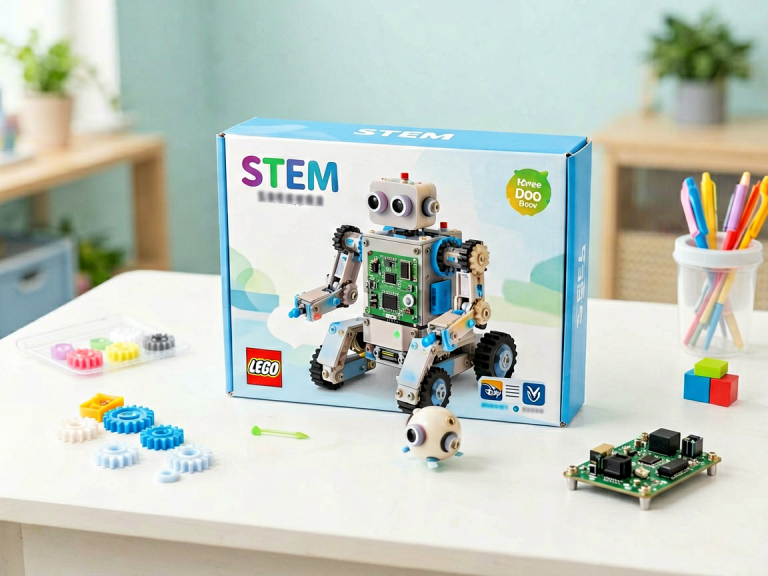
STEM (Science, Technology, Engineering, and Mathematics) toys are perhaps the most recognizable category. They teach concrete principles through hands-on experiments.
- Snap Circuits: These kits allow children to build working electronic circuits. A child can create a doorbell, a light-sensitive alarm, or a spinning fan. The snap-together design makes it safe and intuitive. As they experiment, they learn about voltage, resistance, and flow—concepts that would otherwise remain abstract until high school physics.
- Coding Robots (e.g., Sphero, Ozobot): Elementary kids can program these robots using color codes, block-based apps, or simple text commands. The robot becomes an immediate, visible output of their code. When the robot fails to follow instructions correctly, debugging becomes a game.
- Chemistry and Geology Kits: Growing crystals, testing pH levels, or creating slime with precise ratios teaches scientific method: hypothesize, observe, conclude. The messy results are part of the fun—and the learning.
Mathematical and Spatial Reasoning Toys
Many children struggle with math because it feels disconnected from reality. The right toys make numbers tangible.
- Mathlink Cubes or Base Ten Blocks: These colored interlocking cubes allow children to physically build numbers, add, subtract, and even explore multiplication and division. A child can see that 3 groups of 4 make 12.
- Pattern Blocks and Tangrams: By rotating, flipping, and arranging geometric shapes, children internalize concepts of symmetry, area, and fractions.
- Abacuses and Counting Frames: Despite their ancient design, abacuses are still excellent for teaching place value and the logic of borrowing and carrying.
Language and Literacy-Focused Toys
Reading doesn’t happen only between the pages of a book. Learning toys can make phonics, vocabulary, and storytelling come alive.
- Alphabet Magnets and Word-Building Tiles: Children can physically arrange letters to form words, a process that reinforces phonemic awareness.
- Story Cubes or “Tell Me a Story” Cards: Rolling dice with images or prompts forces children to create narratives on the spot. This develops sequencing, descriptive language, and creativity.
- Scrabble Junior or Bananagrams: These word games introduce spelling and vocabulary in a competitive yet friendly context.
Strategy and Logic Games
Beyond academic content, learning toys that develop critical thinking are invaluable.
- Rush Hour or Logic Puzzle Grids: In Rush Hour, children must slide cars out of a traffic jam—a perfect exercise in working backward and forward simultaneously.
- Chess and Checkers: Classic games that teach pattern recognition, planning, and sportsmanship. Many elementary schools now have chess clubs because of the documented cognitive benefits.
Creative and Open-Ended Construction
Sometimes the simplest toys are the most profound.
- LEGO Classic Bricks (not themed sets): Without instructions, children must imagine a design and then solve the engineering problems to build it.
- Wooden Blocks and Planks: Unstructured stacking leads to discoveries about balance, weight distribution, and structural stability.
- Art and Craft Kits: Looms, clay, and sewing sets encourage fine motor development and creative problem-solving.
—
How to Choose the Right Learning Toys
With thousands of options on the market, parents and educators can feel overwhelmed. Here is a practical framework for selection.
1. Match the Toy to the Child’s Developmental Stage
An advanced six-year-old may enjoy a simple coding robot, while a slower-developing ten-year-old might still need tactile math manipulatives. Observe the child—what does she gravitate toward? Does she enjoy building, sorting, or pretending? The toy should challenge without frustrating. A good rule: the child should succeed about 70% of the time on their own, with the remaining 30% requiring effort or adult guidance.
2. Prioritize Open-Ended, Replayable Toys
Toys that have a single correct outcome (e.g., a puzzle with one solution) are fine occasionally, but open-ended toys offer ongoing value. For example, a set of 100 colored pattern blocks can be used for dozens of different challenges over years. In contrast, a toy that “teaches” only one specific fact will be quickly abandoned.
3. Look for Safety and Durability
Elementary kids are not always gentle. Avoid toys with small parts that can break easily. Check for non-toxic materials, particularly in paints and plastics. Opt for brands that offer replacement parts, as missing pieces often reduce the educational value.
4. Consider Screen-Free Options
While there are excellent digital learning apps (Khan Academy Kids, ScratchJr), physical toys have distinct advantages: they promote fine motor skills, reduce eye strain, and encourage real-world social interaction. A balanced approach is ideal, but during the elementary years, concrete manipulation should still dominate.
5. Involve the Child in the Choice
Take your child to a toy store or browse online together. Let them express interest. When a child chooses a toy themselves, they are more motivated to engage deeply with it. Explain that you are looking for something that will be fun *and* teach them something new—but let their curiosity lead.
—
Integrating Learning Toys into Daily Life
Having the right toys is only half the battle. They must be used intentionally to maximize their potential.
Create a “Discovery Corner”
Designate a small area in your home—a shelf, a bin, or a corner of a room—for rotating learning toys. Keep out only two or three options at a time; too many choices can overwhelm and reduce focused play. Rotate toys every week or two to maintain novelty.
Schedule Unstructured Playtime
Resist the urge to turn every play session into a lesson. The most powerful learning happens when a child explores without adult direction. Let them build a lopsided tower, make a mess with magnets, or play a game incorrectly. These “mistakes” are part of the learning process.
Model Curiosity Yourself
Children learn by imitation. If you sit down with a snap circuit kit and say, “I wonder if we can make this buzzer sound louder?” your child will see that learning is a lifelong, enjoyable activity. Ask open-ended questions: “What do you think will happen if we add another gear?” “How could we make this structure taller without it falling?”
Connect Toy Play to School Subjects
When a child struggles with a math worksheet, pull out the base ten blocks. When they are learning about the solar system in science class, build a model with clay and wires. This connection helps children see that their toys are not separate from “real” learning—they are the foundation of it.
Encourage Peer Play
Arrange playdates around learning toys. A cooperative building challenge or a strategy board game can teach social skills organically. Children often learn more from each other than from adults; they explain concepts in their own language and discover novel approaches.
—
Conclusion: Play Is the Work of Childhood
The Scottish philosopher Jean Piaget once said, “Play is the work of childhood.” For elementary kids, learning toys are the tools of that work. They transform abstract concepts into tangible experiences, turn mistakes into experiments, and shift the child’s role from passive receiver to active creator.
As we worry about test scores and academic benchmarks, it is easy to overlook the simple act of play. But the child who builds with blocks, codes a robot, or negotiates a board game is not just playing. She is building a brain wired for curiosity, resilience, and creative problem-solving. She is, in the truest sense, learning how to learn.
Invest in learning toys. Give them space and time. And then step back and watch the magic happen. Because in that world of magnetic tiles, snap circuits, and story cubes, the elementary child is preparing for a future that we cannot yet imagine—a future that will require exactly the skills they are developing right now, one playful moment at a time.