The Power of Play: How Educational Problem-Solving Toys Shape Young Minds
Introduction
In an era dominated by screens and passive entertainment, the humble toy is undergoing a quiet revolution. Parents and educators alike are rediscovering the profound value of play as a vehicle for learning, and at the heart of this movement lie educational problem-solving toys. These are not mere playthings designed to keep children occupied; they are carefully engineered tools that challenge young minds to think critically, persevere through difficulty, and develop cognitive skills that will serve them for a lifetime. From classic wooden puzzles to sophisticated robotics kits, problem-solving toys offer a unique bridge between fun and intellectual growth. This article explores the nature, benefits, and practical applications of these toys, arguing that they are indispensable in fostering creativity, resilience, and logical reasoning in children.
—
1. Understanding Educational Problem-Solving Toys
At their core, educational problem-solving toys are designed to present a child with a challenge that requires active thinking, trial and error, and often the application of logic or strategy. Unlike open-ended imaginative toys (such as dolls or action figures), these toys have a built-in goal or structure that encourages the child to overcome obstacles. The definition is intentionally broad: it includes everything from a simple shape-sorter for toddlers to a complex circuit-building set for pre-teens.
What distinguishes a problem-solving toy from an ordinary game is its emphasis on the *process* rather than the outcome. When a child struggles to fit a wooden block into the correct hole, they are not just learning about shapes—they are practicing spatial reasoning, fine motor control, and the ability to learn from failure. When an older child attempts to program a robot to navigate a maze, they are engaging in sequential logic, debugging, and systems thinking. These toys do not provide instant gratification; they reward patience and persistence.
The pedagogical foundation of such toys draws heavily from constructivist theories of learning, particularly those of Jean Piaget and Lev Vygotsky. Piaget emphasized that children actively construct knowledge through hands-on interaction with their environment. A problem-solving toy is a perfect microcosm of this process: the child experiments, forms hypotheses, tests them, and adjusts based on feedback. Vygotsky highlighted the role of the "zone of proximal development"—the sweet spot where a task is challenging enough to require effort but not so difficult as to cause frustration. Well-designed problem-solving toys naturally calibrate to this zone, offering adjustable difficulty levels or scaffolding through incremental steps.
—
2. Key Benefits for Cognitive Development
The most obvious benefit of problem-solving toys is the enhancement of cognitive abilities. However, the impact goes far beyond mere intelligence. These toys systematically strengthen several critical domains:
Critical Thinking and Logical Reasoning
Puzzles, strategy board games, and logic-based toys demand that children analyze situations, recognize patterns, and draw conclusions. For example, a game of "Mastermind" requires a child to deduce a hidden code using limited clues—a process that mirrors scientific inquiry. Research in developmental psychology shows that regular engagement with such puzzles improves a child's ability to think flexibly and to approach problems from multiple angles.
Spatial Awareness and Mathematical Intuition
Construction toys like LEGO, magnetic tiles, and 3D puzzles are powerful tools for developing spatial visualization skills. A child who builds a tower must understand balance, symmetry, and volume. These skills are strongly correlated with later success in STEM fields. Studies conducted at the University of Chicago have found that children who play with spatial toys perform better on mental rotation tasks and geometric reasoning tests.
Executive Function and Self-Regulation
Problem-solving toys often require planning, sustained attention, and impulse control. A child working on a 100-piece jigsaw puzzle must resist the temptation to force a piece into the wrong spot and instead systematically search for the correct one. This practice builds the executive functions of the prefrontal cortex, which are essential for academic achievement and emotional regulation.
Resilience and Growth Mindset
Perhaps the most underrated benefit is the cultivation of resilience. When a toy challenges a child, failure becomes part of the learning experience. A tower that collapses, a puzzle piece that doesn't fit, or a coding sequence that fails to run—all these moments teach a child that setbacks are not permanent. Psychologist Carol Dweck's work on "growth mindset" shows that children who learn to embrace challenges and persist through difficulty are more likely to succeed in school and life. Problem-solving toys provide a safe, low-stakes environment for this crucial lesson.
—
3. Types of Problem-Solving Toys and Their Unique Contributions
The landscape of educational problem-solving toys is rich and varied. Below are some major categories, each offering distinct developmental benefits.
Classic Puzzles and Manipulatives
From simple knob puzzles for infants to intricate wooden brain-teasers for older children, puzzles are the quintessential problem-solving toy. They teach pattern recognition, hand-eye coordination, and the concept of trial-and-error. Tangram puzzles, for instance, require a child to rearrange geometric shapes to form a specific silhouette—an exercise in both creativity and analytical thinking.
Construction and Building Sets
LEGO bricks, K'NEX, magnetic rods, and wooden blocks are more than just building materials. They are engineering labs. When a child designs a bridge that must support weight, they engage in physics concepts like compression and tension. Open-ended building sets encourage creativity, but sets with specific instructions (like a LEGO Technic car) also teach children to follow sequential steps and troubleshoot if something goes wrong.
Strategy and Logic Board Games
Games like Chess, Checkers, Blokus, and Settlers of Catan require players to anticipate opponents' moves, manage resources, and make decisions under uncertainty. These games develop strategic thinking, memory, and social skills such as turn-taking and gracious competition. Cooperative games like "Forbidden Island" even teach collaborative problem-solving, where children must work together to achieve a common goal.
Coding and Robotics Toys
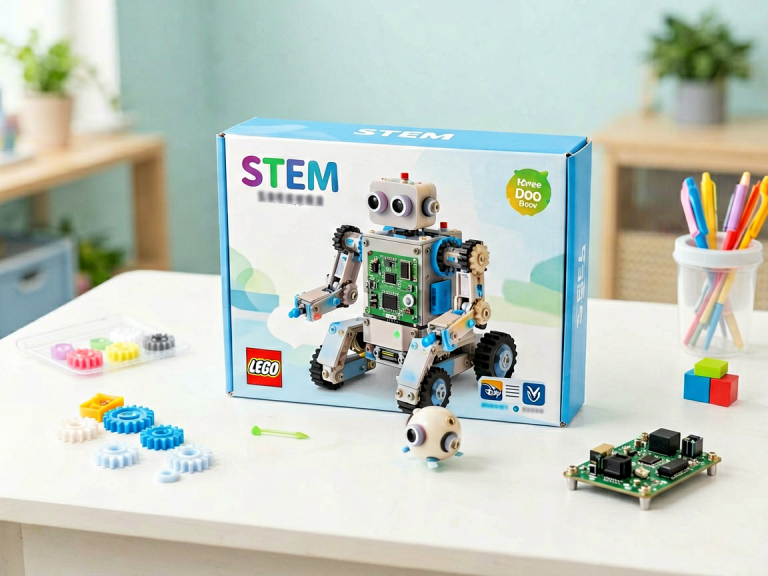
The digital age has spawned a new generation of problem-solving toys. Products like Lego Mindstorms, Sphero, Ozobot, and Cubetto teach children fundamental coding principles without screens or with simple visual programming languages. By programming a robot to follow a path or complete a task, children learn algorithmic thinking, debugging, and iteration. Many of these toys are designed to grow with the child, offering progressively complex challenges.
Science and Experiment Kits
Chemistry sets, crystal-growing labs, and physics experiment boxes turn the living room into a laboratory. These toys pose questions (“What happens if I mix vinegar and baking soda?”) and guide the child through a structured investigation. The process of forming a hypothesis, conducting an experiment, and analyzing results is problem-solving par excellence.
Mazes, Labyrinths, and Escape Room Boxes
Physical mazes (like a marble run) and tabletop escape room kits challenge children to navigate obstacles or solve a series of clues. These toys encourage systematic reasoning and patience. They also often require collaboration, making them ideal for siblings or playdates.
—
4. Choosing the Right Toys for Different Age Groups
Not all problem-solving toys are suitable for all ages. Matching the toy to the child's developmental stage is crucial to avoid frustration or boredom.
Ages 1–3: Sensory and Simple Manipulation
Toddlers need toys that focus on basic cause-and-effect and fine motor skills. Shape sorters, stacking rings, simple peg puzzles (with large knobs), and activity boards with latches and switches are excellent. At this age, the "problem" is primarily physical—how to make the round peg go into the round hole. Safety is paramount; avoid small parts.
Ages 4–6: Early Logical Thinking
Preschoolers can handle more complex puzzles (10–30 pieces), pattern blocks, and simple board games like "Candy Land" or "Hoot Owl Hoot!" (which introduces basic strategy). Magnetic building tiles let them create 2D and 3D structures. Simple coding toys like Cubetto or a programmable bee robot (Bee-Bot) are also accessible.
Ages 7–10: Intermediate Strategy and Construction
Children in this age group thrive with advanced LEGO sets, strategy games like "Blokus" or "Qwirkle," and science kits that require following multi-step instructions. Logic puzzles (like Sudoku for kids) and maze books sharpen reasoning. Robotics kits with block-based programming (e.g., Lego WeDo) become highly engaging.
Ages 11–14: Complex Systems and Abstract Thinking
Pre-teens can tackle open-ended construction (LEGO Technic, Meccano), digital game design (using Scratch or Minecraft Education), and logic-heavy board games ("Ticket to Ride," "The Game of Life"). Escape room boxes and advanced coding kits (Arduino, Raspberry Pi) challenge them to apply cross-disciplinary knowledge.
Ages 15 and Up: Specialized and Mastery-Level Toys
Teenagers benefit from complex robotics (VEX, FIRST), programming puzzles (like "Human Resource Machine" or "Zachtronics" games), physics-based engineering kits (like the "Cubelets" robot blocks), and deep strategy games ("Go," "Terra Mystica"). At this stage, the goal is often to create original solutions or to compete in tournaments.
—
5. The Role of Parents and Educators in Maximizing Learning
Even the best problem-solving toy will not realize its full potential without thoughtful adult involvement. The key is to strike a balance between guidance and autonomy.
Scaffolding Without Solving
When a child encounters difficulty, it is tempting to show them the solution. Better practice is to ask open-ended questions: “What do you think would happen if you turned that piece upside down?” or “Can you describe why the tower fell?” This encourages metacognition—thinking about one’s own thinking.
Creating a Culture of Process Praise
Praise effort, strategy, and persistence rather than speed or success. Say “I love how you tried three different ways before giving up,” instead of “You’re so smart.” This reinforces a growth mindset and reduces fear of making mistakes.
Integrating Toy Play with Real-World Problems
Parents can extend the learning by connecting toy challenges to everyday life. For example, after building a bridge with blocks, visit a real bridge and discuss its design. After solving a logic puzzle, talk about how detectives use similar reasoning.
Limiting Screen Time and Promoting Tangible Play
While digital problem-solving games have their place, physical toys offer tactile feedback and three-dimensional manipulation that are crucial for brain development. The American Academy of Pediatrics recommends limiting recreational screen time and encouraging unstructured, hands-on play.
Encouraging Collaboration
Problem-solving toys used in groups (siblings, classmates, or parent-child pairs) foster communication, negotiation, and shared problem-solving. Cooperative games teach that sometimes the best solution emerges from teamwork.
—
Conclusion
Educational problem-solving toys are far more than a passing trend or a luxury for privileged families. They are a cornerstone of modern childhood development, offering a natural, joyful pathway to building cognitive strength, emotional resilience, and creative thinking. In a world that increasingly demands adaptability and critical thought, these toys prepare children not just for school, but for life.
However, the toy itself is only a catalyst. The magic happens when a child engages with it—when they struggle, question, try again, and finally achieve a breakthrough. That moment of triumph is more than a fleeting pleasure; it is a lesson that intelligence is not fixed, that effort matters, and that problems, however daunting, can be solved. As parents and educators, our role is to provide the right tools, the right environment, and the right encouragement. In doing so, we give children one of the greatest gifts: the confidence to face the unknown and the skills to master it.
So the next time you see a child absorbed in a puzzle, a building set, or a coding robot, smile. You are witnessing the architecture of a capable, resilient mind being built, one playful challenge at a time.